








Top updates: Trump says US will hit Iran ‘20 times harder’ if oil flow stopped through Hormuz Strait
After the US president said the war could end ‘very soon’, the Islamic Revolutionary Guard Corps said Tehran would ‘determine the end’ of the conflict.
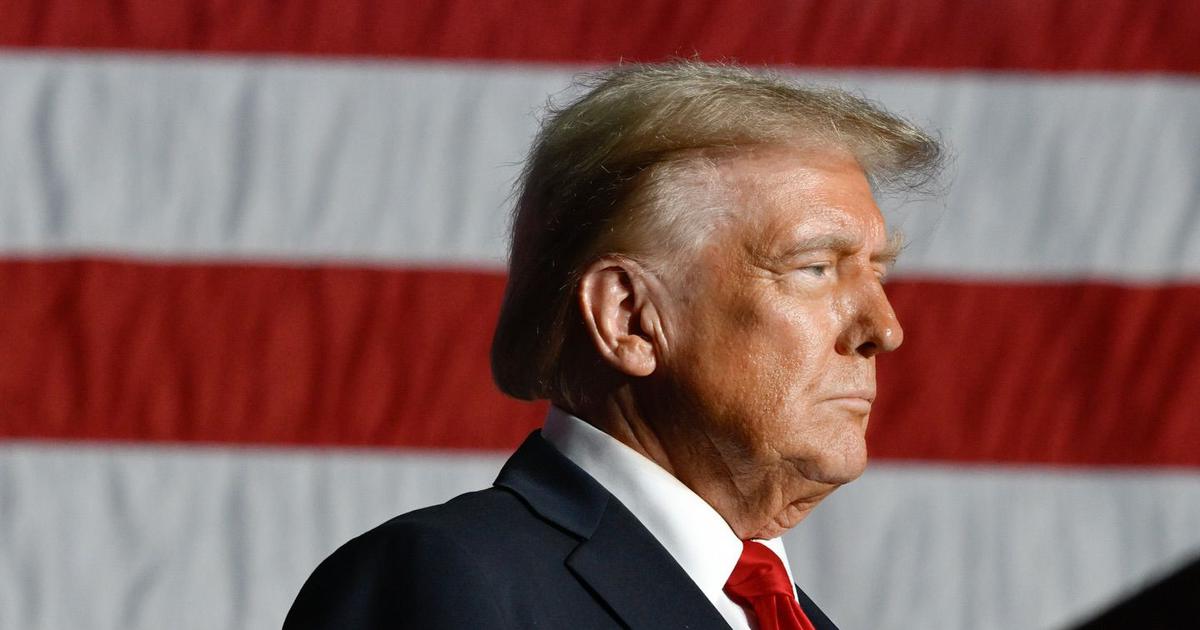
The United States will hit Iran “twenty times harder” if Tehran stops the flow of oil through the Strait of Hormuz amid the conflict in West Asia, said US President Donald Trump on Tuesday.
On March 2, Iran claimed that the Strait of Hormuz was “closed” for shipping traffic, warning that any vessel attempting to pass through the strategic waterway would be set on fire.
The narrow waterbody connects the Gulf to the Arabian Sea. About 20% of global petroleum supply passes through the maritime chokepoint.
The conflict in West Asia began on February 28 after Israel and the United States launched a joint operation to “degrade the capabilities” of the Iranian government.
Tehran retaliated by striking Israel and US military bases in the region, and targeting major cities in other Gulf countries and some ships.
After Mojataba Khamenei was appointed as Iran’s new supreme leader on Sunday, Tehran had signalled that the Strait of Hormuz would likely remain closed, reported AFP.
Here are more top updates from the conflict in West Asia:
- Trump said that his warning regarding the Strait of Hormuz was a “gift” from the US to China “and all of those nations that heavily use” the strait. “Hopefully, it is a gesture that will be greatly appreciated,” he added.
- Trump said on social media on Tuesday that the US will also “take out easily destroyable targets that will make it virtually impossible for Iran to ever be built back, as a nation, again – death, fire and fury will reign upon them”.
- Hours later on Tuesday, Trump told Fox News that it is possible that he would talk with Iran but asserted that it depends on the terms. “We sort of don’t have to speak anymore, you know, if you really think about it, but it’s possible,” he told the television channel, claiming that “they want to talk badly”.
- Earlier, the US president had said that the war on Iran could end “very soon”, but later warned that Washington would continue military operations until “the enemy was totally and decisively defeated”.
- In remarks later on Monday that appeared to contradict his earlier statement that the war could end soon, Trump said the United States would “not relent until the enemy is totally and decisively defeated”, CNN reported.
- Trump had claimed on Monday that the US had not yet hit some of Iran’s most sensitive targets, including its electricity infrastructure, CNBC reported. “We could call it a tremendous success right now…as we leave here, I could call it,” CNN quoted Trump as saying. “Or we could go further, and we are going to go further.”
- In response to Trump’s remarks that the war could end soon, Iran’s Islamic Revolutionary Guard Corps said Tehran would “determine the end of the war”, AFP reported. It added: “The equations and future status of the region are now in the hands of our armed forces; American forces will not end the war.”
- Iran’s Revolutionary Guards said on Tuesday they would not allow “one litre of oil” to be shipped from West Asia if US and Israeli attacks continue, Reuters reported.
- Meanwhile, benchmark Brent crude fell to $91.5 per barrel as oil prices eased in the hours after Trump described the war with Iran as “very complete, pretty much”, The Guardian reported. On Monday, global oil prices had crossed the $100 per barrel-mark, the highest since July 2022.
- Amin H Nasser, the chief executive officer of Saudi Aramco, said that the crisis is the most serious situation West Asia’s oil and gas industry has faced. “If shipping through the Strait of Hormuz does not resume normally, the consequences for global oil markets could be catastrophic,” Fortune India quoted Nasser as saying during a company earnings call on Tuesday. Saudi Aramco is Saudi Arabia’s state-owned petroleum and natural gas firm and among the largest in the world.
- On Monday, Iran’s security chief Ali Larijani had said it was unlikely that the Strait of Hormuz would remain secure amid the ongoing conflict. “It is unlikely that any security will be achieved in the Strait of Hormuz amid the fires of the war ignited by the United States and Israel in the region,” he said, “...Especially if that is by the design of parties that were not far removed from supporting this war and contributing to its fanning.”
- Human Rights Watch said on Monday that the Israeli military unlawfully used artillery-fired white phosphorus munitions over homes on March 3 in the southern Lebanese town of Yohmor. White phosphorus is a chemical substance dispersed in artillery shells, bombs, and rockets that ignites when exposed to oxygen. It can set homes, agricultural areas, and other civilian objects on fire. Under international humanitarian law, the use of airburst white phosphorus is unlawfully indiscriminate in populated areas and does not meet the legal requirement to take all feasible precautions to avoid civilian harm.
- Human Rights Watch said that it verified and geolocated eight images showing airburst white phosphorus munitions being deployed over a residential part of the town and civil defence workers responding to fires in at least two homes and one car in that area.
- The toll from Israeli strikes on Lebanon rose to 486 people killed and 1,313 wounded, AFP quoted the Lebanese health ministry as saying. About 7 lakh persons have registered themselves as displaced on the government’s humanitarian assistance portal, BBC quoted Lebanon’s Minister of Social Affairs Haneen Sayed as saying. Lebanon was drawn into the conflict on March 2 after Hezbollah fired rockets and drones into Israel in response to the killing of Iran’s supreme leader Ayatollah Ali Khamenei.
The tensions
The joint attacks by Israel and the US on Iran came amid tensions between the three countries over Tehran’s nuclear programme. Washington acts as a guarantor of Israel’s security. Israel has been claiming that Iran is close to obtaining a nuclear weapon, which could alter the regional security balance.
Tehran has long maintained that its nuclear programme is for civilian purposes.
The US has repeatedly demanded that Iran give up its nuclear programme, threatening that Tehran must meet its terms or face consequences.
In June, Tehran and Tel Aviv agreed to a ceasefire after 12 days of hostilities.
At the time, the Israeli military had struck what it claimed were nuclear targets, and other sites, in Iran with the aim of stalling Tehran’s nuclear programme. Iran retaliated with missile attacks on Israel.
Both countries had later accused each other of violating the ceasefire.
The two countries had been nudged by the US to accept the ceasefire after Washington on June 22 joined Israel’s war against Iran. The US military had carried out what Trump had described as a “very successful attack” on Iranian nuclear sites in Fordo, Natanz and Esfahan.
While Trump had claimed at the time that Iran’s nuclear facilities had been “completely obliterated” in the attacks, Washington’s preliminary intelligence assessment had said that the strikes only set it back by a few months, and did not destroy its nuclear programme.
Trump’s fresh focus on Iran came after the US’ military operation in Venezuela. On January 3, the US military abducted Venezuelan President Nicolás Maduro and his wife, Cilia Flores, for alleged drug trafficking.
Almost simultaneously, on December 28, protests erupted in Iran initially focused on discontent about rising inflation. However, they later expanded as demonstrations in more than 100 towns demanded an end to clerical rule.
Following this, Trump had announced that the US military was moving warships towards Iran “just in case” he wants to take action, saying that he was “watching them very closely”.
