





India’s diaspora has always been vital to the domestic polity of the country. Gandhi cut his teeth in the Indian diaspora in South Africa, importuning the British and developing many of the ideals he later put to great effect in India. Kerala, which has a sixth of its population living in the Persian Gulf countries, receives a fifth of its GDP in remittances besides a spectrum of new ideas about society from non-resident Indians returning home.
Yet, curiously, the diaspora has remained a distant and neglected entity within the country’s political imagination. The Constitution effectively forbade dual citizenship in its attempt to keep Pakistani citizens from retroactively claiming India as theirs in the 1950s. The governments that followed viewed the large Indian communities in the Commonwealth with derision, considering their bonds with the homeland weak, and limiting engagement to cultural ties and the occasional dose of humanitarian aid. Worse, they frowned upon the estimated five million Indians who had moved to the West to escape the economic environment of the Nehrvuian years, viewing them as quislings to the cause of developing India.
Things only improved in the 1990s, as a liberalised Indian economy saw the diaspora as a valuable source of funds in a country that was starved of capital.
Recognising opportunities
Narendra Modi tapped into the 25 million-strong diaspora early. As chief minister of Gujarat, he capitalised on the potential of the international Gujarati community. Seizing New Delhi’s initiative to engage with the diaspora – with the reestablishment of the Ministry of Overseas Indian Affairs in 2004 – he created the Vibrant Gujarat forum to showcase the state. In response, the Gujarati community abroad lapped it up. His vision reflected their aspirations. As the money poured in, so did political support. Not only did diaspora funds flow in to support economic development, they also maintained electoral sustenance, reflecting national trends, as political parties across India woke up to the opportunities the diaspora afforded them.
The 2008 Nuclear Cooperation Agreement that India signed with the United States capped the diaspora’s significance in Indian foreign policy. Aided by then Ambassador Ronen Sen’s urbane cultivation of the influential Indian-American community, India was able to effectively lobby US Congress to pass the Bill without demur.
Yet, India was lax in addressing the diaspora’s major concerns. Travelling home was challenging. Also, abstruse visa regulations and a welter of laws regarding inheritance, taxes and rights made engagement with the motherland an enduring challenging. The government proffered a solution – the meretricious creation of a Person of Indian Origin card, which removed the need for a visa and simplified some of the legal issues. The PIO card was soon followed by an offer of Overseas Citizenship of India, a window-dressed version of the PIO card, with the caveat that it was not really any form of Indian citizenship.
Give and take
The year 2014 has been a game changer in India’s tryst with its diaspora.
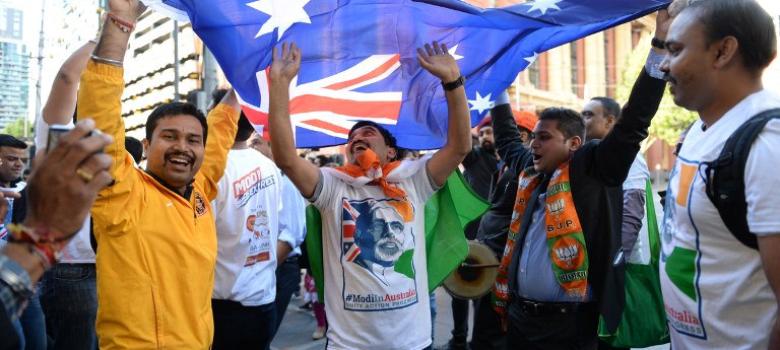
The elections in May were the first to countenance the expatriate Indian vote. As long as they travelled home to cast their ballot, NRIs who remained Indian citizens were no longer disenfranchised. They did not travel alone: along with hundreds of NRIs came PIOs and OCIs wanting to play a part in Modi’s election campaign. Modi’s flag-bearers, they saw in him a man of action who could create an India mirroring their ideas of development, technological advancement, and effective governance.
Modi, in recognition of their fealty, was quick to thank them and made suppliant requests for further contributions to India’s cause in his speeches at Madison Square Garden and Olympic Park. His next step was to announce a limited visa-free regime for travel to India, and a removal of the disparities between the PIO and OCI systems – a reward for their support.
Irregular outreach
Not all, though, is hunky-dory between India and its diaspora. Conspicuously absent is Modi’s outreach to Europe. While ties between India and Europe in recent times have been lukewarm, the diaspora in the United Kingdom and Western Europe remain untapped. As an influential group within the elites of their countries, they can be used to rework relations between India and its second largest trading partner.
Diaspora in the UK, Canada, France, and other large Indian communities across Africa and Southeast Asia remain on the fringe of Modi’s visa-free largesse and are yet to benefit. India’s largest NRI community, in the Gulf, is far from the intellectual and business elite that their brethren in the West represent, yet they too are as much Indian as the others, and would benefit from better consular services and effective support from the government to prevent labour exploitation.
It is clear that the diaspora will continue to be a formidable force in India’s political landscape.
Hrishabh Sandilya, a lecturer on South Asian politics at Charles University in Prague, is a visiting fellow at the Institute of Defense Studies and Analyses in New Delhi. His Twitter handle is @SandilyaH.
We welcome your comments at
letters@scroll.in.
Yet, curiously, the diaspora has remained a distant and neglected entity within the country’s political imagination. The Constitution effectively forbade dual citizenship in its attempt to keep Pakistani citizens from retroactively claiming India as theirs in the 1950s. The governments that followed viewed the large Indian communities in the Commonwealth with derision, considering their bonds with the homeland weak, and limiting engagement to cultural ties and the occasional dose of humanitarian aid. Worse, they frowned upon the estimated five million Indians who had moved to the West to escape the economic environment of the Nehrvuian years, viewing them as quislings to the cause of developing India.
Things only improved in the 1990s, as a liberalised Indian economy saw the diaspora as a valuable source of funds in a country that was starved of capital.
Recognising opportunities
Narendra Modi tapped into the 25 million-strong diaspora early. As chief minister of Gujarat, he capitalised on the potential of the international Gujarati community. Seizing New Delhi’s initiative to engage with the diaspora – with the reestablishment of the Ministry of Overseas Indian Affairs in 2004 – he created the Vibrant Gujarat forum to showcase the state. In response, the Gujarati community abroad lapped it up. His vision reflected their aspirations. As the money poured in, so did political support. Not only did diaspora funds flow in to support economic development, they also maintained electoral sustenance, reflecting national trends, as political parties across India woke up to the opportunities the diaspora afforded them.
The 2008 Nuclear Cooperation Agreement that India signed with the United States capped the diaspora’s significance in Indian foreign policy. Aided by then Ambassador Ronen Sen’s urbane cultivation of the influential Indian-American community, India was able to effectively lobby US Congress to pass the Bill without demur.
Yet, India was lax in addressing the diaspora’s major concerns. Travelling home was challenging. Also, abstruse visa regulations and a welter of laws regarding inheritance, taxes and rights made engagement with the motherland an enduring challenging. The government proffered a solution – the meretricious creation of a Person of Indian Origin card, which removed the need for a visa and simplified some of the legal issues. The PIO card was soon followed by an offer of Overseas Citizenship of India, a window-dressed version of the PIO card, with the caveat that it was not really any form of Indian citizenship.
Give and take
The year 2014 has been a game changer in India’s tryst with its diaspora.
The elections in May were the first to countenance the expatriate Indian vote. As long as they travelled home to cast their ballot, NRIs who remained Indian citizens were no longer disenfranchised. They did not travel alone: along with hundreds of NRIs came PIOs and OCIs wanting to play a part in Modi’s election campaign. Modi’s flag-bearers, they saw in him a man of action who could create an India mirroring their ideas of development, technological advancement, and effective governance.
Modi, in recognition of their fealty, was quick to thank them and made suppliant requests for further contributions to India’s cause in his speeches at Madison Square Garden and Olympic Park. His next step was to announce a limited visa-free regime for travel to India, and a removal of the disparities between the PIO and OCI systems – a reward for their support.
Irregular outreach
Not all, though, is hunky-dory between India and its diaspora. Conspicuously absent is Modi’s outreach to Europe. While ties between India and Europe in recent times have been lukewarm, the diaspora in the United Kingdom and Western Europe remain untapped. As an influential group within the elites of their countries, they can be used to rework relations between India and its second largest trading partner.
Diaspora in the UK, Canada, France, and other large Indian communities across Africa and Southeast Asia remain on the fringe of Modi’s visa-free largesse and are yet to benefit. India’s largest NRI community, in the Gulf, is far from the intellectual and business elite that their brethren in the West represent, yet they too are as much Indian as the others, and would benefit from better consular services and effective support from the government to prevent labour exploitation.
It is clear that the diaspora will continue to be a formidable force in India’s political landscape.
Hrishabh Sandilya, a lecturer on South Asian politics at Charles University in Prague, is a visiting fellow at the Institute of Defense Studies and Analyses in New Delhi. His Twitter handle is @SandilyaH.
