






Booba – I think that was her name. Perhaps short for Mehbooba. I was young back then, too young to know for sure. She told me I had sharp features, which was a compliment. I accepted it reverently. She told me boys found her sexy, but that she loved Sam. We giggled a lot at that. I asked her whether I was sexy. She said no, of course not – I had no boobs. I asked her whether anybody, any boy, would ever fall in love with me. She said she didn’t think so; not yet anyway. She confirmed my worst fears.
Booba was having an affair with her cousin, Sam, in whose home she was living. At the time, I was also living in that house, but only as the tenant’s daughter – not as an impoverished, fatherless relative. So he did not have an affair with me. Besides, I was seven years old and breasts-less. I took his lack of interest in me as a personal affront. After all, I did have sharp features. I took to jiggling my bottom at him. He told Booba he thought I had a problem with my feet – were they flat? Booba made me walk barefoot, with wet feet, across the floor. Then she told me I was flat-footed.
They were found out one day by the landlady, Sam’s mother. The landlord was, after all, just 18. His father had died, leaving him two adjoining houses. Sam’s mother was a large, commanding woman, who slapped him hard when she found him with his hands under Booba’s skirt. She also confiscated our lawnmower. She scolded me for plucking raw mangoes from her tree. She sent Booba packing. I cried a lot when Booba left, sobbing into a green kerchief. There was now no one who would tell me about boys.
I already knew a lot. Booba had told me about blood. Boys did things to one that made one bleed. I did not like that. I preferred the Hindi film version – films I watched with my parents. They had intellectual discussions about them later. I liked to express my opinion about films too but, of course, I did not mention scenes that left me breathless and excited. I knew my parents would be shocked if I told them that I liked it when the villain ripped off the heroine’s clothes, she screamed and the hero jumped in to save her and beat the blackguard. I preferred such scenes to the ones in which the hero treated her similarly and she only laughed and sang. Anyway, there was no blood anywhere in either and I was quite upset by Booba’s insistence that there invariably was. Booba had not been the studying kind.
Sangeeta was not the studying kind either. She used to fail most examinations. She was seventeen and still in the tenth standard. Most of us were fifteen. Sangeeta was a bad girl, or so everybody said. She was having an affair with a boy from the medical college. She used to spend nights at the medical college hostel. She had a slim waist and a whole lot of pimples. That, the girls said, was because she was on the pill.
Before him, she had been friendly with a shopkeeper, who, it was rumoured, gave her a lot of money. She had had an abortion because of him. Her parents were very conservative. They had seven children. They were Jains. Jains were strict vegetarians and were not even supposed to kill flies. But Sangeeta used to have kebabs with her low-caste lover. She was a very bad girl.
When we went to Madras on a school trip, Sangeeta was also supposed to come with us. But instead, she went to Kashmir with her boyfriend. Everybody found out about her affair. She was expelled from school. We never saw her again. People said her parents were keeping her under lock and key. But what was the use? Who would marry her?
The Hindi films that I used to watch with my parents always had a vamp to set off the virtues of the heroine. My favourite vamp was an Anglo-Indian – Helen. Later, I discovered she was Anglo-Burmese, which was not quite the same thing. I loved her dances. They were called “cabaret dances” in Desertvadi parlance. In one film, Helen wore huge plumes and not much else. I also wanted a dress like that. My mother told me only bad women wore such clothes.
My teacher in third standard was also an Anglo-Indian, Miss Gema. She wore short skirts and stockings, and sometimes no stockings. She went dancing with boys. I asked my mother if that made her a bad woman. My mother said Anglo-Indians were different.
There were so many Anglo-Indians in school. They had dance parties. I didn’t know what went on at these parties, but my mother said it was not the “Indian way of life”. I asked her if Kiran, whose father was a doctor and whose mother did not go out at all, was living the Indian way. My mother said yes, but they were much more traditional in their thinking than we were. We were not traditional because she worked – not only in a college but also as a social worker. There were hardly any women social workers in Desertvadi. Other lecturers from Mummy’s college went right back to their homes after their four hours of teaching. I knew Mummy was different.
I met Sheila when I was 11 years old and in the seventh standard. She was 13, already buxom. I told my mother that Sheila, an Anglo-Indian, was my best friend. But I knew I couldn’t go to parties with her because we were different. And anyway, where did I have the time? I had to study so much to maintain my position in class. Sheila, because of her family environment – Anglos, you know – couldn’t be bothered.
“You must call her over for Diwali,” my mother said.
Sheila told me she was a teenager. I loved the sound of it and asked her whether I could be taken for one too. She said no, that I looked so young; it would be ages before I wore a bra.
Sheila did not wear a chemise like me. I always thought “chemise” was a Hindi word until I grew up and learnt it was French. In Desertvadi, it referred to the hand-embroidered cotton shifts little girls wore under their dresses. Sheila wore only nylon, lacy slips under her skirt. The lace of her bra was always visible through her terrycot blouse. She plucked her eyebrows thin, very thin. The teachers were very nasty to her. They were nasty to me too, but that was because I always prepared my lessons too well and asked too many questions. They told me not to be so proud of my knowledge. I got higher marks than the others only because both my parents were in the teaching profession and helped me with my lessons. Other girls were so much brighter but didn’t have enough opportunity.
Sheila told me not to mind all that. The teachers were frustrated – so many of them didn’t have husbands. “Spinsters are always frustrated,” she said.
I asked her whether all the nuns in school were frustrated. She said yes, yes; couldn’t I see the way they behaved whenever the only good-looking priest in Desertvadi came to the convent for a visit?
“But you are a Catholic,” I said.
“So what?” she asked. “Everyone knows nuns are frustrated. Last year, a young novice ran away with the school bus driver’s son – and he wasn’t even Christian!”
I asked whom she would marry.
“The man I fall in love with,” Sheila replied, “will be rich.” She would meet him at a party. He would be captivated by her dancing, Sheila would say.
Sheila got new clothes stitched for every party. Her mother stitched them. She also baked cakes. They spoke only English at home. Her father was a Major in the army.
The Colonel’s daughter in our class used to cut Sheila dead.
“These Hindus are so conservative,” Sheila would say. “These officers’ families, so snobbish.”
“We are not conservative,” I would tell her.
I could never go to her house because the cantonment area was too far. No question of spending the night there, my mother had told me. By the time I was old enough to disobey, Sheila had left Desertvadi.
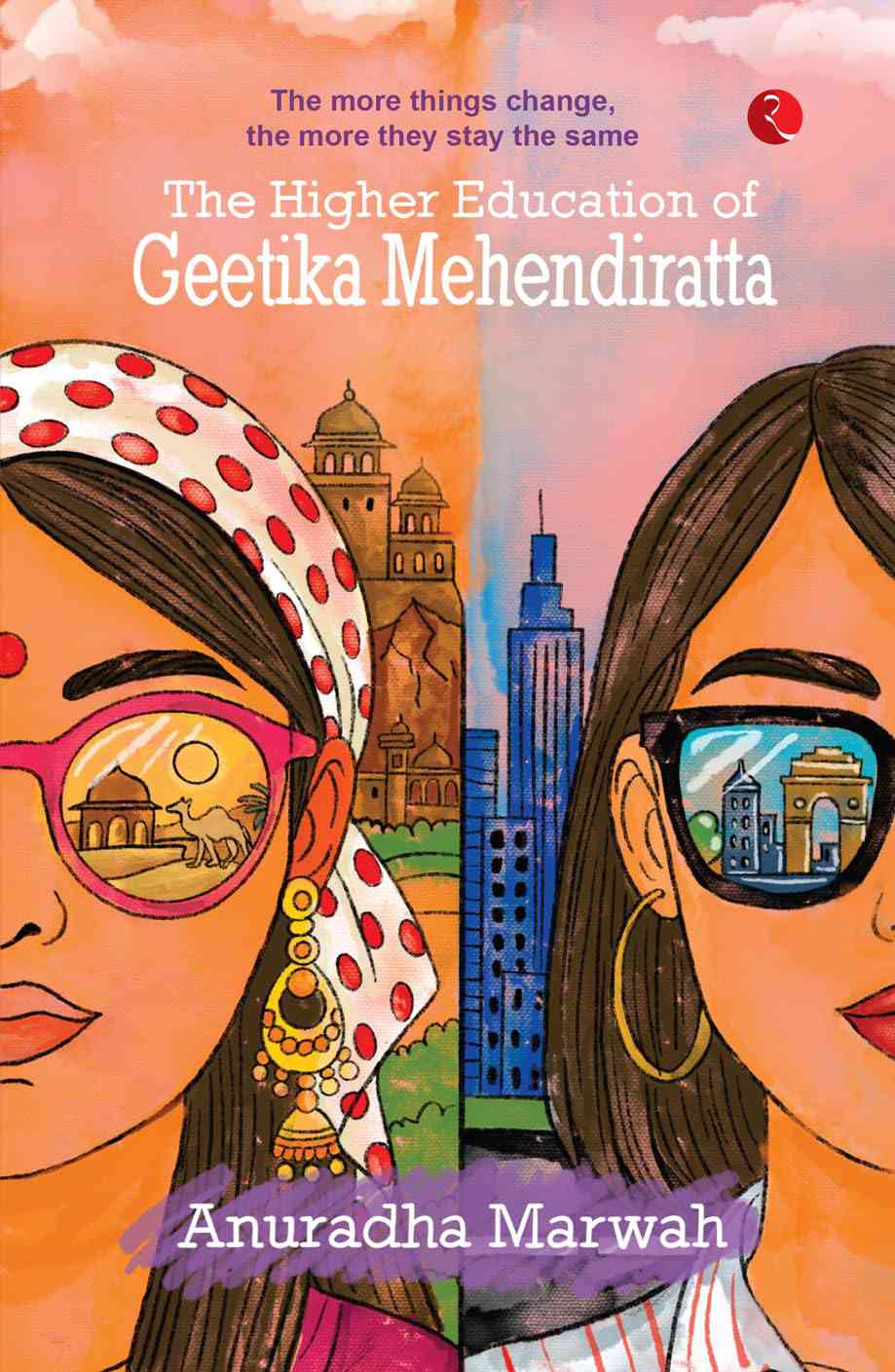
Excerpted with permission from The Higher Education of Geetika Mehendiratta, Anuradha Marwah, Rupa Publications.
