




The New India Foundation today announced its five-book shortlist of the 2025 Kamaladevi Chattopadhyay NIF Book Prize, which honours exceptional works of non-fiction writing on modern and contemporary India.
The winner will be announced on December 6 and will receive a cash prize of Rs 15 lakhs at the Bangalore Literature Festival.
The 2025 shortlist was selected by a jury comprising the chairman of Tata Sons and Tata Group N Chandrasekaran, entrepreneur Manish Sabharwal, political scientist Niraja Gopal Jayal, historian Srinath Raghavan, partner – Trilegal) Rahul Matthan, former Ambassador of India to France Jawed Ashraf, public policy scholar and Yamini Aiyar.
Commenting on the Shortlist, Matthan said, “This year’s shortlist reflects the range and vitality of contemporary nonfiction in India. From biographies of pioneering figures to accounts exploring identity and belief to the workings of democracy and statecraft, these works offer fresh insights into the forces that continue to shape modern India. They remind us that truly understanding our nation requires following both – the centres and the edges, the well-known and the forgotten. the Shortlist stands as a testament to this richness and complexity.”
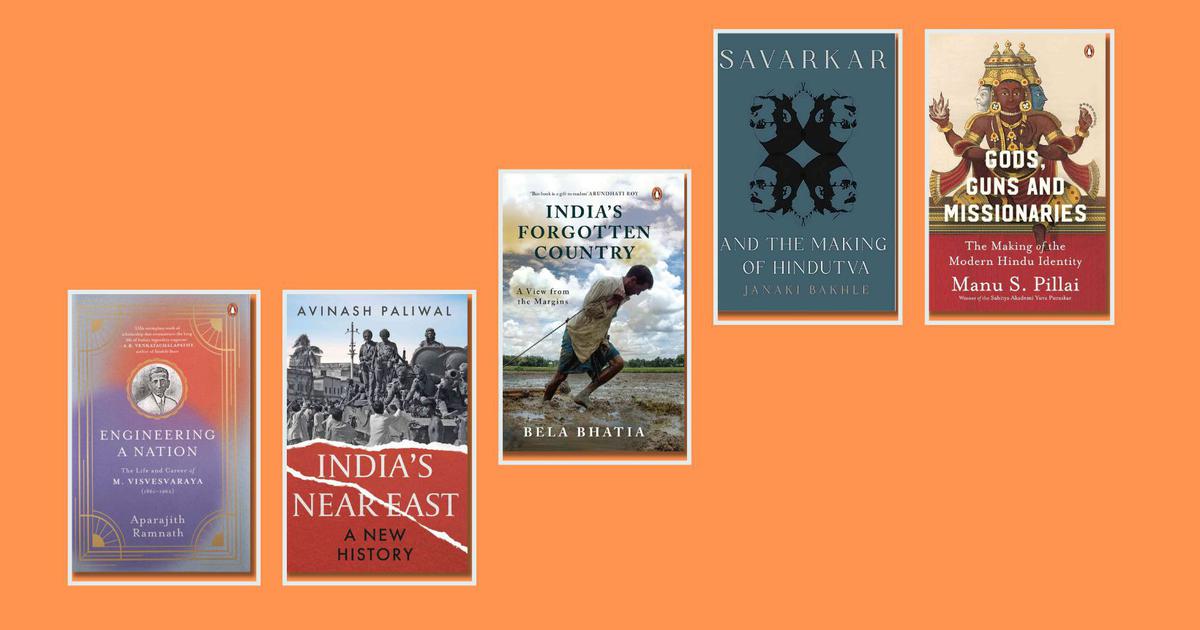
The five shortlisted books are:
Savarkar and the Making of Hindutva, Janaki Bakhle, Princeton University Press
India’s Forgotten Country: A View From the Margins, Bela Bhatia, Penguin Random House India
India’s Near East: A New History, Avinash Paliwal, Penguin Random House India
Gods, Guns, and Missionaries: The Making Of The Modern Hindu Identity, Manu S Pillai, Penguin Random House India
Engineering a Nation: The Life and Career of M Visvesvaraya, Aparajith Ramnath, Penguin Random House India
Recent winners of the Kamaladevi Chattopadhyay NIF Book Prize include Ashok Gopal (2025) for A Part Apart: The Life and Thought of BR Ambedkar (Navayana), Akshaya Mukul (2024) for Writer, Rebel, Soldier, Lover: The Many Lives of Agyeya (Penguin India), and Shekhar Pathak (2023) for The Chipko Movement: A People’s History (translated by Manisha Chaudhry from the Hindi, Permanent Black).
