






Neeraj Tanwar, or Pepsu, became a pivotal figure in creating a new digital mythology and an alternative history that continues to circulate in online spaces, far removed from the domain of professional historians.
Born in 1987 in Fatehpur Beri, he established his own gym and trained dozens of young men. He was also known as the Sher of Gujjar (“Lion of Gujjars”), a title few dared to dispute. What propelled him to fame wasn’t merely his formidable physique but also his ability to project authority through his muscles. He believed strength had to be shown, spoken about and shared. And so he did, online, every day, through TikTok videos.
But life doesn’t move to TikTok’s beat; it refuses to wrap up in sixty seconds. The cheerful gym poses masked a slower undercurrent, crawling like the internet before Jio. Behind the daily slogans and applause was a man quietly slipping away from the role he had built.
On a March afternoon in 2020, Neeraj Pepsu left his house in Fatehpur Beri, saying he was stepping out for juice. When he returned, something was wrong. His breath was short. His stomach churned. Doctors would later find traces of poison in his blood. Within hours, he was dead.
In the weeks that followed, his videos flooded the internet. Teenagers across North India began to make tribute reels. Neeraj Pepsu was no longer just a bodybuilder from Fatehpur Beri famous for his TikTok videos; he became a myth, a legend. His short videos travelled faster than facts ever could, carried by the rhythm of reel edits and auto-tuned voiceovers.
After death, his story began to be narrated as one of a larger-than-life local hero. He became a kind of digital deity, not just within the Gujjar community but also far beyond it. What shocked people along with sparking their curiosity, was the possibility of a strong man like him having been so sad. In our part of the world, gym bodies are seen as an antidote to melancholy. Physical strength, after all, is supposed to be enough to deal with every existential crisis life throws at you.
His story spread all over the internet through low-resolution videos and nostalgic posts. The phenomenon remained contained mostly within Gujjar community pages – obscure corners of the internet where the legend of Pepsu was kept alive. These pages are numerous and scattered across the web like tea stalls – each serving its own version of memory, masculinity and the melancholy surrounding someone who left too soon. The culture he came from had no language to articulate this kind of loss.
Still, his cult grew to massive proportions online and often translated offline. Today, it’s common to see vehicles across NCR carrying stickers that read “Neeraj Pepsu Amar Hai (Long Live Neeraj Pepsu)”. Posters and songs created in his memory circulate widely and continue to mythologise him.
Gujjar Sher’s “Neeraj Pepsu Dil Me Base” boasts 3.5 million views, while “Neeraj Tanwar Pepsu Song” by Rohit Sardhana has around 20 million views on YouTube. Several such songs produced by the Gujjar community circulate online, carrying a subtle (or perhaps very clear) message about the valour of the community and the implication that the term “Gujjar” doesn’t signify a caste but a brand.
I had been tracking these pages for a while and was quite aware of how they were quietly building a new mythology around caste – through music videos, reels and even rap songs. This instinct to mythologise one’s own caste has always existed, but in the post-Jio era this tendency seems to be fuelled by steroids. One popular fan page has a poetic name: “We Are GurJars, We Break Bones Not Hearts.” There are countless pages of this kind, churning out songs and content with Usain Bolt-like speed.
Further, there are even podcasts dedicated entirely to the Gujjar identity. The Kedi Baat Cheet Gujjar podcast, hosted by Pammi Numbardar, played a key role in pulling the cult of Pepsu out of its stronghold in certain corners of NCR into the wider mainstream. Once Instagram discovered it, the whole thing went berserk.
Clips from the podcast singing Neeraj Pepsu’s praises with the kind of earnestness usually reserved for national anthems went viral. To some, it sounded exaggerated; to others, it was gospel. There were edits of Pepsu appearing at Bob Dylan concerts, Travis Scott talking about Pepsu Bhai, and the like.
These videos were, of course, bursting with irony. But on the internet, irony is a gateway drug. Repeat a joke enough times and it becomes a feeling; in the end you won’t remember if started out ironically. By the time a joke completes its life cycle, even its creators can’t tell if they are mocking the subject or building a pedestal for them. But such content achieved what most PR firms can’t: it ensured the world knew about the icon the Gujjar community had sculpted for itself in the digital arena. Today, anyone even half-awake on the internet has either seen Pepsu, heard of him or scrolled past an edited reel featuring him. Often, they are left wondering why a bodybuilder from Fatehpur Beri is performing at a Travis Scott concert.
One may wonder what drives the relentless creation of caste-centric content and the mythologisation of a people. Why the urgency to project alternative histories and assert supremacy online?
Historically, the Gujjars were a pastoral community. Men who once bent over fields, herded cattle and measured their worth in the weight of wheat, the price of milk and the toughness of their hands. Then, liberalisation happened and life in NCR changed. Lands owned by several individuals in the Gujjar community skyrocketed in value. And with that came a new kind of “work”, which meant no work at all.
Now, many of them rent out properties, live in large houses with curiously empty drawing rooms, and lead a spendthrift lifestyle. But a body used to mobility, kinesthetics and hard labour retains its muscle memory. The physical might, once reserved for contending with stubborn buffaloes and delayed monsoons, now makes peace with appearing in gym selfies and slow-motion reels, chests heaving with ancestral pride, veins pumped with protein shakes and something that looks suspiciously like longing.
Of course, nobody really challenges them, but in the reels, there is always an invisible enemy: an unnamed man, a vague army of men who must be taught a lesson, etc. In our world, motion is everything. Gujjar reel aesthetics are rarely about static shots; rather, they often capture their subject en route to something. The videos begin with car rides and end, well, not very differently. Arrival is not the point; the engine is the story. These Gujjar men go places not to reach a destination, but to film the journey.
This curious leisure, the fruit of an old struggle and a new idleness, has produced a unique kind of digital folklore. Everyone participates – aunts, uncles and even five-year-olds well-versed in trending Gujjar songs. The aesthetic is aggressive and alert 24/7. The tone is confident and confrontational, yet celebratory to mark their arrival in the new economy. The message rarely changes: “Gujjar ki barabari na hoye (You can’t match the Gujjar status).”
Once a farming community, in the age of social media the Gujjars have become an engagement-farming people.
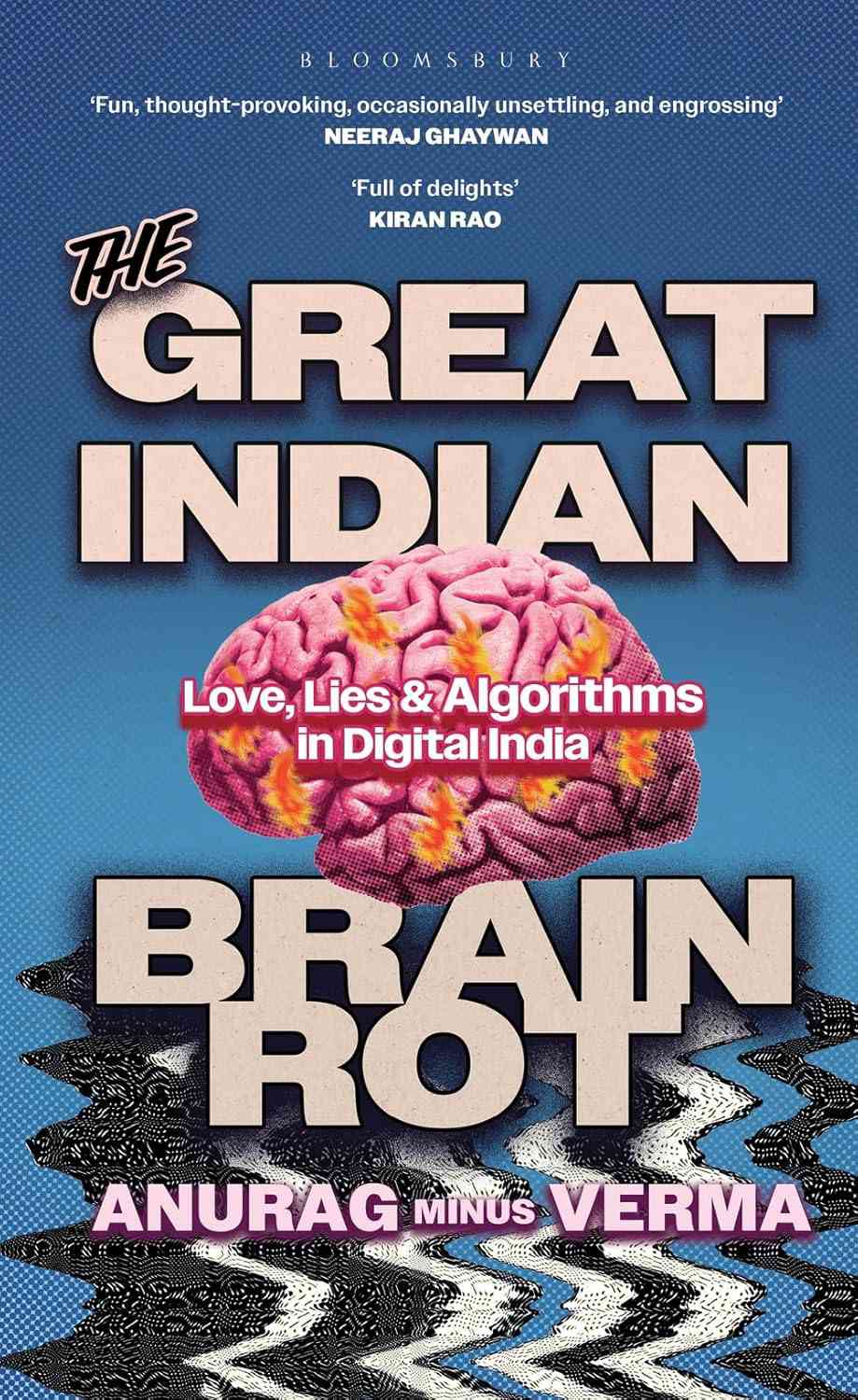
Excerpted with permission from The Great Indian Brain Rot: Love, Lies and Algorithms in Digital India, Anurag Minus Verma, Bloomsbury India.
