





On my way out of the oncologist’s office on the day I was informed that I needed chemo, a nurse had handed me the phone number of someone “very discreet”. A week later, I walked into a boxy room on the ground floor of a nondescript building in central Madrid. There was no signage outside. Inside, I detected the whiff of something antiseptic. My interlocuter was a man dressed in the white coat of a lab technician, but who spoke in the soothing tones of a practised undertaker.
I was at a store that specialised in high-end hair systems. These are custom-made wigs, secured to the scalp with tape and glue that are worn day and night, removed only about twice a month to be washed. I was told that, if I so wished, I could return to the “clinic” and wait in a mirrorless room while the “prosthesis” was cleaned, so that I would never have to see myself without hair, until my own had grown back. No one, the man said sotto voce, would have to ‘suspect’ anything.
To have cancer could cause one to step gingerly along the streets of deception. The mother of a classmate of my younger son called me one day. She’d heard the news of my recent entry into the kingdom of the sick, a place she’d been to as well. We had coffee at my home. The mom was fuzzy on medical details like tumour histology. Having cancer was like childbirth, she said: once you were in remission, the details eluded memory.
What she did recall with enthusiasm was her hair prosthesis. “My boys didn’t suspect a thing,” she’d patted my hand comfortingly. The mom had worn the hair system around the clock while undergoing treatment. Her children were eight and twelve at the time. Keeping her illness from them had been a way for her to worry about one less thing: her kids. She asked me not to tell my son about her visit. Her own boy remained unaware that his mother was a breast cancer survivor, half a decade after the fact.
Over the next few months, my breast cancer circle expanded. The sister of a close friend was diagnosed a month after my own tumour surfaced. Next, a neighbour from my days in China reached out to introduce me to someone who had recently moved to Madrid, only to be bitten by the crab weeks later. We sent each other messages every other day, this sorority of the hair-stricken.
My friend’s sister chose to try and save her locks by freezing her scalp while receiving chemo infusions. The method is called cold capping and requires the patient to wear a head covering filled with frozen gel before, during, and after the actual infusions. Cold restricts blood flow so that icing temporarily decreases the movement of blood to the scalp, reducing the quantity of toxic drugs that reach the hair follicle cells. It is torturous, but one that many women find the strength to undergo, even though there is no guarantee of its effectiveness.
“Hysterical strength” is a term that describes the superhuman levels of physical prowess experienced by some people in extreme circumstances. Mothers have been known to fight off polar bears, fathers to lift cars, to rescue children. The explanation, although lacking scientific consensus, is that a surge of adrenaline allows a person to access physical capacities that are only unlocked under extreme duress. The fear of losing one’s hair takes its place right next to the possibility of losing a child in enabling the body to endure punishment.
The other, new-in-Madrid, friend opted for a prosthesis, the semi-permanent wig. She spent some time weighing the discomfort of having an object stuck to her head for months, against having hair, even if it was someone else’s. In the end, her boyfriend’s opinion that she should think about how uncomfortable other people would feel were they to glimpse her bald, tipped the scales wigwards.
I chose ease. No scalp freezing, no hair system. I did buy a wig, but rarely wore it, given the heat and bother. Instead, I wrapped my bald head in colourful scarves; the debris of rarely donned birthday presents collected over the years was now upcycled into cancer headgear. My comfort level with being public about illness was high. Secrets exhausted me almost as much as the chemo. There is no correct way to journey in illness; some linger in forests of discretion. I preferred the sun-drenched plains of my blog on Substack, where I wrote myself through the process. I talked openly with my children about the diagnosis, emphasising that little would change when it came to their routines. They could still go on play dates and attend birthday parties. Their chess and piano classes would continue. Their mother would chase them about completing their homework, even from her sick bed, so no slacking off.
Sometimes, though, they witnessed me distraught, heaving with volcanic hurt. It was a process, I told them. We needed to allow ourselves to feel our sad feelings, so that they could settle into something akin to determination. I cried often, but I also laughed and sang and took pleasure in life, and books, and spring, and them.
None of which is to say that I was indifferent to beauty. In the days leading up to the start of treatment, wig shopping had provided some succour, a sense of control, a dash of silliness. The feminine pleasure of retail therapy proved cancer-resilient. Wigs, I learned, were armour to rival lipstick. They transformed and transported. Wearing one was like a short-term visa for the kingdom of the well.
The day my hair fell off was a bad one. I had just had my second cycle of chemo, and my body felt flattened. The hair came out in tufts every time I moved my head on the pillow, even though I was too feeble to turn with any force. A day later, my husband helped me into a chair at a wig shop that specialised in cancer-related alopecia. The remaining fuzz was gently shaved off my scalp, and the sexy but affordable synthetic wig I had already picked out weeks earlier was placed on my head. Before settling on it, I had tried and discarded style after style. The choice was vertiginous: real hair, synthetic hair, mixed hair, long, bobbed, highlighted. As someone who likes to do their research before embarking on new travels, I began a deep dive into wigs. How had all this matter out of place, this hair from someone else’s head, made its way into my hands?
The trade in hair is not something new. Wigs were worn in ancient Egypt. The earliest specimen, found at a burial site in Hierakonpolis, dates to about 3400 BC. These hairy coverings served a dual purpose in Egyptian society, symbolic and practical, signalling high rank, while helping to protect shaven scalps (a sign of nobility) from the sun. They also aided hygiene by reducing the incidence of head lice. In more modern times, the 17th and 18th centuries were witness to an explosion of gravity-defying wiggery in the courts of Europe: think Marie Antoinette. Constructed over architectural frames and embellished with horse or goat hair, these wigs were held in place by a concoction of flour, gum, starch and a tolerance for neck pain.
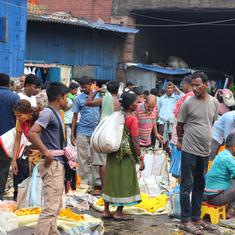
But behind the finery and fashion, the dirty secret of the wig trade has always been that it relies on a gap in wealth and opportunities between those willing to sell their locks and those buying it. I read Emma Tarlow’s excellent book on the subject, Entanglement, in which she explains why most of the hair on the global market today is black in colour. The reason: the main countries of origin are all Asian, notably China, India, Indonesia, Cambodia, Mongolia and Myanmar. Hair collectors in these countries are usually men on bicycles who ride around the poorer neighbourhoods, crying out their presence, although jugaadu loudspeakers are increasingly common. For women, selling their hair allows for the payment of debts, medical expenses, school fees, or just helps put some extra food on the table.
But as these nations grow richer, their citizens’ need to sell hair to meet basic needs is declining. And so, it is the temples of India, especially in the south, that have emerged as the most fertile grounds to harvest locks. In Hinduism, tonsure is an important ritual of purification and renunciation. People also shave their hair to mark their mourning upon losing loved ones.
Reading the book, I was struck by just how global the trade in hair is. Tarlow visits a high-end wig shop in Chennai, where the stylist has recently returned from training in hair extensions with Balmain Hair in Paris. The shop sells products that are marketed as exotic French ones for elite Indian clients. But the hair in these has, in all probability, been sourced from India itself, been processed in China and then travelled back to its point of origin via France – a layover that bestows on it a haute couture benediction.
Over 70% of the hair collected in India, from both temples and the discarded combings of ordinary folk (humans lose between 50 and 100 strands of hair daily), ends up converted into hair products in Chinese factories. China is the biggest exporter of both human hair and synthetic hair products, with 88% of the world’s share in human hair goods and nearly 40% in the synthetic equivalents. The United States is the largest importer of hair. China is the global mastermind of wig production. But the distribution channels of this market are more entangled. Jewish traders dominate in Europe and Israel. The billion-dollar African-American market in the US is firmly in the hands of Korean traders, while the same segment in Britain is controlled by Pakistanis. The story of hair is rife with geopolitical rivalries. India begrudges the fact that the bulk of her comb waste hair is purchased by Chinese hair companies, who reap the value add of wig manufacture. The Chinese, in their turn, resent the Korean-American dominance of the lucrative distribution networks in the United States. And Korean-American companies see the Chinese as rivals in both the global procurement of hair and the manufacture of hair products. Adding an ingredient to this competitive congee are some African-American activists who believe it is their community that should reap the benefits of the hair extension industry in the US, that is insteadof feeding the coffers of Koreans, Indians and Chinese.
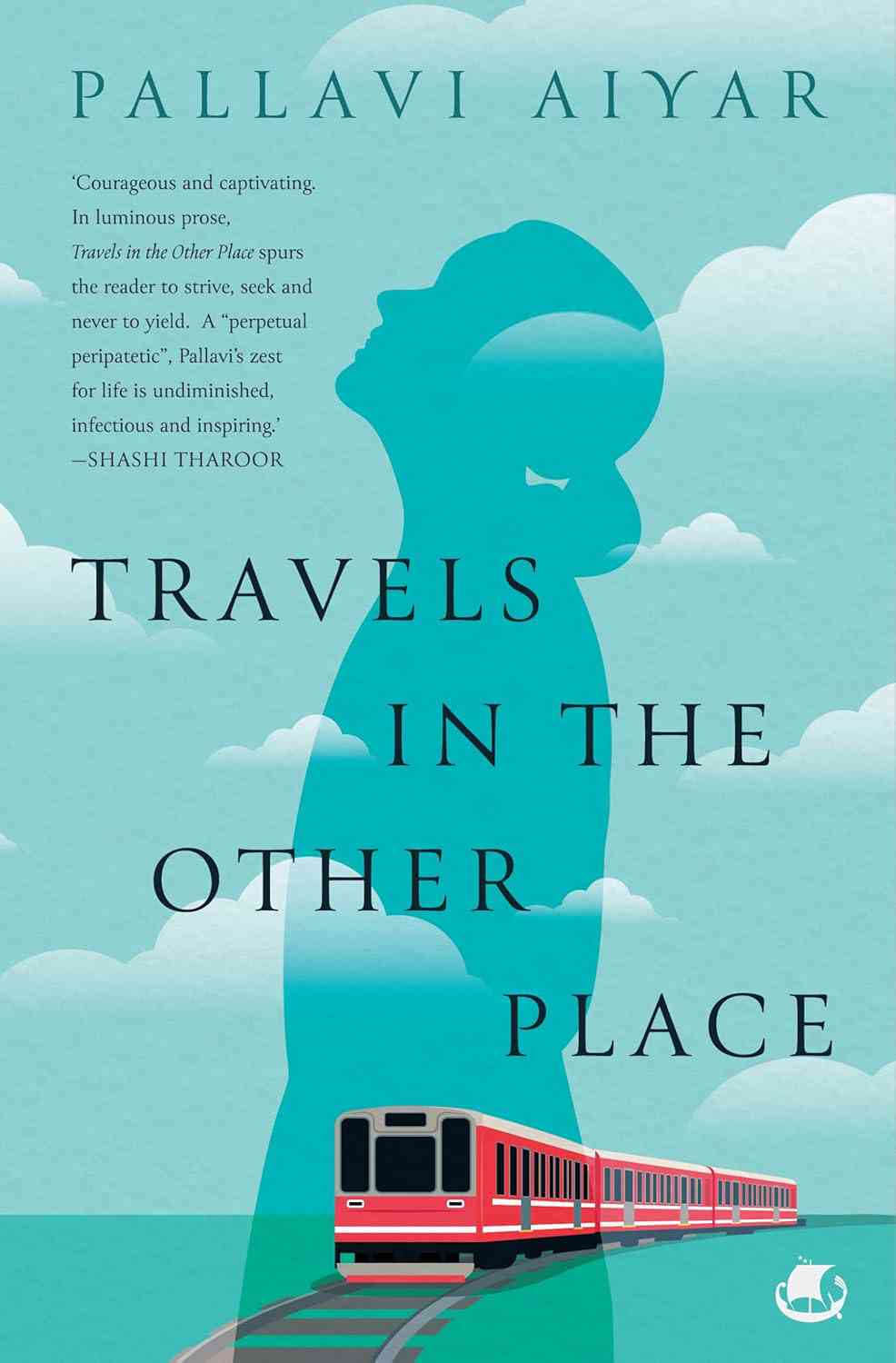
Excerpted with permission from Travels in the Other Place: Pursuing the Self in Eight Acts, Pallavi Aiyar, Westland.
