







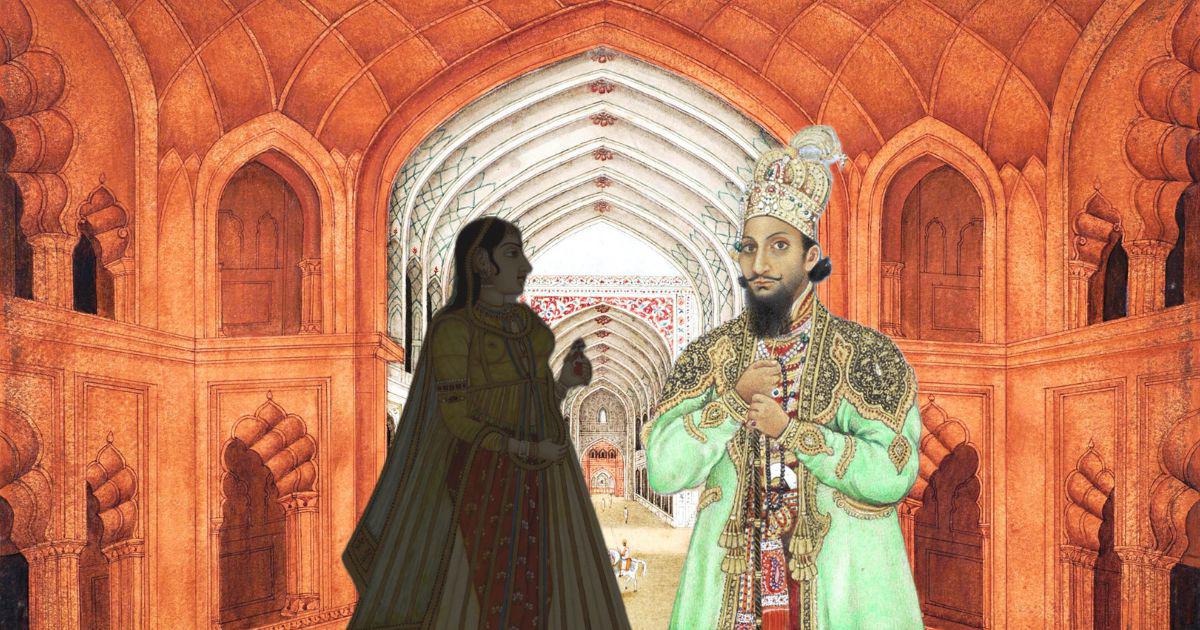
When Wazir Khanam married Mirza Fakhru, the third heir apparent to the Mughal throne, on the cold evening of January 24, 1845, she probably thought this was the pinnacle of her success – and the last stop in her tumultuous journey.
The 31-year-old Khanam was already the mother of four children from various liaisons. But undaunted by her circumstances and confident of her beauty, Wazir bargained hard to secure the most advantageous terms for the marriage contract. It involved a dower of one lakh Shah Alami rupees, to be paid to her later.
Wazir, who composed ghazals under the pen name Zuhra or Venus, was welcomed into the Red Fort by Emperor Bahadur Shah Zafar. She was elevated to the title of “Shaukat Mahal”, the splendour of the palace.
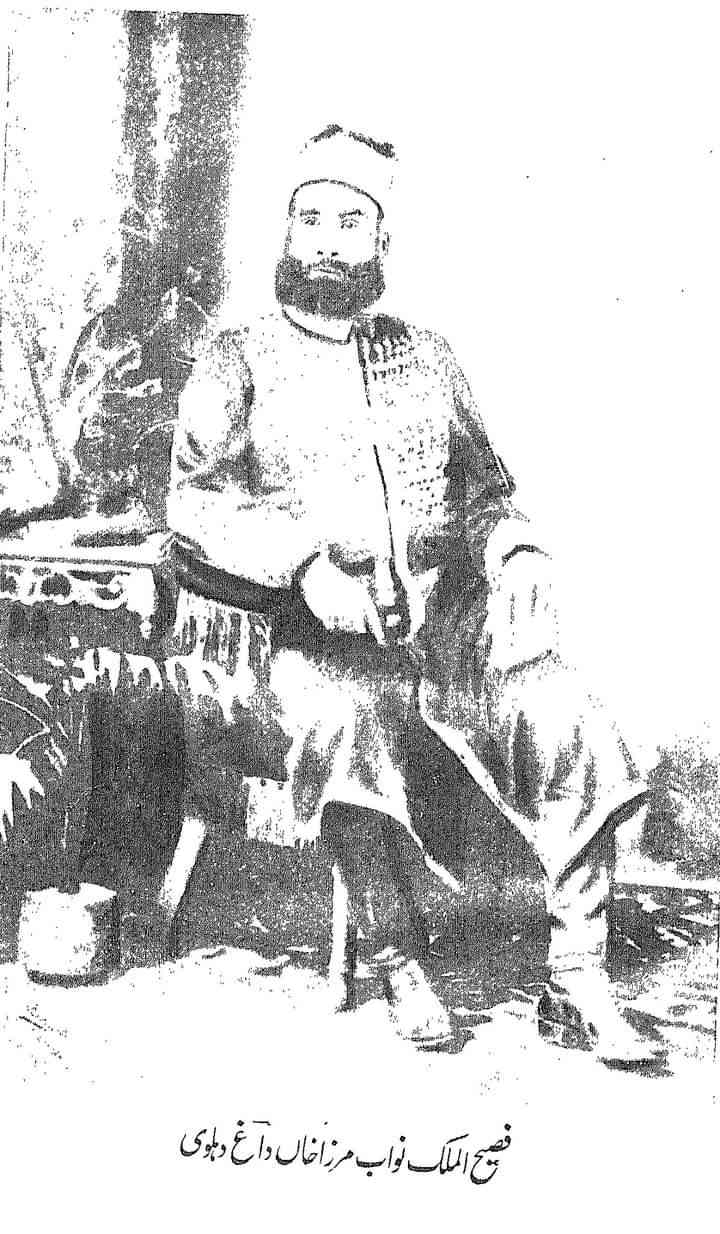
The match gave a boost to the rising poetic career of her teenage son, Nawab Mirza Dagh Dehlvi, who accompanied her to her new residence and was to be brought up and educated as the son of Mirza Fakhru.
By the time of Wazir’s death in 1879, three of her sons and one daughter had become well-regarded poets. She had moved between households and kingdoms. But despite her adventurous life and position in the household of the Mughal emperor, she has earned a mention in the footnotes of history only because of the eminence of the men she loved and the children to whom she gave birth.
Yusuf’s daughters
Born in 1811, Wazir Khanam was the youngest of three daughters of Muhammad Yusuf, a Kashmiri ornament craftsman, and Asghari Begum, the daughter of a famous courtesan of Delhi’s Chowri Bazar.
In Bazm e Dagh, Dagh’s biographer, Rafiq Marehrvi, refers to Yusuf as a “dereydar”, implying that he was also the proprietor of a kotha. In the bazaars of Chandni Chowk, the three girls were famous for their beauty but known somewhat demeaningly as “Yusuf waliyan”, Yusuf’s girls.
Shamsur Rahman Faruqi, in his rigorously researched novel about Wazir’s life, The Mirror of Beauty, describes Yusuf’s despair in trying to keep his daughters away from the glittering kotha of their grandmother and his anger at Wazir’s later choices.
However, the younger two girls, Wazir and Umdah, were immersed in the world of Akbar Bai’s kotha: they attended musical and poetic soirees and met with the grandees who graced the salon. The tawaifs of the time were learned in Persian poetry and the works of great philosophers – a privilege their purdah-observing sisters were denied. Both Umdah and Wazir were mentored by renowned scholars of Delhi.
As evidence of their education, Faruqi includes corrections and comments Wazir’s mentor, Mian Shah Nasir, made on her ghazals. However, most of her writings are now lost to us.
It was in the kotha that Umdah met Nawab Yusuf Ali Khan, scion of the royal family of Rampur. She became his concubine. The elder sister had already been married into a respectable Mirza family of Delhi. The teenage Wazir had a choice of both worlds.
The decision she made would shape her life.
A Bibi
It is not clear when Wazir met the handsome young British officer, Captain Edward Marston Blake, but she decided to accompany him as his bibi or concubine to Jaipur, where he was posted as the assistant political agent.
According to Faruqi, Edward came to an agreement with Wazir’s father. British officers at that time used to have Indian concubines in their “bibi khanas”. Wazir and Marston had two children, Sophia (also known as Maseeh Jan) and Martin Blake (also known as Amir Mirza).
When Edward was killed in a riot in Jaipur in 1830, Wazir was forced to give up her children to be brought up in the Christian faith by Blake’s cousins. She returned to Delhi.
She had no claims to Edward’s estate or their children, and no resources to support herself. Sophia, or Miss Blake, would go on to become a famous Urdu poet under the pen name “Khafi”.
A Begum
Umdah, who still lived in Delhi with Nawab Yusuf, became Wazir’s support and introduced her to William Fraser, the British Resident of Delhi. It is likely that Wazir took up the profession of a tawaif. From the accounts of the time, we know that she met Fraser’s interest in her was sparked by her beauty and intellect as she attended the grand mehfils.
Soon after, she met Nawab Shamsuddin of the Jhirka and Loharu states, possibly through the offices of Nawab Yusuf, and became his mistress. Nawab Shamsuddin brought her a three-storeyed house in Chandni Chowk’s Khanam Bazar, with shops on the ground floor. The rental income was hers for perpetuity. She was also given a regular allowance.
It was in this house that her son, Nawab Mirza, was born. He would become a renowned poet under the name Dagh Dehlvi. Nawab Shamsuddin was overjoyed. Nawab Mirza was his first male heir.
But happiness and security were always ephemeral in Wazir’s life as the fortunes of the men in her life cast her adrift. On October 8, 1835, Nawab Shamsuddin and his servant, Karim Khan, were hanged for the murder of William Fraser.
Fraser had been instrumental in dispossessing the Nawab of his Loharu estate and conferring it on Nawab Shamsuddin’s stepbrother. Some suggest that Fraser coveted Wazir. Though the enmity between the Nawab and the British Resident was common knowledge, some have written that there was no substantial proof of the Nawab’s involvement in the murder.
Dagh’s account of the events recorded in the roznamcha, or daily diary written by his pupil Marehrvi, says that Karim Khan executed the murder on the behest of Nawab Shamsuddin and, in a hurry, disposed of the weapon in a well. It bore the Nawab’s initials, and was recovered during the investigations.
Rampur years
Though the British seized all the Nawab’s property, they could not confiscate the Khanam Bazar house as it was in the name of Wazir. However, Wazir, fearing for her four-year-old son Dagh’s life, sent him to live with Umdah in Rampur. Nawab Yusuf’s father, Nawab Saeed Ali Khan, had ascended the throne of Rampur. He ruled from 1840 to 1855.
Wazir herself spent some years in hiding from the British. Finally, Umdah managed to effect an alliance for her with a Rampur nobleman Agha Turab. Wazir settled in Rampur and was united with her beloved son. Wazir had a son with Turab, Mirza Shagil. He too would become a noted poet.
But these few years of respite in Rampur were shattered by the death of Agha Turab at the hands of thugs in 1842. Wazir returned to Delhi with her two sons to live in her house in Khanam Bazar. Nawab Saeed possibly provided her with some financial support, but her circumstances were greatly reduced.

Shaukat Mahal
Faruqi quotes Muhammad Husain Azad’s Collected Works of Zauq to narrate an incident when the poet and scholar saw the painting of Wazir with Mirza Fakhru. Zauq reportedly described her as a “whore” and a “harlot” out to ensnare the young prince. Regardless, it’s clear that Mirza Fakhru was enamoured of Wazir and she became Shaukat Mahal, the respectable begum of a Mughal prince.
The mushairas of Delhi – held at the royal court, the courtyards of Delhi College and noblemen’s houses – resounded with the words of Ghalib, Momin, Zauq, Azad, Azurda and others, says writer Farhatullah Baig in Dilli ki Akhri Shama. Emperor Bahadur Shah, a pensioner of the British, was a prolific poet too.
There was one disappointment for Wazir, however. She had to reluctantly leave behind her toddler son, Shah Muhammad Agha with a caregiver until he grew up. Mirza Fakhru probably didn’t want her to be distracted by the demands of a child.
But in these twilight years of Mughal Delhi, another of her sons, the teenaged Dagh, was gaining repute for his youthful, extempore poetry. He had been educated at the Rampur court with the crown prince, Nawab Kalb e Ali Khan. Living at the Mughal fort, Dagh was tutored by Zauq in poetry, and his talent was lauded by the emperor himself.
It is possible that Wazir agreed to the match with the Mughal prince Mirza Fakhru to encourage Dagh’s career and to forge ahead toward the chimaera of stability.
But the 1840s, Mughal court was a slippery, inconstant world. The equilibrium between the British and the Mughals was lost with the death of the first heir apparent in 1849. Mirza Fakhru made himself the heir apparent with the support of the British lieutenant general – which led to the alleged poisoning of three British officials. It is said that Zinat Mahal, the chief queen, was responsible for their deaths because they were instrumental in Mirza Fakhru’s elevation.

Then on July 10, 1856, Mirza Fakhru died too. It was said that he died from cholera, though that seemed suspicious to some.
For Wazir, life had assumed a familiar rhythm where every crescendo was followed by a descending note. She was unceremoniously evicted from the fort by the chief queen, who was happy that her son, Jawan Bakht, had finally become the crown prince.
Wazir moved back to her Delhi house with Dagh and Khurshid, her son with Mirza Fakhru. She was 43.
Dagh soon received an appointment at the court of Nawab Yusuf Ali Khan, and the family moved to Rampur, where the poet lived till 1887. The historical record falls silent once Wazir’s life moved beyond the orbit of illustrious men.
Marehrvi writes that she might have found employment with a gentleman from the Deccan. But it is possible that she lived with Dagh in Rampur till her death in 1879. That is what is mentioned in a condolence letter written by Nawab Kalb e Ali Khan of Rampur to Dagh.
Her learning and artistic sensibilities had shaped the lives of three of her four sons – Dagh, Shagil and Khursheed, who had all become poets. But only one fragment of Wazir’s own work survives.
It is quoted by Faruqi in his novel.
It is from her early years and echoes her desire to forge her own way in the constrained world of women:
Sun lein naseh ke chup rahein behtar
Hum na deingey jawab jahil ko
Better to listen to the words of the counsellor quietly,
I shall not respond to an ignorant person.
Tarana Husain Khan is a writer and culinary revivalist based in Rampur. Her latest novel is The Courtesan, Her Lover and I. Her website is here.
