



In 1998, Connie, our younger daughter, Amrita, and I moved back to our home in Bombay. We had spent a few months in the UK at our newly acquired apartment in Chelsea. Our elder daughter, Nivedita, was studying in Oxford. She was to get married to her German fiancé, Christian Raitz von Frentz, who was completing his PhD. Their wedding was solemnised at the Chelsea registrar’s office, followed by lunch with families and friends. We had decided to move our residence back to Bombay.
I had accepted the offer as the non-executive chairman of ICI (India). My full-time secretary, Amy Bharda, had served ICI with distinction for many years, and after her formal retirement, stayed on as my secretary for the next fifteen years. Finally, she and her husband moved to Australia to be with her family, who had settled there. By the time Amy moved on, I had completed my tenure with ICI (India) and had taken on the role of nonexecutive chairman of an ICICI-promoted IT service company, First Source Solutions. During this time, Dhanashri Purao joined Amy, on behalf of a Calcutta newspaper group, where I was a non-executive chairman. Dhanashri continues to assist me even now when I have all but given up active professional commitments, other than those I choose to pursue personally.
Soon after joining ICI (India), I was invited to join the board of ICICI, a well-known industrial development finance company. Its chairman, N Vaghul and I had known each other since my days as the chairman of Hindustan Lever, and Vaghul was one of our non-executive directors. I had joined ICICI at a time when it was in the process of becoming a bank. The company took the initiative to launch my recently published book, Business Driven Research and Development: Managing Knowledge to Create Wealth, published by Macmillan in the UK. My few months with ICICI were my first exposure to banking, which I found very exciting. Amidst this growing post-retirement engagement in India, I was appointed as a nonexecutive director on the board of the Reserve Bank of India, the country’s apex financial institution.
The three terms (spanning nine years) on the board of RBI turned out to be one of the most valuable learning experiences of my professional life. It offered deep insights into the role of monetary policy and the contribution of independent directors on the boards of Indian banks. I closely interacted with three distinguished governors: Bimal Jalan, former secretary to the government of India; Dr Venu Reddy, another well-known secretary; and Dr D Subbarao. My association with the RBI continued beyond my directorship, particularly in connection with the establishment of the Monetary Research Centre, which had been proposed by Prime Minister Singh when he happened to be the governor of the central bank.
As a brief digression, I had always wondered about the actual state of funds that were left in the nation’s treasury at the time of Independence. Unaware of the nuances of public finance, I assumed that government officials had the responsibility to work out the details, which were then presented by the finance minister in an overwhelming and meandering budget speech, which I had occasionally sat through as a Rajya Sabha member, albeit with limited understanding of its finer points. It was only during the prime ministership of Indira Gandhi (1966–77; 1980–84) that the precarious financial state of the Indian treasury became gradually, but vaguely, apparent, never clearly articulated in public discourse. The civil servants were seen, but rarely heard, outside closed-door meetings, while the media and commentators fared little better in conveying clarity. As a part of the pre-budget meetings, business leaders firmly dominated the discussion with what they wanted, rather than any remotely related enquiries about the state of the treasury, the value of our currency or taxes. This is not to suggest that the late Mrs Gandhi was unaware of the deterioration of India’s finances when she discontinued the privy purses of former princely states and nationalised Indian banks. But it may have been impossible to reverse the devaluation of the Indian rupee or some of the highest income tax levels in one of the poorest economies of the world.
By 2000, my family and I were well-settled and living in Bombay, where I was busy with my part-time boards: British Airways, ICICI, Imperial Chemical Industry, Leverhulme Trust and a few more in the pipeline. On a Sunday morning, while I was at the golf course, I received a call on my mobile.
The person at the other end told me that Dr Manmohan Singh wished to speak to me urgently. While I held on to my phone, the caller informed me that Dr Singh was on another call and said that they would get back to me. I forgot about the call, but soon there was a second call where Dr Singh came on the line. He told me that he wished to include me as a member of the Planning Commission and was soon going public with the list of individuals. He added that he would speak to me later about the proposition he had in mind for me. I requested some time to respond as I had some urgent medical issues to attend to. He did not sound pleased with my answer but asked me to come to Delhi as soon as possible. My golf was in shambles, and my fellow golfers wanted to know if I had received any bad news. I simply said yes, excused myself and returned home. Connie was surprised to see me home so early, when I sat her down and described the crisis I had walked into. I informed Dr Singh’s office that I proposed to reach Delhi late the next morning and sought time to see Dr Singh. When I met Dr Singh, I explained to him the early recurrence of my wife’s thyroid ailment and that she needed urgent medical attention. Before I took my leave, he told me that there were some projects which he wanted me to be a part of, and I readily agreed. However, Connie’s condition, a recurrence of her ailment first diagnosed in 1994, was indeed most unexpected and unfortunate.
In Bombay, Mr Vaghul retired as the chairman of ICICI, which had grown into ICICI Bank under Chairman KV Kamath. Following the reasonable success of my book, we decided to set up a consultancy to help Indian industries explore whether they were interested in expanding their activities. For this, we recruited three engineers as partners to assist us if the idea took off. Since several registered family companies were familiar with Vaghul and me, their interest suddenly bubbled. We received warm invitations to visit quite a few enterprises and explore diversification and growth. Almost all our interactions seemed to evoke much interest, but the follow-through remained less than modest. India was infected by the absence of real competition or cloistered by their monopoly. The next generation was just emerging. This group was not interested in jobs or continuing the family trade and was in search of funders and risk-takers. It took us time to realise that those who knew Vaghul and me were the fading business leaders of yesteryears, and we did not have the funds to attract new-generation innovators.
After one year, we changed our business plan and met one of India’s most knowledgeable chief ministers, Chandrababu Naidu of Andhra Pradesh. He had heard about both of us, and we knew that he was the only Indian politician who, along with his cabinet members, attended courses in a well-known business school to understand how the world of industry and commerce was being transformed. Vaghul and I proposed the establishment of an R&D park, which would provide individuals or groups with laboratory space to test their new ideas and have the proof of principle to raise money from banks or entrepreneurs. At the end of our conversation, he requested that we come back to his office, and we would take it from there.
In a day, Chandrababu Naidu had already thought through the idea we had described and appointed an IAS officer to take us on a twenty-minute car ride to a sparsely populated rural village. The three of us and one of our retired IAS friends, who happened to be in Hyderabad, were shown a few large tracts of semi-forested land, and the young IAS officer said that a number of other companies were setting up their units in and around the vicinity. The space was rife with growth opportunities.
We settled on a piece of land close to 400 acres, which we reported back to the chief minister and the initial loan was sanctioned by ICICI. To cut a long story short, the centre was christened as the ICICI Knowledge Park, and the board of management was constituted. Besides Vaghul and me, we invited a few prominent scientists and a key administrator, and the knowledge park took off the following year. It celebrated its twenty-fifth year earlier this year, and today, it has spread out to encompass a large number of laboratory spaces, the extensive grounds enriched by greenery and gardens. There are several young employees, and their leader, a lady from ICICI Bank, has remained in charge of the whole enterprise since its inception. Vaghul recently passed away. We were of the same age. Above all, the knowledge park could not have been so successful without the enthusiasm and instant support of Chief Minister Chandrababu Naidu. This is a small example of transforming the environment of India, as it moves to its rightful place amongst the world’s leading nations.
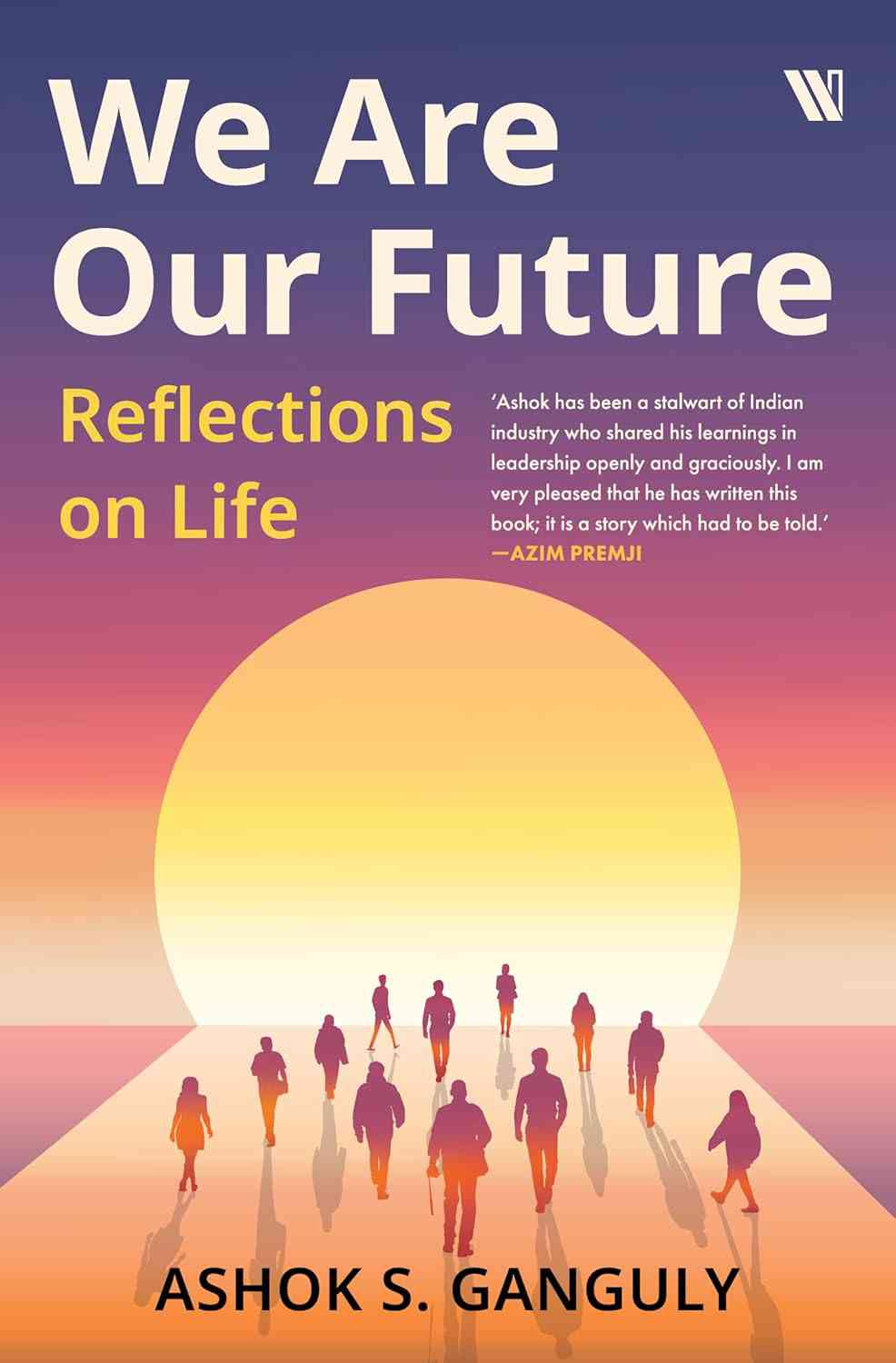
Excerpted with permission from We Are Our Future: Reflections on Life, Ashok Ganguly, Westland.
