




Sanjoy Roy started out in television. In 1989, he co-founded Teamwork Arts (TWA) with Mohit Satyanand, producing everything from soap operas to puppet shows. “By 1995 we had about fifteen weekly shows running forever,” he recalls. But the grind took its toll. “At a Saturday meeting, two of our senior colleagues said, ‘You know, we’re brain dead.’ That was the turning point.”
Six years later, Sanjoy shut down TV production and returned to the arts. TWA platform Friends of Music supported bands like Indian Ocean and Parikrama. They backed new work in dance and theatre, giving artists a shot at projects they otherwise couldn’t do.
Then came a visit to the Edinburgh Fringe Festival in 1999. “Edinburgh is made up of seven different festivals,” Sanjoy says. “I was convinced that’s where we needed to set up our first platform.” TWA created a cross-festival programme showcasing India. Soon they were invited to Singapore, Australia and New Zealand.
Back home, Sanjoy was drawn into the Jaipur Heritage International Festival (JHIF), thanks to John and Faith Singh of Anokhi, who had seen his work in Edinburgh. In 2006, a small literature segment was added, with Namita Gokhale and William Dalrymple as directors. But by 2007, the festival was running out of funds. The Singhs asked TWA to take over.
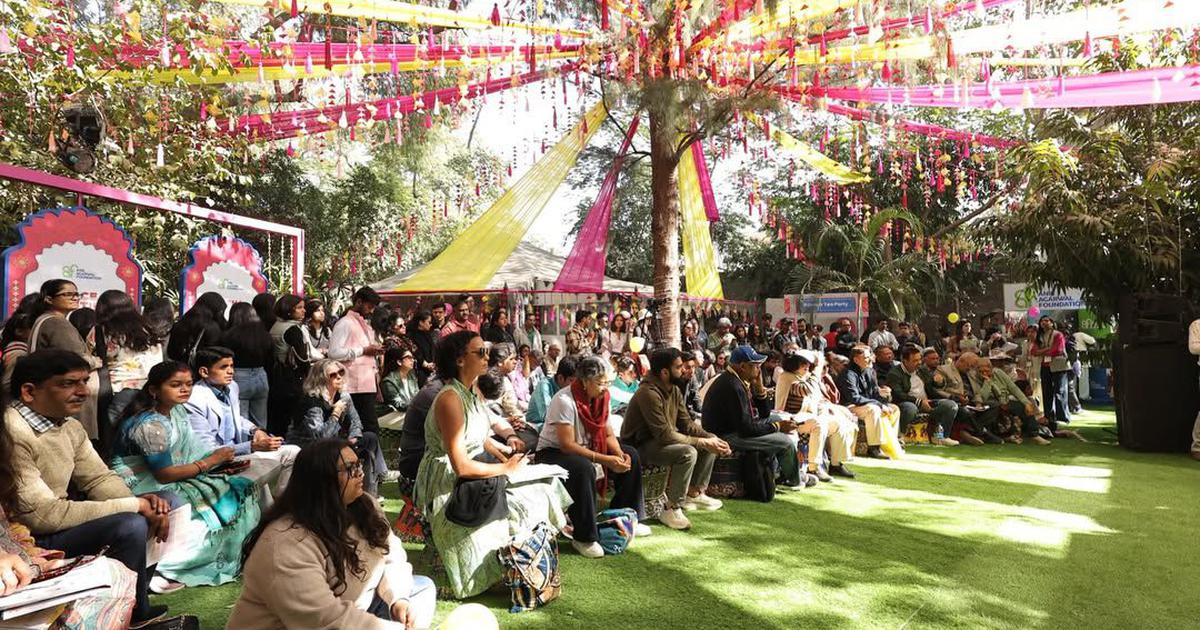
“We signed the agreement on December 9,” Sanjoy says. “The festival was scheduled for January 19. We had no money. No plan. Nothing. Somehow, we pulled it off in three weeks. I came down to the durbar hall and saw 200 chairs. I said, ‘Who’s coming? Remove 100.’ But people came, you know. People came.” And they have kept coming.
JLF became a place where anyone could listen to the world’s greatest writers without VIP barriers. “No reserved seating for the baba log, safed log,” Sanjoy says. At the heart of it all was his core belief: not “make do”, but “make possible”. “In India,” he says, “you’re always getting an edge off. You’re always trying to find your way around.”
Sanjoy’s journey from television to theatre to global literature was never part of the plan. But it was guided by instinct, purpose and the belief that great ideas can bloom, even on a shoestring. “We didn’t set out to do what we eventually did,” he says. “We just created platforms for people to explore, enjoy and spread culture.”
JLF’s rise from being a small segment of a heritage event to a global literary powerhouse is a story of lean, smart management. A big part of its success lies in the teamwork behind the scenes. Namita Gokhale focused on Indian languages and emerging writers. William Dalrymple brought in global literary stars. Together, they struck a powerful balance.
As Sanjoy puts it: “William had an international list, Namita an Indian list, and we were eclectic with our programmes. People knew Jaipur; it was a place for retail. All this made the proposition sexy. We added a touch of glamour and that got everyone’s attention.”
That blend of depth and dazzle helped JLF stand out. It became a festival where bestselling authors and first-time poets shared the same stage. Where language, geography and fame didn’t matter. Nothing captures this better than the story of a rickshaw driver who became a literary star, proof of how the festival opened doors for voices from every walk of life.
Manoranjan Byapari is a Bangladeshi Dalit who arrived in an Indian camp as a kid pre-1971. He was abused in the camp and ran away and joined the Naxal movement. Eventually, he was captured and thrown in jail for 20 years. “In jail,” says Sanjoy, “the superintendent took a shine to him and trained him to read and write. He learned to read the notices on the prison walls and used a stick in the dust to write.”
In jail, Byapari must have read about 200 books. When he left jail, he was rehabilitated as a rickshaw puller. One day, a lady got into his rickshaw, and he asked her the meaning of a difficult Bengali word. Where did you come across this word, she said. In a Mahasweta Devi book, he replied. At the end of the journey, she said: Show me the book. He pulled it out and showed it to her. She looked at it and said: “I’m Mahasweta Devi.”
“So,” says Sanjoy, “Manoranjan wrote a book. We heard about it and invited him to JLF. Back then, he was a cook in a government school for Dalits in Howrah. He couldn’t stand the abuse there and came to Jaipur for a respite. Meanwhile, he got some good press. The next year, he came back with the English rights sold. By now, he was a librarian in the school. The English launch happened, and notices appeared in the Washington Post and the New York Times. This led to translations into more languages.”
The book was translated into ten languages. Next, Byapari was appointed head of all libraries in West Bengal. Finally, when his second book came out, Mamata Banerjee, the chief minister of West Bengal, gave him a ticket to represent the Trinamool Congress. In 2021, he won the elections, becoming an MLA from Balagarh.
When faced with unexpected challenges, Roy learned to improvise and find creative solutions. “One year,” he recalls, “there was a cloudburst in the middle of the night, and all the tents collapsed. This happened around two in the morning, and by 3.30 am, the entire site was in chaos. There was no standing structure left. It was a disaster zone. But our attitude was simple: yes, it’s a disaster, we don’t have electricity, no facilities, but we still have to start on time. So, the next day, we did everything we could to get things back in order. We explained the situation to our audience, and it created an entirely different atmosphere at the festival, earning us a lot of goodwill from those who attended.”
On another occasion, Sanjoy wanted the renowned percussionist Vikku Vinayakram to inaugurate their festival in Singapore. The plan was for Vinayakram to travel by seaplane from Reunion Island to South Africa, then fly to Hong Kong, and from there to Singapore: all connections within a 45-minute window. Naturally, nothing went as planned. The seaplane was cancelled, so Vinayakram took a boat instead. Without a transit visa, Roy’s team had to work with South African officials and then send precise instructions to Hong Kong and Singapore. “Vikku, for his part, said he wouldn’t eat until he was on stage with us!” Sanjoy laughs. “And of course, in the end, everything came together.”
Reflecting on these experiences, he muses, “At some level, the question is: Do you believe that something is possible? And once you do, you must invest that belief with not just hope, but also process, effort and common sense. Without those, nothing meaningful can happen.”
The mindset of building systemic sustainability has shaped JLF at every step. It didn’t expand by chasing growth for its own sake. What truly sets JLF apart is how it has scaled without selling out. From day one, it has held on to its core values – free access, cultural inclusivity, literary democracy. That’s systemic sustainability: not just growing wide but growing right.
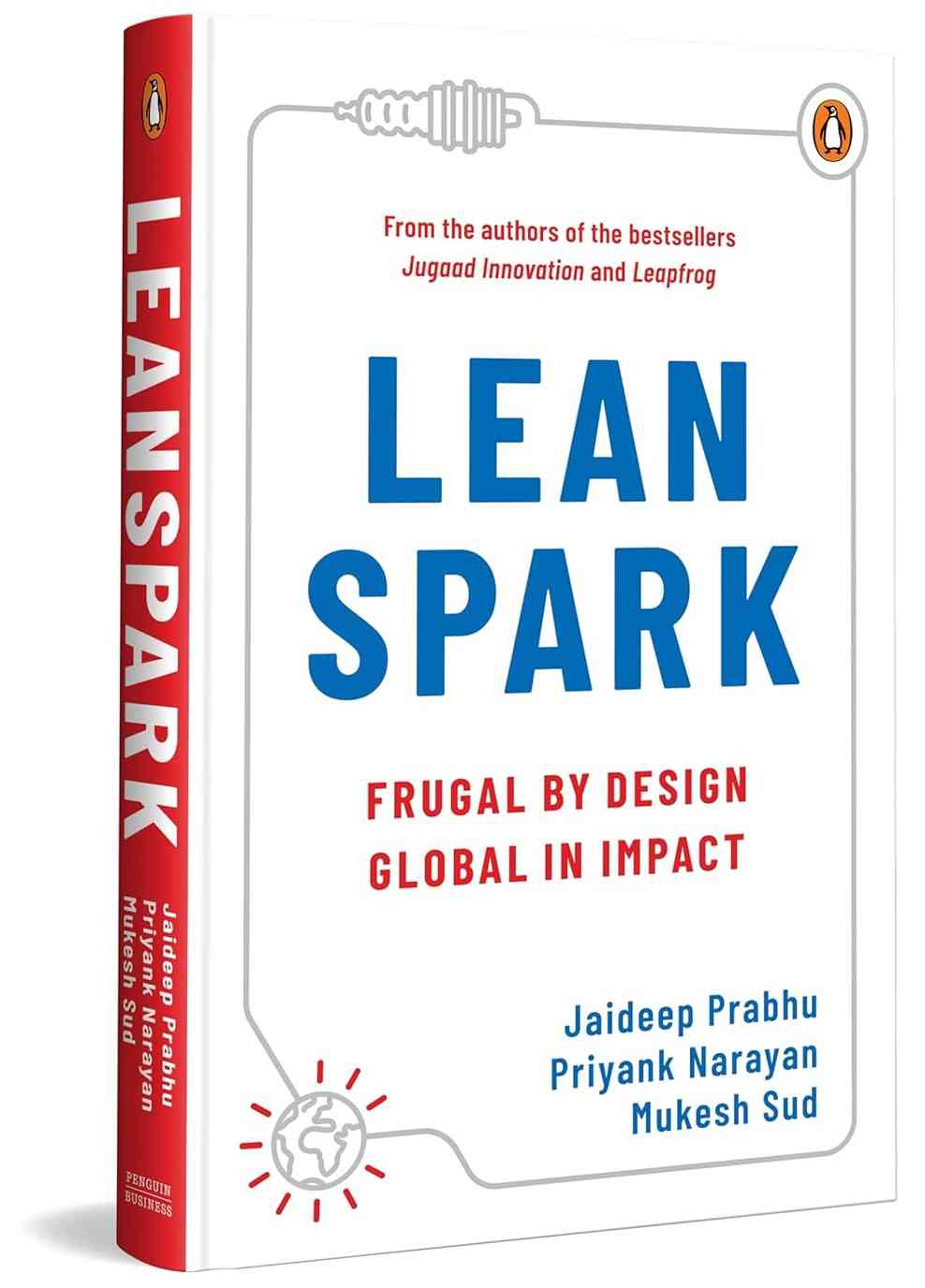
Excerpted with permission from LeanSpark: Frugal by Design, Global in Impact, Jaideep Prabhu, Mukesh Sud, and Priyank Narayan, Penguin Random House India.
