





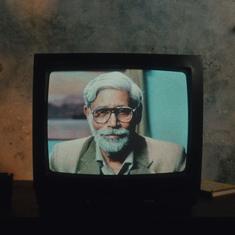

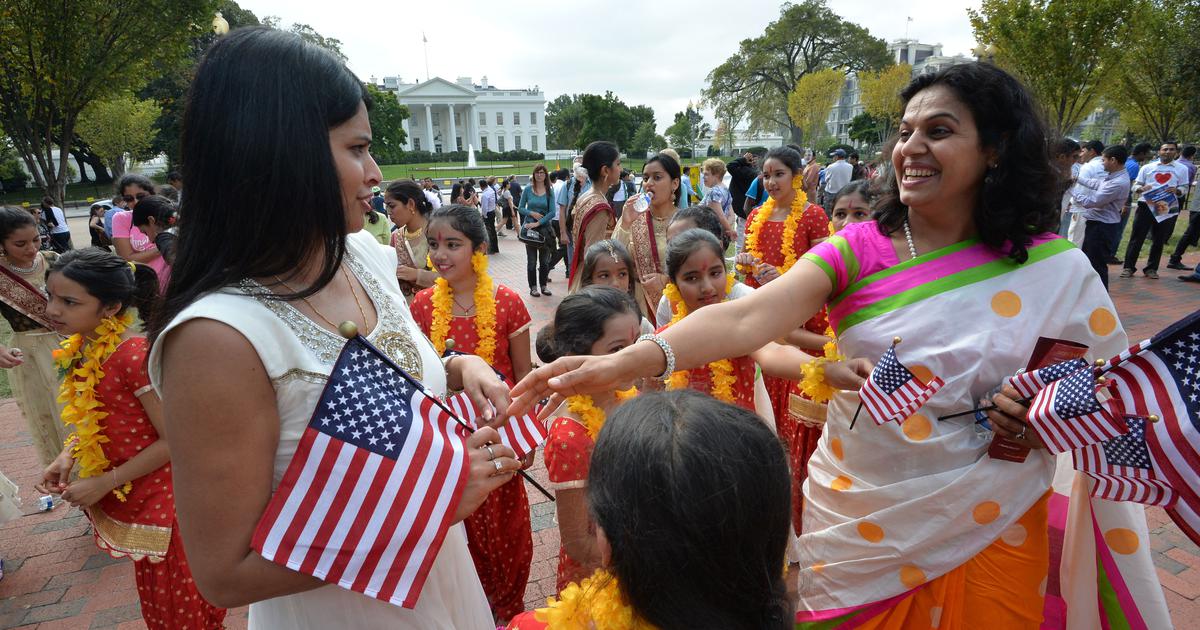
Ask a British person to picture their family doctor, and there’s a good chance they’ll describe someone who looks like Dr Patel – South Asian, probably in their 40s or 50s, calm under pressure, the steady hand who diagnosed your father’s heart condition and delivered your nephew at three in the morning. This isn’t accident or assumption. It’s arithmetic.
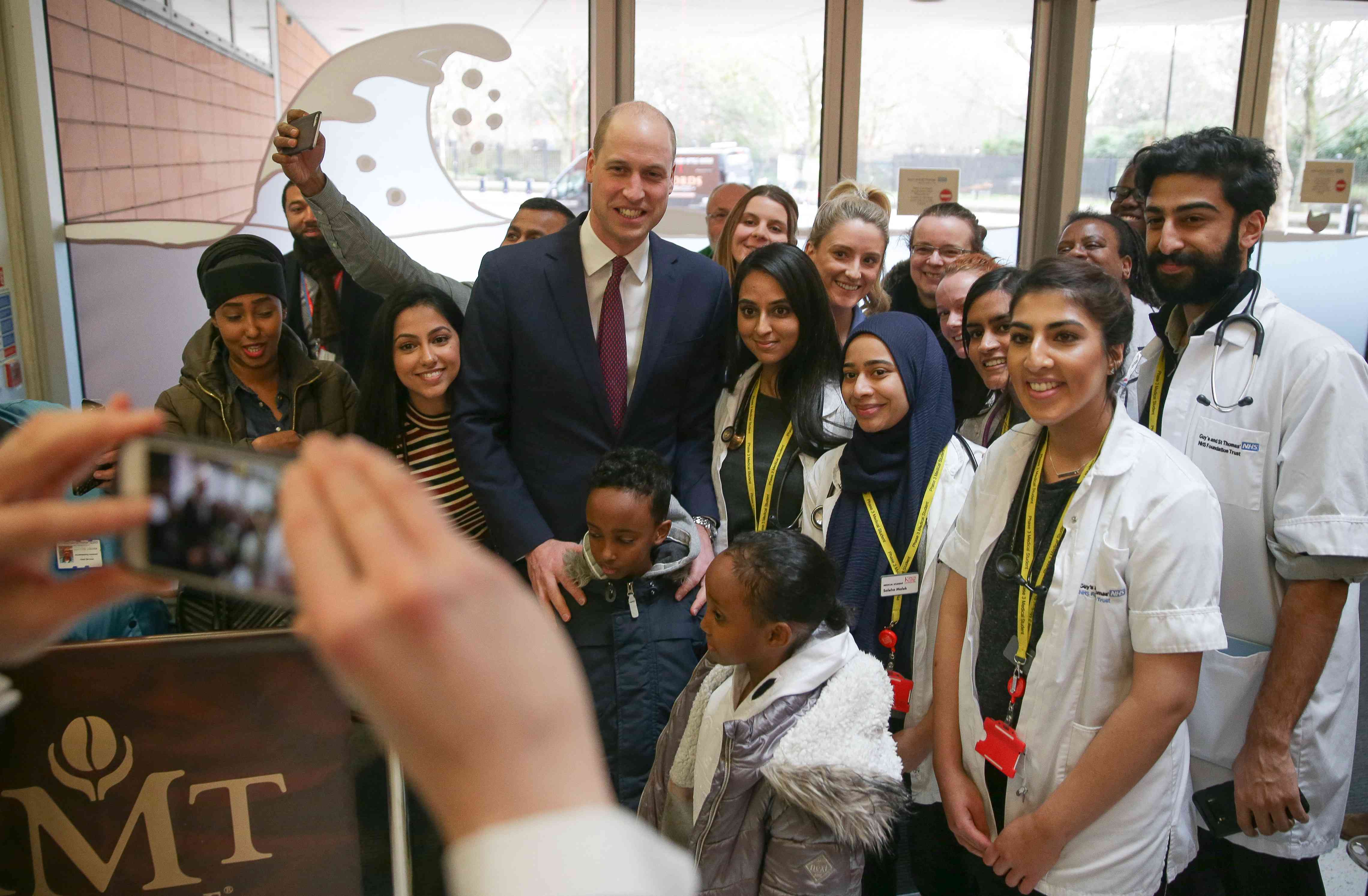
For most of the past 70 years, if you visited a National Health Service surgery in an underserved neighborhood, or checked into a hospital in a struggling northern town, or needed a specialist willing to work nights in geriatrics or psychiatry, you were statistically more likely to be treated by a doctor from India than by one from Edinburgh or Essex.
The stereotype had become so deeply embedded in the national psyche that by 2010, the BBC built a successful series around the premise, calling it, with characteristic British directness, The Indian Doctor. It became a cultural touchstone, like Yorkshire tea or the NHS itself.
The same pattern took hold in America, though without the television series. Walk into a rural hospital in Iowa or North Dakota, and the physician who treats you is more likely than not to be foreign-born. In primary care and specialties like oncology, immigrant doctors account for about half of the workforce.
Among international medical graduates in the United States, Indians comprise the largest share – 23% of all foreign-trained physicians practicing in America graduated from Indian medical schools. In states like North Dakota and West Virginia, H-1B visa holders make up unusually high percentages of the physician workforce. They are the ones willing to work in places American medical graduates won’t go, treating populations that can’t afford to be choosy about the accent of the person saving their life.
Now both countries are cutting off the supply. In Britain, Health and Care Worker visas issued to Indian nationals have plummeted 67% in the past year, with nurses down nearly 80%. Simultaneously, doctors already working in the NHS are leaving: non-UK qualified physicians departing rose 26% in 2024, with senior Indian doctors citing better pay in Australia and Canada, lower taxes in West Asia, and the cold economic reality that Britain’s cost of living has made the NHS unsustainable.
In the United States, the Trump administration imposed a $100,000 fee on new H-1B visa applications in September 2025 – a nearly 30-fold increase that effectively prices rural hospitals out of the market for foreign doctors. Indian nationals hold more than 70% of all H-1B visas. The policy, combined with earlier disruptions to J-1 visas used by medical residents, threatens to sever a pipeline that has supplied American healthcare for half a century.
The timing is particularly cruel. In 2023, the NHS marked its 75th anniversary, celebrating a milestone made possible by Indian doctors who, by 1960, already comprised between 30% and 40% of junior doctors in British hospitals. By 1971, nearly a third of all NHS physicians were foreign-born, the vast majority from the Indian subcontinent.
They were the ones who answered Britain’s desperate recruitment drives in the 1960s when British medical graduates were fleeing to America and Canada for better pay. They were the ones who, as Lord Cohen of Birkenhead told the House of Lords in 1961, kept the Health Service from collapsing. Seventy years later, Britain is simultaneously blocking new arrivals and watching established doctors depart – unwinding a relationship that built the modern NHS.
Both countries will survive these workforce crises, of course. They have survived previous shortages. What they may not survive – what they may not even realise they’re losing – is something more valuable than medical labour. For 70 years, Indian doctors didn’t just heal Western patients. They healed India’s image in the West.
They were, quite literally, trust-builders. And they paved the way for everything that followed: the engineers, the programmers, the CEOs who now run some of the world’s largest companies. If Indians dominate the global tech industry today, if Satya Nadella runs Microsoft and Sundar Pichai runs Alphabet and Ajay Banga runs the World Bank – it all began with the healers.
This is India’s most potent expression of soft power, and it operates on a model unlike any other country’s cultural influence. India didn’t export entertainment that conquered global markets, like Korea’s K-pop or Turkey’s television dramas. It didn’t manufacture cultural products for mass consumption. What India exported was competence – embodied in highly skilled professionals who, through decades of intimate relationships with Western communities, transformed how the West sees India itself.

Healing more than bodies
The timeline matters. Indian doctors began arriving in Britain in the 1950s, but the wave became a flood in the 1960s and early 1970s. The 1965 Immigration and Nationality Act in the United States, which prioritised skilled workers, opened American doors shortly thereafter. By the late 1960s and through the 1970s – accelerated by the Vietnam War’s drain on American medical personnel – Indian physicians were filling critical gaps in both countries.
But here’s what made them different from other immigrants, other professionals, even other highly skilled workers: doctors forge bonds of extraordinary intimacy. When Dr Patel delivers your baby, treats your diabetes, or sits with you through your mother’s final illness, you’re not experiencing a transaction. You’re building trust. When that doctor is Indian, and when this experience is replicated millions of times across Britain and America over decades, perceptions shift.
Before the doctors, “Made in India” meant cheap textiles, unbranded commodities like tea and jute, products competing on price rather than quality. India’s material exports in the 1960s and 1970s told the story of a struggling post-colonial economy – agricultural goods, raw materials, low-value manufactured products. The narrative attached to India was poverty, illiteracy, superstition. The “exotic” India of snake charmers and maharajas.
Indian doctors rewrote that narrative. They weren’t performing for audiences; they were saving lives in working-class neighborhoods, in rural towns, in the unglamorous corners of the healthcare system that desperately needed them. They became, in the words of one NHS history, “integrated pillars of their communities”.
This is soft power of a peculiar and potent kind. Unlike Bollywood’s regional appeal or the global reach of Korean pop, Indian doctors created influence through sustained, personal relationships.
The typical trajectory looked something like this: a young doctor graduating from a medical school in Delhi, Madras, or Bombay in the mid-1960s would arrive in Britain hoping for prestigious training in surgery or internal medicine, only to find those paths blocked by institutional barriers. Instead, he – and occasionally she – would end up in a general practice in a deprived urban area or a remote rural town, places British doctors refused to go.
Over 30 years of night calls and house visits, of treating emphysema in coal miners and delivering babies in council flats, this doctor would become the most trusted figure in a community that initially greeted his arrival with suspicion. That individual story, multiplied across tens of thousands of doctors and millions of patients, built a reservoir of trust that no advertising campaign could match.
Ancient precedent
There is, it turns out, historical precedent for this model. In his recent book The Golden Road, historian William Dalrymple argues that from roughly 250 BCE to 1200 CE, India was a confident exporter of its civilisation – not through conquest or colonisation, but through merchants who carried ideas along with goods.
These traders spread Buddhism across Southeast Asia, introduced mathematical concepts like the zero to the Arab world, and carried Indian astronomical knowledge to China. They weren’t state-sponsored emissaries or cultural warriors. They were businesspeople who happened to carry culture in their cargo.
Dalrymple notes that “the adoption of Indian practices...came voluntarily over generations, with conversion and influence, and not by conquest and military subjection”. Indian merchants didn’t impose their beliefs; they offered them. Local rulers in Cambodia and Java and Burma adopted Indian concepts of statecraft, architecture, and religion because they found them useful, not because Indian armies forced the issue.
The parallel is striking. Modern Indian professionals – doctors, engineers, programmers – spread Indian competence through a similar mechanism: not state policy, but individual excellence. Just as ancient traders brought mathematical concepts that transformed civilisations, modern doctors brought medical skills that transformed healthcare systems. Neither required armies or marketing campaigns. Both relied on the demonstrated value of what they offered.
The engineers
The second wave of Indian soft power arrived with the information technology boom, but it was the doctors who made it possible. By the 1980s and 1990s, when American and British corporations began hiring Indian software engineers in large numbers, they weren’t taking a risk on an unknown quantity. They were extending a pattern already proven in medicine: Indians were reliable, technically excellent, and willing to work the challenging assignments others avoided.
The Y2K crisis accelerated the influx. As corporations panicked about potential computer failures at the millennium, they turned to Indian programmers who could quickly master legacy code and fix the problem. Thousands of Indian engineers came to the West on temporary visas, solved the crisis, and stayed. Many became managers. Some became executives.
By the 2000s, the narrative had shifted again. “Made in India” no longer meant cheap goods or even just competent professionals. It now meant cutting-edge technology. Bangalore became synonymous with innovation, a rival to Silicon Valley. Indian IT companies like Infosys, Wipro, and TCS became household names in corporate boardrooms.
The narrative shift was complete: India wasn’t just a source of cheap labour. It was a generator of solutions.
The CEOs
Which brings us to the present, and to the proliferation of Indian CEOs atop some of the world’s most valuable companies.
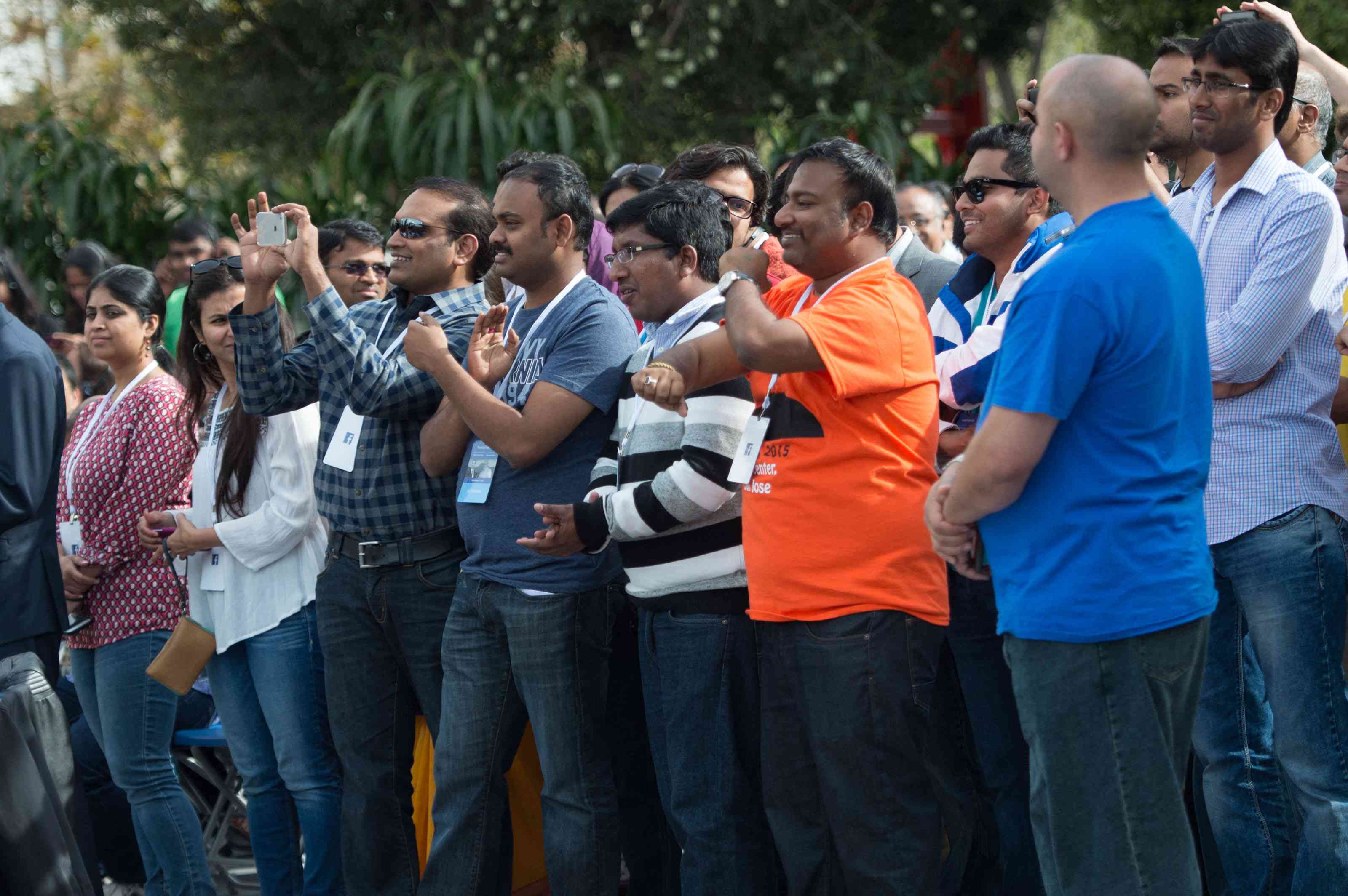
Satya Nadella at Microsoft. Sundar Pichai at Alphabet. Arvind Krishna at IBM. Shantanu Narayen at Adobe. Leena Nair at Chanel. Ajay Banga at the World Bank. On the 2025 Fortune 500 list, eleven companies are led by CEOs of Indian heritage, overseeing enterprises with a combined market capitalisation exceeding $6.5 trillion.
This didn’t happen by accident. It happened because two generations of Indian professionals – doctors first, then engineers – had already established that “Made by Indians” was a mark of excellence. When corporate boards considered Indian candidates for top positions, they weren’t taking a flier on an unknown quantity. They were betting on a known track record of competence.
The progression is clear: Doctors proved Indians could be trusted with lives. Engineers proved Indians could be trusted with systems. CEOs now prove Indians can be trusted with entire corporations.
This is soft power of an unusual kind. Unlike K-pop stars or Bollywood actors, these CEOs aren’t performing India’s culture for global audiences. Many have become thoroughly American or British, their children identifying primarily with their adopted countries rather than India. Satya Nadella is American. Ajay Banga is American. Their success is, in one sense, American success.
Yet their Indian origins matter. When Nadella was named Microsoft CEO in 2014, the fact that he was educated at Manipal Institute of Technology and worked at Sun Microsystems in India sent a message about Indian technical education and business acumen. When Banga became World Bank president, his trajectory from Pune to Mastercard to Washington symbolised India’s integration into the commanding heights of global finance.
The soft power operates indirectly: these leaders embody what India can produce. They are advertisements for Indian education, Indian work ethic, Indian problem-solving ability. They reshape perceptions not through representing India culturally but through demonstrating Indian capabilities functionally.
This is the model India stumbled into, perhaps without entirely intending it. While China tried to manufacture soft power through Confucius Institutes and state-backed films, while Korea engineered K-pop as deliberate cultural export, India accidentally created a soft power machine by exporting its most talented people and letting them excel.
The threats
But nothing lasts forever, and India’s soft power through human capital now faces threats from two directions.
The first is the proliferation of scams and frauds traceable to Indian call centers and tech hubs. The Indian tech support scammer has become a cultural trope, featured in YouTube videos and late-night comedy routines. Romance scammers operating from Bangalore and Kolkata bilk vulnerable Westerners out of millions. The Internal Revenue Service impersonation scam, the Microsoft tech support scam, the countless variations – many lead back to India.
This is corrosive. When Americans now see an unfamiliar phone number with an Indian accent, suspicion is the default reaction. The trust that doctors built over decades, that engineers reinforced – it’s being eroded by criminals exploiting exactly the competence and English-language skills that made Indian professionals valuable in the first place.
The second threat comes from Big Tech’s own reputation crisis. As technology companies face increasing scrutiny over privacy violations, monopolistic practices, misinformation, and negative social impacts, the Indian CEOs running some of these companies become associated with these failures.
When Sundar Pichai testifies before hostile Congressional committees about Google’s market dominance, when questions arise about content moderation on YouTube, the fact that he’s Indian becomes, for some, another data point in a larger narrative.
Perception matters in soft power, and the increasingly negative connotations attached to Big Tech threaten to taint the broader story of Indian professional excellence.

What Britain Is losing
Which returns us to Britain’s current folly. As the UK drives away Indian doctors through restrictive immigration policies, rising costs, and hostile political rhetoric, it’s not just losing medical workers. It’s severing a 70-year relationship that transformed how Britain sees India and how India sees itself in relation to Britain.
Those first generation of Indian doctors who arrived in the 1950s and 1960s didn’t just staff the NHS. They changed the story. They took a country whose image in the West was defined by colonial narratives of poverty and backwardness and began, slowly, patient by patient, to rewrite it. They showed that India could produce professionals as competent as any in the world. They built the foundation on which every subsequent wave – engineers, programmers, executives – would build.
This was never a deliberate strategy. India didn’t plan to export doctors as a soft power initiative the way Korea planned to export K-pop. It happened because Indian medical schools, modeled on British standards during colonial rule, produced more doctors than India’s economy could absorb. It happened because the NHS was desperate and Indian doctors were willing. It happened because of immigration laws and economic incentives and individual decisions to seek better opportunities abroad.
But the effect was strategic nonetheless. Over 70 years, millions of interactions between Indian doctors and Western patients created a reservoir of trust and positive association. That reservoir fed the next waves. It made “Indian engineer” a compliment rather than a curiosity. It made “Indian CEO” seem natural rather than surprising.
Now, as Britain turns away from the relationship that helped build modern India’s global reputation, it’s worth asking: what kind of soft power can replace what’s being lost? Can Bollywood, which never achieved the global penetration of Hollywood or K-pop, suddenly fill the gap? Can Indian cuisine or yoga or Ayurvedic medicine generate the sustained, personal connections that doctors created?
Probably not. Soft power built through decades of trust takes decades to rebuild once broken. The Indian doctors leaving Britain in 2025 aren’t just medical professionals. They’re the end of an era, the closing of a chapter in a longer story about how one country rebuilt its image in another country’s eyes – one patient, one healing, one relationship at a time.
What began with doctors and ended with CEOs was never really about medicine or technology or corporate leadership. It was about problem-solving in an age that prizes problem-solving above almost everything else. India’s greatest export wasn’t software or medical care or executive talent. It was the demonstration, repeated millions of times over 70 years, that when the world has a problem, Indians can solve it.
That was the soft power. That was the trust. And that’s what’s now at risk.
Bobby Ghosh is a geopolitics analyst and columnist.
