



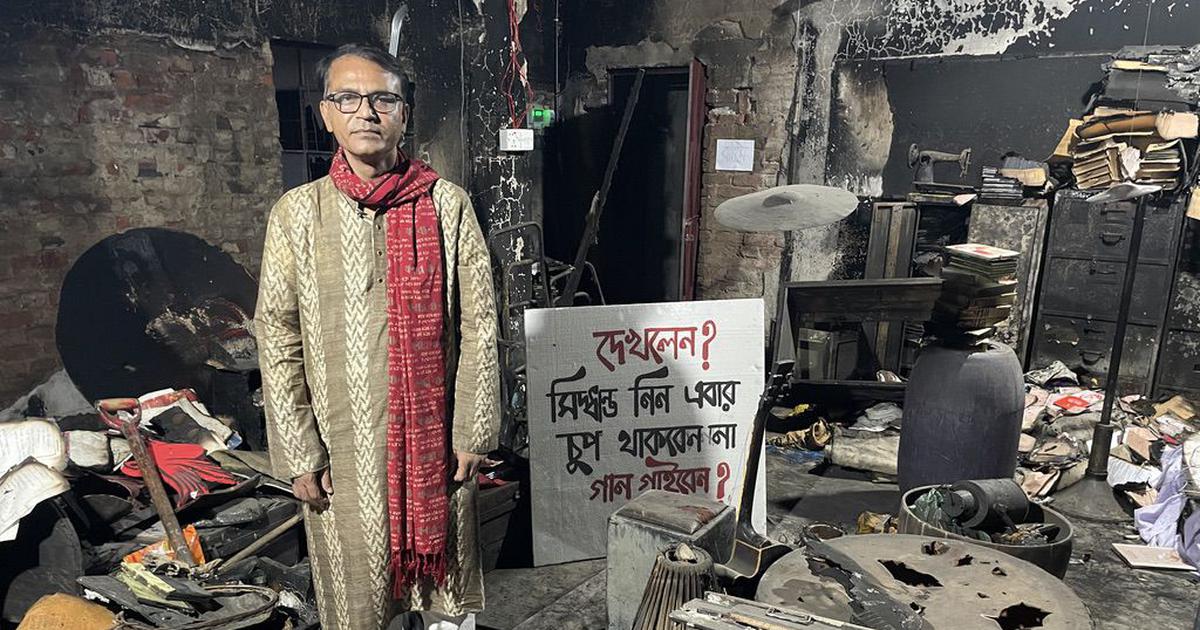
I walked in on Jamshed Anwer Tapan methodically picking up charred books from the floor and placing them into a steel almirah. The office he was standing in was a blackened-out hull, strewn with burnt musical instruments, books, theatre costumes and furniture.
Tapan is the general secretary of Udichi, Bangladesh’s largest cultural organisation. Founded in 1968 by Satyen Sen – as it so happens, Indian economist Amartya Sen’s uncle – Udichi teaches its students singing, dance, drama and the fine arts.
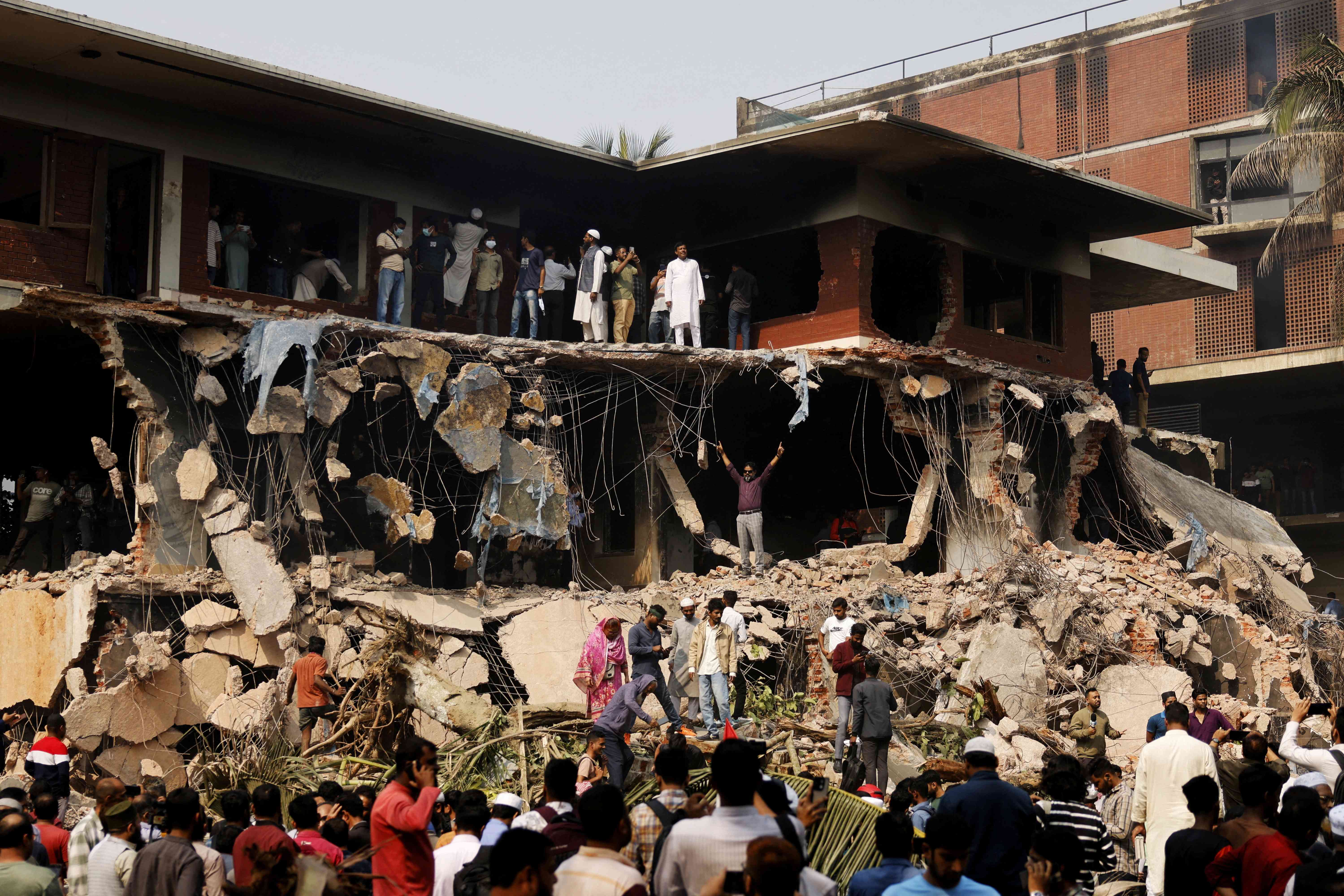
On December 19, Udichi’s head office in Dhaka was attacked by a right-wing mob and burnt down. This was part of a wave of attacks on liberal institutions after the assasination of right-wing rabble rouser Osman Hadi.
“They know Bangladesh is secular in its spirit, so they try to kill people who speak for that spirit,” Jamshed Tapan said. “Udichi represents the real Bangladesh. So that’s why we’re hated by the right, that’s why we are attacked.”
On August 5, 2024, Prime Minister Sheikh Hasina fled to India after a stirring, student-led protest against her authoritarian rule. She stood accused of large-scale corruption, torturing her opponents and rigging elections.
For Bangladeshi liberals, though, relief was short-lived. One of the main beneficiaries of the revolution turned out to be right-wing Islamist parties such as the Jamaat-e-Islami. “When things were in disarray [after Hasina fled], they [the Jamaat] were organised and this gave them an edge,” said Shahidul Alam, one of Bangladesh’s most well-known photographers who had been jailed by Hasina in 2018 for his political statements.
As the country goes into its first post-Hasina elections, Dhaka’s liberals should be happy – instead they are on edge, unsure of what a Bangladesh where the Islamist right is a major political force would mean for them and their way of life.

From Hasina’s authoritarianism to the mob
The July revolution that unseated Hasina had representation from across the aisle – including Bangladeshi progressives. Tapan forcefully pointed out that it was artists from Udichi that broke Hasina’s curfew on July 26, 2024 – a pivotal moment during the uprising.
The July revolution was largely successful in as much as it managed to lessen government authoritarianism. However, Bangladeshi liberals tell me new sources of free speech curbs have arisen since then.
“Under Hasina, the concern was government repression,” said Zafar Sobhan, former editor of one of Bangladesh’s largest English-language newspapers, the Dhaka Tribune. “Under Yunus, it is the power of the mob.”
Muhammad Yunus, a Nobel Peace Prize-winning economist, leads the interim government in Bangladesh.
“The government might not be shutting me down,” said Shobhan, “but if I say something wrong, will there be a mob outside trying to burn my office down?”
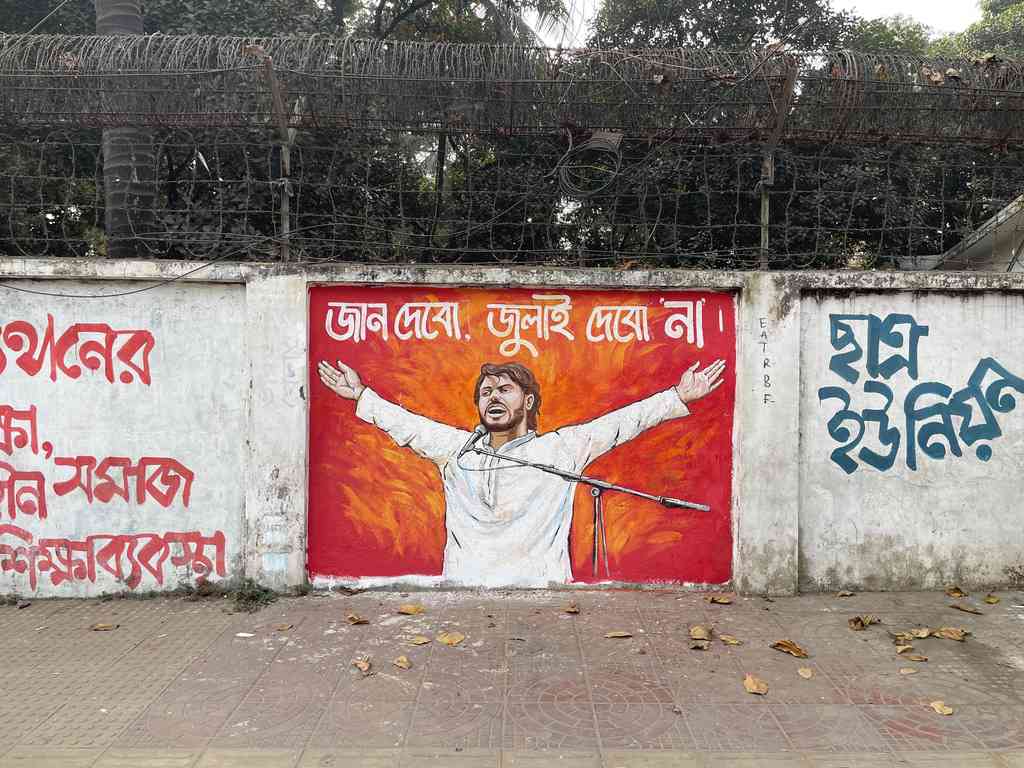
Sobhan’s example was not rhetorical. On December 18, the offices of two of Bangladesh’s most prominent newspapers, the Bengali Prothom Alo and the English-language Daily Star were attacked and set on fire by Islamist mobs. The excuse the mobs used was that these newspapers leaned towards India – though no details were ever provided of how. This came after widespread Islamist attacks since July 2024 on minorities, mazars and Baul singers, the centuries-old syncretic Bengali tradition of mystic singing and poetry that combines elements of Islam as well as Hinduism.
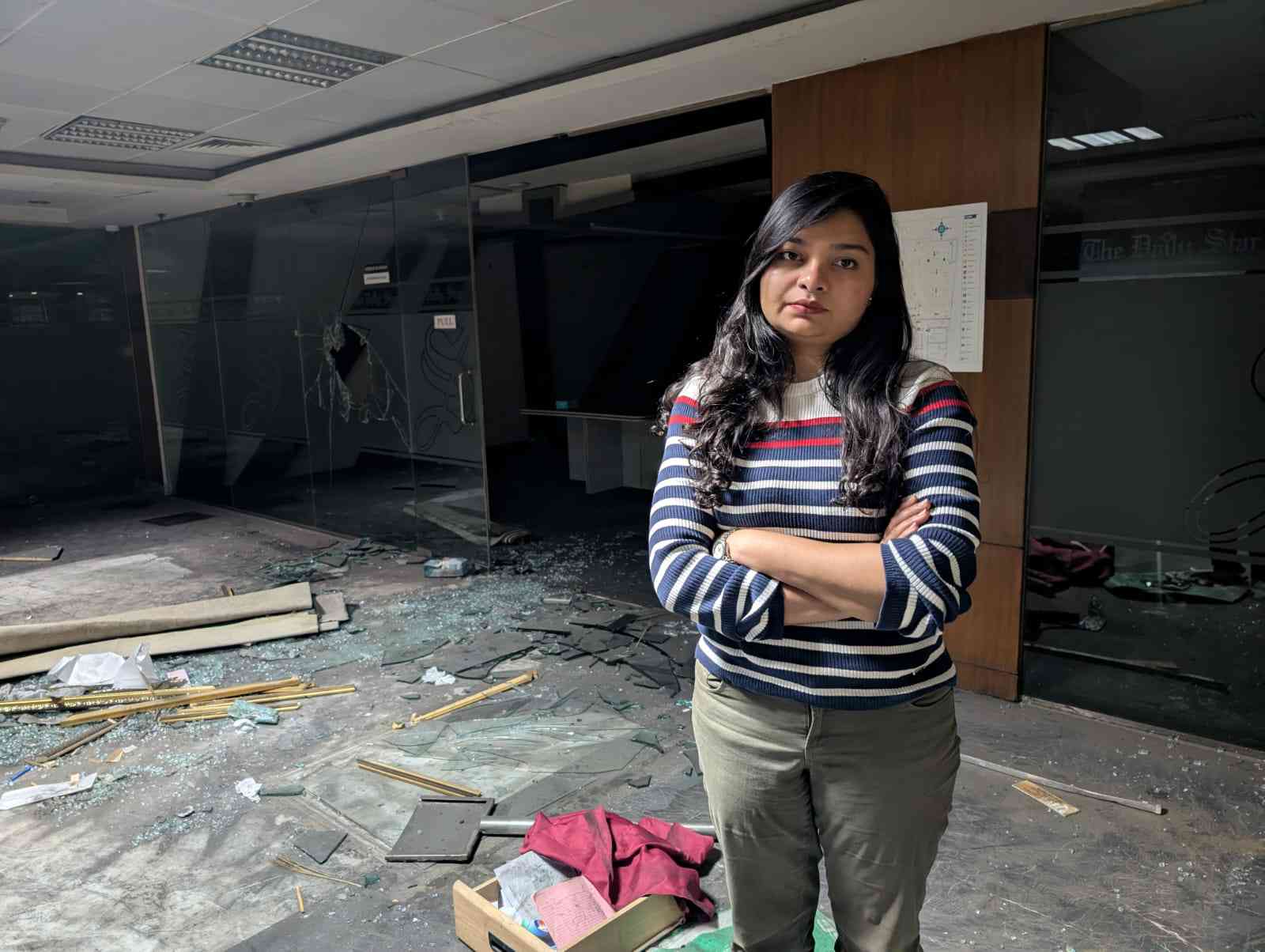
Zyma Islam, a Daily Star reporter was stuck on the roof of her newspaper’s building for almost five hours as mobs rampaged below, before she was eventually rescued by the army. “I can’t breathe anymore,” she had posted on Facebook at the time. “There’s too much smoke. I’m inside. You are killing me.”
In the newspaper’s cafe, she tells me the situation was so bad after August 5 that she was not surprised. “We were mentally prepared that one of these days the Daily Star would be attacked,” she said. “We are seen as cultural aggressors since we are an organisation with progressive values.”
Nurul Kabir, the president of the Bangladesh Editor’s Council, was roughed up by the mob on December 18 as he bravely rushed to the Daily Star office. He was very clear who was to blame: “The government allowed this to happen.”
After the incident, Mahfuz Anam, Daily Star’s editor encapsulated the change from Hasina to now: “Freedom of expression is no longer the main issue – now it is about the right to stay alive.”
In Bangladesh’s current climate, being accused of being pro-India is a serious charge given one of the main allegations against Hasina was her supposed tilt towards Delhi. The December 18-19 attacks took place on institutions that mob leaders said were supposedly pro-India. “Anyone who is secular or progressive in Bangladesh is tagged as an Indian dalal, agent,” Jamshed Tapan said. “This is a charge constantly thrown against Udichi in spite of our role in 1971 [Liberation War].”
The India tag has acquired an additional charge given Delhi’s own right wing tilt. “India’s repression of its own minorities and the misinformation its media has been spreading have helped the Jamaat gain more prominence,” explained Shahidul Alam.
Yunus’ murky role
It is not only journalists like Kabir and Anam – liberals across the spectrum are angry with the Yunus-led interim government for allowing, or maybe even encouraging, right wing mobs.
Sara Hossain, a barrister at the Supreme Court of Bangladesh and executive director of the Bangladesh Legal Aid and Services Trust, a legal advocacy group, believes the government has been “unnecessarily soft” on right-wing groups such as the Jamaat. “And this is worrying since such groups and in particular the Jamaat are very organised, both offline and online,” she said. “For example, members of the Jamaat’s student wing called for attacks on newspapers but no action was taken against them. Baul singers remain under arrest after religious groups disrupted their performances.”
Tapan was more blunt. “This government is run by the right,” he said. “It is a Jamaat government for all practical purposes”.
Shahidul Alam, however, argues that some of this blame must be shouldered by liberals themselves. “Prominent artists were very conspicuous by their silence during Hasina’s rule,” he said. “Things got to such a stage that they did not even speak up when people were being disappeared or killed. In fact, a large number of intellectuals condoned this repressive government.”
This, argues Alam, laid the groundwork for the right’s attacks on liberals today.
Fearful for women’s rights
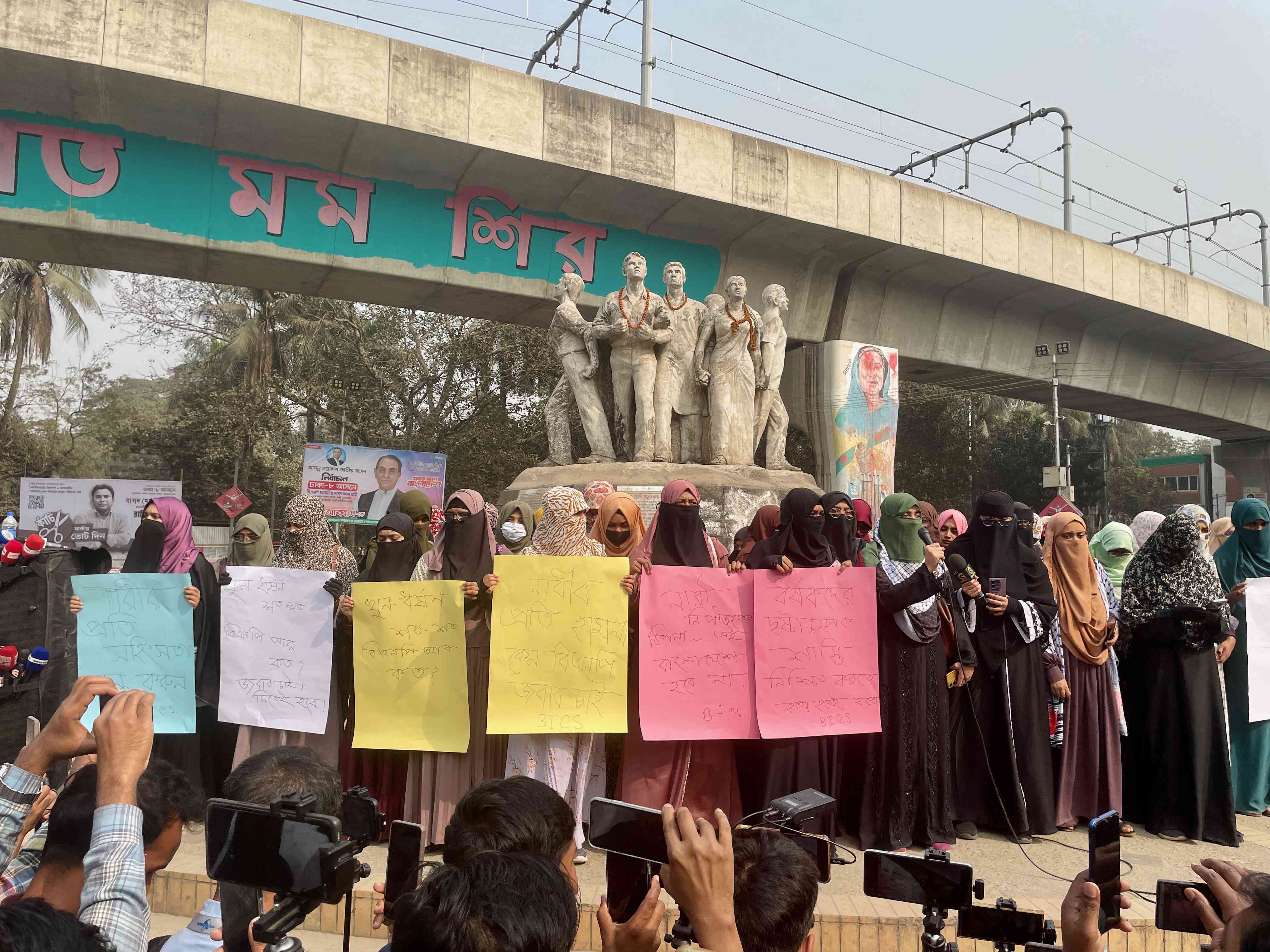
The right’s show of strength over the past 18 months means that Dhaka’s liberals are “very scared” of the Jamaat, says Zafar Sobhan. “They see the Jamaat under every rock,” he said. “For women it’s especially hard. Things have gotten a lot less pleasant for women.”
Shireen Haq, founder of Naripokkho, a women’s rights organisation and the chair of the Women Affairs Reform Commission formed by the interim government, represents exactly the sort of pressure women are under in post-uprising Bangladesh. Her commission’s recommendations saw massive opposition from the Islamist right, especially the Hifazat-e-Islami, an organisation to the right of even the Jamaat.
Haq told me she was particularly disappointed by the lack of defence by the government that had appointed her. “We thought the government would react to the vulgar remarks these people were putting out but maybe because the government felt intimidated they didn’t speak up,” she said.
Haq also expressed anger that even though women led large parts of the uprising, they found little space post August 5. “We went forward three steps but then back four steps,” she said. “Through such a major uprising we would have expected a rupture when it came to the culture of male dominance [in Bangladeshi politics], but that did not happen.”
The Jamaat denies allegations that it is against liberal ideas of democracy. When I interviewed him, the organisation’s media head argued that it would not bring religious laws like compulsory hijab or curtail minority rights. Sara Hossain, however, dismissed the Jamaat’s liberal statements as posturing, arguing it was analogous to Narendra Modi’s 2014 campaign which largely sidestepped Hindutva.
“They [the Jamaat] want to look liberal before the elections but as soon as the votes are counted, they will go back to being who they really are,” she said. “The Jamaat might be saying they don’t want shariah law but eventually they will ask for it when in power. We have already seen very disturbing statements.”
Relooking 1971
Along with women’s rights, the ascendance of the right has also shaken up the idea of 1971, the liberation war with Pakistan that birthed Bangladesh. One of the most appalling visuals after August 5 was the destruction of statues and buildings associated with Mujibur Rahman, Bangladesh’s first prime minister and father of Sheikh Hasina, including his house on 32 Dhamondi Road.
“The destruction of Mujib’s house was a shock,” said Sobhan, who now edits a weekly newspaper called Counterpoint. “It upset a lot of people and there is no way to defend it. It was a black mark against the interim government as well as the students.”
A professor from Dhaka University who didn’t want to be named was even more blunt: “We saw a cultural genocide after August 5.”
After the election, Zyma Islam does not see much improving for Bangladeshi liberals.
“Post-elections the liberals will have to contend with the fact that conservatives will either be the ruling party or a significant force within the government – and they will not,” she explained. “Liberals will be looking for allies within existing political parties, the same way certain factions among them had done with Awami League. What is yet to be seen is if they can mobilise by themselves and form a formidable force.”
No regrets
In spite of the despondency, few are ready to argue that the July revolution was itself a misstep. “I would not want to go back to Hasina’s so-called stability which was accompanied by repression, rights violations and a denial of basic democratic practices,” argued Sara Hossain. “I still feel the situation is better now, with political engagement by diverse groups. After the 2024 elections [widely seen to be rigged] the country felt completely hollow.”
Tapan argued that the worst is already here and things can only get better. “The Jamaat is already in power [referring to the interim government],” he said. “After February 12 [voting day] we will get back to the streets and fight. There is no doubt we will get beaten up. But we will not give up.”
