








On January 13, just a few weeks into US President Trump’s unprecedented immigration crackdown in Minneapolis city that began in December, a photograph went viral. It showed a young woman screaming in pain as immigration enforcement agents dragged her out of her black car.
The woman was Aliya Rahman, a Bangladeshi-American software engineer, who was on her way to a doctor’s appointment.
Soon, the video of Rahman’s arrest flooded social media platforms. As at least two masked and armed US Immigration and Customs Enforcement agents pull her out of her car and drag her to the ground, Rahman yells, “I’m disabled.” Another officer cuts her seat belt with a knife. She is on her way to her doctor, she is heard telling the agents.
"Move! I will break your effing window." Autistic US citizen Aliya Rahman, 42, couldn't comprehend ICE commands (Jan 13) in Minneapolis.
— TruthSeerum (@TruthSeerum) January 20, 2026
"Move" and "Get Out" were ordered in "a cacophony of conflicting instructions."
Couldn't tell who was talking. Everyone masked. No charges pic.twitter.com/6myKg6PfON
Moments later, Rahman was hogtied and carried face-down to an ICE vehicle by four officers, each holding on to her hands and legs. More than a dozen officers hovered around.
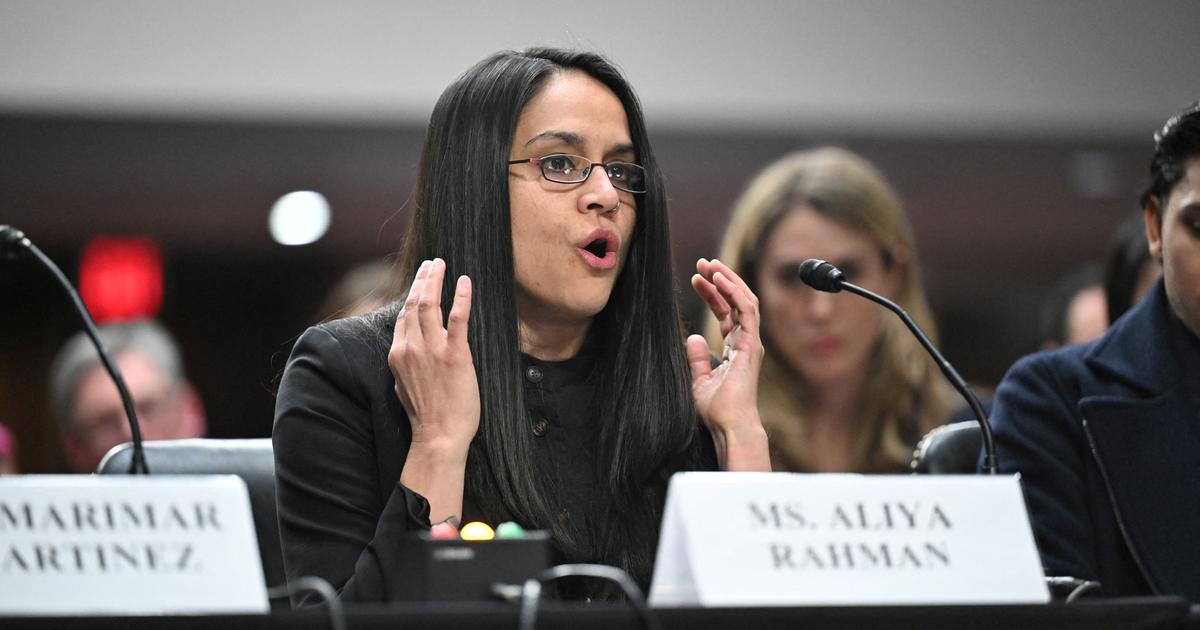
Rahman, a US citizen with autism and a traumatic brain injury, testified at a senate hearing on February 3.
The hearing had been organised to examine the use of force by members of the Immigration and Customs Enforcement. Since US President Donald Trump ordered “Operation Metro Surge” across Minnesota, immigration agents have killed two US citizens in Minneapolis, and reports of several other injuries surfaced almost daily. It was the “largest immigration operation ever”, said ICE’s acting director, involving approximately 2,000 federal agents.
The senate hearing was the first time Rahman, born in Wisconsin and a resident of South Minneapolis, had spoken publicly about the events of that morning.
“While what the world saw happened to me exactly three weeks ago today on video was a terrible violation, it is still nothing compared to the horrific practices I saw inside the Whipple Center,” said Rahman referring to the federal building that has been turned into a detention center for ICE.
She added: “So I am here today with the duty to people who have not had the privilege of coming home”.
Next to Rahman was Marimar Martinez, an American citizen who was shot at least five times by ICE agents in Chicago in September.
Disabled US citizen Aliya Rahman, 42, needed a cane for balance.
— TruthSeerum (@TruthSeerum) January 20, 2026
ICE forced her to walk without cane or wheelchair (Jan). Later blacked out and sent to hospital by ambulance.
No charges. pic.twitter.com/kONHLxK8vP
On the morning of January 13, Rahman was cornered at a chaotic intersection as ICE vehicles caused a traffic jam, she said. There were no instructions on how to get around the jam. But as she rolled down her windows, she heard an officer yell at her: “Move. I will break your f-ing window.”
But she didn’t know where to, she said at the senate hearing later – there were federal agents and pedestrians on all sides.
As Congresswoman Yassamin Ansari said at the hearing, driving towards officers was “an action that, according to the Trump administration, was justification for the lethal force that was used against Renee Good”.
Good is one of the two American citizens shot and killed by ICE agents in Minneapolis.
The crackdown, reported PBS News, was in part tied to allegations of fraud involving Somali residents in Minnesota state. Since then, reports of ICE agents using tear gas, pepper balls and pepper sprays, flashbangs, firearms and physical force have surged exponentially.
Large numbers of Minneapolis residents have taken to the streets to protest the ICE actions.
Three days after videos of Rahman’s arrest surfaced, the MacArthur Justice Center said it would represent her.
“Ms Rahman is lucky to be alive today after being dragged from her car by masked agents two blocks from where Renee Good was shot and killed,” said the director of the centre and Rahman’s lead counsel, Alexa Van Brunt.
“Masked, unidentified federal agents continue to occupy American cities like Minneapolis, leaving violent – and now, deadly – confrontations in their wake,” she said. “No one is above the law, and they must be held responsible for their gross abuse of power”.
Rahman, she said, was neither read her rights during her federal arrest, nor was she charged with a crime. But she was taken to an ICE detention centre where she, like every other detainee, she said, were referred to as “bodies”.
On January 13, ICE forcibly dragged Aliya Rahman, a 43-year-old Bengali American software engineer, out of her car in a video that has since gone viral.
— The Juggernaut (@thejuggernaut) January 16, 2026
“Masked agents dragged me from my car and bound me like an animal, even after I told them that I was disabled,” Rahman told… pic.twitter.com/kHYDHGJiN9
At the centre, Rahman said she was not accorded any of the rights that are guaranteed in the US during an arrest: a medical screening, phone call or access to a lawyer. When her speech began to slur, she was denied a device to help her communicate, she said in her statement.
Rahman was denied a cane. She finally got a wheelchair.
At one point, Rahman blacked out on her cell floor. The last thing she remembers before that moment, she said, was her cellmate yelling and pleading for her to get medical attention. When she opened her eyes at an emergency room, Rahman heard she was brought in to be treated for “assault”.
“I am not afraid,” said Rahman three weeks later at the public forum organised by two Democratic party members: Robert Garcia of the House Committee on Oversight and Government Reform and US Senator Richard Blumenthal of the Senate Permanent Subcommittee on Investigations.
“We call ourselves a civilised nation but lack rules and accountability around what a person claiming to be law enforcement is permitted to do to another human being,” Rahman continued.
Three days after the senate hearing, on February 6, ICE posted a video on its official X account. Reposting a video of Rahman’s testimony against the arrest video that went viral, the agency posted: “Unfortunately for the media, we have the receipts.” It attached a 31 seconds video showing the traffic jam as officers seemingly asked Rahman to move.
The video was cut before the point at which she was arrested, a process recorded by bystanders and media persons.
