





Every society is fundamentally a linguistic community. The collective consciousness that unites its members is a product of the Symbolic and the Imaginary. The wounds inflicted by the big Other are healed by imaginary fantasies such as “heaven”. All things recognised by collective consciousness, including these fantasies, are experienced as reality by members of that society. This is social reality – the perceived and lived world.
The fact that the earth revolves around the sun is scientifically proven knowledge. However, in a society that believes in astrology, even though this knowledge may exist at the conscious level, it does not necessarily become part of its social reality. People in such a society continue to be influenced by a traditional symbolic order, which includes the myths and symbols of astrology.
As the world changes, humans acquire ever-new meanings, making their lives a series of continuous rebirths. Everything we see and touch turns into signs, which, in turn, touch and reshape us. This dynamic relationship between us and our world is what defines our humanity.
Imagination plays a crucial role in sustaining this relationship. Fantasies of the Imaginary help us overcome the prohibitions of the big Other and reclaim lost pleasures. These fantasies endow everything with meaning and wholeness. For example, ‘heaven’ gives the believers a sense of meaning in real life. The Imaginary also helps generate public opinion and consensus, thereby constructing social reality.
Today, our country is plunging deeper into the global capitalist system. “Development” is the most powerful mantra sustaining this socio-political system. Our sense of reality is blurred by its mantric power, and the people relegated to slums in the name of development become invisible to us. We either take it for granted or justify the injustice by invoking the religious notion of sacrifice. Thus, the truth of our life in the global capitalist system is hidden by the veil of ideology, a concept we will soon explore further.
As another example, consider the life of tribal communities in India. Their realities are drowned out by the noisy drumbeats of “development”. Such realities are excluded from public discourse. Nevertheless, we take pride in our democratic system because the Imaginary protects social reality by concealing the gaps between the big Other and the Real.
Within social reality, the Real is like the invisible foundation of a building. However, this foundation is subject to disturbances. Repressed realities and marginalised groups may rise and attempt to rebuild the socio-political system.
The Lacanian concept of jouissance acting on individuals and societies is significant in this context. Slavoj Žižek describes it as a blind, nameless impulse with only temporary and incomplete signifiers. Jouissance constantly drives us to renew ourselves and transform the world.
The symbols, master signifiers, narratives and so forth within the Symbolic combine to integrate institutions, laws, customs and people into a closed system of power. This system weaves together concepts like democracy, governance, national integrity and elections to create a discourse that ensures “law and order”. It establishes fixed positions for everyone and everything within it. This type of power structure defines the global capitalism we witness today. Exposing the threatening ideological underpinnings of this structure is one of Žižek’s primary missions.
For any society to survive, two essential elements are necessary: a common understanding of truth and a unifying belief. To grasp this, we must revise our rationalistic notions of truth and belief. In social life, truth is not a reality independent of fantasies. Fantasies play a crucial role in the emergence and evolution of truth.
Žižek illustrates this point with an example from psychoanalysis. During therapy, the analyst becomes an all-knowing figure in the patient’s mind. Initially, belief in this figure contains little truth. However, for the therapy to succeed, belief must persist. Eventually, when the analyst interprets the patient’s symptoms, the patient’s belief aligns with the truth. When the cause of the illness is understood, belief transforms into doubt-free knowledge. This process mirrors the Hegelian dialectic.
Žižek argues that this dialectical evolution of belief in psychoanalysis also applies to political beliefs. Just as the patient’s belief is sustained by the analyst, belief is always formed and maintained through the big Other. Here, the Russian philosopher Mikhail Bakhtin’s ideas on dialogue become relevant. For a healthy social reality premised on mutual trust to flourish, continuous dialogue must exist within society.
Žižek offers another example to explain truth and belief: communism. Marx argues that the truth of any theory must be revealed through practice. A person’s belief in communism approaches the truth to the extent that it is realised within their society. Belief moves closer to the truth through a successfully functioning political movement.
Like individuals, societies are marked by deep contradictions and conflicts. The central split arises from the impossibility of a fully integrated social system. Žižek asserts that attempts to unify society under a single, coherent identity or ideology always fail due to underlying antagonisms. This split mirrors the division between the Symbolic and the Real. In Žižek’s view, this gap is integral to the structure of society. The tension between what can be articulated within the Symbolic and what resists articulation creates political and ideological conflicts.
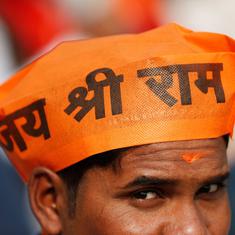
The phrase “unity in diversity” is central to India’s national narrative. It evokes an ideal of harmonious coexistence among multiple cultures, languages and communities. Yet, for the architects of the Hindu Rashtra – figures like MSGolwalkar – this ideal serves a more sinister function. Their vision of unity requires the erasure of diversity: minorities and Avarnas are cast as obstacles to national cohesion, elements to be suppressed or expelled.
In this context, “unity in diversity” becomes an ideological mask – a convenient slogan that conceals the very disunity it pretends to resolve. It covers over the fault lines created by exclusion, intolerance and homogenization. But it also reveals a paradox at the heart of the Hindu Rashtra project: They cannot discard the so-called “dirty water” without also losing the baby. Any attempt to purge the nation of its pluralism will not result in unity, but in the disintegration of the very fabric of the nation itself.
In bourgeois society, relations of domination and servitude are repressed and transformed into social relations between commodities. As with mental disorders, the emergence of truth about social relations manifests as a symptom of social disorder. Social reality is an ethical construct supported by belief. When belief is lost, the social field disintegrates.
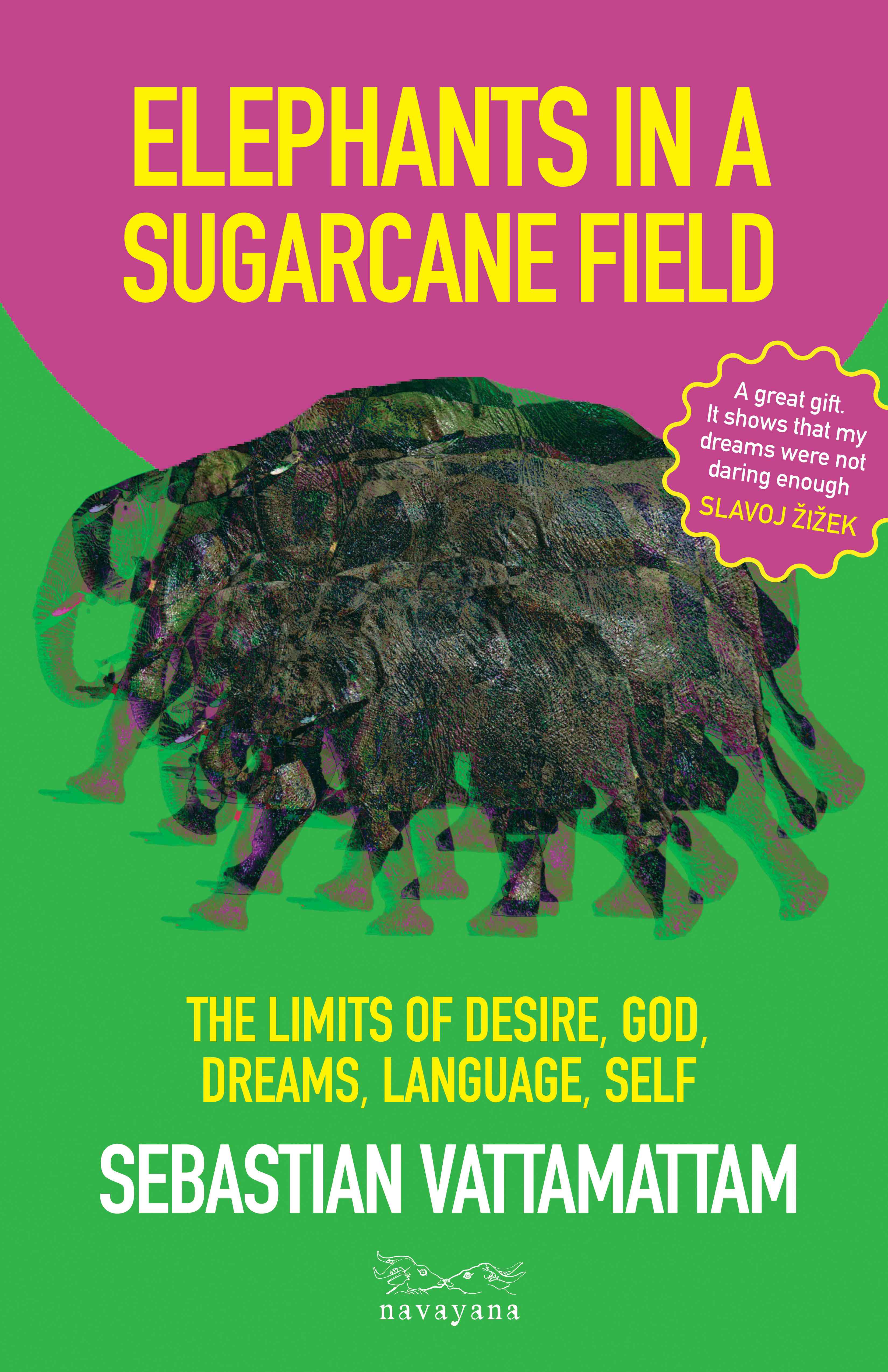
Excerpted with permission from Elephants in a Sugarcane Field: The Limits of Desire, God, Dreams, Language, Self, Sebastian Vattamattam, Navayana.
