






In Delhi, Karan Singh learned early that while formulating policies and making decisions, Indira Gandhi always kept the bigger picture of India’s interests in mind. Soon after he had taken charge of his Ministry, Mauritius was to hold its first general elections before its independence, and the island nation of the Indian Ocean, with a population of predominantly Indian origin, looked towards India for support in more ways than one. The Prime Minister had promised Dr Ramgoolam, Premier of Mauritius, that by April of 1967, an air link would be established from India to Port Louis, the capital of Mauritius. The earlier Civil Aviation Minister had failed to address the airlines’ objections regarding its projected losses on the route, and the deadline had come and gone. An exasperated Indira Gandhi impressed upon Karan Singh, the new Minister, the need for India to come good on the promise. She was worried that India’s failure to establish an air link with Mauritius would adversely affect the elections in that country, and the failure would also allow Pakistan and other countries to exploit the situation.
Karan Singh prevailed upon the reluctant Air India and, in the process, learned that every job had multiple dimensions, beyond the financial implications, and that an eye had to be kept on the larger national interests. He overcame the technical and financial problems for the flight and suggested the inaugural flight take place on August 15, Independence Day, as that would also then become a political message for both countries.
By the last week of May, he had also made a detailed study of Tourism, the subject on which the Prime Minister had shared her views, soon after he had been sworn in, and he sent her his views in a detailed note. He recognised the potential and scope of tourism in the economic development of the country and in augmenting foreign exchange earnings, but also recognized that the challenge was to convert the potential into reality. For this, he identified the need to bring in more commercial flights, which in turn would require better and upgraded terminal facilities. He earmarked new and bigger planes and better terminal facilities as a necessity if India was to benefit from the advent of the “Jumbo” and “Supersonic” jets. But once the tourists had arrived, they needed decent hotels and hospitality, which at that moment were non-existent. Surface transportation also needed to keep pace with the rising footfall, as well as the means of entertainment during the evenings, as the tourists needed to be engaged beyond the daytime tour of sites. He also proposed to develop new areas of tourist interest and also carry out tasteful publicity abroad. His proposals also kept an eye on the domestic sector and suggested the establishment of Workers’ Homes, youth hostels, and adequate facilities for India’s middle class. He hoped that the measures he proposed would also help promote national integration. He pointed out that domestic tourism had always been a part of the Indian lifestyle – not only since Adi Shankaracharya established the four Peeths in the different corners of the country, but also in the Buddhist era before that, when scholars, students and pilgrims within the Subcontinent and from China and other lands travelled to different sites, from the north to the south. Thus, he had a very clear roadmap for the development of tourism and assured the Prime Minister that the targets would be met.
However, very soon the young Minister realised the kind of bureaucratic hurdles that kept popping up during a routine day’s work. Ten weeks after he had taken charge of his Ministry, he was still without a Secretary to his Ministry, and when a name was finalised, he found that the person suggested was on the verge of retirement, whereas he needed someone youthful and energetic. The term of the Chairman of the Indian Airlines too was coming to an end, and the Minister was again keen on having someone dynamic and capable of meeting the goals set by him and the Prime Minister. Again, it turned out to be a longer process than he would have liked, as the appointment had to be ultimately decided by the Appointments Committee of the Cabinet, even though he had warned that any delay would adversely affect the Corporation.
The Ministry of Tourism and Civil Aviation had been carved out of the Ministry of Transport and Shipping when, in 1967, the importance of tourism had been realised. To further strengthen the new Ministry, Karan Singh proposed that the Department of Archaeology be transferred to it. He argued that a vast number of foreign tourists visited India to see the historical sites and monuments; therefore, their upkeep and beautification should be put under the control of the tourism department, just as the research and study of their significance was under the education department. He also advocated the establishment of catering schools, national parks, wildlife sanctuaries, and a Construction Wing, as the construction of airports and tourism-related infrastructure required specialised skills. But to his disappointment, his plans and enthusiasm were not shared by the Planning Commission, which, instead of enhancing his Ministry’s allocation during the Fourth Five-Year Plan, almost halved what was expected. This meant that many of the targets that had been set suddenly became unrealistic and overly ambitious.
As Minister, Karan Singh discovered that the confrontational politics that had manifested itself in public life when the progressives and the conservatives within the Congress came face to face in 1969, affected not only the politics of the country but was to also affected the relationship between the management and workers of almost all sectors. In aviation, there was no doubt that India needed to grow at a faster rate and also needed to ensure that the development was equitable and spread across the board. For this, every sector needed to be modernised and made more efficient. Karan Singh had discovered that civil aviation was afflicted by all the ailments that had begun to plague life in general. He understood that it was unrealistic to expect that it would be free of the influences of society simply because it was a better-paid job than the others. In addition, he discovered that aviation required massive investment for modernising, not only the fleet but also the general infrastructure of the airports, manpower, equipment and technology. Since he also held the Tourism Ministry, he knew that if foreign tourists had to be attracted to India, then an attractive face of the country had to be presented as soon as they landed at any of the international airports. In addition, they needed comfortable and affordable hotels to stay. The truth was that the fleet of Air India and Indian Airlines had been ageing for quite some time, the airports offered only basic facilities, and the hotels at the tourist destinations were either too expensive or lacking in decent facilities. The concept of budget tourism had not yet arrived.
As soon as he set his heart to the task of modernising the ageing aircraft fleet, he discovered that many lobbies were jostling to promote the various aircraft manufacturers that they represented. The proposal of purchasing new planes for the Indian Airlines had been put before the Cabinet on 8 November 1968, a little over a year after he had taken charge of the ministry. A Cabinet committee had gone into it and had reported back to the Cabinet on December 12, 1968. In the meantime, a team had been sent to the USSR, UK and USA to study the viability and technical efficiency of the three shortlisted planes and it had concluded that the choice was between Boeing-737, BAC 111-500, and the DC-9, as the Soviet TU 154 was not only technically inferior but also did not measure up to the operational economics. However, two Cabinet colleagues, Fakhruddin Ali Ahmed and Dinesh Singh, advocated the purchase of the Soviet plane as a quid pro quo for the Soviet purchase of various goods from India. Aware of the bigger picture and close and friendly relations with the USSR, Karan Singh argued that had the Soviet plane been only marginally inferior, then the decision could have been made in favour of the Soviets, but in the case under question, that would harm Indian interests. To balance things, he offered to purchase Soviet hydrofoil boats for tourist purposes and also secure from them the details of TU 144, the Soviet supersonic passenger plane, so that it could be considered along with the Concorde and the Airbus for Air India.
The committee constituted for the purchase of the planes was headed by Bharat Ram and also had Kumarmangalam as a member, whose ideological proximity to the left was no secret. The Americans, too, had noticed this, and US Ambassador Kenneth Keating called upon Karan Singh to express his apprehension about a fair deal, as the American plane belonging to the Douglas company had been dropped from consideration, with its representative being accused of offering bribes to a senior officer of the Indian Airlines. Keating suspected that with “communist” Kumarmangalam as one of the members of the committee, the decision-making had veered in favour of the Soviets. Karan Singh assured him of a fair process and explained the reason for excluding one of the American planes. When the CBI established a prima facie case against the representative of American Airlines and an Indian officer, the DC-9 was eliminated from the process. After making a careful assessment with the help of facilities available at the Computer Centre in New Delhi, a recommendation for the purchase of Boeing-737 was made, and the Cabinet approved it on January 9, 1970. The plane chosen in the face of intense lobbying by the various interest groups had a proven track record, as even at the time of issuing the letter of intent to Boeing’s manufacturer, it was in use by 25 airlines in 14 countries. For Indian Airlines, it turned out to be a money spinner.
It was not just the Americans who were wary of the left-leaning people. JRD Tata’s antagonism towards them was understandable as he was a capitalist, but a large section of the politicians too was fiercely opposed to anyone whom they suspected of being a communist. This was also on display when the Air Corporations (Amendment) Bill, 1970, was tabled in the Parliament. Even though the subject was regarding the Air Corporation that was supposed to expand its field of operations, like setting up and running hotels and the hospitality industry, it soon veered towards the subject of the suitability of Mohan Kumarmangalam as the Chairman of the Indian Tourism Development Corporation and the inability of the Minister to recruit an adequate number of air hostesses in the Airlines. Rajya Sabha member Krishan Kant had gone to the extent of remarking that a handsome, young Minister could not find beautiful air hostesses! Ironically, while most of the members conceded that Air India was doing well, they failed to see that the kind of support that was needed to make an airline successful had not been forthcoming.
Lok Nath Misra, a member from Orissa, also launched a personal attack on Kumarmangalam even though he was not a member of the House, and it fell upon Karan Singh to defend him, which he did vigorously. He pointed out that it was factually incorrect to say that Kumarmangalam was a communist, as he had resigned from that party in 1966, but in any case, a communist had not been barred by the Constitution of India from holding any government position. He also pointed out that there was an elected chief minister who was a member of the communist party, and that Kumarmangalam should have been acceptable to the critics, particularly when he was devoting a lot of his time without availing rent-free accommodation and never availing free passage when not travelling for any work unrelated to airlines. This stout defence forced Misra to acknowledge that he would not have been so critical of Kumarmangalam if the airlines had not been working so ‘shabbily’. Karan Singh accepted that there were many ailments afflicting the Corporation, but these could be eradicated only after the new planes arrived and finances were made available for overhauling the infrastructure. On the question of the suitability of Kumarmangalam as Chairman of ITDC, he asserted that, in his opinion, the job required a person who was “intelligent, who can understand the trends in the industry and who can look ahead and plan”. He insisted that the Chairman had fair managerial and executive ability that had been demonstrated during his years as a labour leader. There were many other minor objections, all of which were suitably addressed by Karan Singh, whose approach made it clear that he favoured lateral entry into the government of people who had ideas, dynamism and the will to contribute to the task of nation-building.
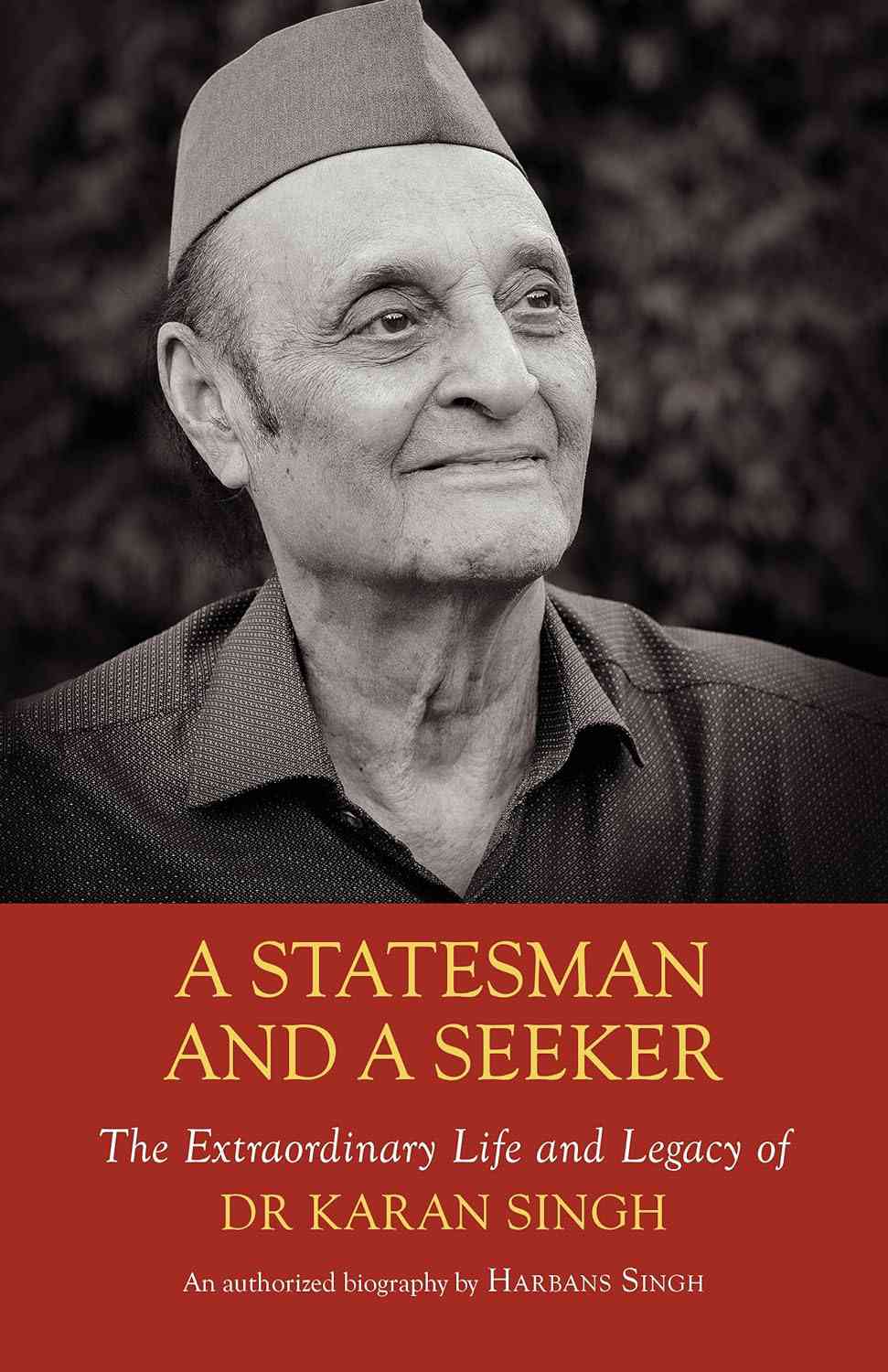
Excerpted with permission from A Statesman and a Seeker: The Extraordinary Life and Legacy of Dr Karan Singh, Harbans Singh, Speaking Tiger Books.
