






“The madness of modern India boiled down to the same thing: the anxieties of young men who no longer know their place in the world. What they find hardest to deal with are women who do.”
As the ultra-violent, ultra-masculine, ultra-jingoistic, sexless Dhurandhar 2: The Revenge outdoes its predecessor Dhurandhar’s box office numbers, the surer the female audience becomes about the death of India’s most enduring export – the charming Bollywood hero who’d do just about everything, from defying his family to his country, to win his sweetheart’s love. Just like the Dhurandhars, these romances too require a suspension of disbelief. But unlike the former, by the time the end credits roll in, the woman – and the man – in the audience are energised by the promises of a sweet romance, and not frothing at the mouth, eager to avenge make-believe enemies. Hate makes blockbusters – and Bollywood is ready to pump out more muscular, bloodthirsty patriots to create this winning formula.
It is not the women but the men who will be the biggest losers of this phenomenon – a youth devoured by misdirected anger.
The saffron men
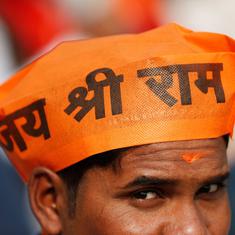
Journalist Snigdha Poonam’s book, Dreamers: How Young Indians Are Changing Their World, was published in 2018. She spoke to young men and women in India’s small town a couple of years before that. The Modi government was still new, Rs 500 and Rs 1000 notes were demonetised to devastating consequences, and sectarian violence was already common. The BJP’s Hindutva rhetoric had seeped deep into the young men’s psyche – and it was extremely attractive. Every personal failure could be blamed on the Congress’s socialist-secular governance. In all seriousness, this was the worst time to be a man – they were simply not equipped to survive in a cut-throat, capitalistic society, and women seemed no longer to be impressed by their machismo.
Poonam’s subjects are mostly men of tier-2 India: those trying to survive in cities like Ranchi and Indore while dreaming of becoming the kings of the world. To this end, any means was fair – cheating, scamming, hooliganism, rioting. From the fashionable office of the now-defunct content farm WittyFeed in Indore to IT cells in Jharkhand, Poonam uncovers a range of “work” that young Indians have undertaken in a market where jobs are either nonexistent or hard to keep on. For this young crowd, slow and steady does not win the race; one must arrive at the starting line all fired up. Ethics and morals do not matter – at the end of the shift, the metric of success is the number of clicks, dollars swindled, and accounts hacked. The knowledge of wrongdoing is hardly a deterrent. For those whose destinies are stacked against them, this is the least they can do to take control of their lives.
Interestingly, every man working at these jobs claims to be a great patriot. He must become a king not only for selfish reasons, but for the betterment of the country. This “betterment” usually has nothing to do with the upliftment of the poor or the marginalised – it is instead a deep desire to reinstate India’s imagined glorious Hindu past, to kick out Muslims and send the lower castes back to the bottom of the social ladder. In doing so, the women will be shown their place too.
The men do not seem to know what exactly this utopian India will look like, but are confident that only they are its most true, devout citizens. From the CEO to the IT cell propagandist, every man is a patriot to be envied. Love for one’s country is perhaps the lowest-hanging fruit. It is chaste – a celibate love. The lover knows his love will not yield fruit in his lifetime; it’s for his children to enjoy. Freed from all pressures of wooing and performing, the patriot only has to announce himself, without really ever doing anything to prove his love. The nation descends into chaos and hatred, while the patriot believes it’s a small price to pay for a blissful future.
The more Poonam reveals the conversations with these men, the more it becomes evident that they truly believe themselves to be the most disadvantaged of all – even worse off than illiterate tribals with little to no money, as seen in the case of Pankaj Prasad. A “fixer” of sorts, Prasad acts as the middleman between the poor tribals wanting to access welfare schemes and the government. He fills out forms, takes photographs, and accepts bribes. Corruption is bad, it is generally agreed, but the small change that Prasad makes is nothing compared to the lakhs of crores that officers and politicians embezzle. It is hard to argue with this logic. The money that flows under the desk eventually buys Prasad a house and a car. A happy ending.
In a man’s world
If the men are angry and loveless, the women too are keen to make their way in a man’s world. They work alongside men in scam call centres and also view themselves as visionaries who will revolutionise India. There have never been as many educated women in India’s history as now, and every woman is hungry to be her own person.
Interestingly, while the men care virtually nothing for social justice, the women do. It could have something to do with a lifetime of oppression and being sidelined. Poonam takes up the case of Richa Singh, the first woman to win Allahabad University’s student body election and a former Samajwadi Party member. As a college student, she had led a protest against BJP leader Adityanath’s hateful rhetoric against minorities. She was successful – he was denied entry to the university campus.
The men fought in elections and voted along identity lines – caste, class, and faith – but Singh was keen to reshape students’ politics. Her manifesto spoke about women’s safety and the betterment of students from the scheduled castes and scheduled tribes, and she reminded women students that their vote was their power. Singh was moved by Dalit scholar Rohith Vemula’s suicide at the University of Hyderabad, and for her, women’s empowerment was intrinsically linked with the empowerment of students from every marginalised group. Allahabad, now Prayagraj, may be a small town, but it did not come in the way of Singh’s universal vision of equality.
Eight years since the book was written, little has changed for the better, and a lot for the worse – for dreamers coming of age now, fed on a steady diet of fear, anger, and paranoia, what does the future hold? We might not know the answers yet, but we do know that the dreamers are waking up to a nightmare.
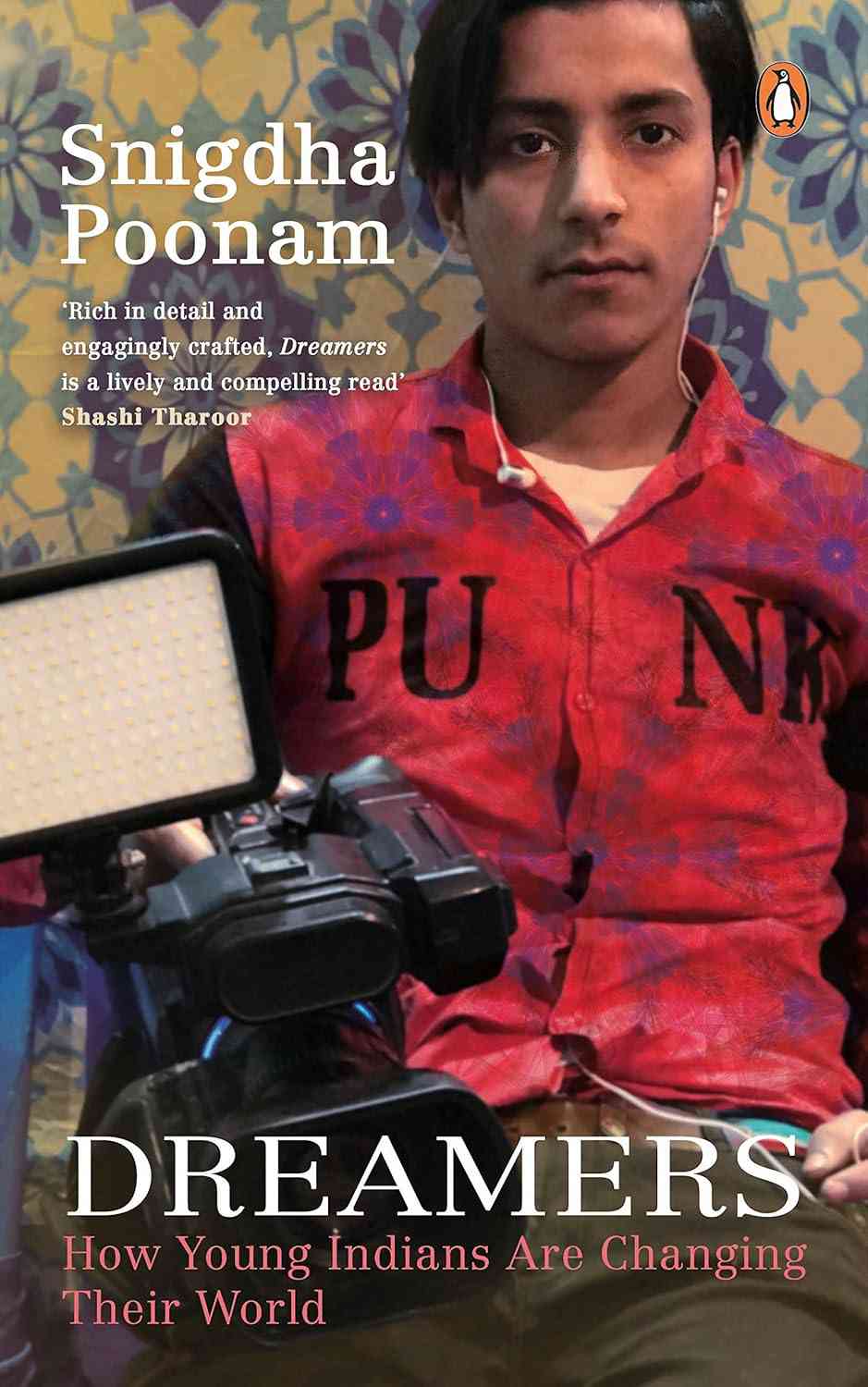
Dreamers: How Young Indians Are Changing Their World, Snigdha Poonam, Penguin Random House India.
