




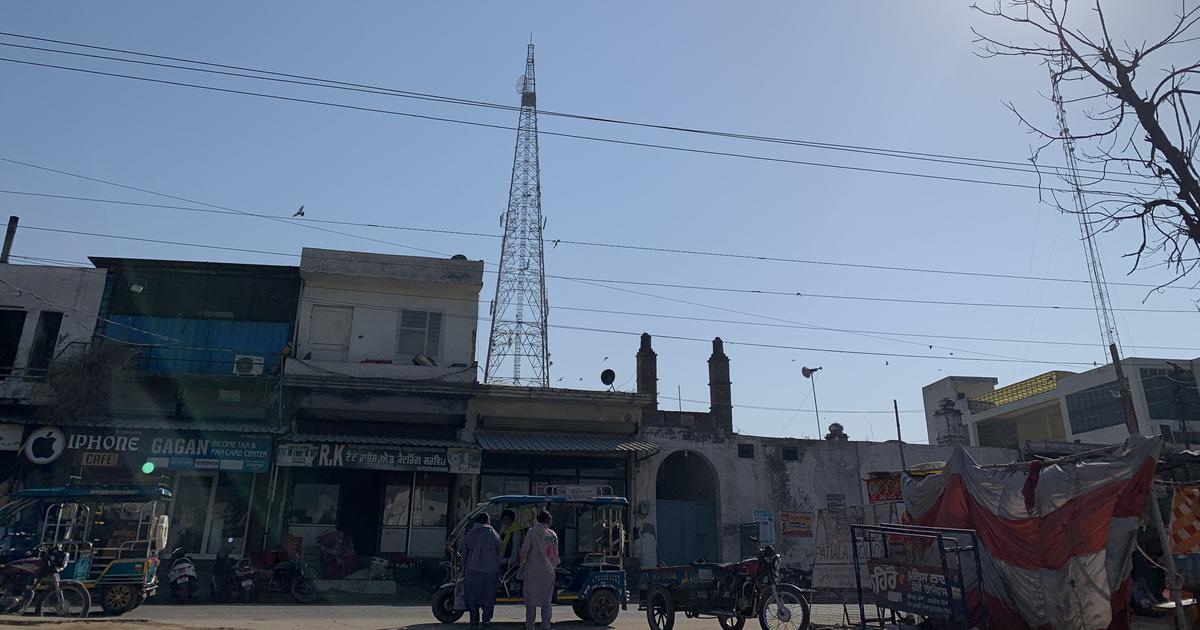
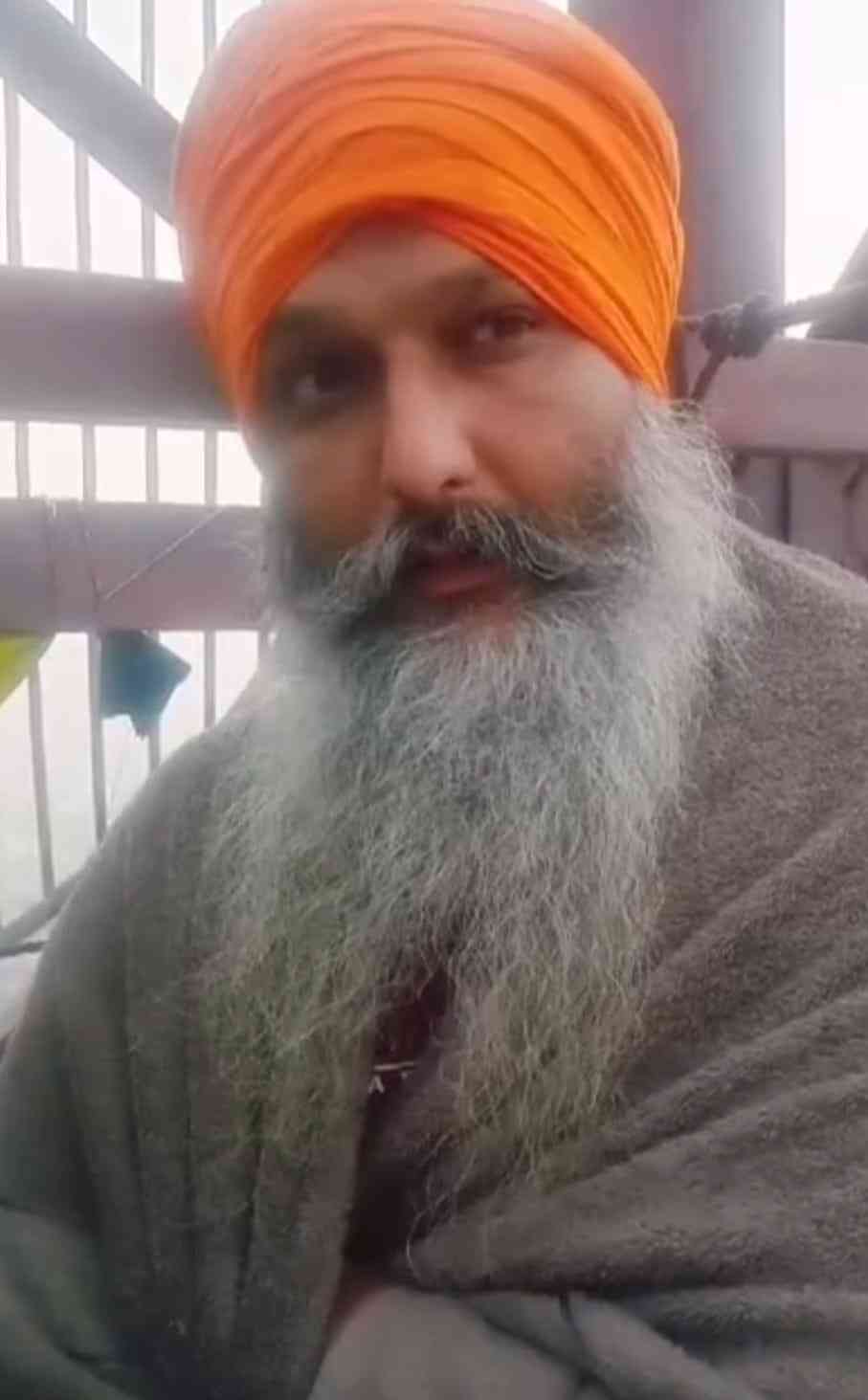
For 17 months, Gurjeet Singh Khalsa has been living atop a cellphone tower in Punjab’s Patiala district – a sheet of tarpaulin over his head, and a blanket and a pistol for company – to demand a strict law against sacrilege of Sikh religious objects and beliefs.
It has been a difficult – and somewhat lonely – protest. “I have put on a lot of weight because I cannot move in this cramped space,” the 43-year-old protester told Scroll in a telephone interview from the tower. “I have been diagnosed with high blood sugar, and cholesterol.”
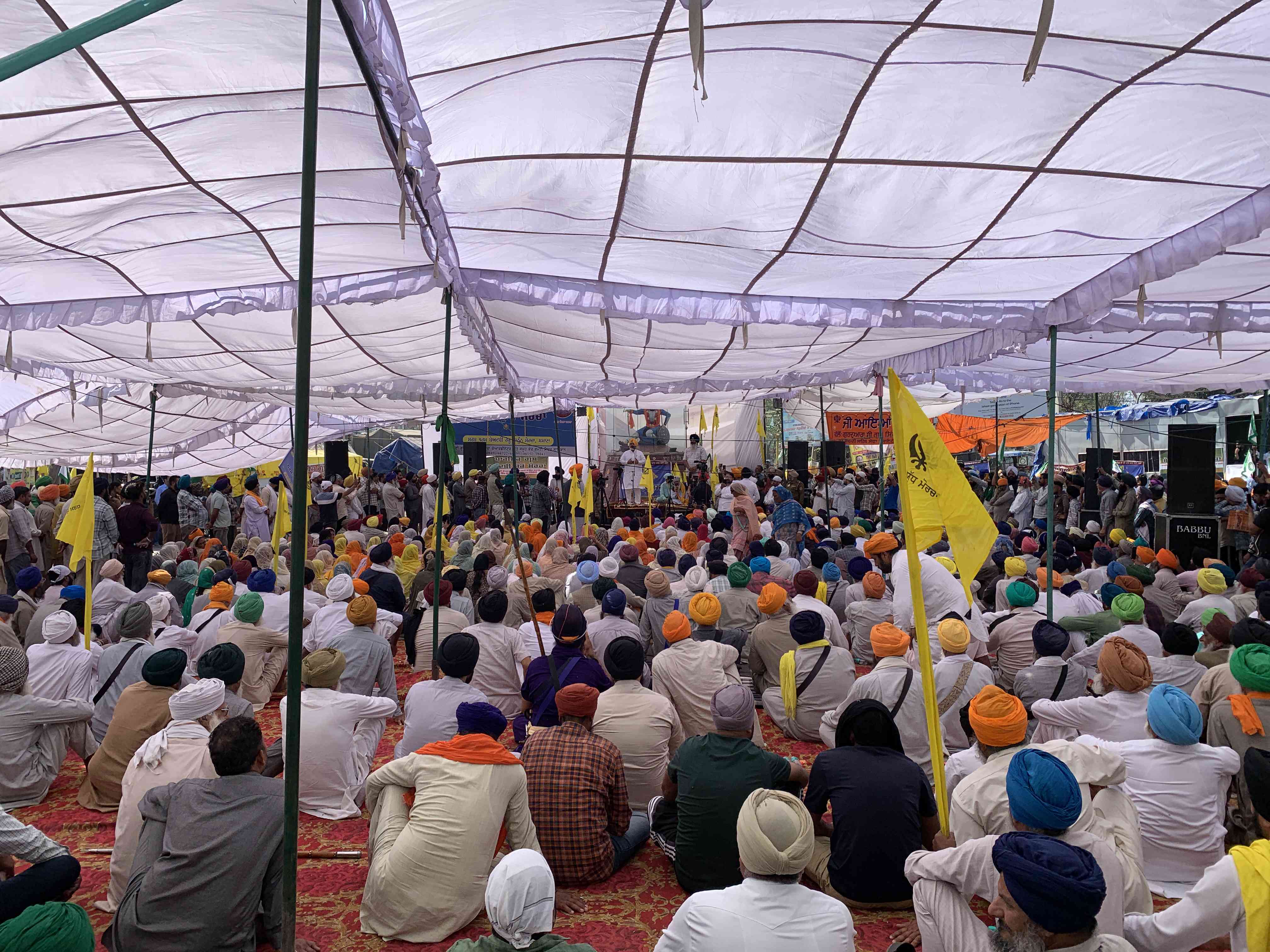
But last month, ahead of a Punjab Assembly session, Khalsa’s protest was back in the headlines, as 400 farmers sat on a dharna at a distance from the tower in his support, despite efforts by the police to stop them.
They gathered under the umbrella of Dharam Yudh Morcha, hoping to force Punjab’s legislators to pass a bill against sacrilege tabled by the ruling Aam Aadmi Party government last July.
Significantly, for the first time since Khalsa climbed up the tower, several farmer groups extended support.
“One of our brothers has been fighting for a law that will ensure that our holy scriptures are not desecrated for 17 months,” said Jaswinder Singh Longowal of Bharti Kisan Union Ekta Azad. “We feel the government needs to listen to his grievance and take note of his protest.”
While the recent session of the Assembly did not act on the bill, on March 21, Punjab Chief Minister Bhagwant Mann announced that a special session of the House would be convened on April 13 to amend a 2008 law to ensure punishment against acts of sacrilege.
A day after, Speaker Kultar Singh Sandhwan visited the Samana protest site to assure Khalsa that the government will act. The protester, however, refused to climb down until the law is implemented.
Observers told Scroll that Khalsa’s desperate protest is a symbol of a crisis of faith in the state’s politics, and anxieties around the protection of Sikh religion. “Khalsa comes across as a man who decided to come forward to protect his faith after those who claimed to be the custodians of religion, failed to deliver on their promise,” a political observer from Chandigarh, requesting anonymity, told Scroll.
A decade since Bargari
The demand for a strict anti-sacrilege law in Punjab stems from a series of sacrilege and violent incidents in Punjab in 2015.
In June that year, a saroop or physical copy of the Guru Granth Sahib was stolen from a gurdwara in the Burj Jawahar Singh Wala village of Faridkot district of Punjab. In Sikhism, the Guru Granth Sahib is not only a holy scripture but also considered a living Guru.
A few months later, handwritten abusive posters against the Sikh community were found pasted near the gurudwara. In October 2015, torn pages of the holy text were found scattered in the streets of Bargari village, some 4 km from the village where the scripture had been stolen.
As the police failed to unearth the conspiracy behind the incidents, massive protests erupted. Two protesters, who were demanding action against the culprits behind the desecration, were shot dead in alleged police firing at Behbal Kalan village.
At the time, an alliance of Shiromani Akali Dal and the Bharatiya Janata Party was in power in the state. A party that has historically projected itself as a custodian of the Sikh community, the Akali Dal’s failure to prevent sacrilege incidents and punish those behind the desecration of Sikh religion, proved fatal for it politically. In the subsequent 2017 and 2022 state elections, the Akali Dal was routed.
The breakthrough in the sacrilege cases came under the Congress government in 2018, with the arrests of 26 followers of Dera Sirsa headed by Gurmeet Ram Rahim. The self-styled godman was also accused of being a “conspirator” in the sacrilege cases.
But eight years later, the cases have not reached any logical conclusion. “Everyone in Punjab knows who was behind these incidents of sacrilege but none of them were punished,” said Gurpreet Singh, the coordinator of Dharma Yudh Morcha, the platform supporting Khalsa’s unique protest.
The incidents of sacrilege have sometimes also led to violence. At least 15 people accused or suspected of having been involved in different sacrilege cases were murdered between 2016 and 2025, data provided by Sikh religious bodies shows. Incidents of sacrilege have continued in the state, shadowing the Aam Aadmi Party government’s tenure as well.
It was one such incident that drove Khalsa to leave his home in Kheri Nagaian village in October 2024 to start his unusual protest.
“At that time, a sacrilege incident inside a gurudwara had occurred in Jalandhar,” Khalsa told Scroll. “That episode crushed me. I thought even if I lose my life, it wouldn’t matter if that helps to put pressure on the government.”
So, he climbed a 400-feet-tall tower of a cellular company in Samana to press upon the government to enact a strict law against sacrilege under which an act of sacrilege will invite life imprisonment. Since then, Khalsa, a farmer and a retired soldier, has had his one meal of the day on the tower. Every day, a boy from his village climbs up to bring him food and bring down his bodily wastes.
The only thing that will make him climb down the tower is the enactment of the law, he insists. “Otherwise, I am ready to die for the honour of my religion,” he told Scroll.
He also warned against any attempt to forcibly remove him from the tower. “I have my pistol as well as bullets. Anyone who tries such a thing will face a befitting response from my side.”
Framing a law
Almost every political party that has risen to power in Punjab in the last 10 years has promised a sacrilege-specific legislation to ensure a strict punishment to those involved. However, no state government has been successful so far.
Last year, the Punjab cabinet approved the Punjab Prevention of Offences Against Holy Scripture(s) Bill, 2025. The bill proposed life imprisonment to those convicted of acts of sacrilege pertaining to holy texts of Sikhs, Hindus, Muslims and Christians. A day later, on July 15, the bill was introduced in the Punjab Assembly. The bill was eventually referred to a select committee of legislators, which was given six months to submit its report. That deadline ended in January and the final report is awaited.
Chief Minister Mann’s decision to revive a 2008 law – Jaagat Jot Sri Guru Granth Sahib Satkar Act, 2008 – to placate the growing protest is an indication of the tricky task for his government.
The protestors at Samana have been demanding that any act of sacrilege should be punishable with life imprisonment. They also want that offences under the act should be non-bailable and a gazetted-rank officer should investigate the incidents.
Most strikingly, if the individual accused of sacrilege is a minor or is mentally unfit, they want the guardian to be made an accused. “Recently, the Supreme Court held that if a minor is driving a vehicle and is involved in an accident, his parents should be booked,” said Gurpreet Singh of the Dharm Yudh Morcha. “We want the same rationale to be applied in this case as well.”
But several observers have warned against enacting such a law.
“A law is not a solution,” said Harjeshwar Pal Singh, professor of history at Sri Guru Gobind Singh College, Chandigarh. “There is a possibility of it being misused against the poor and vulnerable sections. The most immediate example before us is of Pakistan's blasphemy laws, which are used to target individuals from poor and disadvantaged sections as well as religious minorities.”
In August last year, the Constitutional Conduct Group, a collective of former public servants belonging to the All India Services and Central Civil Services, had written a public letter to the select committee on the law, demanding its withdrawal.
“Draconian laws against sacrilege and blasphemy go against the very grain of a secular polity like ours. Instead of circumscribing the role of religion in matters of the state, the proposed Act will only enlarge it,” the letter signed by a group of 79 retired civil servants read. “It will also reinforce sectarian tendencies and strengthen the hands of religious extremists of various hues.”
Having a law does not necessarily translate into a deterrent if the investigations run into a dead end, many pointed out. “Unfortunately, in the case of sacrilege incidents in Punjab, many commissions and investigation teams were set up but nobody was held accountable for these events,” Singh, the professor, said. “How will having a new law help in such a case?”
The politics of sacrilege
But given the high emotions around sacrilege, and an Assembly election scheduled next year, political parties are wary of taking a step back.
“Religion is a big factor in Punjab elections and if the Aam Aadmi Party government manages to enact an anti-sacrilege legislation, it will definitely pay electoral dividends,” said Professor Ashutosh Kumar, head of the department of political science at Panjab University. “This could work well in the Malwa region of the state, which AAP swept in 2022 assembly elections,” he added.
The Aam Aadmi Party won 66 of the 69 seats in the Malwa region, a traditional stronghold of the Akali Dal and the centre of the 2020-’21 farmers’ protest.
“If AAP brings in the law against sacrilege, it would show the government’s resolve. That will not be a good sign for a party like Akali Dal, which considers itself as the custodian of the Sikh community’s religious interests,” said Kumar.
The political observer in Chandigarh, who asked not to be identified, said the AAP would want to “send a message to the Sikh community that it is determined to be seen as its protector.” “This would effectively corner both the Akali Dal as well as Congress on the issue of sacrilege.”
The debate around sacrilege also comes at a time when radical identity politics appear to be drawing some support in the state. “In the last 8-10 years, there has been a rise in rightwing politics in Punjab, parallel to the rise of Hindutva in the rest of the country,” the observer said. Traders in and around Samana alleged that pro-Khalistan slogans were frequently raised at the protest.
For the BJP, politics around the sacrilege issue could also be an opportunity. “The BJP has been trying hard to project a sort of religious anarchy in Punjab, so that the Hindu vote consolidates behind the party,” the Chandigarh-based observer said. “The open calls in support of Khalistan helps the BJP attract Hindu voters to its fold."
