







Whenever Tara packed for a trip, she started with an armload of socks and a spare phone charger.
On this wet Monday afternoon, though, the first thing that went into her lavender suitcase was a black Naruto t-shirt.
Tara had bought the t-shirt as a present for Dev. She had made sure that she would be in Mumbai for his eighteenth birthday. But the planning and shopping had been in vain.
No party invite had arrived so far – and Tara doubted that it ever would.
“I’ll probably spend all my time in Mumbai sitting on that red sofa and ordering dosas on Swiggy,” she said to herself as she snatched up the t-shirt, flung it back into her cupboard and paced up and down the attic room.
It’s difficult to walk in a room the size of a dining table – especially when one-third of the floor space is occupied by a jumbo suitcase. After a few unsatisfactory rounds, Tara headed to her desk, her computer and her wobbly three-legged stool.
Tara’s school holidays were ten weeks long. They usually raced by in a flurry of travel and friends and weeks in El Camino. This year, though, there was no travel, no friends, no El Camino – only a procession of beige, baggy days in the village of Oxel.
Tara did not do well with too much free time. Her empty mind had promptly turned into a devil’s workshop and found her a new and unhealthy obsession.
Once again today – as she had every day for the past three weeks – Tara opened her laptop and typed “Pramila Parulkar Rakesh Jhaveri”. Then she began her journey into the past.
As always, Tara started by scrolling through the photographs of Pramila from her supermodel days. Striding down the catwalk like a dusky goddess. Looking queenly in an ad for diamond jewellery. Beaming in a maternal manner in an ad for pasta. (“Mom has all the answers,” went the strapline, which felt like a cruel joke.)
Amidst these glossy images, there was a single blurry picture of Pramila with her first husband, Sid Shetty. Pramila looked ridiculously young in a tennis skirt. Sid Shetty, who was described as a well-known photographer, looked older and a bit bored.
As she had so many times before, Tara paused to wonder. Why had her mother married this man and divorced him in less than a year?
Google was silent on the subject, so Tara moved to the photographs of Pramila’s second husband. Rakesh Jhaveri. Tara’s father. A man who had been careless enough to fall off a hill in Matheran eleven years ago. Leaving behind a family as rickety as the three-legged stool.
“Why did you go and die and spoil everything?” Tara asked aloud as she gazed at the photographs of Pramila and Rakesh Jhaveri, looking happy, beautiful, invincible.
There was one last group of photographs and, although Tara averted her eyes, she caught a glimpse of a flat, grassy shelf overlooking a deep valley. To fall from this height would mean instant death – and for Rakesh Jhaveri it had meant instant death.
‘Accident or murder?’ the bold caption beneath one of the pictures demanded. The question taunted Tara as she continued her search.
Over the last few weeks, Tara had read about Pramila’s unique fashion sense. (“On any given day, the stunning Pramila Parulkar can be spotted pairing a shirt from Fashion Street with a Prada bag and embroidered jootis.”)
She knew that her mother’s favourite perfume had been Eau Sauvage and that she used to drink six glasses of Electral every day. That when she first came to Mumbai from small-town Nashik, she had been shy about her English and her clothes.
Tara knew about the deep friendship between Rakesh Jhaveri and Dr Ashutosh Kulkarni. (“We spent so much time together that I started speaking better Marathi, and Ashutosh started speaking fluent Gujarati.”)
She had virtually memorised the interview in which Pramila had spoken about how she and Rakesh had met at a party in Alibag. (“I’d gone to keep a friend company. I don’t think Rakesh and I exchanged a single word throughout the day. At sunset, I got bored of the endless boozing and went for a walk on the beach. Rakesh had the same idea. We ran into each other and started talking. We talked about crabs and jellyfish and shells for almost an hour. And by the time the sun had set I knew. But in my head, he belonged to someone else. Then a few minutes after we got back to Mumbai – I had barely climbed out of the speedboat at the Gateway of India – he called and said, ‘We need to discuss starfish.’”)
Tara had gritted her teeth and read about the deaths in Matheran. About the rain and the steep path and the mysterious errand. About the inconsistencies that had led to that question, “Accident or murder?”
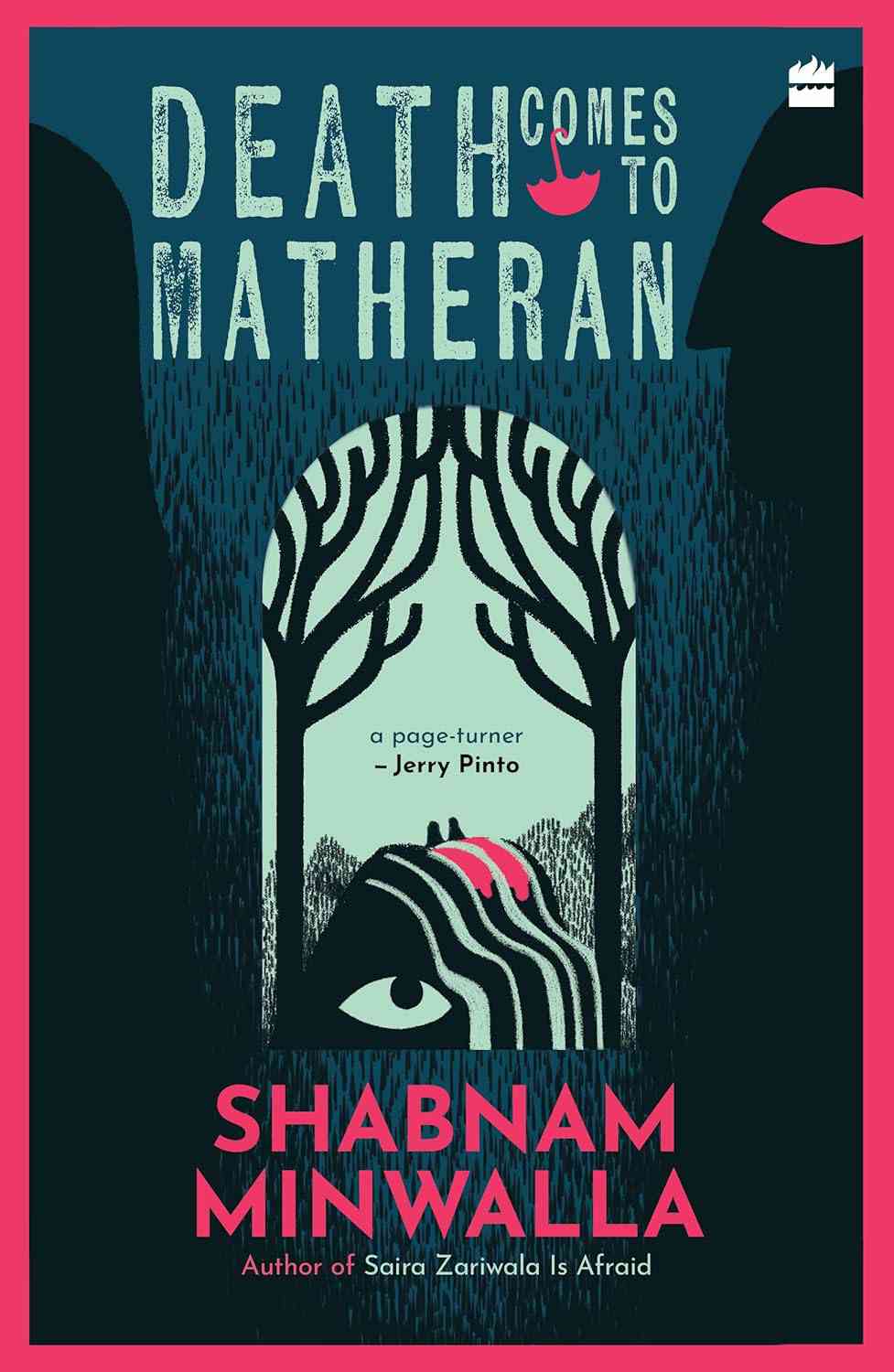
Excerpted with permission from Death Comes To Matheran, Shabnam Minwalla, HarperCollins India.
