









Gar nik aayam mara az Ishan girand
Dar bad basham mara badishan bakhshandIf I am noble, I may be counted with them;
— Hazrat Nizamuddin Auliya, quoted in Fawa’id-ul-Fu’ad
If I am bad, I may be forgiven on their behalf.
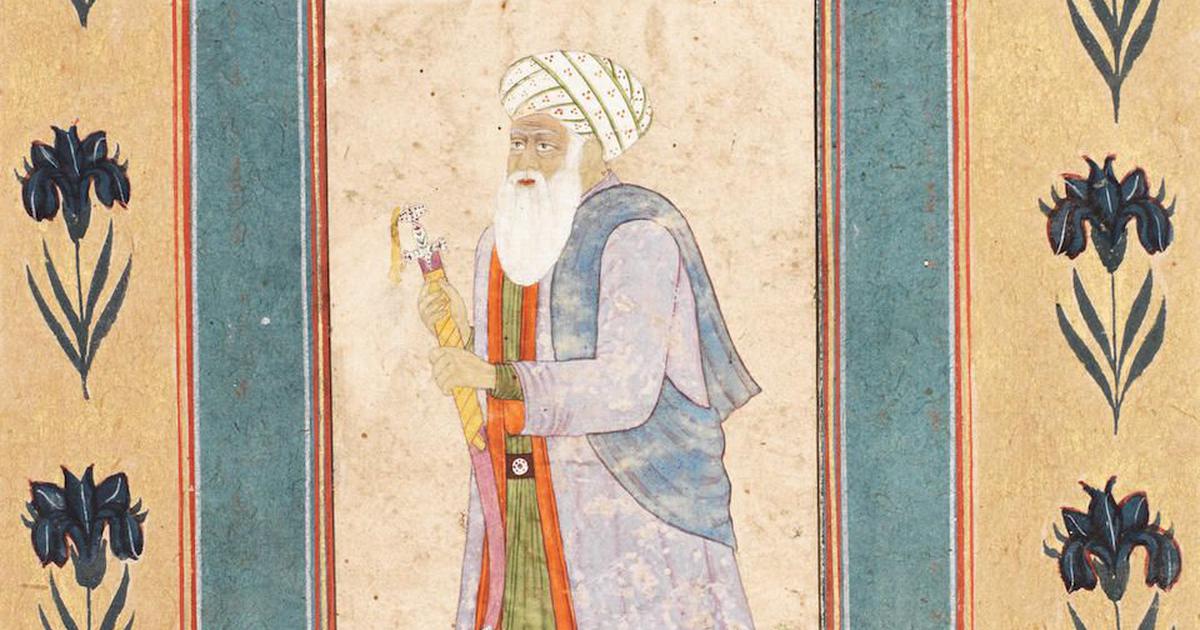
Constant vigil on moral conduct and seeking forgiveness from God are critical features of Sufism. Here, the focus will be on the conversations of the foremost Hazrat Nizamuddin Auliya, in Fawa’id-ul-Fu’ad, on this topic. The anecdotes or hikayats presented in some detail address a spiritual fraternity of people with a heart (ahl-i-dil), which was soaked in love for God and everything around. As Nizamuddin Auliya said, dervishes (members of Sufi orders) were seen to be so graceful in arguing their case that people wondered how elegant they might be when expressing their love for each other. Examples of conversations between Nizamuddin and his followers, given below, will further establish the emphasis on moral and ethical conduct in Sufism as well as the complete submission to the will of God.
Nizamuddin Auliya once told his audience that Prophet Muhammad had foretold that the five generations (tabaqat) of people after him, with each of the generations lasting for 40 years, would gradually fall into ruin. The first generation was that of the companions of the Prophet (sahaba). They were a fine set of people known for their spiritual knowledge and contemplation (‘ilm and mushahida). The second generation comprised the companions of the companions of the Prophet (tabi‘in), who were noted for their good deeds and piety (birr and taqwa). The third generation consisted of people who let the good things of the world go to people who desired to have them, and they shared everything for the love of God. Such characteristics were marked by attempts to make contact and connections with people with a sense of compassion (tawasul and tarahum). As the situation would deteriorate further from the point of view of Islamic piety, the fourth generation would include people who would resort to aggressive animosity (khusumat) to misappropriate everything, identified by cut-throat competitiveness (taqato, literally to cut). Analogous to it would be the conduct of the people who surreptitiously hoarded wealth, not sharing with others and turning their backs on others (tadabur, from tadbir or strategy for mindless self-interest at the cost of everything else). The fifth generation would constitute people who thrived in anarchy and chaos (harj-o-marj). They would kill each other to feed their self-interests, brutalising and killing each other in manners identified with wild beasts (gusht-o-pust-i yakdigar uftand o dar kushtan-i yakdigar shawand).
Thus, such would be the characteristics of the people two centuries after the time of Prophet Muhammad. Nizamuddin observed that after those 200 years, the situation would have deteriorated so much that the birth of a pup would be better than the birth of a human being (agar kasi sagi bachche bizayad beh, na farzand-i-adam). The Sufi master concluded that two centuries after the Prophet were long gone, so they could imagine the situation today, that is, the early decades of the fourteenth century. With tears in his eyes, he concluded, what could one say about the characteristics of our time (in sa‘at-i khwud mardum che guyad). In contexts like the above, Sufis could take a high moral ground through their superior conduct and nearness to God.
Sufis also thought they could perform better miracles than other non-mystics, such as yogis, who were treated as inferior. Some Sufis maintained a clear distance from the yogis, yet others engaged with them in discussions and even performed miracles together. A few anecdotes involving such interactions will illustrate the nature of dialogues and competitiveness in the spiritual domain.
Sufis believed some mystics could fly in the air, and they displayed this paranormal ability when provoked to do so. Nizamuddin Auliya narrated an account of such a challenge faced by Shaikh Safiuddin Gazeruni from a Yogi at Uchchh, in Sindh. The Yogi confronted Shaikh Safiuddin and suggested a contest of levitation between them, that is, they would perform the miracle of flying in the air (baya qadam be-namayam). The shaikh told the Yogi that since he was the one making such claims, he should perform the feat (shaikh guft da‘wi tu mi-kuni tu qadam be-nama).
The Yogi elevated himself off the ground and remained suspended so high in the air that his head touched the roof. Thereafter, he descended straight to the floor and challenged the shaikh to repeat the miracle. Shaikh Safiuddin raised his head towards the sky and prayed to God: you have blessed others with this skill, bestow to me also the ability to perform this miracle. Soon the shaikh was seen flying in all four directions – from west, to north and then to south before returning to the place where he sat. The Yogi was bewildered. He prostrated before the shaikh and confessed that his power was limited to performing straight elevation in the air and that it was beyond his capacity to take right or left turns. Marvelling at the shaikh’s ability to fly in various directions, the Yogi admitted that the shaikh’s practices were true and divinely ordained and his own practices were false. Sufi literature abounds in such narratives of encounters with yogis in which the latter are shown to be defeated and the superiority of Sufis is displayed.
Another account involving Yogi–Sufi conversations takes an interesting turn when Bibi Fatima Sam of Delhi suggested that Nizamuddin could marry the daughter of someone known to her. Fatima Sam was a formidable Sufi figure, personally known to Nizamuddin’s preceptor, Shaikh Fariduddin Ganj-i-Shakar, and commanded a lot of respect. Saying no to her would be an embarrassment to both her and Nizamuddin. So, the latter told her of his meeting with a Yogi who was visiting Shaikh Fariduddin’s hospice at Ajodhan, Pakpattan, now in Pakistan. The Yogi had made a proposition that the character of a child was determined on the day the child was conceived. Different days of the month had different characters assigned, and 29 to 30 different kinds of characters were already determined. The Yogi suggested that some people did not know the right time to have sex, and that is why sometimes useless creatures were born (farzandan keh bi-zauq bairun miaayand az an ast keh marduman waqt-i mubasharat na mi-daanand). On hearing this, the veteran Fariduddin scolded young Nizamuddin for wasting his time in such matters. Sufis were wary of yogic tricks, and Nizamuddin was meant to grow in the mystic path and therefore was wedded completely to God. Fatima Sam understood the message that Nizamuddin could not concern himself with matters of love and marriage, and withdrew the proposal. Marriage is a recommended practice in Islam, but many Sufis thought they could not handle the responsibilities that came with it and therefore remained unmarried (mujarrad). Their nights were spent in prayer, meditation and in remembering God, and their days were spent in service to followers, devotees and various visitors to the hospice, such as the yogis as we saw above.
Once, there was a discussion at Nizamuddin Auliya’s hospice about people kissing the hands of dervishes in anticipation of receiving blessings (khalq dast-i darweshan mi-bosand o barkat mi-talaband). Nizamuddin offered the perspective from the other side: dervishes who offer their hands for kissing wish and pray that they get the hands of a blessed person to hold! Sufis had also realised that since so many people kissed their hands and prostrated before them, it was also possible that some antagonists would throw stones at them. This could perhaps be as part of a divine strategy to keep them grounded and in balance (mizan). Sufis would take such attacks gracefully, with jamal. But if the nature of opposition was perceived as devious, demonic or satanic, they needed to be suppressed with a heavy and wrathful hand, with jalal. Sufis could, it was believed, break the neck of the detractors and even curse them to be dispatched to hell! Hence, most people had wished to be on the right side of the Sufis, seeking blessings and benediction, and soaking themselves in the language of love and belonging of the spiritual kind.
For people visiting Sufis seeking amulets (ta‘wiz) to combat different kinds of mental or physical illness, Shaikh Fariduddin’s advice to Nizamuddin was to not turn anyone away. The simple formulae for the amulets to cure illnesses were to inscribe Allah-o Shaafi, Allah-o Kaafi, Allah-o Ma‘afi. If amulets and relics worked, Sufis would get the credit; if not, God was supposed to have planned otherwise. Complete and graceful submission to the will of God was the recommended ideal.
In the most aesthetically sophisticated forms developed through centuries of practice, Sufism teaches the virtues of tolerance and peace. For, after all, the Sufis sought to preach what they practised – love for God and respect and service to humanity. Enduring pain, cultivating grace and guarding himself against any evil, Hazrat Nizamuddin prayed to be counted amongst the best of the people, saintly exemplars of the larger Muslim world.

Excerpted with permission from Hazrat Nizamuddin Auliya: Beloved of God, Raziuddin Aquil, Pan Macmillan India.
