










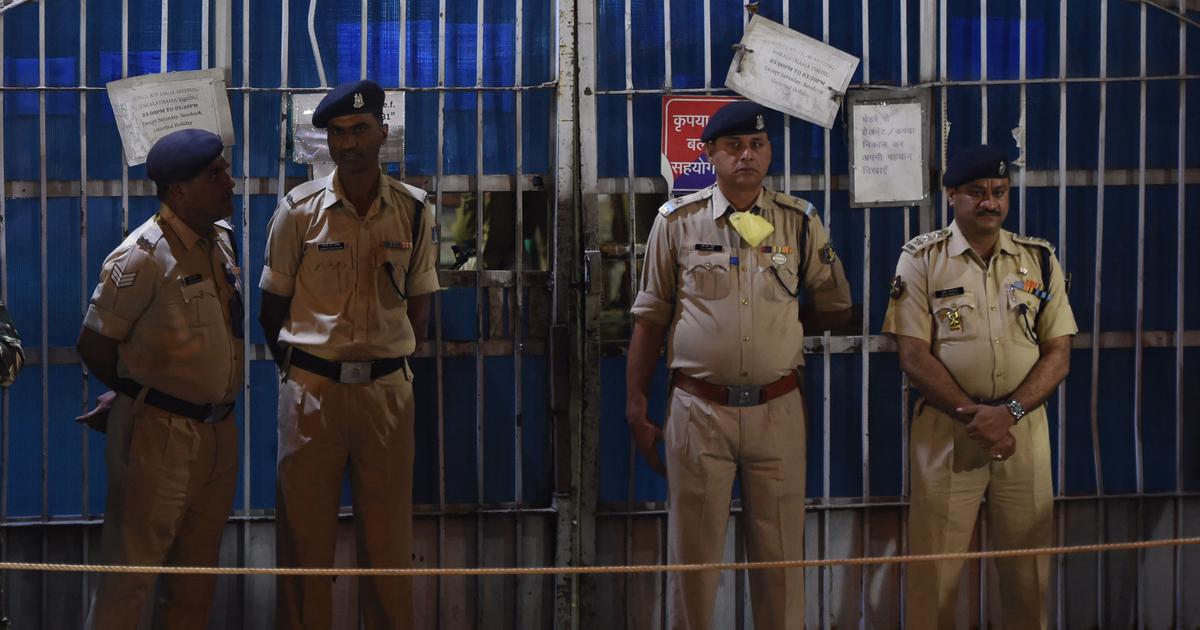
On April 6, the Madurai District Court awarded the death penalty to nine policemen who had been held guilty of the custodial torture and murders of P Jayaraj and his son J Benicks, residents of Sathankulam, in Tamil Nadu’s Thoothukudi district.
The two had been killed in June 2020, when the Covid-19 lockdown was in force. The police claimed that they had been arrested because they had kept their mobile phone shop open past curfew hours. In the first information report against the two men, the police claimed that they had injured themselves after rolling on the ground and attributed their deaths to fever and high blood pressure.
A Central Bureau of Investigation probe found that the police’s claims were false. Jayaraj and Benicks had been sexually and physically assaulted, and had been murdered, the investigation concluded.
But while the verdict against the policemen brings some closure to the case for the moment, one dimension of it remains relatively unexamined: the passive or active role of the other authorities in these crimes.
When the police arrest an individual, they are mandated to put them through a medical examination and present them before a magistrate within 24 hours.
The morning after Jayaraj and Benicks were tortured, they were examined by a doctor in the Sathankulam Government Hospital, who declared them “fit for remand”.
They were then produced before a magistrate in Sathankulam, who remanded them to judicial custody. News reports later noted that the magistrate had not examined the two closely or made any record of their injuries. The police personnel were present throughout the process.
The investigations showed later that the men had suffered grievous injuries by this time. The police had made them change their clothes several times because the ones they were wearing were soaked in blood. Their relatives were asked to bring dark-coloured garments to replace white ones the men had been wearing earlier, since these had turned red.
After the verdict against the policemen was announced on April 6, activists and members of civil society expressed concern about these other officials not being held accountable.
The concern is not one that is limited to this particular case. While I was reporting a story about custodial violence in 2024, activists and victims’ families described it as a pattern in such cases.
Henri Tiphagne, activist and the executive director of the non-governmental organisation People’s Watch, said that when police produce arrested individuals before a magistrate, they are rarely asked if they had faced violence. In many instances, magistrates grant the police the custody they seek without even raising their heads to look at the arrested person carefully.
Further, since the police personnel often return to the same government hospitals to have arrested individuals examined, they grow familiar with the doctors in these facilities. These doctors often cooperate with the police rather than challenge them.
When I spoke to him in 2024, Tiphagne argued that in such instances, justice would not be fully done until the doctors and the judicial magistrates involved were also questioned and, if culpable in the crimes, punished.
Meanwhile, the barrage of criticism that the police received in the Jayaraj and Benicks case seems to have done little to stem the phenomenon of police violence.
In 2026, four cases of death have already been reported linked to police custody in Tamil Nadu: two men died while in custody, and two others died by suicide after being released from custody, during which time they were allegedly beaten by the police.
Here is a summary of last week’s top stories.
Trinamool versus the poll panel. The Trinamool Congress alleged that during a meeting about the upcoming Assembly elections, Chief Election Commissioner Gyanesh Kumar told a delegation of the party to “get lost”. The party had approached the poll panel to express concern about officials allegedly linked to the Bharatiya Janata Party being made part of the West Bengal polling process.
On social media, the poll panel posted a message declaring, “Straight-talk to Trinamool Congress”. It said it had told Bengal’s ruling party that the Assembly polls would be “fear-free, violence-free, intimidation-free, inducement-free and without any chappa, booth-jamming and source-jamming”.
The Trinamool Congress objected to the post, asking if this was how “a neutral constitutional body” was expected to behave.
Allegations and police cases. The Telangana High Court granted transit anticipatory bail for one week to Congress leader Pawan Khera in a forgery and criminal conspiracy case registered by the Assam Police. The bench said he could “file an application before the concerned court” within the week.
Khera had sought protection from arrest after Assam Chief Minister Himanta Biswa Sarma’s wife filed a first information report against him. Khera had claimed that he had documentary evidence that showed that Riniki Bhuyan Sarma holds passports of the United Arab Emirates, Egypt, and Antigua and Barbuda.
Assembly elections. Assam, Kerala and Puducherry went to the polls on Thursday. Assam recorded its highest voter turnout, with 85.3% of the voters casting their ballots. In 2021, the turnout was 82.4%.
While the provisional voter turnout in Kerala was 78.3%, it was 89.8% in Puducherry, according to data from the Election Commission.
In Upper Assam, BJP faces an upbeat Opposition with its battalion of welfare schemes, writes Rokibuz Zaman.
Also on Scroll last week
- Orphaned by the pandemic, let down by government
- Why activists see the imprint of Hindutva in the new transgender law
- Does India have enough fertiliser stocks to tide over Iran war shock?
- The advantage of access: Why Pakistan has emerged as the mediator between Iran and the US
- Why India’s diabetes epidemic is a policy failure
- Why India needs a separate law for domestic workers even though the Centre is opposed to it
- Expatriate workers buoy economies of five Indian states. Politicians must stop ignoring them
- ‘Everybody Loves Sohrab Handa’ review: Murder mystery has sharp actors and witty banter
- ‘Dacoit’ review: A convoluted, ridiculous romance
- In film ‘I, Poppy’, the heady lure and crashing reality of opium cultivation
Follow the Scroll channel on WhatsApp for a curated selection of the news that matters throughout the day, and a round-up of major developments in India and around the world every evening. What you won’t get: spam.
And, if you haven’t already, sign up for our Daily Brief newsletter.
