







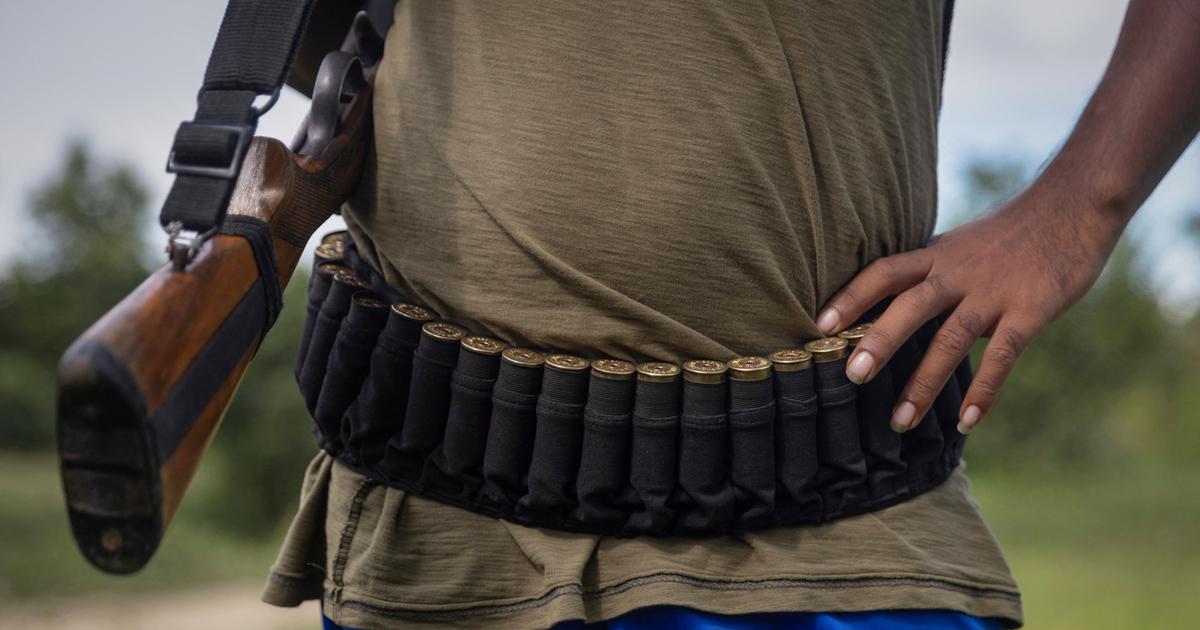
Till a few months ago, he was patrolling Meitei villages near Manipur’s Moirang town.
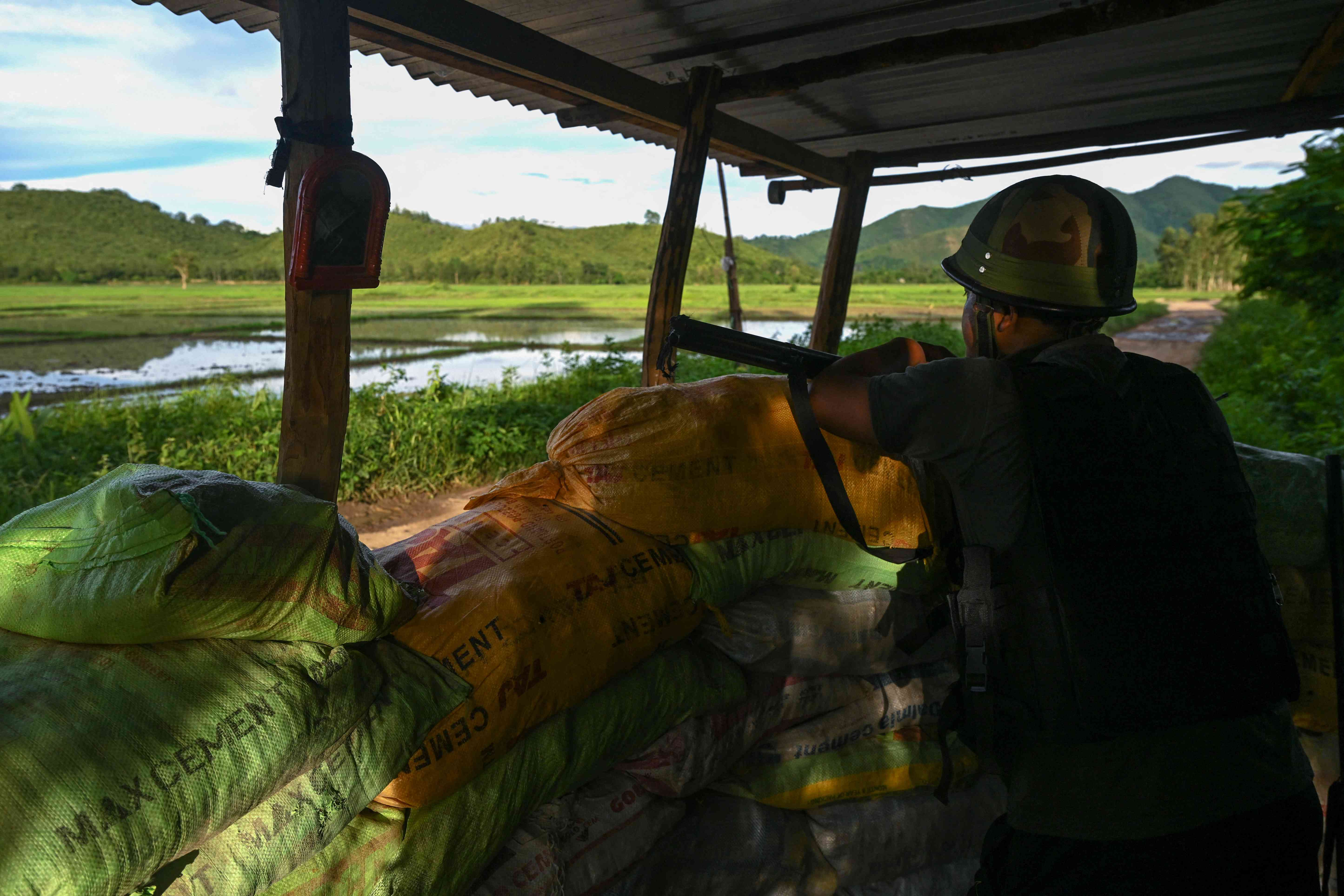
The 43-year-old had taken up arms and joined a cadre of 250 “village volunteers” – armed civilians who “defended” their community’s territory as the conflict that erupted in Manipur in May 2023 ethnically partitioned the state, with no community allowed to travel into the other’s area.
The clashes between the majority Meiteis, who lived in the plains, and the minority tribal group of Kuki-Zo-Hmars from the hill districts plunged Manipur into a civil war, from which it is yet to recover. Over 260 people were killed and more than 60,000 displaced in the conflict.
“I have been guarding villages here since 2023,” the Meitei volunteer said.

But six months ago, after a spell of President’s rule and the recovery of arms from civilians, the violence ebbed.
The 43-year-old and other village volunteers surrendered arms and disbanded. “The government said the central security forces will give full protection to us,” he told Scroll.
“We thought that peace was coming,” agreed Ibotombi, a 60-year-old college teacher from Tronglaobi village in Manipur’s Bishnupur district, one of many villages the Meitei volunteers had guarded. “Even the village volunteers have stopped guarding the village.”
But in the early hours of April 7, the fragile calm was shattered.
Five-year-old Tomthin Oinam and five-month-old Oinam Leisana were sleeping with their mother when a bomb exploded inside their home in Tronglaobi village.
The mother, Oinam Binita, was severely injured. Her children did not survive.
The fatal attack on the children as they slept in their home in the Meitei-inhabited village triggered a wave of shock, grief and anger across Imphal Valley.
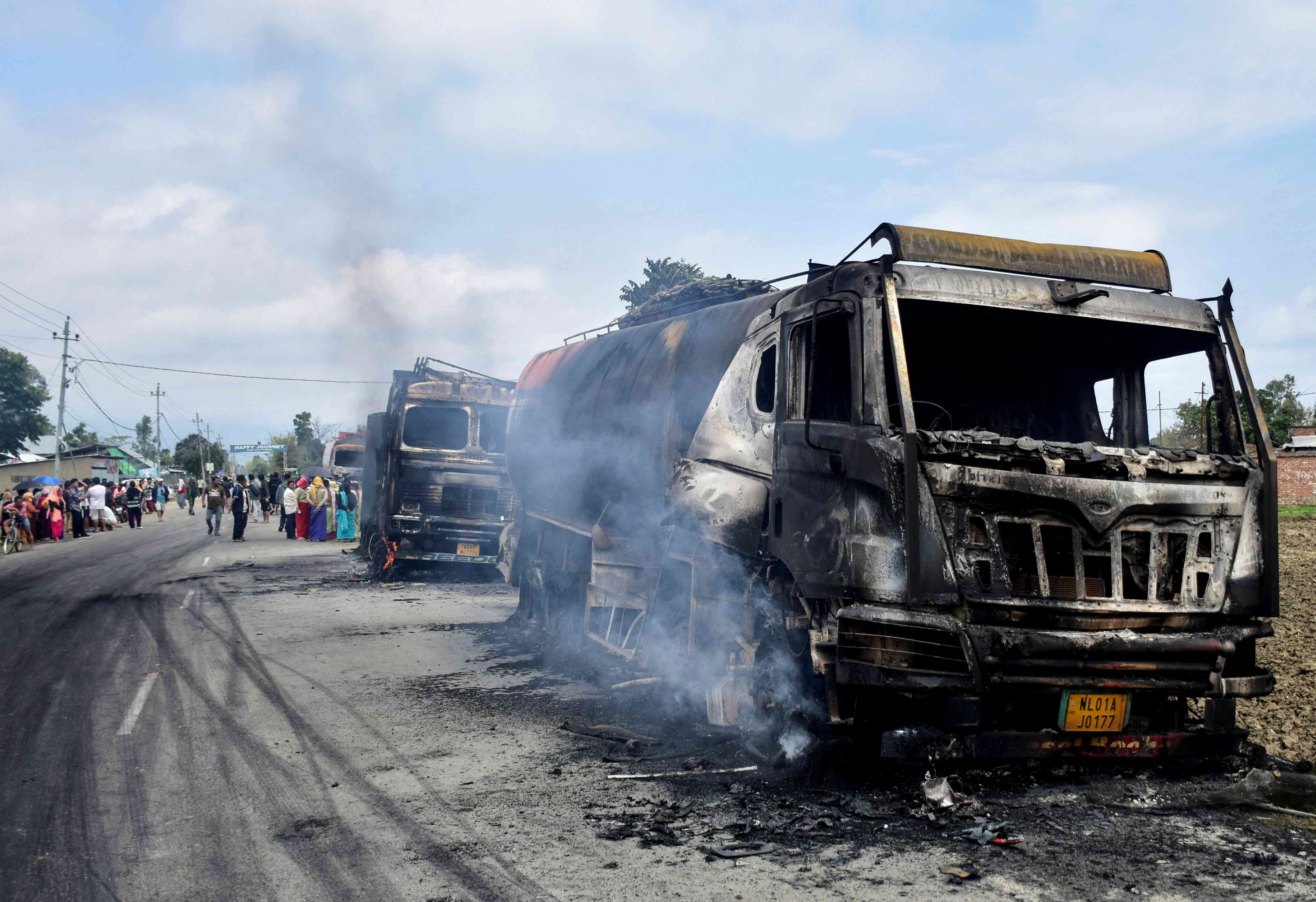
Within hours, a mob of about 500 people stormed a nearby camp of the Central Reserve Paramilitary Force, accusing the soldiers of helping Kuki-Zo-Hmar militants attack the village.
When the angry protestors set security vehicles on fire and tried to snatch arms, the security forces opened fire. Three protestors were shot dead and three others injured by bullets.
About a week after the incident, on April 15, Manipur Home Minister Konthoujam said that five suspected militants of the United Kuki National Army were arrested from Churachandpur.
The United Kuki National Army is a banned insurgent group that is not a signatory to the Suspension of Operations agreement with the Union government. The outfit, in statements issued and circulated online, has denied its involvement in the attack.
It is the first major incident of violence since a new government was formed under Chief Minister Yumnam Khemchand in February. The attack came hours after Khemchand had travelled by road to the Assam-Manipur border to Jirabam town, crossing Kuki-inhabited areas in an effort to bridge the gap between the communities.
“It has been almost three years of the conflict but the government has been unable to contain the violence,” Oinam Babuton, the 70-year-old grieving grandfather of the children, told Scroll. “We thought some peace had arrived as there was no recent incident of violence. But, now it has reached our door.”
The blast
Binita, a nurse based in Guwahati, had returned to Manipur on maternity leave only a few months ago in January. Her husband, Oinam Mangalsana, is a soldier in the Border Security Force, currently posted in Bihar.
Recalling the night of the incident, Babuton said he and his wife and younger son were sleeping in a room at the other end of their house when the projectile struck the room Binita and the children were sleeping in.
“Binita screamed as soon as the blast took place,” Babuton told Scroll. “As we came out of our room, we could see smog and dust coming out.” Babuton said the five-month-old baby was bleeding. The family took the two children to the hospital but both of them died.
For two days, Binita lay in hospital, unaware of the fate of her children. “We thought that we will tell her once she is better,” said Babuton.
“Two days later, while she was recovering from a surgery, Binita got to know about their deaths from a newspaper delivered to the hospital ward,” Babuton said. “She broke down. Doctors were unable to control her. She was given an injection to make her sleep.”
The buffer zones
The killings highlight the precariousness of peace in the “buffer zones” created by security forces to minimise interaction between the Meitei-dominated Valley and the hill districts, where the Kuki-Zomis reside.
Tronglaobi is about 1 km from one such buffer zone, which is heavily guarded by the Army and other central paramilitary forces, apart from the state police.
Residents of Tronglaobi said they had seen and heard crossfire before, but not this level of violence. “No civilians were injured in the past,” said Babuton. “How could this happen despite the presence of security forces?”
“We never knew that this could happen to our family,” said Babuton. “We only pray for peace to return to Manipur .”
For the next three days, protestors blocked roads in Imphal and other districts as they clashed with security forces. Since the outbreak of the ethnic violence, Meiteis have accused the security forces of siding with Kuki groups.
“People thought that the attackers had come down from the hills and taken a route near the CRPF camp,” Ibotombi, a 60-year-old college teacher and resident of the village, told Scroll. “We have always suspected that Kuki groups are with the security forces. Otherwise, how can they come and fire bombs in an area guarded by CRPF, Army and other security forces?”
According to the Indian Express, preliminary investigations found that the rocket-like projectile which struck the home was allegedly “fired from just about 100 metres”.
Ibotombi alleged that despite the widespread presence of military personnel, there was little security. “There is utter lawlessness,” he said.
On April 14, protesters tried to intercept the vehicles of the security forces in Bishnupur suspecting the Kuki militants were travelling in them. Twenty people were injured and two of the vehicles were torched.
Manipur home minister K Govindas Konthoujam said it was a “misunderstanding”. He said it was a team comprising members of the Central Industrial Security Force, the Assam Rifles and Manipur Police headed for Kwakta to recover drugs and arms based on inputs from a drug peddler who had been arrested at Imphal Airport.
Meitei women have also blocked the Imphal-Churachandpur highway, disrupting the supply of essential supplies between the state capital and the second biggest urban centre. As of April 16, the blockade was still in force.
Grateful for the warm welcome at Thowai Kuki Village en route to Ukhrul. Assured early redressal of concerns on roads, water & health. Our commitment remains towards inclusive growth and peaceful coexistence. pic.twitter.com/pkhUqcSj01
— Khemchand Yumnam (@YKhemchandSingh) April 17, 2026
Fear rises in buffer zones
Past incidents of violence followed by the killing of the children has sent residents of buffer zones into a spiral of anxiety.
People are losing hope in the security forces, said KK Chanu, a 24-year-old displaced woman from Churachandpur. Since 2023, Chanu has been living in a relief camp in Moirang, a foothill town close to the buffer zone. “How could the Kukis come so near and bomb us?” she asked. “Since April 7, there is no peace in Moirang. Everyone is afraid.”
A resident of Kwakta, an area inhabited by Meitei Muslim Pangals, who are seen as neutral to the dispute between the communities, said the killing may encourage a return of armed guards. Some of them are “already visible”, he said. “Extortion and loot will also increase if the violence continues.” Kwakta is also one of the areas affected by the blockade of the Imphal-Churachandpur highway.
Shayam Kumar, a resident of Moirang, said that the village volunteers had been disbanded and their weapons had been collected. “Meiteis had been persuaded to discontinue any bunkers and village guards as they were assured that the government and central forces would take care of everything,” said Kumar.
But now, some want the volunteers to be brought back. “The security forces failed to protect us,” said Kumar. The Kukis are coming to the centre of the village and attacking, he alleged. “Had our village volunteers guarding the periphery of the villages, this would not be possible.”
