





“Life is almost all perch. There is no nest; and no one is with you, on exactly the same rock or out on the same limb. The circumstances of passion are all too petty to be companionable.”
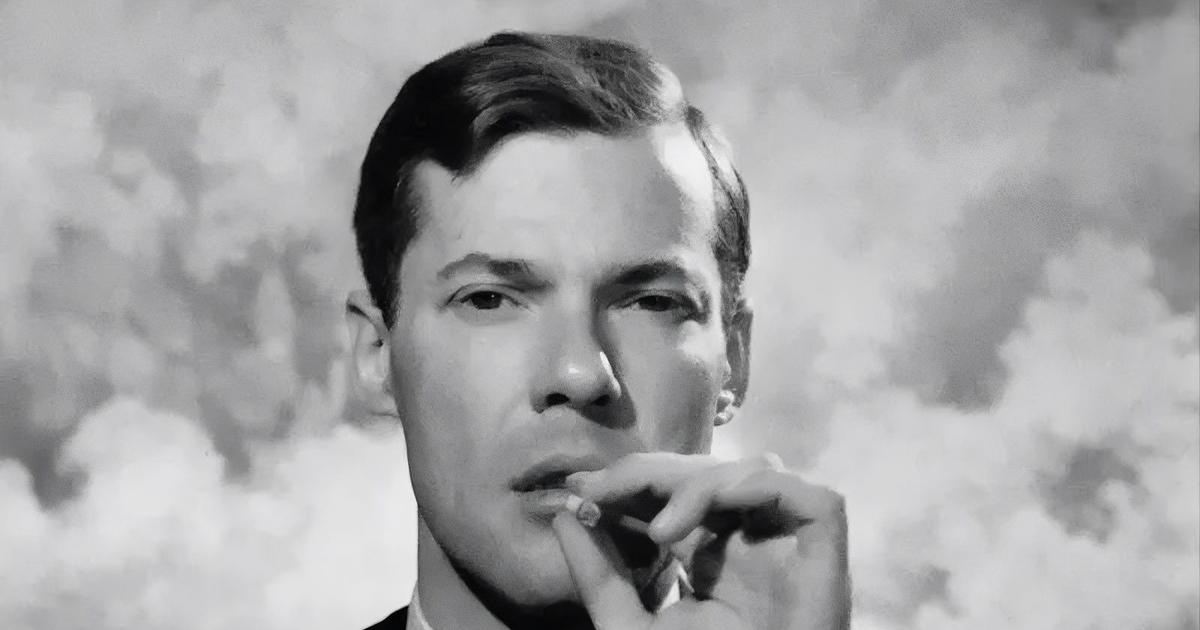
Glenway Wescott created a respectable volume of fiction over 20 years of his writing career. In addition to short stories and poetry, Wescott wrote four novels: The Apple of the Eye (1924), The Grandmothers (1927), The Pilgrim Hawk: A Love Story (1940), and Apartment in Athens (1945). After this, until his death in 1987, Wescott would publish no more work of fiction. In the intermediate years, he wrote essays and worked as an editor.
The character Robert Cohn in Ernest Hemingway’s The Sun Also Rises is said to have been modelled after Wescott.
Wescott was also among the rare openly gay writers of his time. His relationship with Monroe Wheeler lasted from 1919 until Wescott’s death. Wheeler died the following year. They are buried next to each other in a farm that Wescott had acquired.
The hawk perches
Wescott’s penultimate novel, The Pilgrim Hawk: A Love Story, is narrated by Alwyn Tower, an American writer-in-the-waiting visiting his friend Alex in Paris. Madeleine and Larry Cullen, a middle-aged Irish couple, drop by one day. The husband is clumsy and flustered while the wife is energetic and exasperated by her husband. In tow is Madeleine’s unusual pet, Lucy, the pilgrim hawk.
Alwyn, who has an artist’s sensibility, is immediately intrigued by the bird. He strikes up a conversation with Madeleine about it, who is only more than happy to indulge him. The woman speaks of the bird in turns as a child she might be overly attached to or a lover she might be obsessed with. Alwyn too is mesmerised by the hawk’s elegance.
He notes, “Her body was as long as her mistress’s arm; the wing feathers in repose a little too long, slung across her back like a folded tent. Her back was an indefinable hue of iron; only a slight patine of the ruddiness of youth still shone on it. Her luxurious breast was white, with little tabs or tassels of chestnut. Out of tasselled pantaloons her legs came down straight to the perch with no apparent flesh on them, enamelled a greenish yellow… But her chief beauty was that of expression.”
In the small apartment trapped with the men, both Madeleine and Lucy begin to seem like ethereal creatures who, despite their differing corporeal forms, share a soul.
Lucy assumes the central position in the Cullens’ marriage, as pets often tend to do. Throughout the novel, the couple does not talk about anything else besides their occupation with the hawk. Madeleine is well-versed in the bird’s nature while Larry is mostly disinterested. Madeleine speaks with the precision of an ornithology expert, reiterating that even domesticated hawks do not lose their taste for the wild. They never mate in captivity and, now and then, try to escape.
Minor depressions aside, the hawk is very likely to return to its “home” once its thrill is satisfied. As Madeleine goes on about the hawk’s natural disposition, Alwyn observes the air shifting between the couple. There is no doubt that her obsession with the bird has something to do with her own desire for freedom.
The hawk – domesticated but wild at heart – is the image of his mistress’s spirit. It’s an elegant metaphor for her decaying marriage and also a cause of it. Larry and Madeleine can never seem to agree on their feelings for Lucy, increasingly growing impatient with each other as the bird’s presence becomes more and more invasive in their relationship.
Alwyn is disarmed by this silent but highly charged negotiation. He observes it as thus, “Time after time her transitions like this – from hawk to human, objective to subjective – startled me.”
The heart is a bird
Nothing really happens in The Pilgrim Hawk. We understand that the Cullens are to depart soon and that Alwyn is quite unlikely to meet the hawk or the bickering couple again. Nevertheless, we realise that the strange encounter has left a deep impression on him. This interlude was probably as important for the couple as it was for Alwyn – both finding a new perspective on marriage and the creative impulse, respectively. The more Alwyn hears Madeleine speak and the more he observes Larry, he is surer that some day this brief meeting will reward him richly as a writer.
In his judgment of the couple, Alwyn shows himself to be biased, though he cannot explain the reason for it. He has no relationship with either of them; therefore, no reason to favour one over the other. What he is is a writer of fiction, and prejudice is essential for this art form: “Sometimes I entirely doubt my judgment in moral matters; and so long as I propose to be a story-teller, that is the whisper of the devil for me.”
This admission, which comes at the end of the novel (excuse the pun), kills two birds with one stone. We realise that the author character has taken liberties in his recollection of that day (which is what fiction often does) and as an outsider who has nothing to do with the marriage, the day has revealed something true to him about the heart’s natural wildness, fluttering against the gilded cage of matrimony.
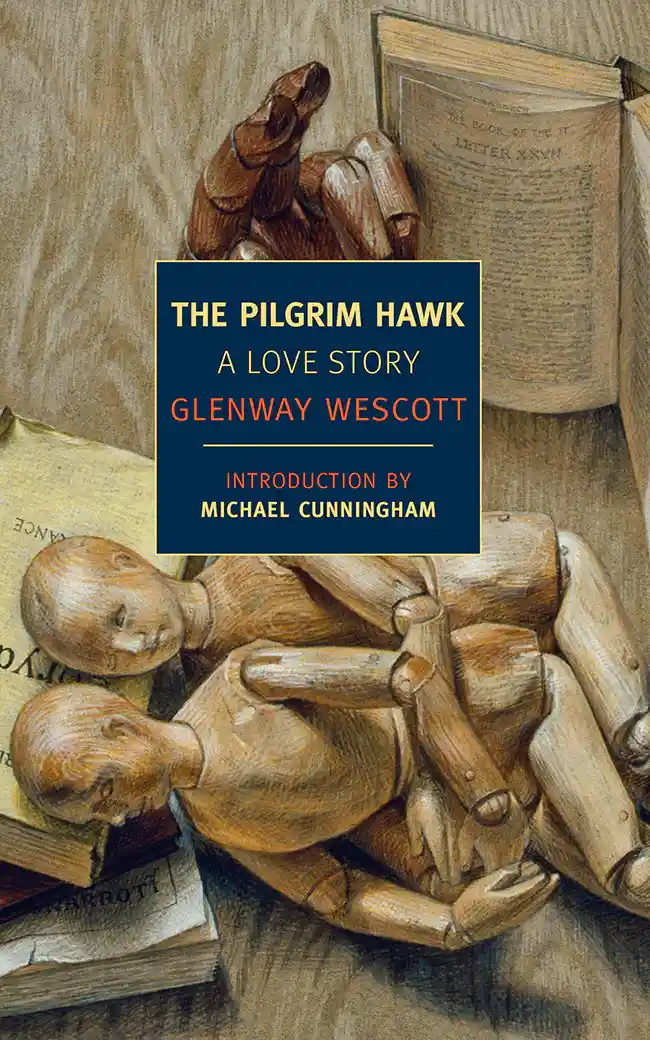
The Pilgrim Hawk: A Love Story, Glenway Wescott, NYRB Classics.
