





India does not treat local democracy with the same seriousness as national and state institutions. Nowhere is this more evident than in the conduct of elections to local governments.
Elections to Parliament and state Assemblies are held with near clockwork precision but those to urban and rural local bodies are frequently delayed or stalled across many states. Article 243U of the Constitution mandates that elections to urban local governments be completed before the expiry of their five-year term, and State Election Commissions are empowered under Article 243ZA to conduct them.
Yet, over the past decade, delays in elections to rural local governments – village and taluk panchayats and zilla parishads – and urban local governments like municipal councils and corporations have become routine. A 2024 report by the Comptroller and Auditor General noted that two-thirds of 2,625 cities audited across 17 states did not have elected councils.
Judicial interventions have so far addressed individual instances rather than the systemic gaps in the legal framework governing local polls. This undermines the intent of the 74th Constitutional Amendment for democratic decentralisation and deprives citizens of elected and accountable governments at the first mile of governance.
After years of delays, some states held local body elections in recent months. But that only signals the need to shift from merely conducting overdue elections to building institutional safeguards.
Local elections and delays
Kerala maintained its streak of on-time elections with its latest cycle in December 2025. Gujarat in April completed a major round of polls, broadly sustaining its record of regular local government elections.
Haryana, Telangana and Punjab held municipal elections in 2025 and 2026, though with delays ranging from six to 24 months.
In Maharashtra, after repeated interventions and deadlines set by the Supreme Court, citizens across panchayats and municipalities – including the country’s richest city government, the Brihanmumbai Municipal Corporation – elected new local governments in January after a delay of nearly four years.
Municipal elections are also expected in Rajasthan and Jharkhand soon, after delays of one to three years and on the directions of their respective high courts.
In Himachal Pradesh, local self-government elections were held in May after delay due to a stand-off between the state government and the State Election Commission. The Supreme Court had directed that elections be held by the end of May with no further extensions.
Karnataka, meanwhile, retains the dubious distinction of not conducting elections to hundreds of rural and urban local governments – including in Bengaluru – for periods ranging from two to six years. The Karnataka State Election Commission has filed multiple cases against the state government, holding it responsible for the delays and seeking judicial intervention to restore local democracy. After repeated reprimands from the High Court and the Supreme Court – and even fines in some cases – elections are likely to be held this year.
Odisha and Andhra Pradesh are expected to conduct their local body elections scheduled for later this year.
These developments appear to signal a revival of grassroots democracy. But the structural issues that enable delays remain unresolved and there is no institutional guarantee that elections will not be postponed again when the next cycle is due.
Many state governments have repeatedly managed to defer local elections through administrative inaction and legal manoeuvres.
Delays in ward delimitation and reservation notifications, along with last-minute municipal restructuring, are frequently cited technical reasons for postponements. In practice, these actions allow state governments to supersede elected councils and install bureaucrats as administrators for months, and sometimes years, in violation of the constitutional mandate.
The root of the problem lies in the weak institutional design of State Election Commissions. Though constitutionally mandated to conduct local elections, the commissions lack operational autonomy in critical areas such as ward delimitation and reservation of seats, functions that are largely under executive control.
A 2025 study by Janaagraha found that only eight of 34 State Election Commissions had the powers to undertake delimitation and reservation exercises. This leaves state commissions unable to enforce election timelines independently.
The discourse on simultaneous elections, popularly termed One Nation, One Election, also provides an opportunity to consider the reforms necessary for timely local elections.
A report of the High-Level Committee on simultaneous elections, in its report submitted in March 2024, recommended synchronising municipal and panchayat elections with Lok Sabha and state assembly elections, with a 100-day deferment.
Seven reforms
Fundamental reforms are urgently needed, ideally through amendments to Part IX‑A of the Constitution, or alternatively through changes to state municipal laws.
First, State Election Commissions must be explicitly empowered to undertake ward delimitation and determine reservations. Removing these functions from the executive will eliminate one of the most common causes of election delays and reduce politically motivated interventions and litigation.
Second, delimitation and reservation exercises should occur at a fixed frequency, once every 10 years following the national census, rather than immediately before elections. Ad-hoc exercises tied to electoral cycles have caused avoidable delays across states.
Third, significant time and resources are spent by State Election Commissions in obtaining and adapting electoral rolls from the Election Commission of India for local elections. Instead, common electoral rolls or voter lists must be adopted for all elections, from Parliament to panchayats.
Fourth, State Election Commissioners should be appointed through a transparent and independent process similar to that used for other constitutional authorities. A high-level committee comprising the chief minister, the leader of Opposition in the state assembly and the Chief Justice of the High Court should make these appointments, replacing the current practice of nomination by the state government.
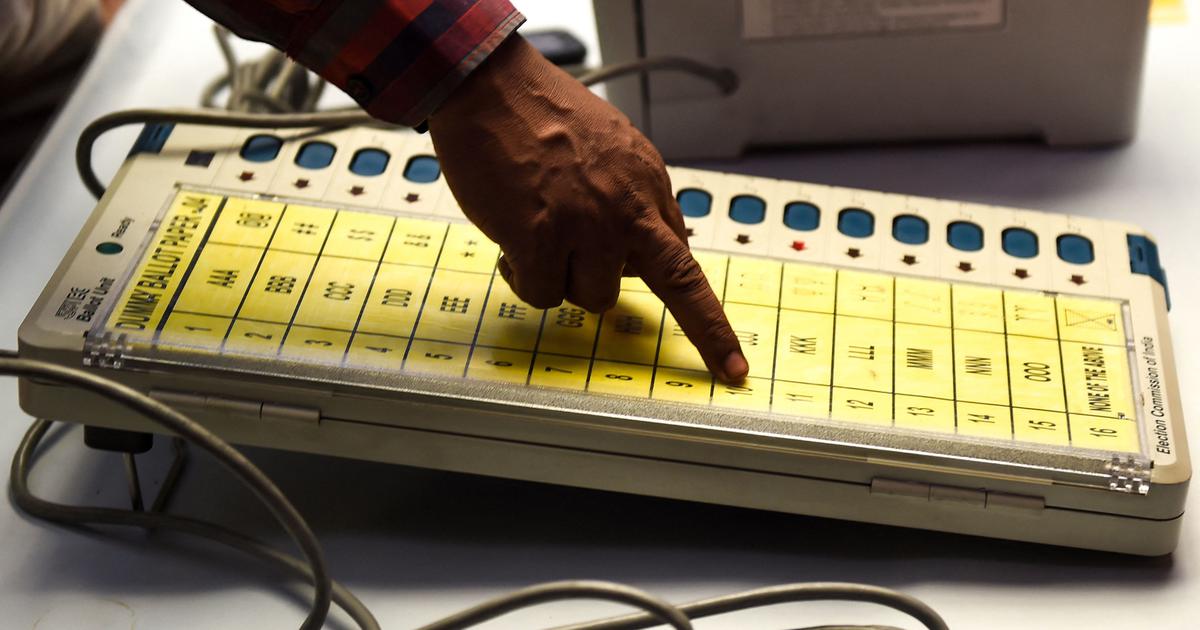
Fifth, State Election Commissions often struggle to secure essential election materials such as EVMs and indelible ink. State Election Commissions, therefore, be empowered through staffing and financial autonomy, with their expenditures charged directly to the Consolidated Fund of the State rather than requiring approval from state governments.
Sixth, State Election Commissions should submit annual reports to the governor detailing their preparedness and timelines for upcoming elections. These reports must be tabled in the state legislature, introducing much-needed transparency and accountability.
Finally, state governments must be prohibited from dissolving municipalities before the completion of their five-year term or altering municipal boundaries within six months of elections becoming due, except through explicit legislative sanction. Ideally, such reorganisation must be restricted to once in 10 years after the Census.
Stronger State Election Commissions are the constitutional bulwark against discretionary action – or inaction – by state executives.
Santosh Nargund is Director, Policy Engagement at Janaagraha Centre for Citizenship and Democracy. The views expressed are personal.
