


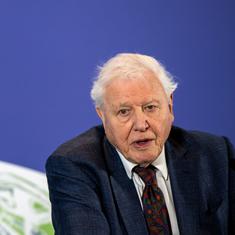



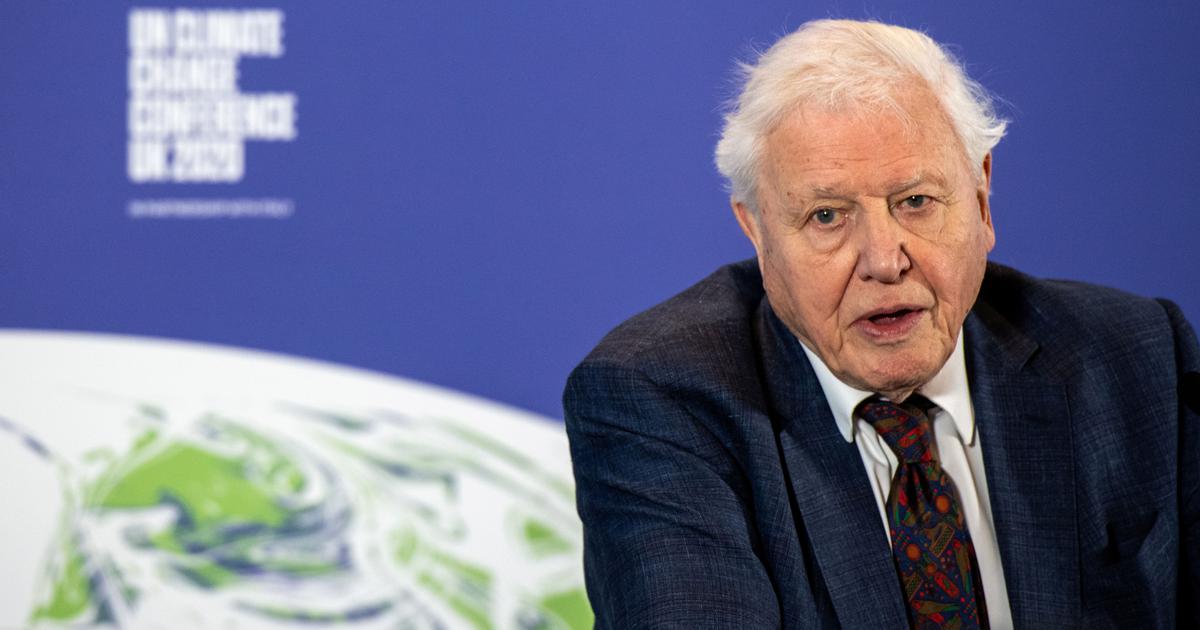
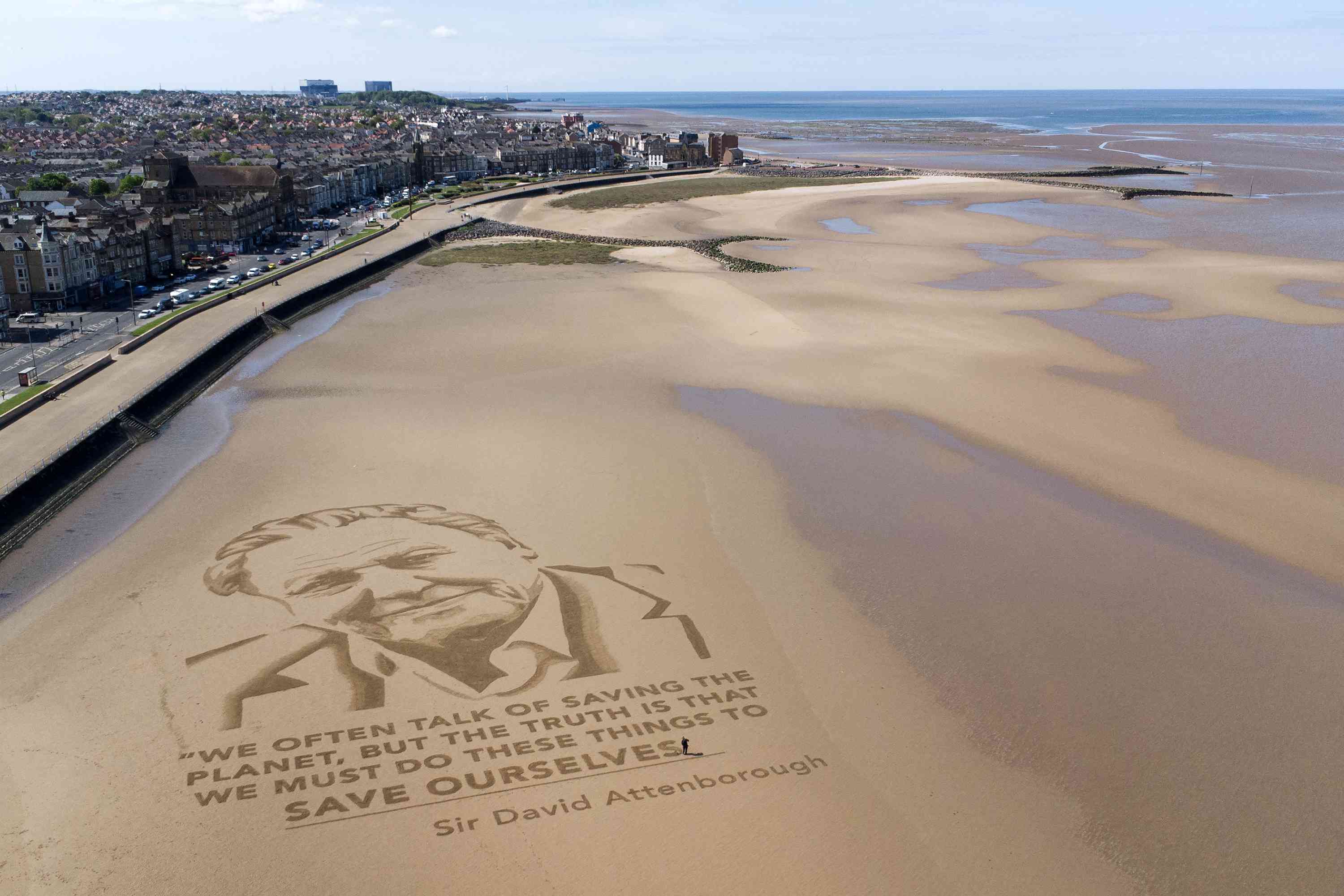
As the world marked David Attenborough’s hundredth birthday on May 8 and now observes World Environment Day on June 5, this is an apt moment to reflect on the environmental imagination the globally-renowned presenter of television programmes on natural history helped to create.
More than any scientist or statesman, Attenborough has defined the modern imagination of nature. Over a 70-year-long career, he has inspired generations to feel wonder towards animals and plants, focusing on creating an emotional resonance with non-human relations through visuals, narration and pure awe.
Yet his legacy and work disseminate an environmental imagination that frames nature as distant and untouched by history, human presence and ecological conflict.
The pristine wilderness
Attenborough perfected a mode of environmental imagination that presents landscapes such as the Amazon and Serengeti as pristine wildernesses, foregrounding charismatic biodiversity and ecological drama visible to only a tiny fraction of humanity.
This is spectator environmentalism where ecological engagement is organised around mediated observation and wonder, with limited engagement on why environmental destruction occurs.
There are three problems with this approach.
First, Attenborough’s documentaries foreground non-human life, with human actors either absent or only selectively included to emphasise environmental impact. The effect of this narrative is subliminal. Given that humans evolved with nature and depend on it, showcasing nature by divorcing people from it risks implying that a human-free state is the one in which nature ought to be.
Second, these documentaries perpetuate the Western binaries between nature and human culture – pure versus corrupted, sacred versus profane. Yet throughout human history, people have cohabited with nature. Even as we marvelled at the nature around us, we have shaped landscapes and even the evolutionary trajectories of other species.
Many indigenous communities consider elephants and tigers as brothers, mountains as goddesses, the sky and earth as parents. That too is an environmental imagination, though it has rarely been granted a charismatic spokesperson.
Third, many species evolved in close association with humans. In Attenborough’s work, biodiversity created by farmers and animal breeders – plant cultivars, crops and domesticated animals – is never featured. They may not easily fit the neat Linnean taxonomic classes, but they too are nature.
While Attenborough’s later works address overfishing, climate crisis, and planetary boundaries, he still privileges distant observation and a wilderness without humans, and emotional narration about the loss of nature.
The environment needs politics
The problem is not that Attenborough and others like him aestheticise nature, but that they narrow the political imagination of what environmentalism can mean. It is also the case that audiences, media and institutions have sustained an idea of nature as being separate from human politics and history.
The environmental crisis thus becomes a distant problem devoid of political reality.
Spectatorship makes the audience into passive witnesses. Attenborough has preferred depoliticisation: an education toward nature lost over an understanding of its causes. By directing the cause of nature’s loss to human activity, his documentaries obscure important questions: who pollutes and who suffers? Whose knowledge counts? Why are ecological burdens unequal?
Human communities suffer alongside the nature Attenborough would like us to conserve. But he never clarifies issues such as the ecological loot during colonisation, the dispossession of pastoralists, farmers, and indigenous people for conservation reserves, and the ongoing environmental and political conflict.
Spectator environmentalism leaves the audience without answers because the right questions are never raised. For instance, who defines nature, biodiversity and conservation? What representations are cast out? Which corporate actors and states are more responsible for environmental loss? Why do wealthier nations define the global representation of nature? They have disproportionate cultural, economic, scientific and media power.
Unless environmentalism is politicised, it falls prey to quick-fix neoliberal market solutions. For instance, green consumerism and carbon credits sidestep the central question of how much humans should consume to keep the planet safe. While we are captivated by the spectacle, capitalism and our consumption patterns continue to devour the environment.
Ecological spectatorship ignores environmental conflicts and questions of environmental justice. Thus, we need ecological citizens who can look past the spectacle and see the reasons behind environmental damage and loss.
Beyond the spectacle
Attenborough’s legacy holds one essential element aloft: we should all step outside to pay attention to the natural world. His achievements have helped build an excitement among viewers for creatures of all kinds: many may not have come to care about what they did not first learn to love. For that reason, we need more like him – though one hopes the archetype of wisdom and authority will broaden beyond its pale, male inheritance.
The environmental crisis is at its foundation the consequence of unchecked power, inequality and a lack of responsibility. Not everyone contributes equally to ecological destruction, nor do people suffer its consequences equally. Given these deeper linkages and the environmental crisis, nature watching must go beyond spectatorship and emotional narration.
Although Attenborough’s later works call for action, they rarely confront who pollutes, profits and pays the price. The goal must be to cultivate ecological citizens who can ask difficult questions about justice, consumption, and responsibility.
There should indeed be a wonder and appreciation of nature. But it is also important to link awe with accountability and place questions of power, politics and responsibility at the centre of how nature is seen, narrated and acted upon.
Amit John Kurien is Assistant Professor, Environmental Science, School of Liberal Arts and Sciences, RV University, Bengaluru.
