


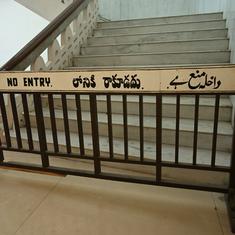


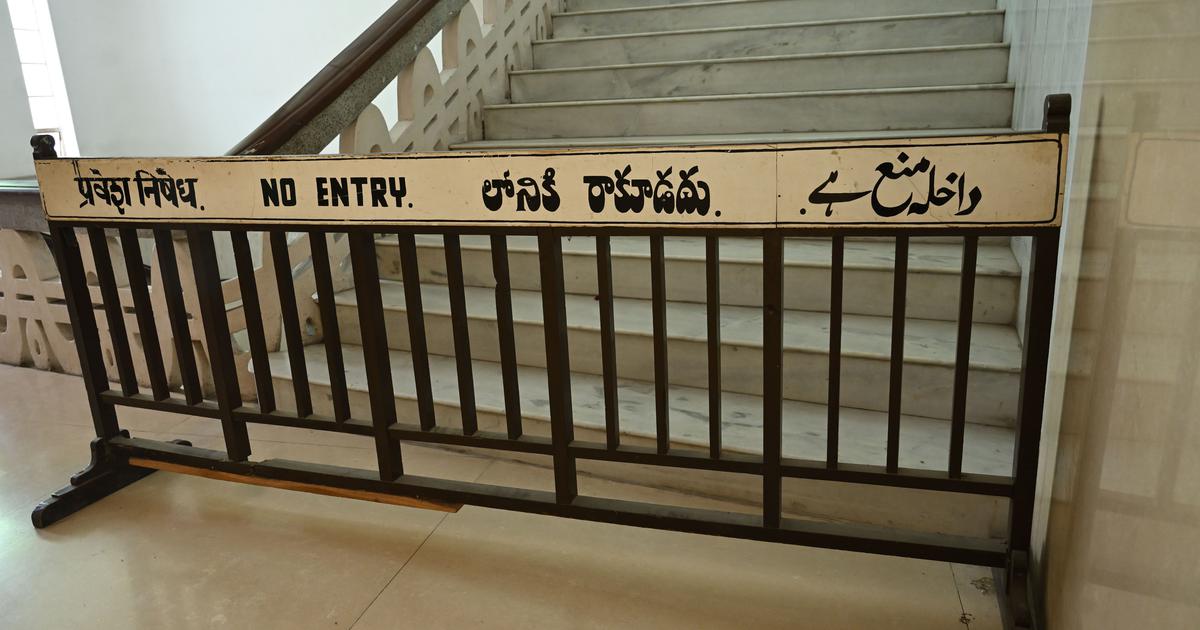
Language is more vital and organic to people than inanimate objects, and is a source of great culture in terms of prose, poetry and drama. It is essentially a liberating force in that it allows for the fullest expression of feelings, moods and thoughts. As literary critic George Steiner puts it, “No two languages, no two dialects or local idioms within a language, identify, designate, map their worlds in the same way. The memories stored, the empirical surroundings inventoried, the social relations which the language organises and mirrors (kinship, for example), the colours distinguished in its vocabulary of perceptions, differ, often radically, from tongue to tongue.” Language was a seminal part of the cultural fabric of India – to protect language is to protect plurality and cultural diversity.
When the Constitution was being drafted, the notion of cultural rights, particularly special cultural rights of minorities, was admittedly inchoate. The question was whether minorities ought to be guaranteed freedom in the matter of religion, language and culture and be protected from discrimination and interference by the State. The Congress had supported a policy of preservation of minority culture, script and language as early as in the Karachi Resolution of 1931.
However, Dr Ambedkar, the chairman of the Drafting Committee, saw a limited role for the State in the preservation of culture. Author Rochana Bajpai sums it up by stating, “The form in which cultural safeguards were eventually incorporated in the Constitution was that minorities were free to promote their culture with the possibility, but not an entitlement, to assistance from the state.” So the role of the State was negligible. It was to play no active hand in assisting the minority to preserve its culture and linguistic heritage.
This insouciance for the preservation of minority culture is disturbing in a society which ostensibly strove for pluralism, since in most cases assimilation is tantamount to annihilation. Contemporary thinking has privileged the notion of cultural preservation in a multicultural society. For the Muslims of UP and Bihar, Urdu’s importance was seminal. Yet successive Congress governments in power in UP in the 1950s and 1960s were actively negating minority linguistic culture and heritage, despite the existence of legislation which was to be used to assist the cause of Urdu. This point will be substantiated later in the book, but the matter of the right to cultural preservation is vital.
This policy should be looked at in a historical backdrop where Persian was the primary language of the North Indian elite and Urdu was most definitely an Indian language. Francesca Orsini, an eminent scholar of South Asian literature, traces the development of Urdu to the 19th century, when “Urdu took over the mantle from Persian.” At that time, it was certainly not identified with Muslims, although it was identified with the upper classes. In UP, apart from the Muslims, it was widely spoken by the Kayasths, the Khatris and, of course, the Kashmiri Pandits. Nehru, for example, continued to write in Urdu through the 1950s and only towards the early ’60s did he switch to Devnagari.
In 1900 North India, Urdu was overwhelmingly the language of public discourse. In fact, columnist Santosh Kumar Khare writes that “the notion of Hindi and Urdu as two distinct languages crystallised at Fort William College in the first half of the 19th century.” He further suggests that “their linguistic and literary repertoires were built up accordingly, Urdu borrowing from Persian/Arabic and Hindi from Sanskrit.” However, the crux of his argument – something that would disturb most proponents of Hindi – is that “modern Hindi (or Khari Boli) was an artificial construct of the East India Company which, while preserving the grammar and diction of Urdu, cleansed it of ‘foreign and rustic’ words and substituted them with Sanskrit synonyms.” It is paradoxical that it is now the RSS, the foremost protagonist of Hindi today, that takes the most pleasure in deriding English speakers in India, calling them “Macaulay’s children”. At any rate, the RSS position on Urdu is hostile; it ridicules the idea that Urdu, the language of a minority in UP, should be privileged in any way.
But, in a way, the position of UP’s Urdu speakers now mirrors the plight of the “Bhadralok” of Bengal at the time when the Communal Award of 1932 was announced that created separate electorates for communities. The award reduced the position of Bengali “Bhadralok” to a minority presence in the Legislative Assembly. A memorial in protest was sent to Lord Zetland (former governor of Bengal) by the “Bhadralok” community claiming that “your memorialists belong to the Hindu Community of Bengal which constitutes a Minority Community and, as such, is entitled to the same protection that is guaranteed to the Minorities of the other Provinces … the Hindu minority of Bengal claim their due weightage of representation as a recognised Minority right.” It is interesting to note that in the name of “culture”, which anyway was an amorphous term as it did not include language, the Bhadralok spoke about federalism and then Partition when the issue of a United Bengal was proposed in 1946.
The Muslims of UP, or at least the “Ashrafs” (upper classes), have been vilified for insisting on the retention of Urdu, as it was considered unreasonable for a small elite to privilege high culture and also insist on Partition as the solution. There was no reason why there could not have been a compromise and Urdu could not have been retained as the second language in UP instead of Sanskrit which hardly anyone spoke. Yet no one draws parallels with the Bhadralok of Bengal who succeeded in dividing the province because of their paranoia about cultural subjugation. Why was it unreasonable for the Ashrafs to insist on Urdu and not unreasonable for the Bhadralok to demand Partition on the grounds of cultural subjugation by people who they considered inferior?
We do not appreciate sufficiently how systematically Urdu has been erased from daily life in North India. As historian Mushirul Hasan states, “The Pro-Hindi lobby, which was vocal in the Constituent Assembly, had its way.” Seth Govind Das, a member of Parliament from the First to the Fifth Lok Sabha, stated, “The Hindi-Hindustani controversy has come to an end simply because Article 99 of the Constitution refers to ‘Hindi or English’ alone in relation to the transaction of business in our Parliament. Thus, the question of Hindustani exists no more.” The UP Board of High School and Intermediate Education decided on Hindi as the sole medium for writing in high school examinations from 1953 onwards. In order to make it even more difficult for Urdu speakers to transmit their patrimony to their children, the UP and Bihar governments suspended aid to Urdu medium schools. Hasan conceded that Nehru was deeply disturbed by this virulently anti-Urdu policy, but there was little he could do, once even confessing that “[i]f my colleagues do not agree, I cannot help it.”
The real death knell for Urdu was the three-language formula adopted by schools. In UP, this consisted first of the national language, Hindi, with Sanskrit being the second language and the third being a choice between English and Urdu. For those who wished to forge ahead in the new India, learning English as a language was critical, and it would be wrong to blame the few Muslims or those from Urdu-speaking backgrounds who chose English over Urdu. But manifestly, the three-language formula was skewed in favour of Hindi and Sanskrit with a clear intent to consign Urdu to the dustbin of history.
Urdu did have its votaries amongst upper-class Hindus such as Sir Tej Bahadur Sapru, who, as stated above, favoured the continuance of Urdu as the official language of North India. He was acutely suspicious of Hindi, considering it merely a ploy to Sanskritise Hindustani by removing from it the many Urdu words and usages. It must be said that there were many Hindu writers of eminence who wrote in Urdu, such as Munshi Premchand, Firaq Gorakhpuri, Pandit Harichand “Akhtar” and Anand Narain “Mulla”, amongst others. It was a secular bridge between the communities, apart from being the source of great art and high culture.
It is not as if Urdu was being replaced by something popular and vibrant. Hindi was and is dead and bureaucratic. As Octavio Paz, Nobel laureate and former Mexican ambassador to India, wrote, “The Hindi that has been imposed on present-day India has yet a further disadvantage: it is a language that has suppressed foreign voices, whether English, Persian or Arabic; in their place it has inserted Sanskrit neologisms. It is as though the English were to purge their language of all words of French origin because they are relics of the Norman invasion. The truth is that very few people fully understand official Hindi, which has become an affected and bureaucratic dialect. In order for ‘High Hindi’ (as some call it, sarcastically) to become a living language, it must submerge itself in popular speech and accept the voices of outsiders, no matter what their origin. Living languages are hybrids and impure.” The intent behind the emphasis on Hindi was clear – erase Urdu to prejudice Muslims and attack the composite culture, nothing else.
Retaining Urdu as the second language of UP would have been in keeping with the mandate of Article 29 of the Constitution, which explicitly protected the right of any group to nurture their language and culture. In UP, which was Urdu’s birthplace, the language was a marker of civilisation, literature and culture, deserving not just of protection but of pride. It was also the mother tongue of 20 per cent or more of the population. Academic Faizan Mustafa has pointed out that under Article 350(A), the state government was mandated to provide facilities for instruction in the mother tongue of linguistic minorities at a primary stage, and under Article 350(B), there was a requirement for the appointment of a special officer for linguistic minorities. Yet in UP, none of this was done, as Urdu was dishonestly identified as the language of a religious minority – rather than a linguistic minority – whose culture was required to be marginalised, if not eradicated. In fact, UP went further and banned Urdu medium schooling altogether, something which was not even done in states like Maharashtra. The famous Urdu writer, Shamsur Rahman Faruqi, was quite blunt about this, saying that there was an effort to extirpate Urdu in UP post-Independence.
There have been attempts to say that the Hindu Right was not being unreasonable in its desire to rid UP of Urdu. It was said that the Urdu script was not easy and despite centuries of being in use in the North by Muslims and Hindus alike, Devanagari was a more practical language and easier to write. This may sound plausible and divest the debate of anti-Muslim animus, except for one thing: the acrimonious debate over numerals. The Hindi supporters pointedly refused to accept Western Arabic numerals (0, 1, 2, 3…), which are in use today and insisted that Devanagari numerals be adopted. The reason, although it has not been stated as such, was, according to historian Gyanesh Kudaisya, “their Islamic provenance”. If the West had no difficulty in adopting the Arabic numerals, it is difficult to see a reason for their rejection by Hindi supporters, other than a visceral hatred for and a desire to vaporise the Islamic patrimony. India came very close to officially adopting Devanagari numerals in 1949, after a tied vote in the Constituent Assembly. Nehru’s intervention prevented this, who stated that Devanagari numerals should not be forced on the country by such a slim margin. I stress this example as it epitomises the attitudes of many members of the Hindu Right towards Muslim heritage. This was particularly apparent in UP, a point that underwrites the argument that there was little or no appetite on their part to come to any sensible arrangement on cultural matters with a large and entrenched minority.
This implacable insistence on removing Urdu carries significant implications, because with a language comes its literature, and with that literature comes a rich cultural heritage – what George Steiner referred to as a cultural patrimony. There have been attempts to translate Urdu poetry into Devanagari as well as into the Roman script, notably by Professor KC Kandy and other gifted translators, but it is not easy, and invariably a language and its literature disappear with the degradation or diminution of its script.
This is clearly apparent in the case of another Indic language which is spoken by over 35 million people worldwide and particularly by a community which, despite its small number in India, has played a disproportionate role at the forefront of enterprise, wealth creation and philanthropy: the Sindhi community. The Sindhi language is written in several scripts, including Perso-Arabic. Some of the greatest poets and writers of Sindhi literature, such as Shah Abdul Latif Bhittai, have written in this script, adumbrating Sindhi folklore and traditions. It is a profound tragedy that many young Sindhis today are denied the opportunity of imbibing the grandeur of their literature and syncretic heritage because of a bigoted desire to eradicate its traditional script and replace it with a script in which there is little Sindhi literature to speak of.
The curious aspect of this is the fact that when India attained independence, Hindi was made the official language of governance, with English being given an interim status. However, the victory of the “Hindiwalas” was, in the words of Francesca Orsini, “pyrrhic” since it could never substitute English, as can be seen from the popularity of English in primary and secondary school education, even in the Hindi-speaking states. Many, if not all, votaries of Hindi have sent and continue to send their children to English-speaking schools.
Paradoxically, notwithstanding the clear desire of the Hindu Right to eradicate Urdu, columnist Shoaib Daniyal states that, “demotic Urdu along with a substantial part of its Persian loans still lives on in India. Its 19th-century status as a register of elite society means North Indians still look to Urdu in their cultural consumption.” This is in large part the influence of Bollywood. In fact, it is this Hindustani that bridges the gulf between the North and the South much more efficaciously than an arid bureaucratic Hindi does.
Excerpted with permission from Heartland Rising: The Making of Majoritarian India, Javed Gaya, Westland.
