







A place that is marked by the presence of people is not unusual, but a place that leaves an indelible mark on people is extraordinary. In the ancient mountains at the southern tip of the great Western Ghats ranges, sheltering among rocky peaks and rugged slopes draped with tall evergreen forest, lies one such place. A place of beauty and challenge and diversity, which if you have really experienced it, you will declare has no real equal. And if you have lived and worked there, wherever you go, the place will go with you. It will remain a benchmark, a touchstone, a reference point in felt memory and field experience, against which you will forever measure other places, newer knowledge. A place that does all this, slowly, gently, but inevitably, is Kalakad–Mundathurai Tiger Reserve.
Near the southern tip of the Indian peninsula, the Kalakad–Mundathurai Tiger Reserve sprawls over an expansive forest landscape within the Western Ghats of Tamil Nadu state. Occupying 895 square kilometres, it adjoins other wildlife sanctuaries (Neyyar, Peppara, and Shendurney) and reserved forests lying across the administrative boundary in Kerala state, forming a forest tract nearly twice as large as the Agasthyamalai–Ashambu hill ranges. Biologists consider this landscape one of the most significant areas for conservation of biological diversity in the Western Ghats. It retains one of the largest and last remaining unbroken tracts of over 400 square kilometres of tropical rainforest, much of which has not been logged or converted to plantations, ripped by roads, or ravaged by mining like many other parts of the Western Ghats have been. Partly for these reasons, Kalakad–Mundanthurai Tiger Reserve offers an unparalleled opportunity to understand the ecology of rainforest plants and animals in a relatively undisturbed setting: an understanding that is a vital step to help conserve such a place for posterity
From the wide sweep of the Tirunelveli plains, the Kalakad mountains rise abruptly in looming grandeur. South of Tirunelveli, on the national highway that runs down to Kanyakumari at the southern tip of the Indian peninsula, the road turns sharply west towards the mountains. It passes through a rich countryside where paddy, banana, and other crops are grown in flatlands amid scattered lakes, old village ponds, and rocky outcrops. Past villages at the foothills, the road ascends the mountains to a Forest Department camp at the edge of the rainforest.
A narrow foot trail about a mile long snaked uphill along a torrential water channel, then across a river, and through the rainforest. Up this trail, on which everything from rice and gas cylinders and pipes and field supplies had to be carried, in the shadow of Kulirattimottai mountain, we had established a base camp that became our home for three years. It was an abandoned house with a cardamom drying room, the remnant of an expired plantation lease. There was no electricity or any other modern facilities, but as a camp literally a step away from the rainforests, it was perfect. People said we were cut off from the world. Yet, there in the rainforest, we felt more immersed in the world than ever before.
We had come there to study small mammals and birds, posing fundamental questions of ecology: on the distribution and abundance of species in relation to their environment. What were the small mammal and carnivore species – from rodents and shrews to civet and marten – that lived in the rainforest? And what was the community of birds? How did the distribution and abundance of all these species change from lower to higher elevations or from abandoned plantation and previously logged forest to undisturbed mature tropical rainforest? How did endemic species, such as the nocturnal brown palm civet, thrive in the rainforest? How much area did the civets need? What did they feed on? Where did they roost by day before they set out to feed by night?
With a bunch of such questions tucked into our belts, we set out to answer them through field research and observations. We laid quadrats to measure vegetation and grids and catch-and-release traps for studying rodent populations. We surveyed transects and point counts for birds and walked trails with tagged trees to document monthly patterns of leaf-flush, flowering, and fruiting of rainforest trees and lianas. We radio-collared brown palm civets to track and study this elusive and enigmatic species. With eyes and ears on the mountains and feet on the earth, we tried to discern the pulse and flow of the rainforest.
Immersed in the rainforest our work slowly brought us to appreciate the enduring rhythms of nature and its cycles of renewal. From early morning counts of birds, daytime surveys of plots and trails and transects, through nocturnal tracking of civets onto the next day: this was our diurnal rhythm. Every morning, the spot-bellied eagle-owls tucked into their tree hollows, and as the sun crested the mountains, the black eagles came skimming over the treetops. At the end of the day, as the giant squirrels went to roost in their tree nests, the flying squirrels and civets emerged to roam by night.
Then came the pulse of the seasons. The year opened cool and dry, or laced with the moist departure of the northeast monsoon, and Canarium trees flared red amid a sea of rainforest green. After the elephants passed by in March, peeling tree bark and snacking on Ochlandra reed bamboos, came two hot and tempestuous months with pre-monsoon thunderstorms that revived the wilting shrubs and replenished rainforest streams. Then, from June to September, the southwest monsoon reigned, with short sunny mornings and rain-lashed afternoons under dark, gloomy skies. The forest turned damp, as did our clothes and books and everything else in the camp, and fruits of Palaquium trees littered the forest floor and little seedlings sprung up on the moist leaf litter.
Then, as one monsoon withdrew, depressions in the Bay of Bengal brewed another. The northeast monsoon brought persistent, torrential rains and thick mists that swallowed the rainforests barely twenty metres away from our doorstep and poured in through the windows into our home. The swelling rivers, which sometimes flowed over the trail cutting off our base camp, thundered down the valley, carrying revivifying waters to the people in the plains. Even during a deluge it was remarkable how there was so little erosion – the slopes were swathed in dense forests – and the waters remained clear and pure to drink. Finally, as the year wound down, the winds and clouds and rains withdrew, cool, clear skies would open over the forests again, and the crimson flush of Canarium would flag the beginning of another year.
The rainforests were a place of eternal surprise. Even as we went in search of answers, looking for our study species, other creatures, puzzles, and wonders confronted us. We could take nothing for granted: all our senses had to be on alert all the time.
The trail cameras had been set, the civets collared, but dense vegetation kept much hidden. In the night, our spotlight would reveal little more than the shining eyes of a flying squirrel or a civet in the canopy, a shy chevrotain nibbling on fruits fallen on the forest floor. Even by day, we noted birds more by their songs than by sight, although a glimpse of an elusive Malabar trogon or the sweet songster, the endemic white-bellied blue flycatcher, was an almost daily joy.
Such sights and sounds hinted at what the forest held, and yet they constantly surprised us. That loud honk was not the alarm bell of a distant sambar, but the courtship call of a nearby frog; that black blur on the branches was not a scampering giant squirrel, but a Nilgiri marten on his hunt; that repetitive pulse was not the beep of a receiver left on by mistake, it was a tiny cricket cheeping in the undergrowth; that flash of yellow streaking from tree trunk to trunk was no darting woodpecker or butterfly, but a Draco, the flying lizard; that whistle emerging from the dark rainforest by night was no forlorn cry of mystery mammal, it was the haunting call of the rare Sri Lanka bay-owl. In the rainforest, even a sudden silence or a carpet of fallen Mesua leaves revealed something – the hushing of an unseen cicada on tree bark under the scanning eye of a treepie, or the passing of a sated troop of langur in the trees.
Watching animals, we learnt more about plants. The civets, although carnivores, ate more fruits than animal prey, and so we tried to document and identify the fruits and the plants they consumed. And fruits were always there: every month, through the year, some species provided sustenance to civets and macaques and birds such as hornbills and Malabar imperial-pigeons. Seeing seedlings sprouting from civet scat or trailside, we grasped how so many native rainforest plants could be regenerated from seed, into seedlings that could be planted to bring back rainforest in abandoned plantations and other degraded sites.
We had come to the rainforests for our research, but when we left three years later, we left with so much more. Working by day and night, more than what we came to study, we learned about natural history and ecology of the rainforest. And what we gathered informs and guides us to this day. As we completed our doctoral research, wrote our thesis and papers and reports, we began a project to ecologically restore degraded rainforest fragments in the Anamalai Hills, a range about 200 kilometres to the north. The work was inspired by field experiences in the Kalakad rainforest. It was this place that taught us to not just take away new knowledge, but try to give back something through informed conservation actions. It taught us how we could assist the civets in their task of forest regeneration, how we, too, could contribute to renewal as farmers of the forest.
Years later, the saplings planted in the Anamalai Hills now reach towards the sky having become young trees over twenty feet tall. In the restoration site, the young Canarium flames upward year after year, alongside quick Elaeocarpus and slow Palaquium and many other species, and on the leaf litter below, a passing civet has deposited a fresh batch of seeds.
The plants evoke a recollection of a distant rainforest, a home by the river running below the rocky dome of Kulirattimottai, where we would like to be again – to be reinvigorated, to learn, to be surprised anew. Yet, in this moment, the forest does not seem to be outside of us at all: seeing seed and scat and surging sapling before our eyes, we perceive the rainforests of Kalakad.
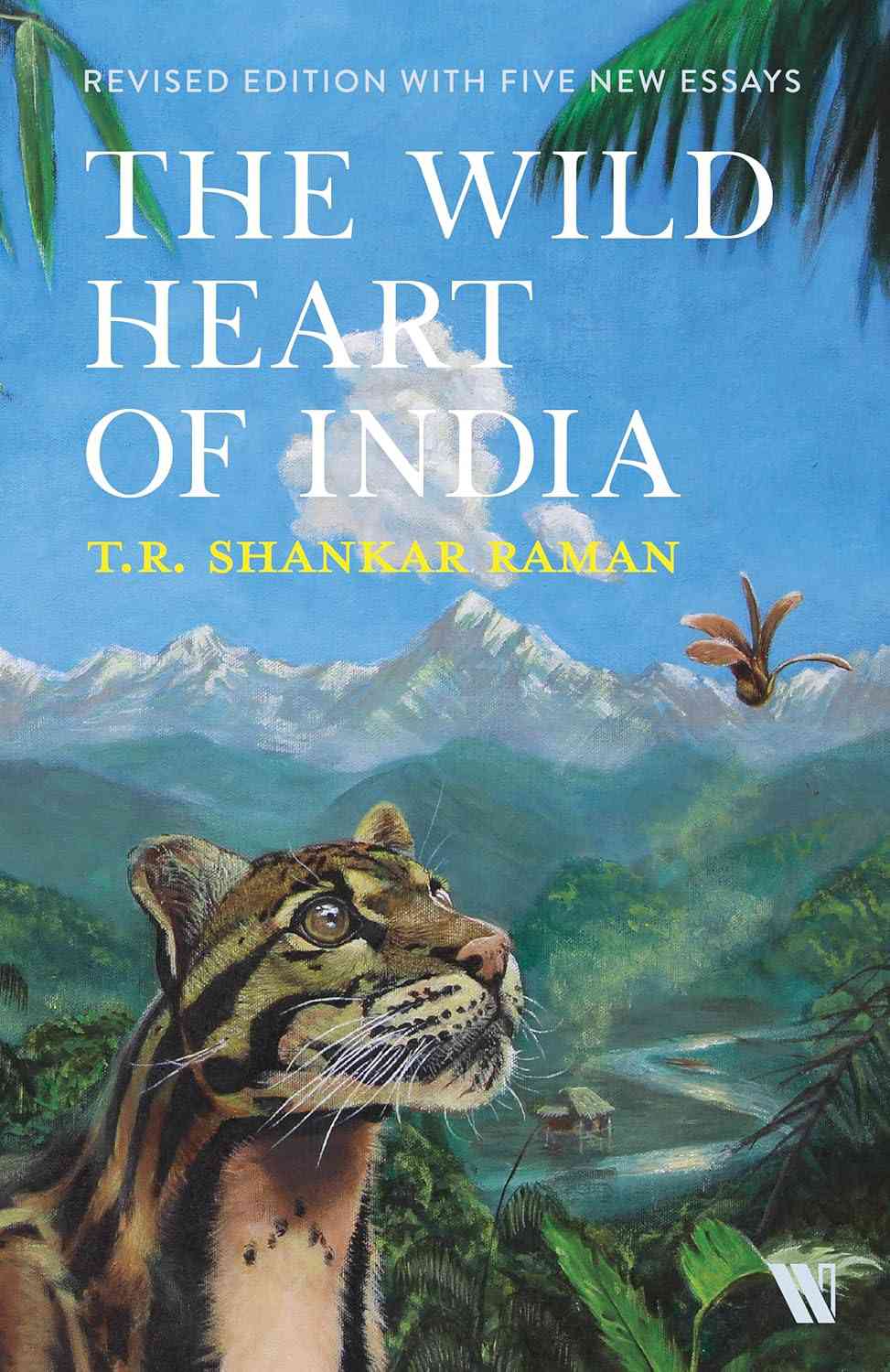
Excerpted with permission from The Wild Heart of India: Nature and Conservation in the City, the Country, and the Wild, TR Shankar Raman, Westland.
