










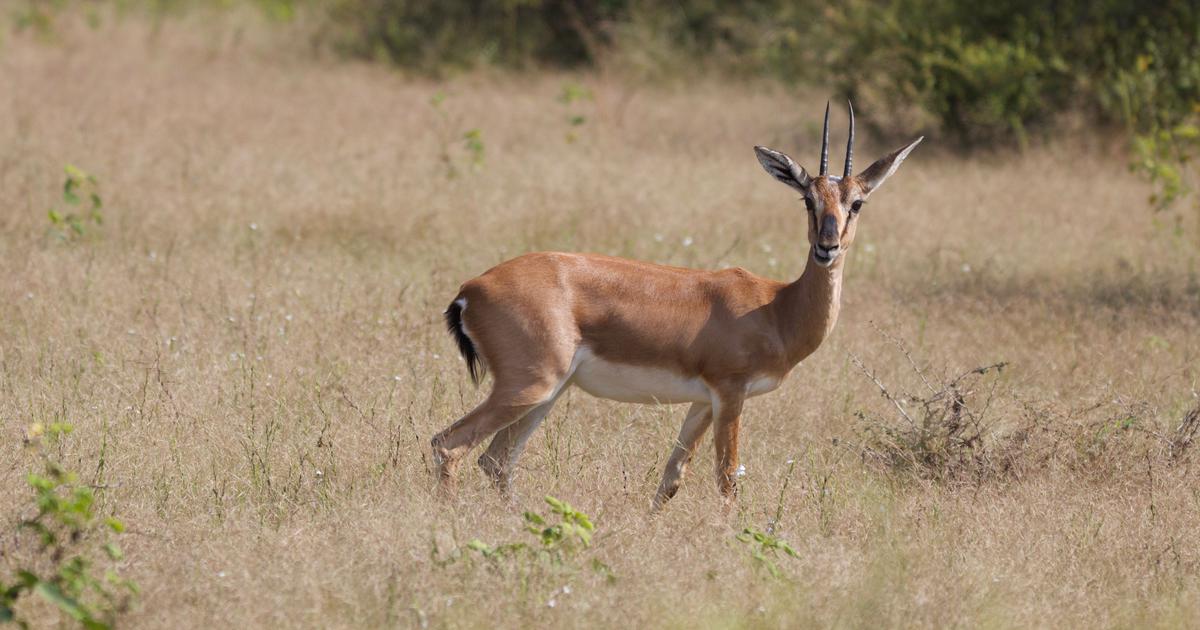
The Indian gazelle, also known as chinkara, found across the subcontinent’s drylands, carries a quiet sense of security. Protected under Schedule I of India’s Wildlife Protection Act and listed under the least concern category by the IUCN, it is not an obvious candidate for a conservation crisis. However, a new study published in the Journal of Wildlife Management by researchers from the Zoological Survey of India, challenges that assumption.
The study projects that under the worst-case emissions pathway, RCP 8.5, where temperatures rise by 4°C or more by 2100, the chinkara could lose nearly 89% of its suitable habitat by 2070. When climate alone is isolated as a driver, projected habitat loss climbs to almost 96.5%. Under RCP 2.6, which aligns with the Paris Agreement’s 2°C target, habitat losses were lower, but still severe.
“A loss of 89%-96% of habitat within roughly 50 years represents a biodiversity emergency for this species in India,” said lead author of the study Amar Paul Singh. The study is among the first to examine these risks at a national scale for a dryland ungulate.
Mapping a shrinking future
The researchers compiled more than 200 verified chinkara records from field surveys, published literature and biodiversity databases spanning between 2000 and 2022. They layered those records against climate, land-cover, topographic and human-disturbance data, then ran them through an ensemble of seven different species-distribution models to reduce the bias any single model might introduce into the final projection.
Under current conditions, the models identified a little over 195,733 square kilometres of suitable habitat, about the size of Gujarat, across western and central India, with patches on the Deccan Plateau. The chinkaras are found to roam across 11 states in the country, ranging from Rajasthan, Gujarat, Maharashtra, and Madhya Pradesh to Karnataka and Andhra Pradesh.
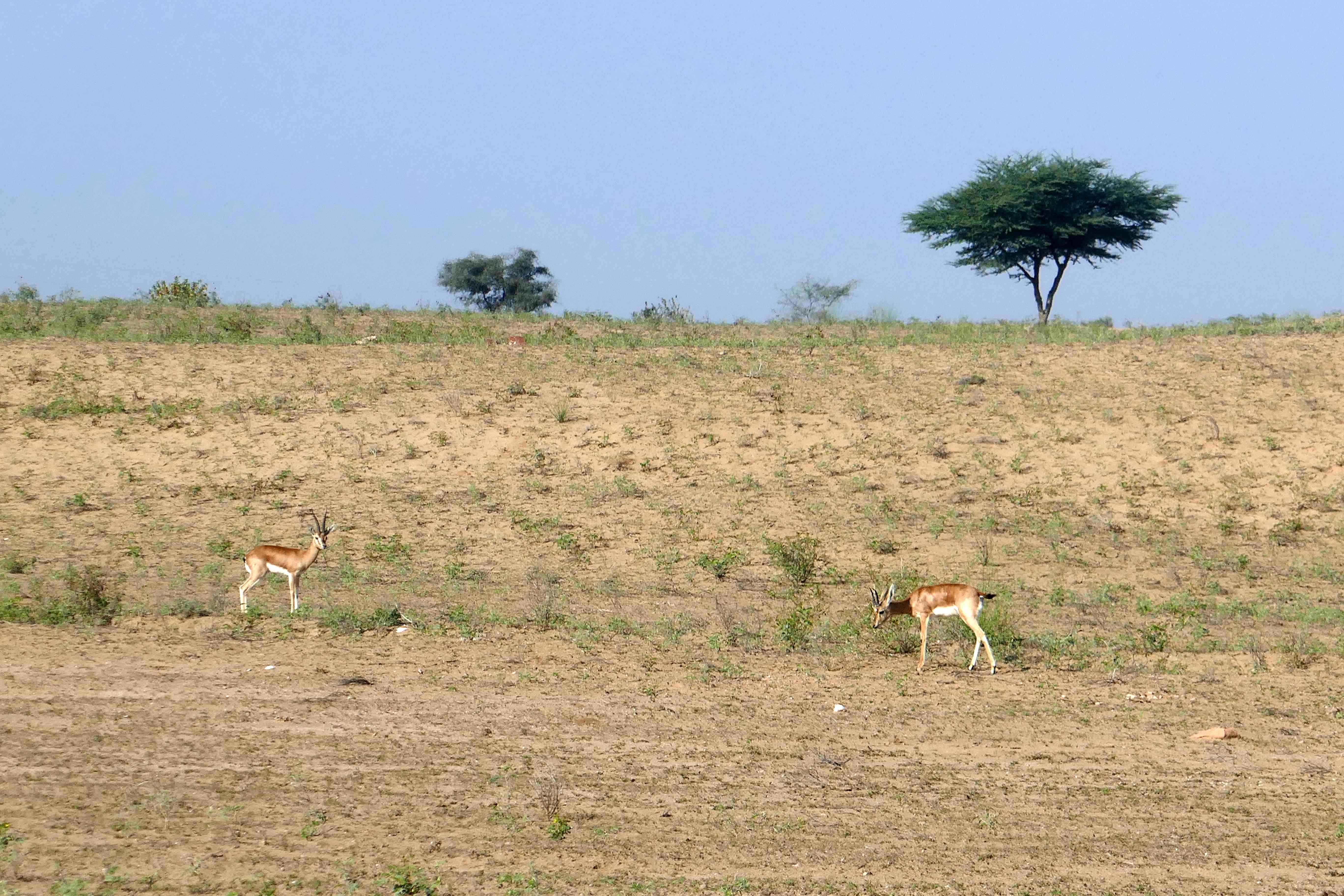
But by 2070, much of central and southern India is projected to become unsuitable for chinkaras. Liveable habitat would largely retreat to Rajasthan and the northwest. “This is not a gradual drift – it is a potential collapse of range for a species that many people assume to be secure,” said Singh.
The researchers looked at two main categories of threats that cause chinkara’s habitat loss: climate change and human land-use. The data models showed that climate change is by far the biggest threat to where the chinkara can live, dictating over 70% of the model’s results. Specifically, shifts in weather patterns like aridity, temperature and seasonal precipitation, will damage the chinkara’s habitat significantly more than human development or agriculture will.
Desert adaptation isn’t enough
There’s a tempting logic that says desert animals are essentially climate-proof, considering they have already adapted to living in one of the harshest environments on earth. The study also confronts the reasoning.
“Chinkaras are indeed desert-adapted animals, but adaptation does not mean they can tolerate unlimited heat or drought,” said Singh.
The models suggest chinkaras thrive in moderately dry conditions, not extreme aridity. The concern is as much ecological as physiological. The chinkara has the ability to survive without water for many weeks and can sustain hydrating itself by extracting moisture from desert plants, seeds and wild fruits. “When vegetation becomes severely stressed due to extreme aridity, food quality and quantity decline, creating indirect pressure on the species even if the animal can tolerate heat reasonably well. In essence, they can survive in deserts, but they need a desert that still has functioning, water-bearing vegetation,” Singh explained.
Threats beyond climate change
Parts of Rajasthan emerge from the analysis as potential climate refugia, but the study does not account for several emerging threats on the ground.
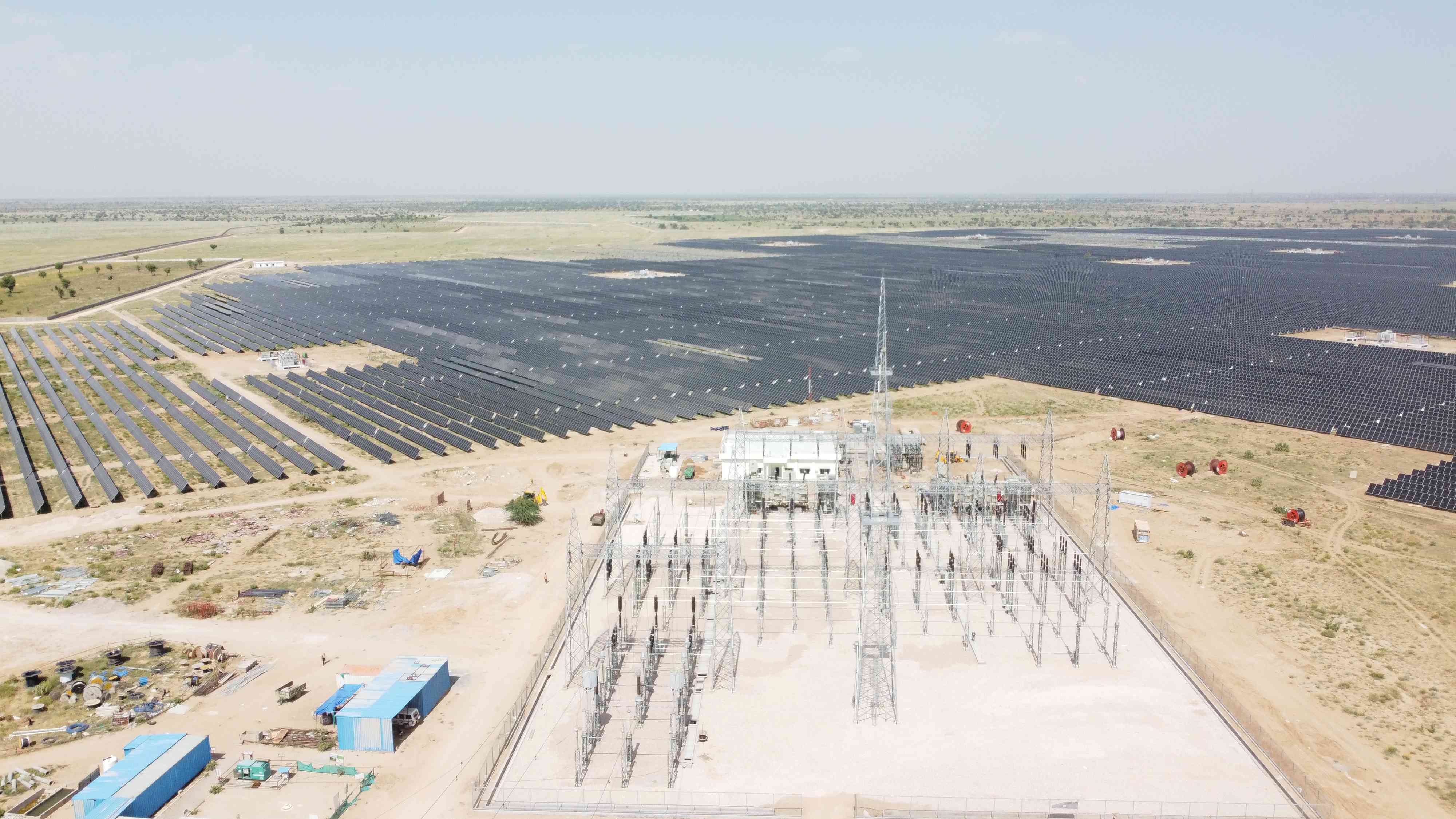
Rajasthan is India’s largest solar energy producer, with several large-scale parks sitting within or adjacent to the climatically-stable habitat, the study identifies.
Sumit Dookia, a wildlife researcher who has spent more than two decades studying chinkara in Rajasthan, welcomed the study’s projections but also pointed to the rapid expansion of renewable energy infrastructure. “This study does not account for the existing and future case scenario of solar energy parks in this landscape. These renewable energy parks are altering the existing habitat of chinkara and such landscape-level fenced parks are going to become inaccessible,” he said.
Dookia also questioned whether the northwest can reliably serve as a future stronghold, given the irrigation initiative – Indira Gandhi Canal Project’s transformation of the region. Improved irrigation has enabled two to three crops a year, eliminating the fallow periods that once gave wildlife room to move. He also listed habitat degradation and free-ranging dogs as immediate threats, largely absent from long-term climate projections.
Community guardians
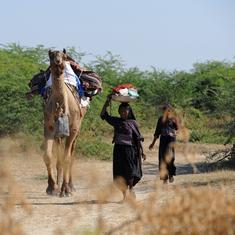
In north-western Rajasthan, the Bishnoi community has functioned as an informal, effective conservation force for generations. For the Bishnoi, harming or killing a chinkara is a sin. Those who violate this norm face social pressure and the community intervenes directly.
“Populations near Bishnoi villages are notably healthier and denser than in adjacent areas without such community protection. As our projections show Rajasthan becoming the primary refuge for chinkara under climate change, the cultural stewardship of communities like the Bishnoi becomes even more ecologically significant,” Singh said.
What next?
Dookia argues that broader policy changes are needed. “There is an urgent need to recognise so-called ‘wastelands’ as biodiversity refuges inside human-dominated landscapes. We need a grassland policy for the protection of one of the most fertile ecosystems, which supports many wild herbivores outside protected area regimes,” he said.
The study’s authors also outline four interconnected priorities. Population monitoring must first be strengthened across the species’ current range. Simultaneously, habitats in central and southern India need to be prioritised for protection before further land-use change accelerates losses.
Looking further ahead, wildlife corridors connecting existing populations to projected future refugia in the northwest will be essential to enable the range shift the models anticipate. Finally, as a key prey species for cheetahs reintroduced in India, the chinkara’s conservation carries broader ecological significance for India’s rewilding project as a whole.
This article was first published on Mongabay.
