



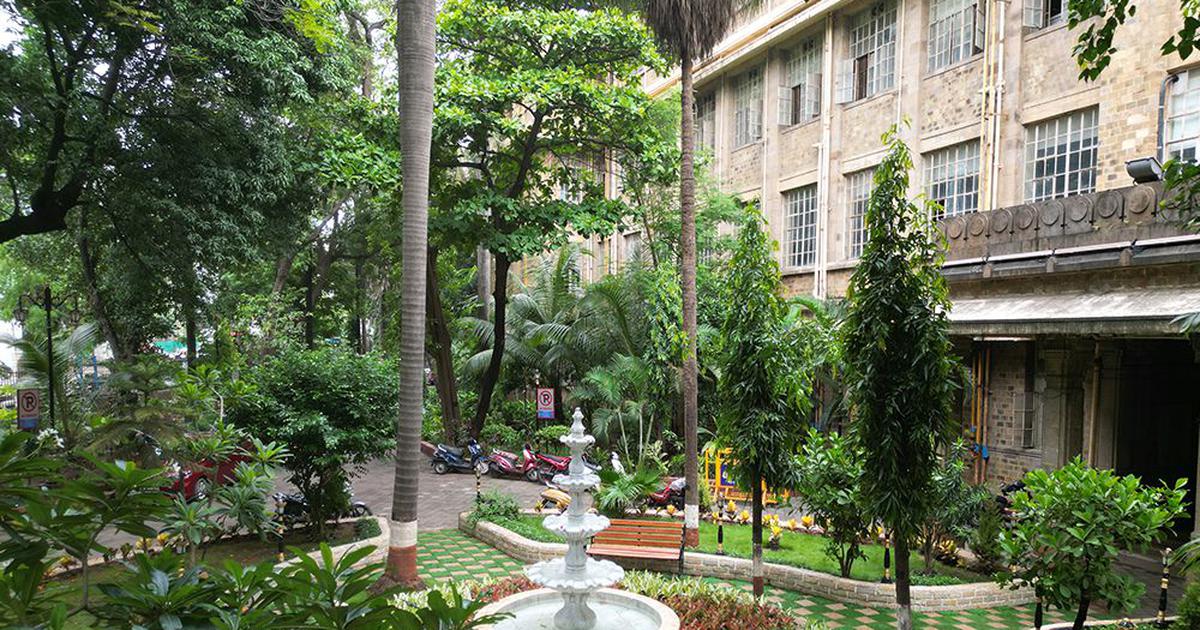
Seventy nine years after Independence, most colonial names have been wiped clean in Mumbai. So when Maharashtra minister Mangal Prabhat Lodha found one that was still intact and proposed that the municipal King Edward Memorial Hospital be rechristened, there really shouldn’t have been much of a debate.
“The name King Edward represents colonial rule,” Lodha said at an event to celebrate the hospital’s centenary in January. “It has no connection with India today. Therefore, the civic body should think about changing it.”
This week, the minister reiterated his demand. Edward, he said, was actually “King Kasab who looted India and killed lakhs of Indians” – a reference to the Pakistani terrorist Ajmal Kasab who along with 11 others massacred 175 people in the city in 2008.
Oddly, Lodha’s suggestion has met with opposition from members of Uddhav Thackeray’s Shiv Sena faction – whose predecessors in 1995 had changed the name of the city from Bombay to Mumbai.
“There is a history behind the KEM Hospital’s name and contribution of Edward towards health that can’t be denied,” party MLC Sunil Shinde told The Print.
Historians point out that sites with colonial names, even those that memorialise controversial personalities, serve as resonant reminders that the past is more complicated that politicians often try to suggest. Others note that the campaign to replace colonial names is a low-effort emotion-driven strategy by governments to deflect attention from their inability to solve current problems.
Still, the impulse to purge colonial names is easy to understand: the British were insatiably extractive and forced India to pay a colossal human price for their imperial project.
That corrosive memory informed Indian foreign policy for decades. During the Cold War, New Delhi was justifiably wary of being drawn into neo-imperialist blocs and attempted to forge a path of non-alignment.
No wonder Indians with a perspective on global history have been alarmed at the country’s recent willingness to bend over backwards to pander Donald Trump’s America – even in the face of indifference (most recently, Trump refused to apologise for the deaths of three Indian sailors in US fire) and insult (India was slapped with crippling tariffs and can buy crucial Russian oil only at Washington’s forbearance).
In fact, India is so eager to flatter the US president, the street by the US consulate in Hyderabad was designated Donald Trump Avenue earlier this week (even though Telangana is ruled by the Congress).
That is a move that would meet with the approval even of Mangal Prabhat Lodha, the Maharashtra minister pushing to give KEM Hospital a more Indic identity. In addition to being a politician, Lodha runs a construction conglomerate, erecting towers with decidedly Western names. His projects include Lodha Bellissimo, Lodha Fiorenza – and Lodha Trump Tower.
Here is a summary of last week’s top stories.
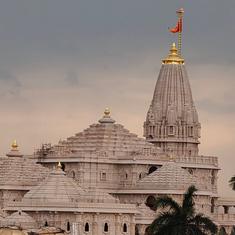
Ayodhya embezzlement case. Shri Ram Janmabhoomi Teerth Kshetra Trust chief Champat Rai and member Anil Mishra resigned from their posts on “moral grounds” following the alleged embezzlement of donations made to the Ram temple in Ayodhya. The trust manages the temple.
On Thursday, a first information report was registered against eight persons in the matter based on a complaint by the trust. It invoked provisions of the Bharatiya Nyaya Sanhita pertaining to theft by a clerk or servant, criminal breach of trust, stolen property and criminal conspiracy.
This came after a Special Investigation Team submitted its preliminary report on the allegations to the Uttar Pradesh government. The contents of the report have not been made public. Opposition leaders and a whistleblower have claimed that cash and jewellery offerings made by devotees had been embezzled by temple staffers under the trust’s watch.
Spotlight on the Madhya Pradesh CM. The Congress asked whether the Bharatiya Janata Party would agree to an independent judicial inquiry into allegations pertaining to land purchases by Madhya Pradesh Chief Minister Mohan Yadav, his family members and their real estate companies. The Congress’ state chief Jitu Patwari asked whether Yadav would release a white paper on the land he had bought since taking oath as the chief minister.
This came a day after The Indian Express reported that Yadav, his family and their real estate firms bought at least 137 plots worth Rs 45 crore in areas that will benefit most from infrastructure projects announced by him.
Patwari urged Yadav to explain the source of the funds used by him and his family to buy the land.
A destructive natural disaster. At least 920 persons died and 3,360 were injured as of Friday after two earthquakes of magnitude 7.2 and 7.5 struck Venezuela on Wednesday. More than 50,000 persons were reported missing. The epicentres of both the quakes were close to the capital city of Caracas.
The “doublet” earthquake was the most powerful to occur in the region in 126 years. There were more than 20 aftershocks. Several countries sent search and rescue teams to look for survivors.
War crimes. The Israeli military deliberately killed Palestinian children and has committed a genocide, said the United Nations Independent International Commission of Inquiry. More than 20,000 children have been killed by the forces and 44,000 injured since October 2023, it added.
“Even after the October 2025 ceasefire, children continue to be killed and seriously injured, with continued disregard by Israel for the ceasefire and for the protection owed to Palestinian children under international law,” said Srinivasan Muralidhar, the chair of the commission.
The panel also alleged that sexual violence had been used against children as part of the “collective shaming and oppression, entrenched within a prolonged, ethnic, gendered, and intergenerational pattern of Israeli occupation and hostilities”.
Also on Scroll last week
- In Ayodhya, it’s Sangh Parivar vs Sangh Parivar as Ram temple fund ‘theft’ charges blow up
- The RSS man at the centre of Ram temple trust’s controversial run in Ayodhya
- A ban on meat in Amritsar triggers a legal challenge – and rakes up a contentious history
- Food regulator took credit for a ‘crackdown’ on Bournvita. But it gave the drink a clean chit
- Explained: Why an Indian passport is not proof of citizenship – and no single document is
- How two men refused to bend to press censorship during the Emergency
- How India can keep cool as energy demands overheat its power grid
- The SpaceX reckoning: Elon Musk’s empire is built on taxpayer money, government subsidies
- ‘Eetha’ and the long fade of the tamasha tradition in Maharashtra
- How a Ritwik Ghatak restoration will make us see the master filmmaker in a new light
Follow the Scroll channel on WhatsApp for a curated selection of the news that matters throughout the day, and a round-up of major developments in India and around the world every evening. What you won’t get: spam.
And, if you haven’t already, sign up for our Daily Brief newsletter.
