












The spectre of climate change is upon us and its manifestations are there for all to see.
The public debate about climate change tends to focus on its more visible effects for adaptive (and not preventive) measures: increased frequency and intensity of heat waves, urban flooding and air pollution. However, many of the embedded sources of environmental harm remain unacknowledged. As a rapidly urbanising country, one such source that India can no longer ignore is carbon emissions emerging from its growing built environment.
Every building carries a carbon cost that far outlasts those who built it. Globally, the built environment accounts for nearly 34% of annual CO₂ emissions, the single largest share of any sector. In India, the buildings sector contributes a substantial and growing share of national greenhouse gas emissions.
Currently, the dominant discourse tends to focus mostly on “operational carbon” – the emissions from running a building, with the discussion confined to energy efficiency. What tends to be ignored is “embodied carbon” – the carbon emitted in the making of a building, from the extraction and production of materials to their transportation and construction on site.
Once a building is completed, its embodied carbon is locked in and cannot be reversed or reduced.
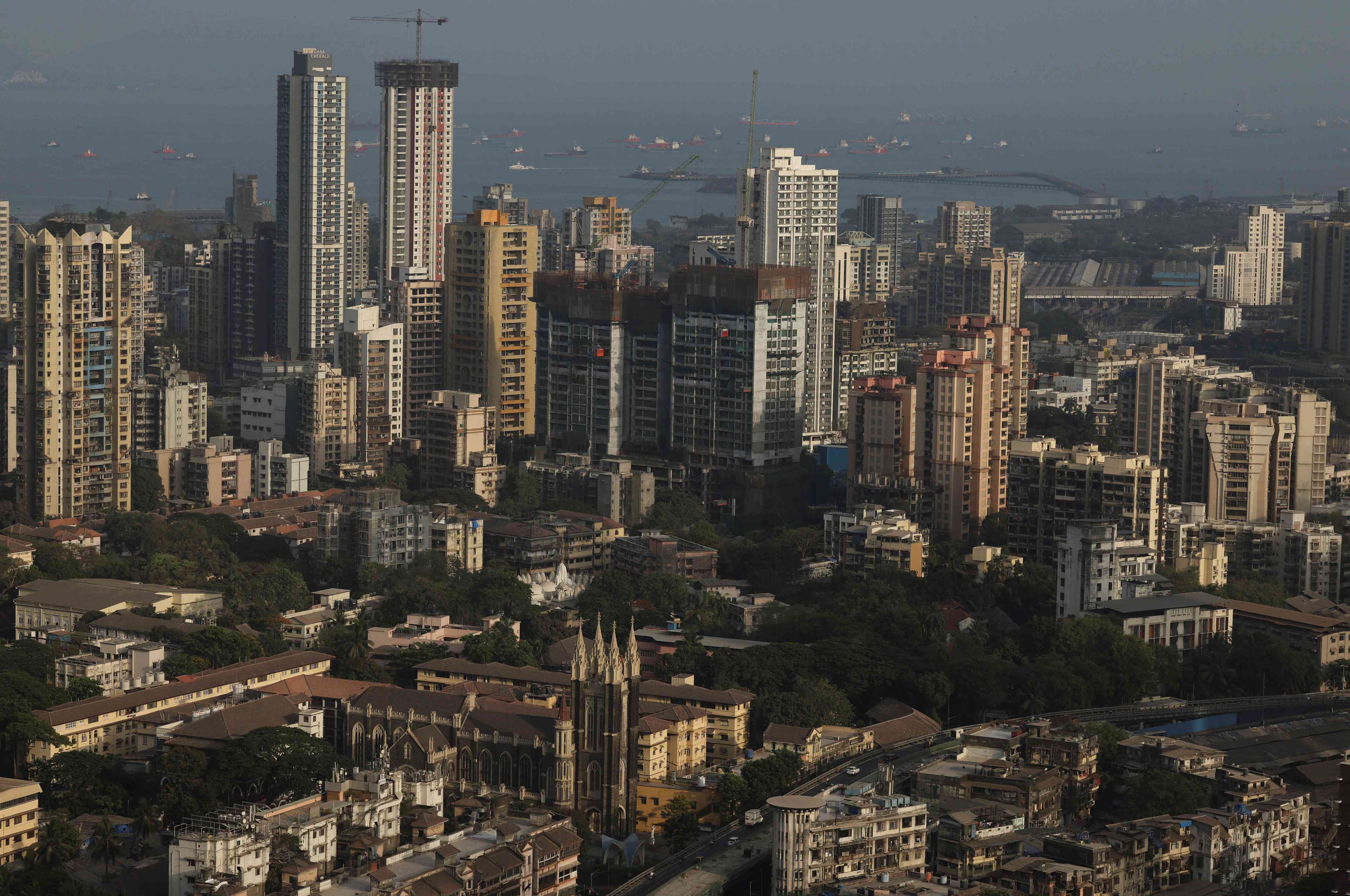
Since India is slated to add over 50 billion square metres of new building stock in the coming decades, how it handles the carbon emissions from new construction will become one of the most consequential environmental decisions of this century.
This explosion of built space presents a critical regulatory challenge: how should environmental law and urban planning govern and discipline the carbon intensity of India’s urban growth?
Environmental law
India’s environmental legal architecture was not designed to govern climate change or carbon emissions. Under the “dualist” framework of the Indian Constitution, international agreements like the Paris Agreement become enforceable only when Parliament passes a law under Article 253. This is the provision that gives Parliament the power to make laws to implement international treaties, conventions and the decisions of global conferences.
At the Global front, India has committed through its Nationally Determined Contribution to reducing the emissions intensity of its GDP by 45% by 2030 from 2005 level, and achieving “net-zero” emissions by 2070 – by transitioning to clean energy and building carbon sinks to absorb carbon dioxide from the atmosphere. But there is no overarching legislation or statutory framework to enable, mandate or monitor this tall order.
India’s core environmental statutes – the Water (Prevention and Control of Pollution) Act, 1974, the Air (Prevention and Control of Pollution) Act, 1981, and the Environment (Protection) Act, 1986 – were landmark enactments in their time. But these laws have not evolved to incorporate the challenges of carbon emissions and climate change.
The Environment Protection Act empowers the Central Government to set standards to regulate pollutants, but does not specifically address greenhouse gas emissions from buildings or construction. The Environmental Impact Assessment notification similarly requires no whole-life carbon accounting, whether embodied or operational.
The judiciary, too, has engaged only marginally with climate change in this context. In 2024, the Supreme Court recognised a constitutional right against the adverse effects of climate change. However, Indian environmental jurisprudence has largely focused only on the visible forms of pollution such as vehicular emissions and industrial contamination, with very little engagement with building construction-related emissions.
In this context, the Energy Conservation (Amendment) Act, 2022 marks a positive step forward. The Bureau of Energy Efficiency has already issued building energy codes such as the Energy Conservation Building Code and Eco Niwas Samhita. The 2022 amendment moves towards an Energy Conservation and Sustainability Building Code, incorporating embodied carbon, material efficiency, and net-zero considerations. Yet implementation remains dependent on state-level notification and has not yet been widely adopted.
Urban planning regulations
If environmental law has a blind spot for embodied carbon, urban planning instruments and regulations are no less culpable. The function of urban planning has traditionally been to enable economic growth while managing externalities through land-use regulation.
Across India, speculative real estate markets are driving deregulated or extremely high allowances for Floor Area Ratio, also known as Floor Space Index. This ratio defines the size of a building that can be built on a parcel of land. This increased allowance is being capitalised on to encourage high-rise development without an empirical scrutiny of its carbon implications.
The relationship between land-use intensity, building height, and carbon emissions remains almost entirely ignored in India’s urban regulatory regime. Research increasingly shows that beyond a certain threshold, higher Floor Area Ration and taller buildings generate disproportionately higher life-cycle carbon emissions and produce diminishing returns in population density.
Each additional floor increases embodied carbon and operational energy demand, while reducing rooftop solar potential and intensifying urban heat island effects.
Yet, climate considerations barely figure in state-level Town and Country Planning Acts and the planning instruments emerging from it. While some city-level master plans go beyond this limited framework, a study of 59 city plans across 24 states found that only 30% show any awareness of climate change and just 10% contain climate-relevant analysis.
Most development control regulations continue to determine Floor Area Ratio and building heights solely through market logic, with no reference to carbon emissions. National-level instruments like the Urban and Regional Development Plans Formulation and Implementation guidelines and the National Building Code do engage with sustainability to some degree. However, these instruments are advisory and not statutory and hence create no enforceable obligations.
Low-carbon cities
While India has ambitious carbon-reduction targets on paper, it lacks a statutory architecture with enforceable targets and accountability mechanisms to achieve this. For a comprehensive response to the climate crisis, India ideally needs an enforceable “framework law” on climate change.
This can be seen in countries like Denmark and the Netherlands that have enacted climate laws with binding emission reduction targets and enforceable instruments of accountability.
A Climate Change Act can establish binding medium and long-term carbon reduction targets and enforceable accountability mechanisms across sectors, including construction.
Beyond an overarching climate change law, the most immediately actionable step lies in updating existing environmental law and regulations. The Environment Protection Act should be amended to explicitly include greenhouse gas emissions from the built environment within its regulatory scope. The Environmental Impact Assessment clearance process should also be strengthened by requiring mandatory whole-life carbon assessments for major developments.
Planning regulations must also be reformulated to limit carbon emissions from the built environment. The archaic state-level Town and Country Planning Acts should be amended to make climate change adaptation and mitigation a legally mandated objective that needs to be incorporated in the master plan.
The ensuing master plans and development control regulations should incorporate explicit carbon limits and recalibrate Floor Area Ration and height norms as instruments of carbon governance.
India can learn from France’s RE2020 regulation that imposes lifecycle carbon thresholds for buildings, with Paris having reintroduced a statutory 37-metre height limit for all new buildings, treating building height as a carbon variable.
Given the scale of construction India is expected to undertake in the coming decades, it needs to weigh the per capita carbon footprint of what it builds and set a binding per capita limit for emissions from the built environment. Such a target should be laid down in the framework climate law and operationalised through environmental and planning regulations.
Without such regulatory discipline, India’s urbanisation will exceed its fair share of emissions and push the planet closer to irreversible climate change.
Mathew Idiculla is a legal consultant and a PhD Candidate and Teaching Fellow at the Faculty of Law & Justice, University of New South Wales, Sydney.
Ashok Lall is the principal architect at Ashok B Lall Architects in New Delhi and an action researcher developing strategies for sustainable urban development.
Girisha Sethi is an architect and urbanist based in New Delhi and a consultant with the United Nations Environment Programme (UNEP).
