






The revolving door of No 10 Downing Street, has been dubbed the UK’s most in-demand Airbnb. Another new occupant – the seventh British prime minister in a decade – will arrive in a few days’ time.
Once seen as a beacon of stable democracy, it’s been musical chairs in the Mother of Parliaments for the 10 years since the “Brexit” vote that triggered the UK’s departure from the European Union. Capriciousness exists where once predictability ruled.
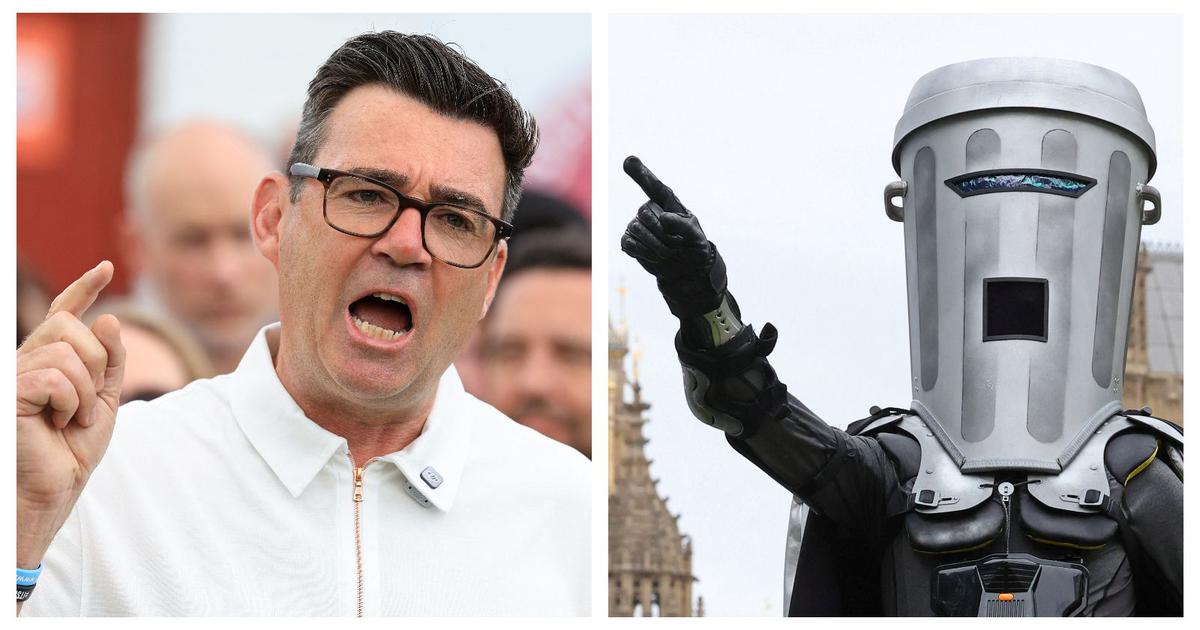
The new incumbent, Andy Burnham, is little known outside the UK and comes to high office in unique circumstances. He served as an MP from 2001 to 2017 and held various cabinet roles. After two unsuccessful bids for the leadership of the Labour Party while it was in opposition, he quit Westminster and served as the elected Mayor of Greater Manchester for nine years.
His return to Parliament as the MP for Makerfield – a working-class constituency at the edge of Manchester – is one of the greatest heists of the modern political era.
Viewed by many Labour MPs as a “king over the water”, or pretender to the throne, Burnham’s path to power was cleared by the resignation of a sitting MP in a seat that Labour has held for more than 40 years. In the ensuing bye-election Burnham won big. On the back of that success, he has ousted Sir Kier Starmer who came to power just two years ago with a landslide victory
Starmer is seen by many to have done a good job on the international stage. He formed a workable relationship with US President Donald Trump, maintained support for Ukraine and concluded a Free Trade Agreement with India which comes into effect on July 15. He can claim notable success at home including a sharp decline in illegal immigration.
But his position became increasingly precarious. Parliamentary colleagues were frustrated by a series of domestic policy U-turns, a lack of bold ideas and a growing belief that he is unable to see off the challenge of an insurgent right-wing threat from Reform UK the party led by Nigel Farage – the architect of Brexit.
The appointment of unrepentant Epstein crony Lord Peter Mandelson as ambassador to the USA – and his ultimate resignation – chipped away at Starmer’s credibility.
British Prime Minister Keir Starmer hugs his wife Victoria, as he announces the timeline for his resignation, outside 10 Downing Street, in London, Britain, June 22, 2026.
— The News (@thenews_intl) June 22, 2026
📸: Reuters
Visit our website: https://t.co/vURCUirZbS#TheNews pic.twitter.com/BytQ8RmtiU
Less than 100 hours after the Makerfield result, Starmer concluded that the writing was on the wall and resigned, triggering a leadership election. Since Burnham was the only candidate with overwhelming support of his fellow MPs, the leadership contest became a coronation. He will step unchallenged into the top job on July 20.
The manner of his ascent poses a challenge. Burnham wasn’t an MP at the last election and so becomes prime minister off the back of a single bye-election result. The lack of an internal contest means he hasn’t had to put forward a programme of government and having avoided media interviews, he has dodged the scrutiny of journalists.
If he’s bold and assured, he will seek a nationwide mandate and call a quick general election or at least a vote of confidence by which to prove he has the support of elected members. If not, he risks a premiership dogged by questions of legitimacy.
He is a good communicator and has charisma. With the wind behind his back, he inherits a huge majority – which means constitutionally he has a “mandate”. Whether the British public see his tenure at No. 10 as legitimate is yet unclear.
UK citizens – and those who watch Westminster from afar – have little sense of his agenda, the degree to which he feels beholden to the Labour manifesto upon which this government was elected in 2024, or who will hold the other big offices of state. Parliament will go into recess for the summer on July 24, and he won’t address the House of Commons until the second week of September. Uncharted waters await.
There are big and unanswered questions about what the UK can expect and what might yet another change of leadership mean for international relations? How will Burnham position himself in relation to the US, Europe, China and India? There’s little to go on, so we must speculate.
Major domestic challenges include a flatlining economy, cost of living crisis, high and rising welfare spending, and long National Health Service waiting lists. These will demand immediate attention and even a new manager bounce won’t solve these stubborn structural problems.
One of his big themes as Mayor of Manchester was devolution – the sharing of power between regions and the centre. In recent years Burnham has been an advocate for a “new settlement” between Westminster and the UK’s regions.
The next Prime Minister will be @andyburnham he now has the backing of enough MPs to secure the leadership outright.
— Labour Future (@LabourfutureUK) July 14, 2026
Congratulations Andy. Let us all go forward together and beat the populists and build the country we know we can be.https://t.co/IT5eFHV62d
Policy announcements in the past month have been like sober uncles at a Parsi wedding or a Gujarati travelling without thepla – hard to find. The exception has been the idea of a No 10 North – that some of the functions of the prime ministerial operation – are relocated north to Manchester. This has been presented as an attempt to reduce the feeling that government is remote, out of touch and disconnected from the majority of the population, particularly those outside the capital.
Such an idea won’t seem odd to Indians who live in a country where the seat of power has variously shifted most recently in 1931 when New Delhi replaced Calcutta (now Kolkata) as the capital. During the Raj era, the British rulers routinely decamped in summer to Shimla to manage state business from cooler climes. Given India’s federal structure, much power already rests with regional governments. Perhaps 80 years after Independence, Burnham will seek inspiration in the structures of India’s system of power sharing (though perhaps not in the way it has been functioning in practice).
In 2019, then Mayor Burnham led a 30-strong Northern Powerhouse delegation to Mumbai, Delhi and Bengaluru designed to strengthen ties between India and the north of England – a region that is home to a large South Asian diaspora. He has been a vocal supporter of the Manchester India Partnership and an advocate for bi-lateral investment as well as cultural and education initiatives.
Indians will watch his stance on visas for students and skilled workers and his support for the UK-India Free Trade Agreement. New Delhi will want that agreement to be honoured and hope that it does not become under-resourced and pushed down the agenda as its UK signatory departs and new appointments take over key ministries.
A recent change at the Indian High Commission in London and the fact that senior UK diplomats in India are nearing the end of their tenures means new relationships need to be forged. Perhaps this is an area where he will feel he can benefit by encouraging the upward trajectory of UK-India relations and enjoy the fruits of his predecessor’s endeavours while focusing on his domestic challenges.
On China, Burnham has previously said the UK can learn from its success in building infrastructure. He has not left a trail of anti-Trump social media posts and is a proponent of closer ties with Europe but pragmatic enough to see that too much political and economic capital has been wasted over the past decade to want to reopen that debate in the short-term. Home affairs will be top of mind.
BREAKING: Reform UK leader Nigel Farage announces he will resign as an MP, triggering a by-election in Clacton in which he will run.
— Sky News (@SkyNews) July 7, 2026
Politics latest: https://t.co/agDl4d6R99
📺Sky 501 and YouTube pic.twitter.com/6Hn1vqMHon
As every good story should have, there’s a twist in the tale. Nigel Farage – architect of Brexit (directly) and Starmer’s downfall (indirectly) – is under parliamentary scrutiny for having taken an undeclared 5million pounds (Rs 64crore) gift from a crypto billionaire. His response was to resign his seat, trigger a bye-election and ask the voters of his constituency, Clacton in the south-east county of Essex, to judge him.
The mainstream parties have refused to endorse the stunt and won’t stand candidates. So his challenger is a character called Count Binface – who claims to be a 5,900-year-old intergalactic warrior from Sigma IX but is in fact a man with a garbage bin on his head who has no discernible policies and says he has never been to Clacton.
So, it seems the big political story of the UK summer will not to be interrogation of the incoming prime minister but rather the farcical battle of Farage versus the Bin.
Burnham should use the distraction to sharpen his policy agenda and make sure he starts his tenure behind the famous door on a firm footing lest he finds himself packing his bags in haste.
In an uncertain world a period of stability is to everyone’s advantage. At home and abroad.
Mark Hannant is a creative services entrepreneur. He splits his time between London and Mumbai. He is the author of Midnight’s Grandchildren How Young Indians are Disrupting the World’s Largest Democracy.
