






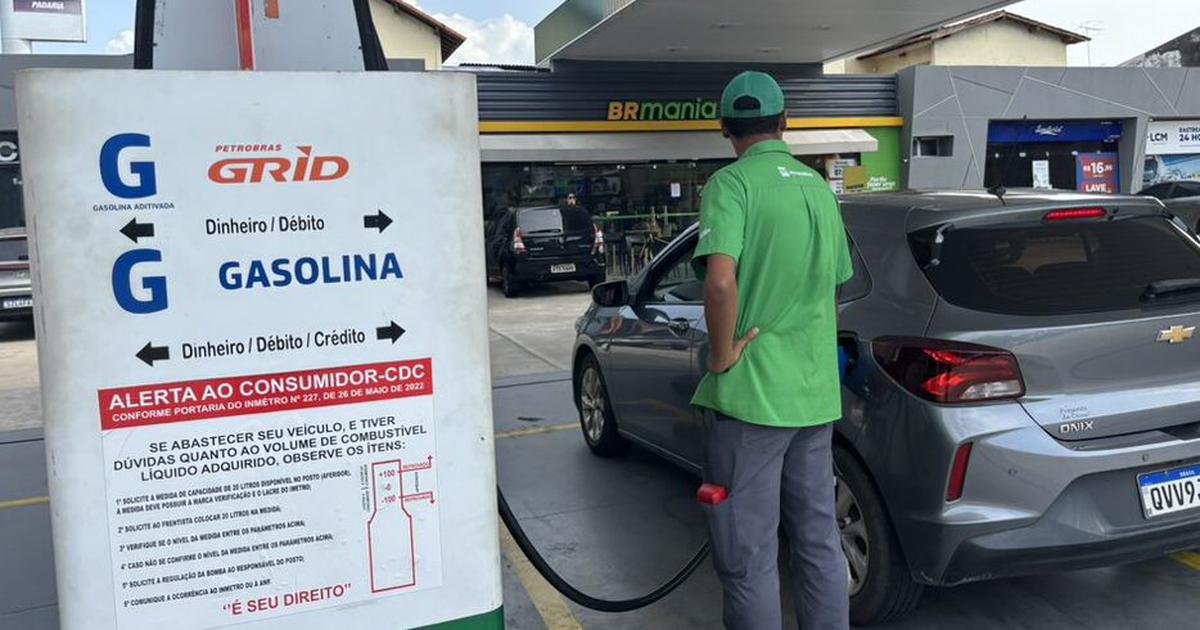
At Posto Dallas, a fuel station in northern Brazil’s Belém city, a car pulls in. The driver checks the price board, then picks a fuel. The 27-year-old station attendant, John, sees this happen all day. “Mostly flex-fuel vehicles come here,” he said. “People see the price and ask us to fill the fuel in their tanks accordingly.”
Posto Dallas fuel stations are supplied by the state-owned energy company Petrobras and operate under the brand. In Brazil, customers can choose between different percentages of ethanol blends or pure petrol depending on the price and usage. Most cars sold here are flex-fuel vehicles, built to run on different petrol-ethanol blends. Brazil has offered this choice for decades.
In another part of the world, nearly 15,000 km away, at a petrol pump in Bhopal’s Katara Hills, the scene looks similar. Vehicles come and go, attendants fill tanks, customers decide fast. But one thing is different: the choice on offer. In India, the government made 20% ethanol blended petrol, called E20, the default fuel across all fuel stations under its ethanol blending programme.
For Nicola Pamplona, a vehicle owner and a journalist by profession, choosing between petrol and ethanol in Rio de Janeiro is routine. Most Brazilians follow a simple rule. “Brazilian drivers know that ethanol is worth using when its price is below 70% of the petrol price,” Pamplona said.
However, unlike Pamplona, Priyanka Verma doesn’t get that choice in Bhopal. Verma moved to Bhopal from Delhi. In Delhi, her car ran about 15 km per litre in heavy traffic. In Bhopal, traffic is lighter, but the mileage has dropped to around 11.5 km per litre, a drop of about 23%. She blames E20 fuel for this drop.
Pamplona chooses ethanol, whereas Verma is forced to use it. That difference sits at the heart of the India-Brazil comparison. Brazil allowed enough time for non-compatible vehicles to phase out, built its system around flex-fuel vehicles, and allowed consumers to choose their fuel based on price. India is moving differently, with E20 becoming the default petrol while flex-fuel vehicles remain rare. Separate fuel choice at the pump too barely exists.
Brazil matters to India’s ethanol debate because India has often looked to Brazil’s long ethanol experience while expanding blending. India’s ethanol roadmap has referred to Brazil’s experience with ethanol and flex-fuel vehicles. The two countries have also discussed bioenergy cooperation, including ethanol, higher blends and flex-fuel technology. Brazilian ethanol representatives have engaged with Indian government and automobile-sector forums. India’s discussion around flex-fuel vehicles echoes parts of Brazil’s pathway, where ethanol moved from blending to direct use in flex-fuel vehicles.
However, the comparison of India’s and Brazil’s ethanol transition also shows the difference. Brazil built its ethanol system over decades through transition of vehicles, rigorous testing, competitive prices, logistics and consumer trust. India’s move from low ethanol blending to E20 has been rapid.
What India tested before E20
India’s ethanol transition has its own testing history, though many of the details are not as publicly available as Brazil’s long ethanol record.
In 2021, the NITI Aayog came up with a Roadmap for Ethanol which was prepared in just 75 days by an expert committee comprising representatives of petroleum and road transport ministries, oil marketing companies and Automotive Research Association of India.
India’s ethanol journey began with pilot projects in 2001 and the sale of 5% ethanol-blended petrol in selected states from 2003. Average blending was still around 5% in 2019-20, before the government accelerated the target from E10 to E20 and advanced the E20 deadline to 2025-26.
The roadmap also recognised vehicle compatibility as part of the transition, saying manufacturers should define and display whether vehicles can use fuels such as E20, E85 or E100. It also noted the need to address material compatibility and corrosion risks in ethanol-blended fuels.
The Automotive Research Association of India and the Society of Indian Automobile Manufacturers, have publicly referred to E20 testing on older and newer two-wheelers and four-wheelers, including checks on emissions, fuel economy, durability and material compatibility.
According to the Society of Indian Automobile Manufacturers, India’s E20 adoption was a “calibrated, standards-backed journey”, while the Automotive Research Association of India has said studies covered performance, fuel economy, durability, long-term usage, accelerated ageing and material compatibility.
Mongabay-India could not find detailed vehicle-wise results in a public government repository.
The government has acknowledged that E20 can cause a marginal reduction in fuel efficiency in some vehicles. In a March 2025 reply to Parliament, the Ministry of Petroleum and Natural Gas said E20 results in a marginal reduction in fuel efficiency for four-wheelers designed for E10 and calibrated for E20. The reply also said SIAM had informed the committee that hardware changes and engine tuning could reduce this loss, and that the E20 roadmap did not find major issues in vehicle performance, engine wear or engine oil deterioration.
The Society of Indian Automobile Manufacturers has said concerns about drastic mileage loss are misplaced, noting that mileage depends on several factors beyond fuel type.
Brazil’s long road
Luiz Augusto Horta Nogueira, a Brazilian bioenergy expert and former technical director of Brazil’s National Agency of Petroleum, Natural Gas and Biofuels, or ANP, told Mongabay-India that India’s ethanol transition appears strikingly fast when compared with Brazil’s long journey.
“We took almost a century to do that and India has done it in five years,” he said.
Brazil introduced mandatory ethanol blending in petrol in 1931, but ethanol’s roots in Brazil’s sugar economy go further into the country’s agricultural and industrial history. The major political push came after the oil shocks of the 1970s, when Brazil launched Proálcool, its National Alcohol Programme, to promote domestic ethanol production and reduce dependence on imported fuel.
Sindicom, Brazil’s National Union of Fuel and Lubricant Distribution Companies, described the country’s experience as one that “transcends five decades of accumulated learning” across technology, logistics, regulation and taxation. That learning included failures. In the early phase, car buyers had to choose between petrol and an ethanol-powered vehicle.
Nicola Pamplona has watched Brazil’s ethanol transition for around three decades, both as a journalist and as a vehicle user. He said that during the initial period, choosing between a petrol and an ethanol-powered car was not simple.
The turning point, he said, was flex-fuel technology. “The introduction of flex-fuel vehicles was the key driver behind the industry’s success,” he said. “Drivers gained the freedom to choose which fuel to use based on price or environmental considerations.”
This freedom changed how Brazilian drivers related to ethanol. They could use ethanol during the sugarcane harvest season, when it is cheaper, and shift to petrol during the off-season or for longer trips.
But Pamplona said his own choice is not only economic. “As a driver, I have always preferred ethanol over petrol for environmental reasons. I do not mind paying a little more in exchange for emitting fewer pollutants,” he said.
India’s move, by comparison, has been much faster. Indian government data shows ethanol blending in petrol was 1.53% in 2014. India reached 10% blending in 2022, five months ahead of schedule.
Public sector oil marketing companies had started selling E20 petrol from February 6, 2023. The pace has also been backed by expanded ethanol supply. The petroleum ministry said the National Policy on Biofuels, amended in 2022, advanced the 20% blending target from 2030 to Ethanol Supply Year 2025-26, along with expanded production and infrastructure.
The government said the E20 target had already been achieved in the current Ethanol Supply Year, the November-to-October cycle used to track ethanol supply and blending.
The missing bridge between fuel and vehicles
Horta said consumer confidence has to be treated as part of ethanol policy. “Consumer confidence is really an issue to be tackled seriously,” he said. Like India, Brazil also had to respond to scepticism and confusion around ethanol. “There is a permanent fight to clarify, to inform,” he said.
Brazil’s sugarcane and bioenergy industry association, UNICA, had participated in meetings in India with government and automotive-sector representatives during India’s ethanol discussions.
Evandro Herrera Gussi, the head of UNICA, who participated in meetings in India, spoke to Mongabay-India and said fears around ethanol blends are not new. He argued that ethanol is often blamed for problems that may come from vehicle age or poor maintenance. “The truth about ethanol, it’s better for engines. It’s better for cars,” he said.
Horta, speaking from his mechanical engineering background, also defended ethanol’s technical properties while also recognising that ethanol has lower energy content per litre. “In my opinion, I am a mechanical engineer, in many aspects, ethanol is a higher quality fuel compared with petrol,” he said.
A book on Brazil’s ethanol journey, Bioethanol: Fast track to mobility decarbonisation, coordinated, underlines why higher ethanol fuels require vehicle and fuel-system adaptation. Ethanol has different energy content, volatility and water affinity from petrol, and high-ethanol fuels such as E85 are usually discussed together with engine calibration, materials compatibility and cold-start performance.
That distinction matters for Indian consumers. A higher ethanol blend may have technical benefits, but if drivers experience lower mileage without a clear price advantage, the transition becomes a trust issue. In a market where E20 is becoming the default, consumers also need clarity on vehicle compatibility and warranties.
The larger lesson, both Horta and Gussi suggested, is that higher blends need testing before trust can follow. “A lot of tests,” Gussi said. “To achieve E20, to achieve E27, to achieve E30, to achieve E35, nothing without tests.”
The book, jointly published by the Brazilian development bank and Centre for Strategic Studies and Management, also describes how higher-blend decisions in Brazil were backed by institutional testing.
The move to E27 involved government, Petrobras/CENPES, automaker and motorcycle-industry participation. Brazil’s current standard petrol contains 30% ethanol and 70% petrol. This blend was announced only after technical tests showed its viability. The government also said the tests were monitored by multiple automotive-sector organisations who declared the E30 blend safe for two- and four-wheeled fleets. Brazil also put out these test reports in public domain to build consumer confidence.
In July 2026, Brazil’s National Energy Policy Council also approved a temporary increase from E30 to E32 for 180 days, citing fuel-price pressure and the need to reduce gasoline (petrol) imports.
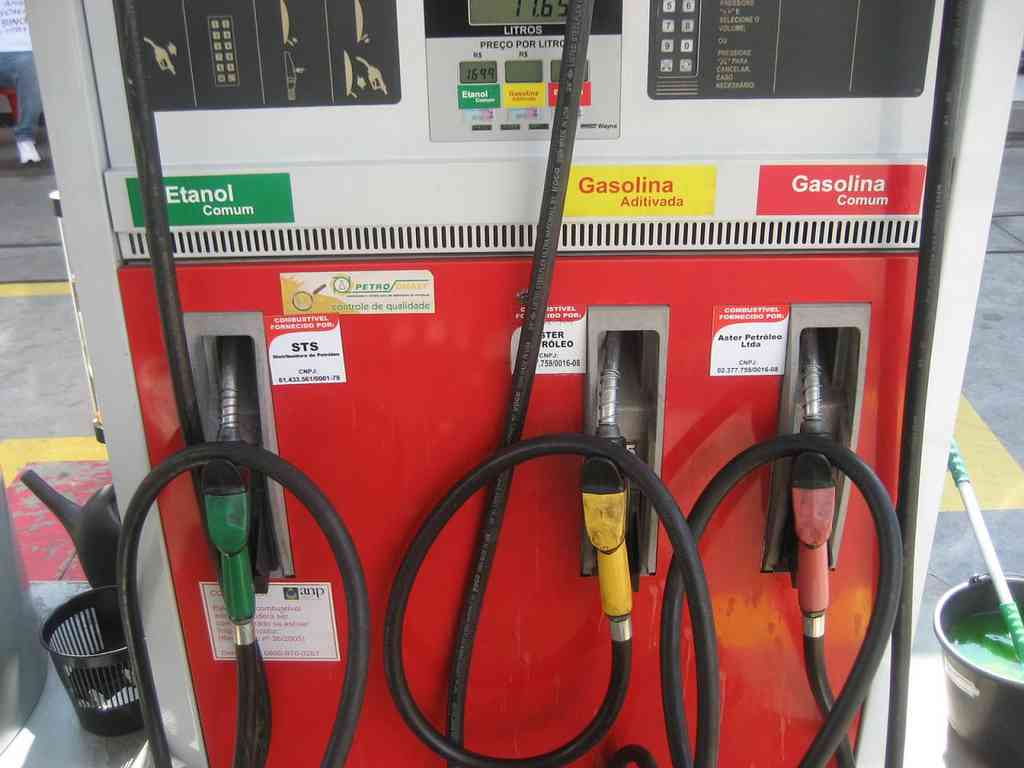
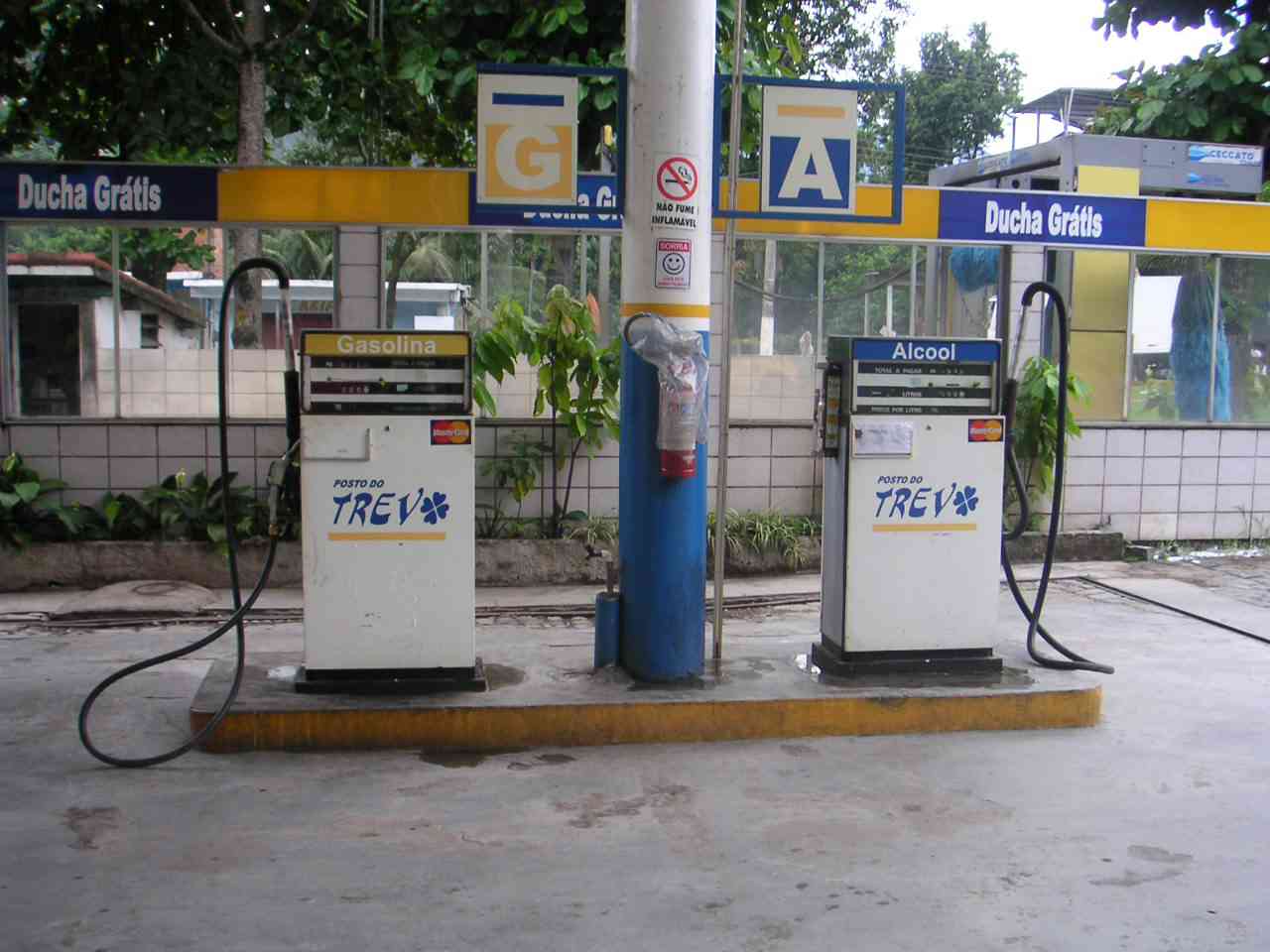
In addition to E30 petrol, Brazil has a separate ethanol pump for its flex-fuel fleet. Sindicom put the flex-fuel share at about 75% of Brazil’s national fleet and said Proálcool helped finance research and development in flex-fuel engines. That vehicle transition is central to Brazil’s ethanol story because ethanol demand is not created only through a blending mandate, but also through vehicles that allow drivers to choose.
Sindicom told Mongabay-India that Brazil’s “Fuel of the Future Law” allows movement towards higher ethanol content only with tests and trials proving technical viability. For any increase, including up to E35, Sindicom said predictability is essential so that distributors can invest and plan logistics properly.
Horta advised India to stay with E20 for now, calling it a safer path because higher blends would require more preparation in vehicles, fuel supply and consumer readiness. “I feel that you (India) are safer. Go to E20, not beyond immediately,” he said.
This article was first published on Mongabay.
