






Welcome to The India Fix by Shoaib Daniyal. A newsletter on Indian politics.
As always, if you’ve been sent this newsletter and like it, to get it in your inbox every week, sign up here (click on “follow”).
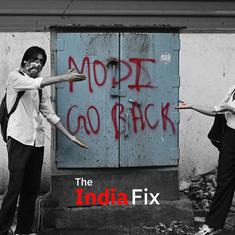
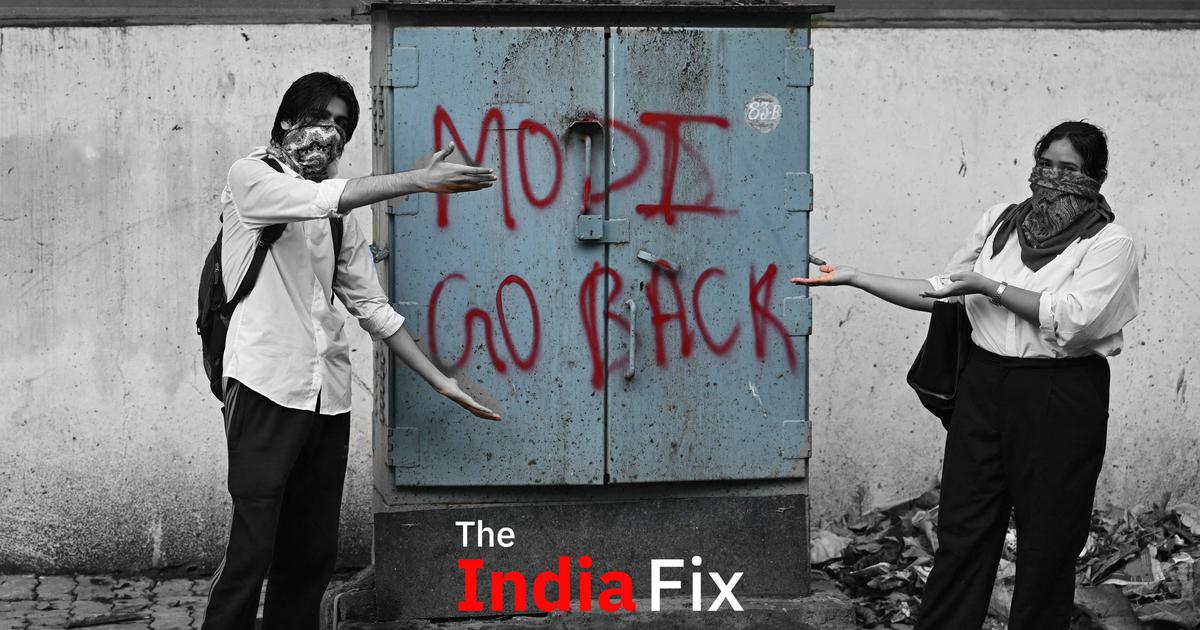
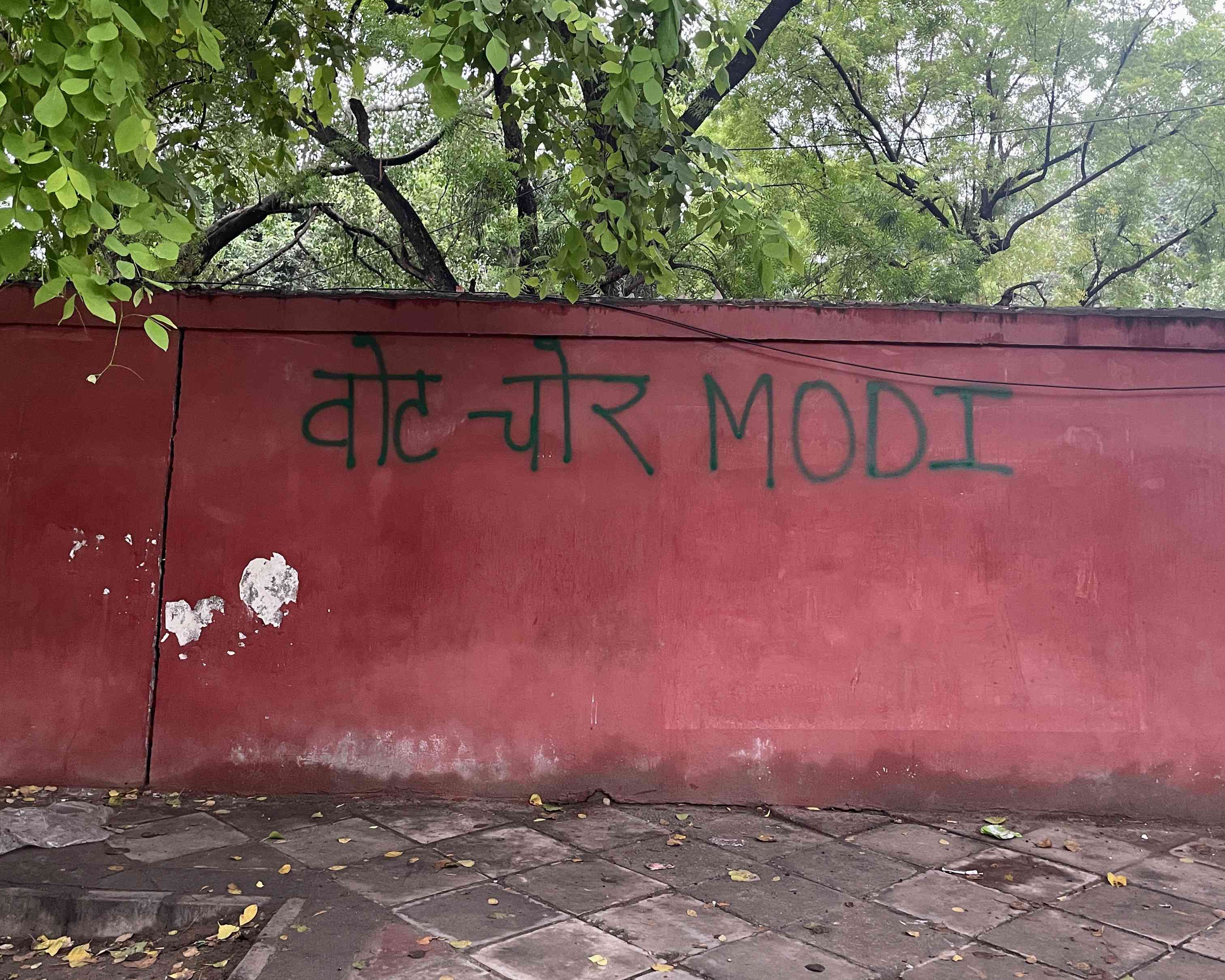
On a wall close to the Jantar Mantar, an eighteenth-century observatory in the heart of New Delhi, are scribbled the words “Vote Chor Modi”. The Hindi phrase, calling Prime Minister Narendra Modi a vote thief, refers to the frequent allegations of election rigging made against the Bharatiya Janata Party.
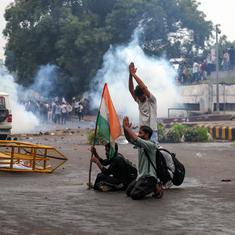
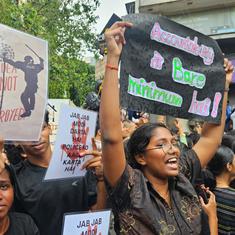
The graffiti was made by students protesting against question paper leaks. For weeks now, hundreds of young men and women have gathered at the heart of India’s capital to demand the resignation of the Union minister for education. Rather than talk to the students, on Saturday the Modi government sent in the police to forcibly detain Sonam Wangchuk, an activist fasting on behalf of the students.
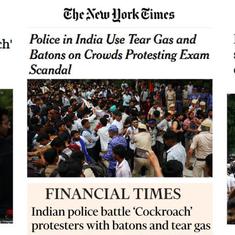
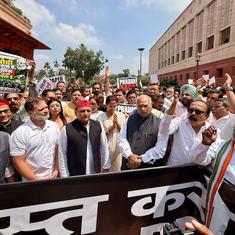
This show of force was the political equivalent of taking a cricket bat to a wasp nest. On Monday, students, likely numbering above a lakh, hit the streets trying to march to Parliament. While the police blocked them before they could reach the legislature, the sheer size of the crowd meant that they took over Lutyen’s Delhi, the heart of the Indian state. It was a sight never seen before.
Economic fears
What was a slogan highlighting concerns about rigged elections doing in a protest against corruption in the education sector? The young men and women protesting in Delhi’s monsoon heat are driven primarily by economic anxieties around their future place in the job market. Unemployment for graduates under the age of 25 is shockingly high, at nearly 40%. The number of white-collar jobs have stagnated since 2021 and wages, adjusted for inflation, have not grown.
In this bleak landscape, public examinations are one of the rare channels available for economic mobility. With the transparency of even those under a cloud, it is not surprising that youth anger has burst.
But by themselves, economic issues would not have led to this sort of massive protest in India’s capital. A significant reason for it is also that India today offers no pressure valves for public anger to dissipate.
Vote chori
Take the “vote chori” grafiti. Protesters at Jantar Mantar are acutely aware of the widespread allegations of election rigging by the Modi government. For years now, researchers, journalists and Opposition politicians have been pointing to significant anomalies in how India’s elections are conducted.
Matters peaked in the April Bengal election, when millions of voters were arbitrarily removed from the voter list. After winning the election, the BJP then went ahead and split the Trinamool, thereby controlling almost the entire state Assembly.
In more normal times, the young men and women angry with the government’s economic performance might have expended their energies trying to vote the ruling party out. But these widespread allegations of election rigging and decimation of the Opposition mean that many protesters are convinced that the Bharatiya Janata Party simply can’t be voted out – so hitting the streets is the only option.
It’s not only elections: almost all other pressure valves have been shut off. Consider that the movement was sparked off by the remarks of the Chief Justice of India, Surya Kant, who had allegedly described young people who criticise the judiciary as “cockroaches, who don’t get any employment”.
Quis custodiet
For some years now, the judiciary is seen to not be doing its job of keeping the executive in check. Challenges to policies pushed by BJP-led governments, no matter how controversial, either get the court’s approval or, in some cases, are simply not heard – in effect giving the government a victory.
So acute is this phenomenon that the very distinction between the government and Supreme Court got blurred in the eyes of the protestors. An agitation that started with Kant’s statement seamlessly moved on to include slogans against Narendra Modi.
Then, of course, is the fourth estate. Like the courts, the media is meant to check executive power. But major Hindi and English channels based in the National Capital Region function quite brazenly as mouthpieces of the Modi government. Not surprisingly, much of the anger during Monday’s march was expressed against so-called godi media or lapdog media.
Add all of these and it’s quite clear that a major push factor for the protests is the lack of any democratic devices to release the pressure. Indians angry with the Modi government have no door to knock on. It is very unlikely that the courts will help them, the media will not investigate wrongdoing and protestors feel elections are not fair enough to allow the BJP to lose.
The long haul
This moment has not come suddenly. Mass protests have been a stark feature of the Modi era. In 2019-2020, lakhs of people across the country came out on the streets in response to fears that the Modi government was planning to institute a National Register of Citizens as a way to check the citizenship of the country’s 200 million Muslims. Faced with no voice in the corridors of power, India’s Muslims hit the streets.
Five years later, farmers mostly from Punjab and Haryana set up camp on the borders of Delhi, alarmed by new laws passed by the Modi government that would reduce government involvement in agriculture.
This was also sparked off by democratic failure. In India, states are responsible for agriculture. Yet, Modi had used Parliament to make sweeping laws for the sector. Worse, he got the bill passed in the Rajya Sabha without so much as an actual vote – highly unusual given the BJP does not have the numbers in the upper house. With no democratic recourse, the farmers hit the streets and eventually forced Modi to take back the laws.
Not much has changed since the anti-NRC movement and the farmer’s protest. The Modi government has shown little appetite for dialogue with the protestors at Jantar Mantar. It is unclear if the government even has the capacity to change its autocratic style of functioning. Add this democratic decline to economic stagnation and we have a recipe for continued street protests in the coming years.
