




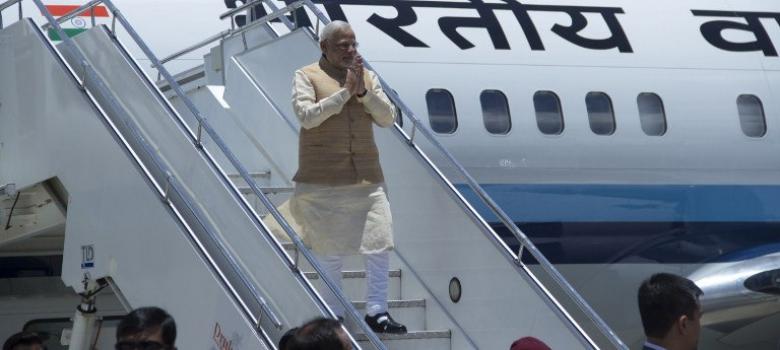
Exactly one month ago, we were given proof that the exit polls were not mistaken: India’s next government would be led by Narendra Modi of the Bharatiya Janata Party. A few days later, on May 26, Modi was sworn in as India’s new prime minister in a grand ceremony at Rashtrapati Bhavan. In his speeches since, he has outlined a development agenda that closely mirrors his rhetoric during the campaign and his party’s manifesto – from 100 smart cities to bullet trains (now downgraded to high-speed rail).
Here’s a look at a few other bright spots over the last month.
1. Adopt a Cause
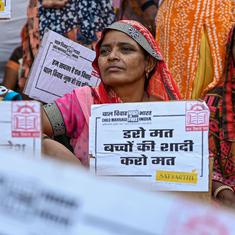
It remains partly a matter of direction, rather than implementation, and yet the orders themselves are heartening. Women and Child Development minister Maneka Gandhi has trained her eyes on the cumbersome process and red tape involved in adopting Indian children.
With about 2,400 children still waiting to be placed in homes, Gandhi wrote to the chief justices of all High Courts to clear the backlog. In her own ministry she has spoken of giving statutory status to the Central Adoption Resource agency, the primary body that oversees adoption. Most interestingly, Gandhi said she would work to change the rule that insists only 20% of Indian children can be adopted by non-citizens. She said that Persons of Indian Origin should not be considered as foreigners and that she would move to allow them to adopt.
2. Preventive Cures
With news of more than 44 children dying of encephalitis in Bihar over the last fortnight and up to 500-600 annually, Health minister Dr Harsh Vardhan decided to attack the disease energetically. Vardhan said that he had empowered local officials, especially in those states, to take “extraordinary” measures while carrying out an immunisation campaign on the lines of the Pulse Polio campaign. Vardhan added that resources would be put into researching the disease and ways of preventing it.
3. Self Destruction
Information & Broadcasting minister Prakash Javadekar put it quite simply: he’s working towards the abolition of his own ministry. Javadekar’s ministry technically oversees the media industry while also dealing, at an arm’s length, with Prasar Bharati, the autonomous body that comprises Doordarshan television network and All India Radio. In effect, however, I&B operates as the Indian government’s publicity and propaganda department, while constantly meddling in Prasar Bharati. Though it’s hard to see the ministry being dissolved anytime soon, even discussing its abolition is a positive sign. Also heartening was Javadekar's unambiguous statement said that his government will allow FM channels to broadcast news.
4. Safety Umbrella
The death of Bharatiya Janata Party leader Gopinath Munde in a car crash inspired the health minister to call for making seat belts mandatory, even in the back seats of vehicles. While that may prove to be a tough task to implement, Road Transport minister Nitin Gadkari has said that his ministry will be looking for ways to improve safety on the streets. Gadkari said that a new umbrella act will be prepared that incorporates other laws, such as the Motor Vehicle Act and the Carriage by Road Act, which would go much further towards establishing an international level of road safety standards here at home.
5. Cultural Tourist
The "minimum government, maximum governance" promise has been echoing around the halls of Delhi’s ministries, explaining the talk between the Ministry of Culture and India’s Ministry of Tourism. With the minister himself, Yesso Naik, straddling both the departments, bureaucrats from both ministries identified areas of convergence before the two and have started to put together Memoranda of Understanding between the ministries that should facilitate work for both sides.
6. Extinct Grouping
The United Progressive Alliance had a great preference for ministerial consultative bodies that existed beyond the Cabinet: Groups of Ministers and Empowered Groups of Ministers. Some of them were infamous for barely ever meeting, while others ended up delaying policy-making rather than speeding it up as they were meant to. Modi has relegated both these creations to the dust heap, with his office saying the issues they had been handling will now simply revert back to their ministries and departments. If there is conflict between two ministries, the answer is simple: the Prime Minister’s Office will show the way.
7. Improving Babudom
Aware that much of the policy paralysis that seemed to have slowed down the UPA in the last few years came from bureaucrats' fears that any decision they made would be questioned over and over, Modi has told the babus that he will back them up. In a 11-point note sent to the bureaucracy, the prime minister encouraged them to take decisions, adding that they could even email him directly in case they had a problem or a solution.
8. Look Around Policy
Possibly the most unambiguous success of the new government so far has been its foreign policy. The clever decision to invite all the SAARC leaders to the swearing-in, followed by talks with each individually sent a signal that the PM is not afraid to make grand gestures. Choosing Bhutan as his first port of call also sends a positive message, indicating that India is committed to the interests of its most reliable ally, despite being so tiny.
We welcome your comments at
letters@scroll.in.
Here’s a look at a few other bright spots over the last month.
1. Adopt a Cause
It remains partly a matter of direction, rather than implementation, and yet the orders themselves are heartening. Women and Child Development minister Maneka Gandhi has trained her eyes on the cumbersome process and red tape involved in adopting Indian children.
With about 2,400 children still waiting to be placed in homes, Gandhi wrote to the chief justices of all High Courts to clear the backlog. In her own ministry she has spoken of giving statutory status to the Central Adoption Resource agency, the primary body that oversees adoption. Most interestingly, Gandhi said she would work to change the rule that insists only 20% of Indian children can be adopted by non-citizens. She said that Persons of Indian Origin should not be considered as foreigners and that she would move to allow them to adopt.
2. Preventive Cures
With news of more than 44 children dying of encephalitis in Bihar over the last fortnight and up to 500-600 annually, Health minister Dr Harsh Vardhan decided to attack the disease energetically. Vardhan said that he had empowered local officials, especially in those states, to take “extraordinary” measures while carrying out an immunisation campaign on the lines of the Pulse Polio campaign. Vardhan added that resources would be put into researching the disease and ways of preventing it.
3. Self Destruction
Information & Broadcasting minister Prakash Javadekar put it quite simply: he’s working towards the abolition of his own ministry. Javadekar’s ministry technically oversees the media industry while also dealing, at an arm’s length, with Prasar Bharati, the autonomous body that comprises Doordarshan television network and All India Radio. In effect, however, I&B operates as the Indian government’s publicity and propaganda department, while constantly meddling in Prasar Bharati. Though it’s hard to see the ministry being dissolved anytime soon, even discussing its abolition is a positive sign. Also heartening was Javadekar's unambiguous statement said that his government will allow FM channels to broadcast news.
4. Safety Umbrella
The death of Bharatiya Janata Party leader Gopinath Munde in a car crash inspired the health minister to call for making seat belts mandatory, even in the back seats of vehicles. While that may prove to be a tough task to implement, Road Transport minister Nitin Gadkari has said that his ministry will be looking for ways to improve safety on the streets. Gadkari said that a new umbrella act will be prepared that incorporates other laws, such as the Motor Vehicle Act and the Carriage by Road Act, which would go much further towards establishing an international level of road safety standards here at home.
5. Cultural Tourist
The "minimum government, maximum governance" promise has been echoing around the halls of Delhi’s ministries, explaining the talk between the Ministry of Culture and India’s Ministry of Tourism. With the minister himself, Yesso Naik, straddling both the departments, bureaucrats from both ministries identified areas of convergence before the two and have started to put together Memoranda of Understanding between the ministries that should facilitate work for both sides.
6. Extinct Grouping
The United Progressive Alliance had a great preference for ministerial consultative bodies that existed beyond the Cabinet: Groups of Ministers and Empowered Groups of Ministers. Some of them were infamous for barely ever meeting, while others ended up delaying policy-making rather than speeding it up as they were meant to. Modi has relegated both these creations to the dust heap, with his office saying the issues they had been handling will now simply revert back to their ministries and departments. If there is conflict between two ministries, the answer is simple: the Prime Minister’s Office will show the way.
7. Improving Babudom
Aware that much of the policy paralysis that seemed to have slowed down the UPA in the last few years came from bureaucrats' fears that any decision they made would be questioned over and over, Modi has told the babus that he will back them up. In a 11-point note sent to the bureaucracy, the prime minister encouraged them to take decisions, adding that they could even email him directly in case they had a problem or a solution.
8. Look Around Policy
Possibly the most unambiguous success of the new government so far has been its foreign policy. The clever decision to invite all the SAARC leaders to the swearing-in, followed by talks with each individually sent a signal that the PM is not afraid to make grand gestures. Choosing Bhutan as his first port of call also sends a positive message, indicating that India is committed to the interests of its most reliable ally, despite being so tiny.
