


Allegedly armed black man killed by a police officer in Missouri
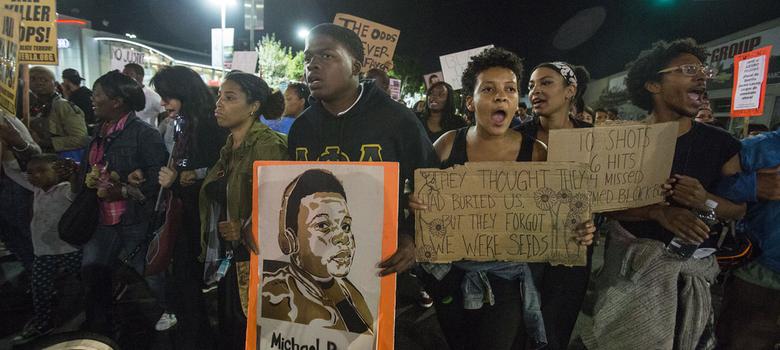
Late on Tuesday night, US police shot and killed an 18-year-old black man at a petrol pump in a suburb of St. Louis in Missouri. Media reported that the shooting occurred near where police killed unarmed teen Michael Brown in August. The police have said that the man had pointed a handgun at an officer who had approached him. Brown's death had sparked nationwide protests against the police's methods in the country.
Islamic State forces may have shot down a warplane over eastern Syria
A warplane was downed over eastern Raqqa, a province in Syria under control of Islamic State militants, a monitoring group said on Tuesday. The claim could not be verified. According to the group, the pilot was of Arab nationality. IS-affiliated social media accounts reportedly displayed pictures of IS members holding the pilot. An international coalition, led by the United States, was formed earlier this year to bomb the area, known to be dominated by IS forces. There were no comments from members of the coalition about the downed plane.
Uber apologises for surge pricing during Sydney siege
Uber, the web-based taxi firm, apologised on Wednesday for hiking fares during the Sydney siege last week. The company had implemented surge pricing, a practice of increasing prices during peak demand, for people exiting the area in downtown Sydney where about 30 people were held hostage at a café by a mentally ill man on December 16. "We are truly sorry for any concern that our process may have added," Uber said in a statement.
China blocks out news of Sony Pictures hack within its borders
CNN reported on Wednesday that China had blocked out all but some news of the Sony Pictures cyberattack for which the United States is blaming North Korea, in an effort to stay neutral on the dispute. The censorship also extended to concealing the heightened tension between the Western superpower and Pyongyang, during which North Korean leader Kim Jong-un threatened to launch airstrikes against the mainland US.
Treaty to restrict terrorists' access to weapons comes into force
A landmark United Nations treaty to regulate the $85 billion global arms trade came into force on Wednesday. The United Nations and other human rights organisations hope the treaty will help prevent weapons transfer to terrorists. The Arms Trade Treaty was adopted by the UN General Assembly in April 2013 and became the first legally-binding multilateral agreement that prevents nations from exporting weapons to countries where the material will be susceptible to appropriation by terrorists. As of Tuesday, 60 nations had ratified the treaty and 130 had signed it. India had abstained during the vote last year.
We welcome your comments at
letters@scroll.in.
Late on Tuesday night, US police shot and killed an 18-year-old black man at a petrol pump in a suburb of St. Louis in Missouri. Media reported that the shooting occurred near where police killed unarmed teen Michael Brown in August. The police have said that the man had pointed a handgun at an officer who had approached him. Brown's death had sparked nationwide protests against the police's methods in the country.
Islamic State forces may have shot down a warplane over eastern Syria
A warplane was downed over eastern Raqqa, a province in Syria under control of Islamic State militants, a monitoring group said on Tuesday. The claim could not be verified. According to the group, the pilot was of Arab nationality. IS-affiliated social media accounts reportedly displayed pictures of IS members holding the pilot. An international coalition, led by the United States, was formed earlier this year to bomb the area, known to be dominated by IS forces. There were no comments from members of the coalition about the downed plane.
Uber apologises for surge pricing during Sydney siege
Uber, the web-based taxi firm, apologised on Wednesday for hiking fares during the Sydney siege last week. The company had implemented surge pricing, a practice of increasing prices during peak demand, for people exiting the area in downtown Sydney where about 30 people were held hostage at a café by a mentally ill man on December 16. "We are truly sorry for any concern that our process may have added," Uber said in a statement.
China blocks out news of Sony Pictures hack within its borders
CNN reported on Wednesday that China had blocked out all but some news of the Sony Pictures cyberattack for which the United States is blaming North Korea, in an effort to stay neutral on the dispute. The censorship also extended to concealing the heightened tension between the Western superpower and Pyongyang, during which North Korean leader Kim Jong-un threatened to launch airstrikes against the mainland US.
Treaty to restrict terrorists' access to weapons comes into force
A landmark United Nations treaty to regulate the $85 billion global arms trade came into force on Wednesday. The United Nations and other human rights organisations hope the treaty will help prevent weapons transfer to terrorists. The Arms Trade Treaty was adopted by the UN General Assembly in April 2013 and became the first legally-binding multilateral agreement that prevents nations from exporting weapons to countries where the material will be susceptible to appropriation by terrorists. As of Tuesday, 60 nations had ratified the treaty and 130 had signed it. India had abstained during the vote last year.
