




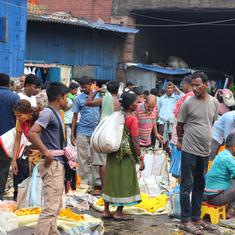

India has over 1.2 billion people, and the Union of India consists of 32 States and Union Territories. The biggest of these is Uttar Pradesh. With a population of 199.6 million or 16.49% of India’s people, it is as big as Brazil. The smallest political unit is Lakshadweep, which has just 64,000 people (0.01% of the total). Quite clearly the omnibus term India masks a diversity of nations.
Modern India now has over 2,000 ethnic groups. Modern Indian languages have evolved from all the world’s four language families. Indo-European, Dravidian, Austro-Asiatic and Tibeto-Burman. India has 1,652 individual mother tongues and has 30 languages each spoken by over a million. It’s clearly a nation of much complexity and heterogeneity.
For most of its history India was a civilisational notion with many political entities and there are but a few times it has been welded together under a central authority. Great rulers such as Ashoka and Akbar, who did so, did it more by reconciling the competing aspirations of regional kings and princes, more by the display of imperial authority and by less by forceful imposition. The English, who created the largest imperial India ever, ruled it by incorporating various principalities and nationalities, less by force of arms but more by persuasion and statecraft that rarely required taking off the velvet glove to display the iron fist. Even in the heyday of the Raj, a few hundred Britishers with the co-operation of the native elite governed India.
Rulers such as Aurangzeb, the last great Mughul, and even democratically elected Indira Gandhi who tried to impose their beliefs and will by being authoritarian, were felled by regional uprisings and popular rejection. This then is the great lesson of history. India can only be governed and kept together by the persuasive use of authority and not by the imposition of will. The elected government can govern not just with the support of a majority in parliament but by catering to the aspirations and demands of the many groups of the colorful mosaic that India is.
A strong foundation
Thus, India’s founding fathers wrote a great Constitution, with its bedrock of individual freedoms and rights, with the promise of hearing every voice and seeking to meet every aspiration, if not in full but in some measure. This system has prevailed in India since 1950, when its Constitution was accepted by the Constituent Assembly representing the full diversity of India. Since then, democracy has flourished in India. All the rights, particularly those relating to equality of races, groups and gender, were assured by the Constitution of India, much before they became a reality in other earlier democracies such as the US.
In the recent times, after the advent of the nationalist Bharatiya Janata Party government led by the charismatic Narendra Modi, powerful voices from within the BJP and its secretive parent, the Rashtriya Swayamsevak Samiti, have been stridently espousing Hindutva or a national Hindu identity. The Hindutva of their conception selectively chooses from India’s complex past to advance an agenda, which seeks to impose a primacy of Hindu thought, philosophy and folklore now increasingly confused with history. While Mahatma Gandhi, himself a devout Hindu, sought the reformation of Hindu society by ending its institutional inequities, the protagonists of the new Hindutva seek a revival.
India’s founding fathers envisaged a syncretic nation with a fusion of culture that treated all the periods of India’s past as its own, making the Jama Masjid in Delhi as uniquely Indian as the Meenakshi temple in Madurai. We consider Akbar was equally great as Ashoka. We celebrate Kanishka who hailed from Xinjiang just as well place the Englishman, William Bentick, on a pedestal for abolishing sati.
A campaign against minorities
Powerful groups from the RSS stable have opened many fronts. Some have begun a programme to return India’s Christians, mostly drawn from lower caste and tribal groups, considered less than equal by Hindu traditionalists, back into the Hindu fold. They seek a ban on conversions when Article 25 of the Constitution guarantees the right to propagate a religion. Some others have attacked India’s huge Muslim minority of waging a “love jihad” to encourage Muslim youth to marry more Hindu girls. These zealots raise fears of a faster growing Muslim population who might many centuries later swamp the Hindus. True, the population growth among Muslims is higher than the norm, but it is not less than that of lower caste Hindus, suggesting that poverty and backwardness has more to do with it than theology. But such arguments are dismissed as secularist talk and derisively referred to as “sickular”. The spread of Saudi-funded teaching institutions espousing a radical Islam, to supplant the Sufi traditions of most Indian Muslims, adds more edge to this.
A few days a ago the people of Delhi, who strongly supported Narendra Modi during the Lok Sabha elections by electing all the BJP candidates from it, delivered him a stunning rebuke in the state elections by pummeling the resurgent BJP/RSS combine to three members in a house of seventy. The lesson of history was being administered. Indian can only be governed by the consent of not just the majority but also all its myriad groups.
To be fair to Narendra Modi, he has been studiously aloof from the retrograde agenda of some of his political compatriots. Modi might have moved along, but his background as a RSS pracharaks, makes it doubly incumbent on him to show he has grown out of the narrow and exclusivist worldview he cut his teeth on. People and groups cannot be victimised for what happened in the past. How can Indian Muslims be held responsible for the desecrations of Mahmud of Ghazni at Somnath and Mir Baqi at Ayodhya? For that matter how can one hold the Brahmins to what they did to Nalanda before Bakhtiyar Khilji razed it? The biggest blight on our society, the odious caste system that led to the exploitation and enslavement of the vast majority of Indians, was by caste Hindus.
We also have a tradition where some nationalities enslaved others. Just as India is a nation of diverse people, it is a nation of diverse victimisations. The past cannot be obliterated, but learning from it will help us from repeating it. What the founding fathers sought to enshrine in our Constitution is to ensure that the march of victimisation is halted once and for all. That is Narendra Modi’s first duty now. To fulfill it he must deal firmly with those of his compatriots who insist on dwelling on the past and the irrelevant.
We welcome your comments at
letters@scroll.in.
Modern India now has over 2,000 ethnic groups. Modern Indian languages have evolved from all the world’s four language families. Indo-European, Dravidian, Austro-Asiatic and Tibeto-Burman. India has 1,652 individual mother tongues and has 30 languages each spoken by over a million. It’s clearly a nation of much complexity and heterogeneity.
For most of its history India was a civilisational notion with many political entities and there are but a few times it has been welded together under a central authority. Great rulers such as Ashoka and Akbar, who did so, did it more by reconciling the competing aspirations of regional kings and princes, more by the display of imperial authority and by less by forceful imposition. The English, who created the largest imperial India ever, ruled it by incorporating various principalities and nationalities, less by force of arms but more by persuasion and statecraft that rarely required taking off the velvet glove to display the iron fist. Even in the heyday of the Raj, a few hundred Britishers with the co-operation of the native elite governed India.
Rulers such as Aurangzeb, the last great Mughul, and even democratically elected Indira Gandhi who tried to impose their beliefs and will by being authoritarian, were felled by regional uprisings and popular rejection. This then is the great lesson of history. India can only be governed and kept together by the persuasive use of authority and not by the imposition of will. The elected government can govern not just with the support of a majority in parliament but by catering to the aspirations and demands of the many groups of the colorful mosaic that India is.
A strong foundation
Thus, India’s founding fathers wrote a great Constitution, with its bedrock of individual freedoms and rights, with the promise of hearing every voice and seeking to meet every aspiration, if not in full but in some measure. This system has prevailed in India since 1950, when its Constitution was accepted by the Constituent Assembly representing the full diversity of India. Since then, democracy has flourished in India. All the rights, particularly those relating to equality of races, groups and gender, were assured by the Constitution of India, much before they became a reality in other earlier democracies such as the US.
In the recent times, after the advent of the nationalist Bharatiya Janata Party government led by the charismatic Narendra Modi, powerful voices from within the BJP and its secretive parent, the Rashtriya Swayamsevak Samiti, have been stridently espousing Hindutva or a national Hindu identity. The Hindutva of their conception selectively chooses from India’s complex past to advance an agenda, which seeks to impose a primacy of Hindu thought, philosophy and folklore now increasingly confused with history. While Mahatma Gandhi, himself a devout Hindu, sought the reformation of Hindu society by ending its institutional inequities, the protagonists of the new Hindutva seek a revival.
India’s founding fathers envisaged a syncretic nation with a fusion of culture that treated all the periods of India’s past as its own, making the Jama Masjid in Delhi as uniquely Indian as the Meenakshi temple in Madurai. We consider Akbar was equally great as Ashoka. We celebrate Kanishka who hailed from Xinjiang just as well place the Englishman, William Bentick, on a pedestal for abolishing sati.
A campaign against minorities
Powerful groups from the RSS stable have opened many fronts. Some have begun a programme to return India’s Christians, mostly drawn from lower caste and tribal groups, considered less than equal by Hindu traditionalists, back into the Hindu fold. They seek a ban on conversions when Article 25 of the Constitution guarantees the right to propagate a religion. Some others have attacked India’s huge Muslim minority of waging a “love jihad” to encourage Muslim youth to marry more Hindu girls. These zealots raise fears of a faster growing Muslim population who might many centuries later swamp the Hindus. True, the population growth among Muslims is higher than the norm, but it is not less than that of lower caste Hindus, suggesting that poverty and backwardness has more to do with it than theology. But such arguments are dismissed as secularist talk and derisively referred to as “sickular”. The spread of Saudi-funded teaching institutions espousing a radical Islam, to supplant the Sufi traditions of most Indian Muslims, adds more edge to this.
A few days a ago the people of Delhi, who strongly supported Narendra Modi during the Lok Sabha elections by electing all the BJP candidates from it, delivered him a stunning rebuke in the state elections by pummeling the resurgent BJP/RSS combine to three members in a house of seventy. The lesson of history was being administered. Indian can only be governed by the consent of not just the majority but also all its myriad groups.
To be fair to Narendra Modi, he has been studiously aloof from the retrograde agenda of some of his political compatriots. Modi might have moved along, but his background as a RSS pracharaks, makes it doubly incumbent on him to show he has grown out of the narrow and exclusivist worldview he cut his teeth on. People and groups cannot be victimised for what happened in the past. How can Indian Muslims be held responsible for the desecrations of Mahmud of Ghazni at Somnath and Mir Baqi at Ayodhya? For that matter how can one hold the Brahmins to what they did to Nalanda before Bakhtiyar Khilji razed it? The biggest blight on our society, the odious caste system that led to the exploitation and enslavement of the vast majority of Indians, was by caste Hindus.
We also have a tradition where some nationalities enslaved others. Just as India is a nation of diverse people, it is a nation of diverse victimisations. The past cannot be obliterated, but learning from it will help us from repeating it. What the founding fathers sought to enshrine in our Constitution is to ensure that the march of victimisation is halted once and for all. That is Narendra Modi’s first duty now. To fulfill it he must deal firmly with those of his compatriots who insist on dwelling on the past and the irrelevant.
