



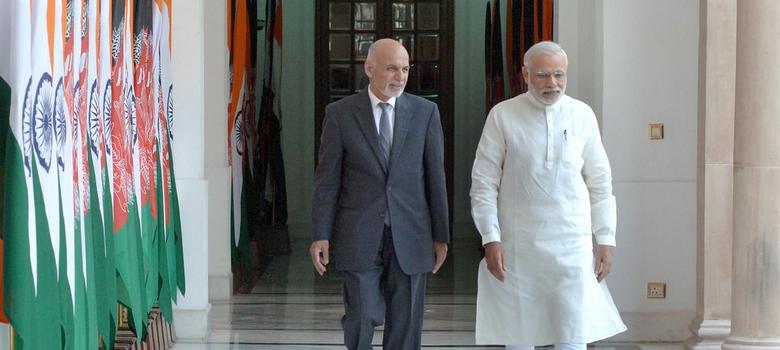
While Modi has made a good impression on the world stage, there are big questions about his ability to produce the necessary structural changes at home that are critical for the transformation of India’s external relations. On the economic front, the world has its fingers crossed.
Not everyone is convinced that Modi’s focus on improved governmental performance is enough to impart fresh momentum to the economy. There is concern at the reluctance of the government to initiate bold and inevitably controversial reforms. Modi has taken a number of steps in 2014, including the liberalisation of rules for foreign direct investment, changes in the labour law and new incentives for domestic manufacturing, simplifying the environmental clearances, reducing the difficulties of land acquisition and improving the ease of doing business. Yet his political horizon looks clouded.
Like other leaders before him in the reform era, he confronts the problem of a weak domestic political consensus in favour of radical reform. While the Congress party continues to drift to the left, there is significant resistance within the BJP and the RSS against reforms. The lack of a majority in the upper house has made his task of pushing through major reforms that much harder.
Modi faces an equally daunting challenge on the prospect of maintaining domestic peace and harmony that are so critical for accelerating India’s rise on the world stage.
During his campaign, Modi had succeeded in softening his image as a Hindutva hardliner by focusing on the theme of economic development. He was willing to discard many of the polarising themes that the BJP had championed in the past. This helped him widen the base of the voter support for the BJP and raised the hopes that Modi can help transcend the identity politics that weakened the Second Republic and build a new political framework for unity.
In his first Independence Day address on 14 August, Modi called for a moratorium on controversial issues like casteism, communalism and regionalism. But the Hindu extremist groups have been reluctant to respect that call. Whether it was sharpening the communal divide with the Muslims, forced conversions to Hinduism, attacks on churches, or imposing a religious–cultural agenda on India’s education system, there has been a new assertiveness among the extremist supporters of the BJP.
If tensions between the Hindu extremist groups and the religious minorities escalate, it would have an impact on India’s relations with its neighbours, especially Bangladesh and Pakistan, the Muslim world and with the West where both the human rights organisations as well as religious groups are likely to mobilise public opinion against the government in Delhi. The first sign of serious international consequences came when US president Barack Obama, during his visit to India as the chief guest at the Republic Day celebrations, warned against the dangers of widening India’s domestic fault lines under Modi.
While Modi’s personal political appeal remains larger than that of the BJP and is a significant factor in the Indian political landscape, there is no doubt it will be dented over a period of time amidst the difficulties of meeting the extraordinary expectations that he raised during the 2014 general elections.
His surprising success in the elections is compelling greater unity among the non-BJP forces. If the divisions among the political parties facilitated Modi’s impressive victory in the north Indian states, greater cohesion and coordination among the other parties could limit the future of the BJP and Modi’s own political effectiveness.
The weakening of the Congress party too could significantly reverse the gains made by the BJP in the 2014 parliamentary elections. For example, in Delhi, the BJP had emerged as the largest single party in the 2013 elections to the state assembly and Modi magic helped the party win all the seven parliamentary seats in the province. Yet in the February 2015 assembly elections, the BJP was just reduced to three seats in a house of 70.
The triumph of the populist Aam Aadmi Party was generated as much by the vanishing of the Modi magic as the significant shift of the Congress vote base, especially that of the minorities, to the AAP. This quick reversal of political fortunes is not a new phenomenon in Indian politics. In the First Republic, the massive mandates for Indira Gandhi (1971) and Rajiv Gandhi (1984) quickly evaporated amidst the turbulence of domestic politics.
A single political setback could also trigger a massive political consolidation of the opposition forces and paralyse the government despite a massive majority in Parliament.
If the diversity and volatility of India’s politics can deflate the strongest electoral mandates, Modi will have to find a way of nurturing his primacy in the post 2014 political terrain through a framework of inclusive politics.
Modi’s robust personality was also widely seen as improving the possibilities for energising the governance in Delhi that appeared to dissipate in the Second Republic. Three decades of rule by political coalitions had significantly weakened the power of the prime minister. Constant accommodation of diverse interests in the coalition and deference to special interests of states weakened the PM’s space for manoeuvre across the board. Worse still, the capacity of the PM and his office to discipline various departments was severely limited by the fact that there were multiple centres of power.
P.V. Narasimha Rao and Atal Bihari Vajpayee, despite their seniority and experience, faced significant difficulties in running the governments. They had to continually cope with resistance from other parties as well as their own. The problem became more acute for Manmohan Singh, given the unique arrangement between him and Sonia Gandhi. As a technocrat with no political base of his own and an ‘accidental prime minister’, as his media adviser in the first term of the UPA government, Sanjaya Baru, put it, Dr Singh had no authority over his cabinet colleagues who served at the pleasure of Mrs Gandhi.
This in turn eroded the authority of the Prime Minister’s Office over the rest of the government. Departmentalism became rampant, where every agency and ministry acted on its own and vetoed Manmohan Singh’s policy directives.
Within the first weeks of taking charge, Modi asserted his authority over the cabinet and renewed the tradition of the PM dealing with the secretaries of various ministries directly. He also strengthened the oversight and follow-up of the PMO over the rest of the government.
This style of governance resembles that in the First Republic when strong leaders like Indira Gandhi and Rajiv Gandhi dominated the government.
Sceptics, however, doubt if Modi can sustain this approach at a moment when Delhi is a very different place than the one ruled by the Gandhis. The BJP is a more loosely configured party than the Congress, and it might not be easy for Modi to establish an uncontested authority over the party and the government.
There is much grumbling across the political class about excessive centralisation of power under Modi and his aloof leadership. There is deep resentment within the BJP, the allied parties and the cabinet at the apparent lack of consultation with senior colleagues. Finding that balance between providing strong leadership and the need for a collegial functioning is a major challenge for Modi. The PM has also found that a majority in the Lok Sabha is not enough to reclaim the power that the executive had ceded to other institutions like judiciary, regulators and media in the Second Republic.
Put simply, Modi has a long way to go before he can overcome the negative trends of the Second Republic. The first months of the Modi government have also made it clear that the very electoral triumph of Modi and the BJP holds within it the seeds of trouble. By threatening to undermine India’s core values, the Hindu extremists prevent the construction of a stable and forward-looking Third Republic that could strengthen India’s domestic peace, increase its national prosperity and enhance its power position in the international system.
A measure of harmony at home and reasonably high economic growth rates of around 8 per cent are bound to generate new diplomatic opportunities for India.
What matters for foreign policy is not simply the steady increase in the relative weight of India in world affairs.
The nature of great power relations, shifting regional balances and the evolution of the international system as a whole will have a significant bearing on India’s engagement with the world. While some of those developments will impose new constraints, many of them will also provide India significant openings.
Minimising the impact of adverse developments and taking advantage of the new opportunities will depend on the performance of the Indian State, its political will and bureaucratic capabilities. For all his problems and constraints, Modi appears to have many more opportunities than his recent predecessors to engineer a structural transformation in India’s international relations.
Excerpted with permission from Modi’s World: Expanding India’s Sphere of Influence, C. Raja Mohan, HarperCollins India.
We welcome your comments at
letters@scroll.in.
Not everyone is convinced that Modi’s focus on improved governmental performance is enough to impart fresh momentum to the economy. There is concern at the reluctance of the government to initiate bold and inevitably controversial reforms. Modi has taken a number of steps in 2014, including the liberalisation of rules for foreign direct investment, changes in the labour law and new incentives for domestic manufacturing, simplifying the environmental clearances, reducing the difficulties of land acquisition and improving the ease of doing business. Yet his political horizon looks clouded.
Like other leaders before him in the reform era, he confronts the problem of a weak domestic political consensus in favour of radical reform. While the Congress party continues to drift to the left, there is significant resistance within the BJP and the RSS against reforms. The lack of a majority in the upper house has made his task of pushing through major reforms that much harder.
Modi faces an equally daunting challenge on the prospect of maintaining domestic peace and harmony that are so critical for accelerating India’s rise on the world stage.
During his campaign, Modi had succeeded in softening his image as a Hindutva hardliner by focusing on the theme of economic development. He was willing to discard many of the polarising themes that the BJP had championed in the past. This helped him widen the base of the voter support for the BJP and raised the hopes that Modi can help transcend the identity politics that weakened the Second Republic and build a new political framework for unity.
In his first Independence Day address on 14 August, Modi called for a moratorium on controversial issues like casteism, communalism and regionalism. But the Hindu extremist groups have been reluctant to respect that call. Whether it was sharpening the communal divide with the Muslims, forced conversions to Hinduism, attacks on churches, or imposing a religious–cultural agenda on India’s education system, there has been a new assertiveness among the extremist supporters of the BJP.
If tensions between the Hindu extremist groups and the religious minorities escalate, it would have an impact on India’s relations with its neighbours, especially Bangladesh and Pakistan, the Muslim world and with the West where both the human rights organisations as well as religious groups are likely to mobilise public opinion against the government in Delhi. The first sign of serious international consequences came when US president Barack Obama, during his visit to India as the chief guest at the Republic Day celebrations, warned against the dangers of widening India’s domestic fault lines under Modi.
While Modi’s personal political appeal remains larger than that of the BJP and is a significant factor in the Indian political landscape, there is no doubt it will be dented over a period of time amidst the difficulties of meeting the extraordinary expectations that he raised during the 2014 general elections.
His surprising success in the elections is compelling greater unity among the non-BJP forces. If the divisions among the political parties facilitated Modi’s impressive victory in the north Indian states, greater cohesion and coordination among the other parties could limit the future of the BJP and Modi’s own political effectiveness.
The weakening of the Congress party too could significantly reverse the gains made by the BJP in the 2014 parliamentary elections. For example, in Delhi, the BJP had emerged as the largest single party in the 2013 elections to the state assembly and Modi magic helped the party win all the seven parliamentary seats in the province. Yet in the February 2015 assembly elections, the BJP was just reduced to three seats in a house of 70.
The triumph of the populist Aam Aadmi Party was generated as much by the vanishing of the Modi magic as the significant shift of the Congress vote base, especially that of the minorities, to the AAP. This quick reversal of political fortunes is not a new phenomenon in Indian politics. In the First Republic, the massive mandates for Indira Gandhi (1971) and Rajiv Gandhi (1984) quickly evaporated amidst the turbulence of domestic politics.
A single political setback could also trigger a massive political consolidation of the opposition forces and paralyse the government despite a massive majority in Parliament.
If the diversity and volatility of India’s politics can deflate the strongest electoral mandates, Modi will have to find a way of nurturing his primacy in the post 2014 political terrain through a framework of inclusive politics.
Modi’s robust personality was also widely seen as improving the possibilities for energising the governance in Delhi that appeared to dissipate in the Second Republic. Three decades of rule by political coalitions had significantly weakened the power of the prime minister. Constant accommodation of diverse interests in the coalition and deference to special interests of states weakened the PM’s space for manoeuvre across the board. Worse still, the capacity of the PM and his office to discipline various departments was severely limited by the fact that there were multiple centres of power.
P.V. Narasimha Rao and Atal Bihari Vajpayee, despite their seniority and experience, faced significant difficulties in running the governments. They had to continually cope with resistance from other parties as well as their own. The problem became more acute for Manmohan Singh, given the unique arrangement between him and Sonia Gandhi. As a technocrat with no political base of his own and an ‘accidental prime minister’, as his media adviser in the first term of the UPA government, Sanjaya Baru, put it, Dr Singh had no authority over his cabinet colleagues who served at the pleasure of Mrs Gandhi.
This in turn eroded the authority of the Prime Minister’s Office over the rest of the government. Departmentalism became rampant, where every agency and ministry acted on its own and vetoed Manmohan Singh’s policy directives.
Within the first weeks of taking charge, Modi asserted his authority over the cabinet and renewed the tradition of the PM dealing with the secretaries of various ministries directly. He also strengthened the oversight and follow-up of the PMO over the rest of the government.
This style of governance resembles that in the First Republic when strong leaders like Indira Gandhi and Rajiv Gandhi dominated the government.
Sceptics, however, doubt if Modi can sustain this approach at a moment when Delhi is a very different place than the one ruled by the Gandhis. The BJP is a more loosely configured party than the Congress, and it might not be easy for Modi to establish an uncontested authority over the party and the government.
There is much grumbling across the political class about excessive centralisation of power under Modi and his aloof leadership. There is deep resentment within the BJP, the allied parties and the cabinet at the apparent lack of consultation with senior colleagues. Finding that balance between providing strong leadership and the need for a collegial functioning is a major challenge for Modi. The PM has also found that a majority in the Lok Sabha is not enough to reclaim the power that the executive had ceded to other institutions like judiciary, regulators and media in the Second Republic.
Put simply, Modi has a long way to go before he can overcome the negative trends of the Second Republic. The first months of the Modi government have also made it clear that the very electoral triumph of Modi and the BJP holds within it the seeds of trouble. By threatening to undermine India’s core values, the Hindu extremists prevent the construction of a stable and forward-looking Third Republic that could strengthen India’s domestic peace, increase its national prosperity and enhance its power position in the international system.
A measure of harmony at home and reasonably high economic growth rates of around 8 per cent are bound to generate new diplomatic opportunities for India.
What matters for foreign policy is not simply the steady increase in the relative weight of India in world affairs.
The nature of great power relations, shifting regional balances and the evolution of the international system as a whole will have a significant bearing on India’s engagement with the world. While some of those developments will impose new constraints, many of them will also provide India significant openings.
Minimising the impact of adverse developments and taking advantage of the new opportunities will depend on the performance of the Indian State, its political will and bureaucratic capabilities. For all his problems and constraints, Modi appears to have many more opportunities than his recent predecessors to engineer a structural transformation in India’s international relations.
Excerpted with permission from Modi’s World: Expanding India’s Sphere of Influence, C. Raja Mohan, HarperCollins India.
