





Above the fold: Top stories of the day
1. Indrani Mukerjea, founder CEO of INX Media and wife of former Star India CEO Peter Mukerjea, has confessed that the woman she allegedly had murdered in 2012 was not her sister but her daughter.
2. The Supreme Court has suspended trial proceedings against the two Italian marines accused of killing Indian fishermen off the coast of Kerala. An international tribunal earlier had ordered status quo until it could be determined whether India or Italy has jurisdiction over the matter.
3. India and Seychelles have signed an agreement to curb tax evasion.
The Big Story: Yesterday once more?
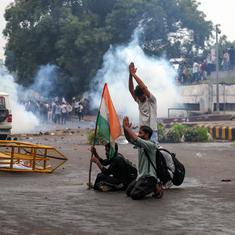
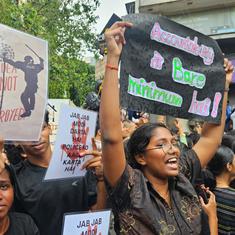
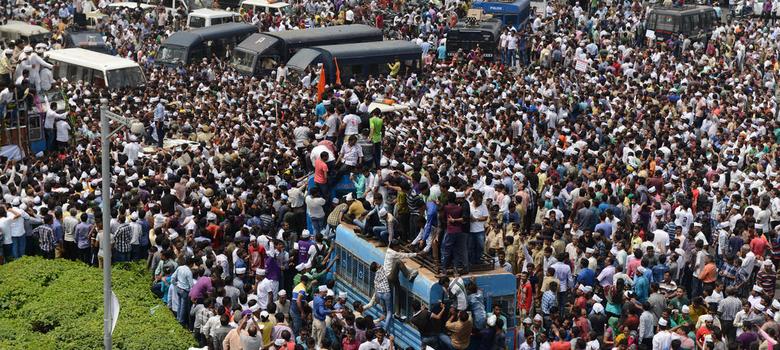
In Gujarat, the Patidar agitation set off by 22-year-old Hardik Patel to demand reservations for his Patel community has now claimed at least nine lives. Army columns marched through its cities on Wednesday, and normal life was suspended as trains were cancelled, schools stayed shut and curfews was imposed. The last couple of days have been a reminder of Gujarat's fraught relationship with caste. This was, after all, the state where reservations gave rise to violent agitations in 1981 and 1985, claiming hundreds of lives. It's just that the Patidars who took to the streets three decades ago were protesting against the quotas that were part of the Congress's new caste policy.
Though the Congress held political power in Gujarat till the 1990s, the state had long been home to other influential mobilisations. The Rashtriya Swayamsevak Sangh, the Jana Sangh and Vishwa Hindu Parishad had a strong presence and the 1970s saw the spread of organisations like the Hindu Milan Mandir. Such groups sought to consolidate Hindu identity by papering over caste divisions, but not necessarily out of concern for those at the bottom. This caste unity was required to shore up Hindu samaj, and by extension the Hindu rashtra, against non-Hindus. So after the Congress in the 1970s introduced reservations for socially and economically backward castes (later called Other Backward Classes), powerful castes like the landowning Patidars rose up in arms.
The agitations of the 1980s helped push the Patidars away from the Congress and resulted in gains for the BJP, which managed to draw OBCs and Dalits into its fold. But the fissures remained. The image of the BJP as a sanskritising force seems to have persisted. It was to disperse this image and draw in a wider coalition of voters that Narendra Modi emphasised his OBC identity ahead of the 2014 Lok Sabha polls. Recent years have also seen claims for OBC status by large, dominant groups, like the Jats in northern states, the Gujjars in Rajasthan and the Marathas in Maharashtra. Did these developments unlock new possibilities for OBC mobilisations in Gujarat? And has politics in Gujarat come full circle, with the dominant caste demanding the same reservations it once revolted against?
The Big Scroll: Scroll.in on the day's biggest stories
Darshan Desai, on the caste stir as it unfolded on Tuesday in Gujarat. Twitter hilarity on Hardik Patel. And photographs of a state under siege.
Politicking and Policying
1. Yogi Adityananth, BJP member of Parliament from Gorakhpur, has termed the rise in Muslim population alarming and revived demands for a Uniform Civil Code.
2. The riches of godmen have now drawn the attention of the Special Investigation Team probing black money.
3. India claims to have uncovered "crucial evidence" that the attackers of Gurdaspur came from Pakistan.
4. In Bihar, Nitish Kumar and Lalu Prasad support the Patidar agitation while Sharad Yadav opposes it.
Punditry
1. In the Indian Express, Christophe Jaffrelot discusses the Patels of Gujarat and the "neo-middle class syndrome".
2. Subir Bhaumik in the Hindu is sceptical of the government's framework agreement to solve the Naga issue.
3. As India braces for economic challenges lying ahead, Nitin Desai in the Business Standard writes of the need for a less confrontational political discourse.
Don't Miss...
Janani Sridharan on how Dalit homes in Tamil Nadu were set ablaze by Vaniyars on Independence Day, and both the opposition and the ruling party in the state remained silent:
We welcome your comments at
letters@scroll.in.
1. Indrani Mukerjea, founder CEO of INX Media and wife of former Star India CEO Peter Mukerjea, has confessed that the woman she allegedly had murdered in 2012 was not her sister but her daughter.
2. The Supreme Court has suspended trial proceedings against the two Italian marines accused of killing Indian fishermen off the coast of Kerala. An international tribunal earlier had ordered status quo until it could be determined whether India or Italy has jurisdiction over the matter.
3. India and Seychelles have signed an agreement to curb tax evasion.
The Big Story: Yesterday once more?
In Gujarat, the Patidar agitation set off by 22-year-old Hardik Patel to demand reservations for his Patel community has now claimed at least nine lives. Army columns marched through its cities on Wednesday, and normal life was suspended as trains were cancelled, schools stayed shut and curfews was imposed. The last couple of days have been a reminder of Gujarat's fraught relationship with caste. This was, after all, the state where reservations gave rise to violent agitations in 1981 and 1985, claiming hundreds of lives. It's just that the Patidars who took to the streets three decades ago were protesting against the quotas that were part of the Congress's new caste policy.
Though the Congress held political power in Gujarat till the 1990s, the state had long been home to other influential mobilisations. The Rashtriya Swayamsevak Sangh, the Jana Sangh and Vishwa Hindu Parishad had a strong presence and the 1970s saw the spread of organisations like the Hindu Milan Mandir. Such groups sought to consolidate Hindu identity by papering over caste divisions, but not necessarily out of concern for those at the bottom. This caste unity was required to shore up Hindu samaj, and by extension the Hindu rashtra, against non-Hindus. So after the Congress in the 1970s introduced reservations for socially and economically backward castes (later called Other Backward Classes), powerful castes like the landowning Patidars rose up in arms.
The agitations of the 1980s helped push the Patidars away from the Congress and resulted in gains for the BJP, which managed to draw OBCs and Dalits into its fold. But the fissures remained. The image of the BJP as a sanskritising force seems to have persisted. It was to disperse this image and draw in a wider coalition of voters that Narendra Modi emphasised his OBC identity ahead of the 2014 Lok Sabha polls. Recent years have also seen claims for OBC status by large, dominant groups, like the Jats in northern states, the Gujjars in Rajasthan and the Marathas in Maharashtra. Did these developments unlock new possibilities for OBC mobilisations in Gujarat? And has politics in Gujarat come full circle, with the dominant caste demanding the same reservations it once revolted against?
The Big Scroll: Scroll.in on the day's biggest stories
Darshan Desai, on the caste stir as it unfolded on Tuesday in Gujarat. Twitter hilarity on Hardik Patel. And photographs of a state under siege.
Politicking and Policying
1. Yogi Adityananth, BJP member of Parliament from Gorakhpur, has termed the rise in Muslim population alarming and revived demands for a Uniform Civil Code.
2. The riches of godmen have now drawn the attention of the Special Investigation Team probing black money.
3. India claims to have uncovered "crucial evidence" that the attackers of Gurdaspur came from Pakistan.
4. In Bihar, Nitish Kumar and Lalu Prasad support the Patidar agitation while Sharad Yadav opposes it.
Punditry
1. In the Indian Express, Christophe Jaffrelot discusses the Patels of Gujarat and the "neo-middle class syndrome".
2. Subir Bhaumik in the Hindu is sceptical of the government's framework agreement to solve the Naga issue.
3. As India braces for economic challenges lying ahead, Nitin Desai in the Business Standard writes of the need for a less confrontational political discourse.
Don't Miss...
Janani Sridharan on how Dalit homes in Tamil Nadu were set ablaze by Vaniyars on Independence Day, and both the opposition and the ruling party in the state remained silent:
"As of August 25, the police have arrested 86 people and have named 400 people in their first information report, according to villagers.
But the sequence of events before the attack raises several questions. Why did the police not act on repeated warnings about an impending onslaught of violence? Why did they not call for additional help once the attack had begun?
The morning following the attack, the police administration imposed section 144 on the area, which prohibits the unlawful assembly of three or more people. Why did the authorities not take this pre-emptive step before the attack rather than afterwards, when the damage had already been done?
The state government has announced a compensation of Rs 50,000 for each police official injured in the attack, but no one seems to have thought of how to undertake the mammoth task of restoring the shattered faith of a terrorised community."
