






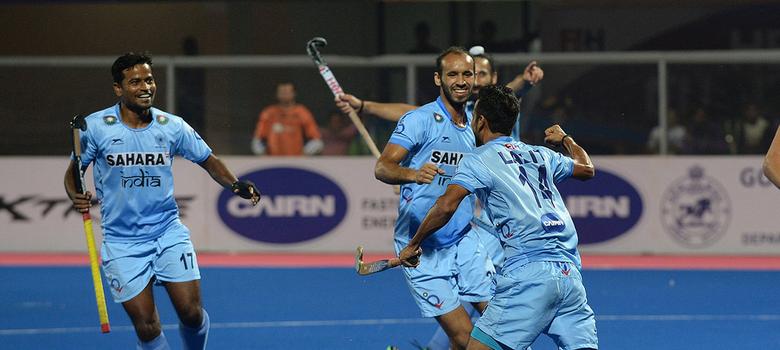
The score at half-time on Sunday in Raipur read 2-0 to the Netherlands. It was the third place playoff of the Hockey World League finals and India were looking down and out.
Over the next two quarters however, mayhem ensured. India struck back to level the scores and then for good measure, added a third. Netherlands equalised with five minutes to go for the hooter. India added two more to make it 5-3. Two minutes left on the clock. Netherlands added a fourth. Five seconds to go. Netherlands added a fifth to force the game into a shootout
The shootout was an even more thrilling affair with India managing to miss their first stroke but somehow still prevailing to win 3-2 and take home the bronze medal. But in a way, the match perfectly encapsulated this India’s team’s performances in 2015: abject one moment, exhilarating the next.
35-year jinx broken
Coming into the quarter-final against Great Britain on December 3, not many gave India a prayer. They had finished bottom of their pool in the ground stage with their only point coming from a hard-fought 1-1 draw against Germany. Britain on the other hand had romped through the group stage, scoring eleven goals, five of them coming in a hugely celebrated victory over traditional rivals, Australia.
Yet India were fabulous in the quarter-final. They played with hunger, looked up for the occasion and got in two goals, before Britain realised what they were dealing it. By the time they did and clawed one back, India defended for their very lives, closing out against wave after wave of Britain’s attacks. It was a lifting performance from India’s often-maligned hockey stars and they thoroughly deserved their first win over Great Britain in 35 long years.
But, as it has become a common occurrence in 2015, India were a very different team against Belgium. The scoreline might show a narrow 1-0 win, but for large portions of the game, India did not even have a whiff of the Belgian goal and deserved to lose.
After a decently successful 2014 where India had became the first team to qualify for the 2016 Olympics in Rio by defeating Pakistan to win gold at the Asian Games in Incheon, the hope was India could carry on the good work, under the tutelage of Paul van Ass who took over from Terry Walsh in January.
And for a while, it seemed like it was working. In their first international outing at the Sultan Azlan Shah Cup in Malaysia in April, India performed admirably, even defeating top-ranking Australia in one match,to finish third. Carrying on from that, India blanked Japan 3-0 in a series at home before proceeding to the semi-finals of the Hockey World League at Antwerp in Belgium in June. Over there, the team started off confidently, handing out comprehensive defeats to France and Poland and drawing with Pakistan. Unfortunately, they crashed against Belgium in the semi-finals and proceeded to lose the third-place playoff against Great Britain.
Administrational interference
Despite those losses, it had still been a good year for the team before a familiar old bogey raised its ugly head: administrational interference. On the sidelines of India’s loss against Belgium, Narinder Batra, president of Hockey India and then-coach Paul van Ass got into a tiff. The subsequent result was that Paul van Ass was unceremoniously sacked (or resigned if the Hockey India version is to be believed), the fourth foreign coach to be sacked since 2009.
Since then, India have been consistently inconsistent. They came away from New Zealand after winning a four-Test series 2-1 but narrowly lost against Australia at home, losing in a penalty shootout in the last match. Frustratingly, India developed a habit of letting in late goals: in the first game of the series against Australia, they played a vastly better game and should have won but conceded a goal just minutes before the hooter to allow Australia to force a draw. The second game followed a similar script with India again leading 1-0 at the end of the second quarter only to concede two successive goals.
When the team performs, as they did on those two big nights against Britain and the Netherlands, it is a pleasure to watch Sardara Singh, the captain marshal his boys. There is energy, there is fire, there is a zest in the team which delights fans used to seeing Indian teams curling up and dying. With less than a year to go for Rio Olympics, there is finally a cautious sense of expectation over the team. But as current coach Roelant Oltmans must ensure, these exhilarating performances have to become the rule rather than the exception if the country's 36-year long wait for an Olympic hockey medal is to be ended.
We welcome your comments at
letters@scroll.in.
Over the next two quarters however, mayhem ensured. India struck back to level the scores and then for good measure, added a third. Netherlands equalised with five minutes to go for the hooter. India added two more to make it 5-3. Two minutes left on the clock. Netherlands added a fourth. Five seconds to go. Netherlands added a fifth to force the game into a shootout
The shootout was an even more thrilling affair with India managing to miss their first stroke but somehow still prevailing to win 3-2 and take home the bronze medal. But in a way, the match perfectly encapsulated this India’s team’s performances in 2015: abject one moment, exhilarating the next.
35-year jinx broken
Coming into the quarter-final against Great Britain on December 3, not many gave India a prayer. They had finished bottom of their pool in the ground stage with their only point coming from a hard-fought 1-1 draw against Germany. Britain on the other hand had romped through the group stage, scoring eleven goals, five of them coming in a hugely celebrated victory over traditional rivals, Australia.
Yet India were fabulous in the quarter-final. They played with hunger, looked up for the occasion and got in two goals, before Britain realised what they were dealing it. By the time they did and clawed one back, India defended for their very lives, closing out against wave after wave of Britain’s attacks. It was a lifting performance from India’s often-maligned hockey stars and they thoroughly deserved their first win over Great Britain in 35 long years.
But, as it has become a common occurrence in 2015, India were a very different team against Belgium. The scoreline might show a narrow 1-0 win, but for large portions of the game, India did not even have a whiff of the Belgian goal and deserved to lose.
After a decently successful 2014 where India had became the first team to qualify for the 2016 Olympics in Rio by defeating Pakistan to win gold at the Asian Games in Incheon, the hope was India could carry on the good work, under the tutelage of Paul van Ass who took over from Terry Walsh in January.
And for a while, it seemed like it was working. In their first international outing at the Sultan Azlan Shah Cup in Malaysia in April, India performed admirably, even defeating top-ranking Australia in one match,to finish third. Carrying on from that, India blanked Japan 3-0 in a series at home before proceeding to the semi-finals of the Hockey World League at Antwerp in Belgium in June. Over there, the team started off confidently, handing out comprehensive defeats to France and Poland and drawing with Pakistan. Unfortunately, they crashed against Belgium in the semi-finals and proceeded to lose the third-place playoff against Great Britain.
Administrational interference
Despite those losses, it had still been a good year for the team before a familiar old bogey raised its ugly head: administrational interference. On the sidelines of India’s loss against Belgium, Narinder Batra, president of Hockey India and then-coach Paul van Ass got into a tiff. The subsequent result was that Paul van Ass was unceremoniously sacked (or resigned if the Hockey India version is to be believed), the fourth foreign coach to be sacked since 2009.
Since then, India have been consistently inconsistent. They came away from New Zealand after winning a four-Test series 2-1 but narrowly lost against Australia at home, losing in a penalty shootout in the last match. Frustratingly, India developed a habit of letting in late goals: in the first game of the series against Australia, they played a vastly better game and should have won but conceded a goal just minutes before the hooter to allow Australia to force a draw. The second game followed a similar script with India again leading 1-0 at the end of the second quarter only to concede two successive goals.
When the team performs, as they did on those two big nights against Britain and the Netherlands, it is a pleasure to watch Sardara Singh, the captain marshal his boys. There is energy, there is fire, there is a zest in the team which delights fans used to seeing Indian teams curling up and dying. With less than a year to go for Rio Olympics, there is finally a cautious sense of expectation over the team. But as current coach Roelant Oltmans must ensure, these exhilarating performances have to become the rule rather than the exception if the country's 36-year long wait for an Olympic hockey medal is to be ended.
