




Above the fold: Top stories of the day
1. The Central Bureau of Investigation's raid on the office of the principal secretary was an act of vendetta, Chief Minister Arvind Kejriwal tells the the Delhi assembly.
2. A Border Security Force aircraft crashed just outside Delhi's Indira Gandhi International Airport, killing all 10 on board.
3. Signs of a slowdown as job creation in the corporate world takes a hit.
The Big Story: No sparing the child
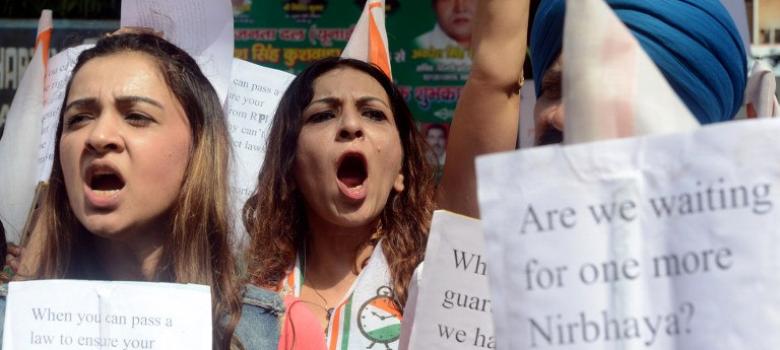
In the end, the baying of the mob and the media frenzy prevailed. On Tuesday, the Rajya Sabha passed the Juvenile Justice (Care and Protection of Children) Bill, which dictates that children over 16 can be tried as adults for heinous offences. Certain television channels took credit, saying Parliament only passed the legislation out of fear and under public pressure. That is indeed a tragedy.
Public outrage has been boiling as the juvenile in the December 16 gangrape case was released from the correctional home where he had been kept for the last three years. Over the last week, the image of the gangraped woman's grieving parents has triggered vast surges of anger and the demand to punish the juvenile further. In the three years since the rape and murder of Jyoti Singh, there have been numerous stories about the juvenile's savagery, how he was the most violent of the attackers, how he has shown no remorse and how he has been "radicalised" by association with other offenders in the correctional home. Now, that perception of the much-dreaded boy has clouded over the lives of thousands of children in need of care and guidance. It has obscured the conditions which breed a majority of juvenile crimes – poverty, lack of education, childhoods lost in the knowledge of violence and abuse. It has negated the need for deeper studies of the workings of the juvenile mind to frame a policy informed by science. It has shifted focus from addressing these root causes and fixing a broken system to punishing vulnerable children.
So the Rajya Sabha on Tuesday presented the spectacle of legislators discussing a bill that had not even been listed originally, while the parents of the victim looked on. The Bharatiya Janata Party has been pushing for the bill for a while; what is perhaps even more appalling is the abdication of the other parties. While the Left walked out, most other parties swallowed their misgivings to vote for the bill. The possibility of sending the matter to a select committee and engaging in wider consultation was ruled out. Dubious statistics were trotted out in support of the legislation. The filter between public sentiment and a good law – a serious, thoughtful legislative process insulated from outside pressures – was wholly missing. The fury of a media moment was transmitted directly into the notion of justice, turning it away from reform and towards retribution.
The Big Scroll: Scroll.in on the day's biggest stories
Bhavya Dore speaks to a neuroscientist who feels that science has not been allowed to inform laws for juvenile offenders.
Why Left parties objected to the new juvenile justice bill.
Bhavya Dore on why public outrage should not sway the rehabilitation of juvenile convicts.
Juvenile crimes registered under the Indian Penal Code rose by 47% between 2010 and 2014, but an adult law may not help curb the problem, says this IndiaSpend report by Devanik Saha.
Politicking and policying
1. Prime Minister Narendra Modi backed Finance Minister Arun Jaitley, comparing the accusations against him to the hawala scam smear on LK Advani.
2. Modi flies to Russia today to discuss Syria, nuclear energy and terror.
3. The Press Council of India has served a notice to the Rashtriya Swayamsevak Sangh mouthpiece, Organiser, for mocking Kerala's beef-eating culture.
Punditry
1. In the Indian Express, Mallika Shakya on why India needs to rebuild ties Nepal.
2. In the Hindu, Kalpana Purushothaman on the fate that awaits the juvenile in the December 16 gangrape case.
3. In the Business Standard, Kenneth Rogoff on how moderate oil prices have not significantly boosted global growth.
Don't Miss...
Amanda Goodrich of the Conversation recounts how 18th-century radicals in Britain fought free speech battles and fled domestic persecution:
We welcome your comments at
letters@scroll.in.
1. The Central Bureau of Investigation's raid on the office of the principal secretary was an act of vendetta, Chief Minister Arvind Kejriwal tells the the Delhi assembly.
2. A Border Security Force aircraft crashed just outside Delhi's Indira Gandhi International Airport, killing all 10 on board.
3. Signs of a slowdown as job creation in the corporate world takes a hit.
The Big Story: No sparing the child
In the end, the baying of the mob and the media frenzy prevailed. On Tuesday, the Rajya Sabha passed the Juvenile Justice (Care and Protection of Children) Bill, which dictates that children over 16 can be tried as adults for heinous offences. Certain television channels took credit, saying Parliament only passed the legislation out of fear and under public pressure. That is indeed a tragedy.
Public outrage has been boiling as the juvenile in the December 16 gangrape case was released from the correctional home where he had been kept for the last three years. Over the last week, the image of the gangraped woman's grieving parents has triggered vast surges of anger and the demand to punish the juvenile further. In the three years since the rape and murder of Jyoti Singh, there have been numerous stories about the juvenile's savagery, how he was the most violent of the attackers, how he has shown no remorse and how he has been "radicalised" by association with other offenders in the correctional home. Now, that perception of the much-dreaded boy has clouded over the lives of thousands of children in need of care and guidance. It has obscured the conditions which breed a majority of juvenile crimes – poverty, lack of education, childhoods lost in the knowledge of violence and abuse. It has negated the need for deeper studies of the workings of the juvenile mind to frame a policy informed by science. It has shifted focus from addressing these root causes and fixing a broken system to punishing vulnerable children.
So the Rajya Sabha on Tuesday presented the spectacle of legislators discussing a bill that had not even been listed originally, while the parents of the victim looked on. The Bharatiya Janata Party has been pushing for the bill for a while; what is perhaps even more appalling is the abdication of the other parties. While the Left walked out, most other parties swallowed their misgivings to vote for the bill. The possibility of sending the matter to a select committee and engaging in wider consultation was ruled out. Dubious statistics were trotted out in support of the legislation. The filter between public sentiment and a good law – a serious, thoughtful legislative process insulated from outside pressures – was wholly missing. The fury of a media moment was transmitted directly into the notion of justice, turning it away from reform and towards retribution.
The Big Scroll: Scroll.in on the day's biggest stories
Bhavya Dore speaks to a neuroscientist who feels that science has not been allowed to inform laws for juvenile offenders.
Why Left parties objected to the new juvenile justice bill.
Bhavya Dore on why public outrage should not sway the rehabilitation of juvenile convicts.
Juvenile crimes registered under the Indian Penal Code rose by 47% between 2010 and 2014, but an adult law may not help curb the problem, says this IndiaSpend report by Devanik Saha.
Politicking and policying
1. Prime Minister Narendra Modi backed Finance Minister Arun Jaitley, comparing the accusations against him to the hawala scam smear on LK Advani.
2. Modi flies to Russia today to discuss Syria, nuclear energy and terror.
3. The Press Council of India has served a notice to the Rashtriya Swayamsevak Sangh mouthpiece, Organiser, for mocking Kerala's beef-eating culture.
Punditry
1. In the Indian Express, Mallika Shakya on why India needs to rebuild ties Nepal.
2. In the Hindu, Kalpana Purushothaman on the fate that awaits the juvenile in the December 16 gangrape case.
3. In the Business Standard, Kenneth Rogoff on how moderate oil prices have not significantly boosted global growth.
Don't Miss...
Amanda Goodrich of the Conversation recounts how 18th-century radicals in Britain fought free speech battles and fled domestic persecution:
"During the 1790s, in response to the French Revolution, a number of English political thinkers developed a reform movement in Britain. At the time, the nobility dominated both houses of parliament, and very few people had a vote.
Reformers set up societies throughout the country, such as the London Corresponding Society, and the Manchester and Sheffield Constitutional Societies. These agitated for moderate and radical reform of English government and the constitution. The most common demands were for the sovereignty of the people, fairer representation in parliament, universal male suffrage, and regular or annual parliaments. Religious tolerance was also a common addition.
In the early 1790s, these societies publicly congratulated France on its successful revolution. Some reformers were more radical still, visiting Paris and calling for the overthrow of all European despotic governments and universal freedom for all people – a world of revolutions."
