








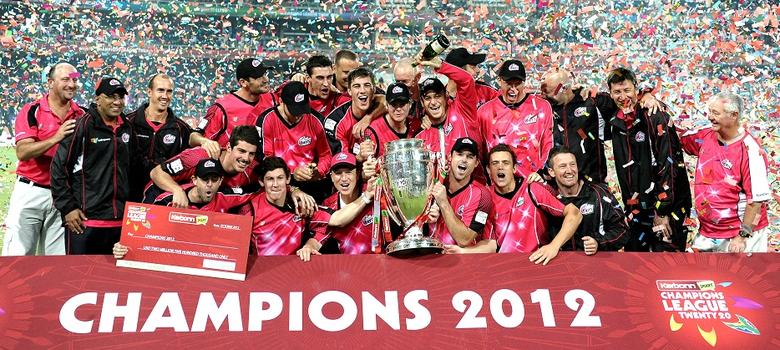
Overjoyed by the popularity of the first season of the Indian Premier League, a league featuring Indian teams competing in the 20-over format of the game, the shortest format, the Board of Control for Cricket in India, along with cricketing bodies of six other nations, started the global Champions League. They thought the League and its Twenty-20, or T20, tournament, would change the future of cricket through money and entertainment.
The Champions League featured teams from various cricketing countries, who would compete in the T20 for $2.5 million, arguably the most prize money in the history of club cricket tournaments.
Eight years and six editions later, the league was officially laid to rest on Wednesday by the same BCCI that had launched it with much fanfare. It cited falling popularity as the reason for the decision. Even though many had seen the demise of the league approaching because of falling TV ratings and a string of controversies, the board maintained that it was a “fantastic platform” for players to showcase their talent on.
"Unfortunately, off the field, Champions League T20 wasn't sustaining the interest of the fans as we had hoped,” said Anurag Thakur, the BCCI secretary on Wednesday.
The beleaguered tournament was laid to sleep just a day after the Justice Lodha Committee, looking into cleaning up the IPL, banned Chennai Super Kings and Rajasthan Royals for two years and announced lifelong bans on their top officials, Gurunath Meiyappan and Raj Kundra.
Rough beginning
Things didn’t go well for the Champions League from the very beginning. Its first edition, scheduled to take place in 2008, had to be cancelled because of a series of bomb attacks on Mumbai by Pakistani militants just one week earlier. The tournament was postponed to early 2009, but finally took place in October that year.
Meanwhile, the Indian board paid $5 million each to the Chennai Super Kings and Rajasthan Royals teams for cancelling the league’s first season in an unprecedented financial bailout while no other team was provided any compensation.
Even though the first season featured 12 teams from seven different countries, the tournament was loaded in favour of Indian teams from the very beginning because it had many more teams. As a result, three of its teams made it to the first edition, while more than four teams have participated since 2011. In contrast, other countries contributed at most only two teams each.
This, however, didn’t help the Indian TV ratings of the league, which saw a lukewarm response in its inaugural edition. The league got a TAM TV rating of 1.06 in 2009, much lower than the 4.1 that the IPL got. With Bollywood stars buying teams in the IPL and viewers' greater identification with the region-based teams, it did extremely well.
Soon enough, Bollywood stars, such Shahrukh Khan, were roped in to the Champions League’s marketing campaign and opening ceremonies, in a bid to match IPL’s glamour quotient, but it did not help. Viewers in India were interested only in matches in which IPL teams were playing, and that too, in the later stages of the tournament.
The final of the 2010 tournament, held in South Africa, which Chennai Super Kings won, had a TV rating of 3.3, while matches featuring Mumbai Indians had an average rating of 2.11, substantially above the tournament average of 1.45.
Sponsors pull out
Following the dull ratings, Bharti Airtel pulled out of its five-year sponsorship deal in just two years. Nokia, after agreeing to replace Airtel as the title sponsor for four years, withdrew after just one year.
One of the major criticisms against the tournament was its poor timing, which was in the middle of England’s home seasons, preventing its teams from participating for three years: 2010, 2011 and 2012.
Furthermore, rivalry between the Indian Cricket League, a private T20 league in India, and the BCCI-promoted IPL led to further disputes, with the Champions League disallowing any teams to feature players who participated in the ICL.
When Lalit Modi, who was IPL Commissioner, announced this, 25 players across 15 Champions League teams were also in ICL teams and they were barred from playing in the T20 tournaments, reducing the talent pool..
Slow death
The fading popularity and persistent problems with the Champions League didn’t go unnoticed internationally, and obituaries of the league had started to appear much before its actual demise on Wednesday.
The BCCI was even contemplating a mini-league on the lines of IPL, called IPL-2, which would feature the top four teams in a knock-out format. There was speculation that the tournament would take place in the United Arab Emirates starting this year but now that seems unlikely in light of the action against the IPL teams and the shelving of the Champions League.
ESPNCricinfo’s Andrew Fidel Fernando argued last year that the league was still looking for meaning.
It can be argued that it was the IPL’s popularity and dominance that hurt the Champions League. Given the public’s lack of trust in the BCCI, the time had probably come for it to shut it down.
We welcome your comments at
letters@scroll.in.
The Champions League featured teams from various cricketing countries, who would compete in the T20 for $2.5 million, arguably the most prize money in the history of club cricket tournaments.
Eight years and six editions later, the league was officially laid to rest on Wednesday by the same BCCI that had launched it with much fanfare. It cited falling popularity as the reason for the decision. Even though many had seen the demise of the league approaching because of falling TV ratings and a string of controversies, the board maintained that it was a “fantastic platform” for players to showcase their talent on.
"Unfortunately, off the field, Champions League T20 wasn't sustaining the interest of the fans as we had hoped,” said Anurag Thakur, the BCCI secretary on Wednesday.
The beleaguered tournament was laid to sleep just a day after the Justice Lodha Committee, looking into cleaning up the IPL, banned Chennai Super Kings and Rajasthan Royals for two years and announced lifelong bans on their top officials, Gurunath Meiyappan and Raj Kundra.
Rough beginning
Things didn’t go well for the Champions League from the very beginning. Its first edition, scheduled to take place in 2008, had to be cancelled because of a series of bomb attacks on Mumbai by Pakistani militants just one week earlier. The tournament was postponed to early 2009, but finally took place in October that year.
Meanwhile, the Indian board paid $5 million each to the Chennai Super Kings and Rajasthan Royals teams for cancelling the league’s first season in an unprecedented financial bailout while no other team was provided any compensation.
Even though the first season featured 12 teams from seven different countries, the tournament was loaded in favour of Indian teams from the very beginning because it had many more teams. As a result, three of its teams made it to the first edition, while more than four teams have participated since 2011. In contrast, other countries contributed at most only two teams each.
This, however, didn’t help the Indian TV ratings of the league, which saw a lukewarm response in its inaugural edition. The league got a TAM TV rating of 1.06 in 2009, much lower than the 4.1 that the IPL got. With Bollywood stars buying teams in the IPL and viewers' greater identification with the region-based teams, it did extremely well.
Soon enough, Bollywood stars, such Shahrukh Khan, were roped in to the Champions League’s marketing campaign and opening ceremonies, in a bid to match IPL’s glamour quotient, but it did not help. Viewers in India were interested only in matches in which IPL teams were playing, and that too, in the later stages of the tournament.
The final of the 2010 tournament, held in South Africa, which Chennai Super Kings won, had a TV rating of 3.3, while matches featuring Mumbai Indians had an average rating of 2.11, substantially above the tournament average of 1.45.
Sponsors pull out
Following the dull ratings, Bharti Airtel pulled out of its five-year sponsorship deal in just two years. Nokia, after agreeing to replace Airtel as the title sponsor for four years, withdrew after just one year.
One of the major criticisms against the tournament was its poor timing, which was in the middle of England’s home seasons, preventing its teams from participating for three years: 2010, 2011 and 2012.
Furthermore, rivalry between the Indian Cricket League, a private T20 league in India, and the BCCI-promoted IPL led to further disputes, with the Champions League disallowing any teams to feature players who participated in the ICL.
When Lalit Modi, who was IPL Commissioner, announced this, 25 players across 15 Champions League teams were also in ICL teams and they were barred from playing in the T20 tournaments, reducing the talent pool..
Slow death
The fading popularity and persistent problems with the Champions League didn’t go unnoticed internationally, and obituaries of the league had started to appear much before its actual demise on Wednesday.
The BCCI was even contemplating a mini-league on the lines of IPL, called IPL-2, which would feature the top four teams in a knock-out format. There was speculation that the tournament would take place in the United Arab Emirates starting this year but now that seems unlikely in light of the action against the IPL teams and the shelving of the Champions League.
ESPNCricinfo’s Andrew Fidel Fernando argued last year that the league was still looking for meaning.
“...for all that potential, the Champions League has not cracked it globally. International engagements largely stop to allow the tournament free access to the best teams and players, but the cricket has always seemed lightweight - even for T20. It is the juvenile trying to make it in the grown-up world, the man who shows up for a corporate job interview in a T-shirt with his ex-girlfriend's name tattooed on his arm, or the woman crunching numbers in a corner cubicle wearing a clown-suit. The Champions League is difficult to take seriously.”
It can be argued that it was the IPL’s popularity and dominance that hurt the Champions League. Given the public’s lack of trust in the BCCI, the time had probably come for it to shut it down.
