









SC refers question on exemption of minority-run schools from Right to Education law to larger bench
The court said that the exemption had prompted several institutes to seek minority status only to become autonomous and circumvent the mandate of Act.

The Supreme Court on Monday expressed doubts about the correctness of its 2014 verdict, which held that minority institutes were exempt from the Right to Education Act, and referred the matter to Chief Justice BR Gavai for consideration by a larger bench, Live Law reported.
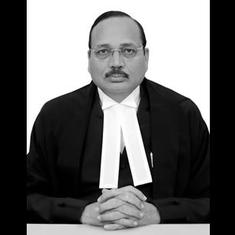
A bench of Justices Dipankar Datta and Augustine George Masih questioned whether the verdict had “been correctly decided”. Datta held that the judgement had “unknowingly jeopardised the very foundation of universal elementary education”, The Hindu reported.
In 2014, a constitutional bench had held in the Pramati Educational and Cultural Trust case that the right of children to free and compulsory education under the Act did not apply to aided or unaided schools run by minority groups.
The court had been testing the constitutionality of a provision of the Act that required educational institutes to reserve 25% of entry-level seats for children from disadvantaged groups and weaker sections, The Hindu reported.
The judgement had said that the provision infringed on the minority character of these institutes and compromised their institutional autonomy.
On Monday, the court said that exempting minority institutes from the Act leads to the “fragmentation of the common schooling vision” and weakens the idea of inclusivity and universality envisioned by Article 21A of the Constitution.
Article 21A grants the fundamental right to free and compulsory education for all children aged six to 14 years.
“We are afraid, instead of uniting children across caste, class, creed, and community, it reinforces ‘divides’ and ‘dilutes’ the transformative potential of shared learning spaces,” The Hindu quoted the court as saying.
The bench also observed that the exemption had prompted several institutes to seek minority status only to become autonomous and circumvent the mandate of the Right to Education Act.
Enclaves of privilege cannot be created at the cost of national developmental goals, the court added.
The bench was hearing a batch of petitions, including from Tamil Nadu and Maharashtra, about whether the Teachers’ Eligibility Test was mandatory for experienced staff appointed before 2011 and for those in minority institutes, Bar and Bench reported.
In July 2011, the National Council for Teacher Education had made the test mandatory for teacher service or for seeking a promotion.
At the hearing on Monday, the court held that clearing the Teachers’ Eligibility Test was mandatory for those seeking teaching jobs as well as for teachers seeking promotions. However, it referred the question about its applicability to minority institutes to a larger bench.
