








Delhi’s air quality in ‘severe plus’ category for third day, dense smog hampers visibility
The airport operator warned of possible flight disruptions in the national capital.
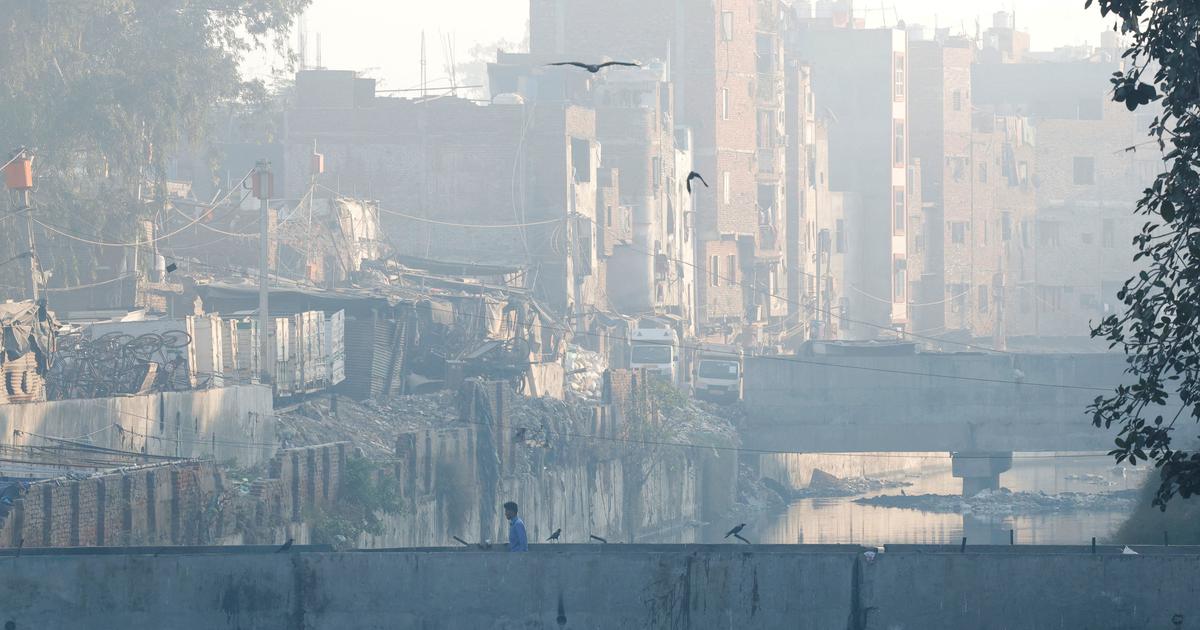
Delhi’s air quality remained in the “severe plus” category on Monday, with 26 of the city’s 40 monitoring stations recording Air Quality Index readings above 450, according to data from the Sameer application at 7.05 am.
The national capital’s average AQI stood at 454, showed the application, which provides hourly updates from the Central Pollution Control Board.
The cities adjoining the capital also reported hazardous air quality levels on Sunday. While Noida recorded an AQI of 456, Ghaziabad 464 and Greater Noida 451, Gurugram remained in the “very poor” category at 328.
Delhi’s air quality has deteriorated sharply in the past few days. The capital’s average AQI rose from 307 on Thursday to 349 on Friday and 431 on Saturday, before touching 461 on Sunday.
An index value between 301 and 400 indicates “very poor” air. Between 401 and 450 indicates “severe” air pollution, while anything above the 450 threshold is termed “severe plus”.
An AQI in the “severe” and “severe plus” category signifies hazardous pollution levels that can pose serious risks even to healthy individuals.
The deterioration in the air quality has been attributed to unfavourable weather conditions, including very low wind speeds caused by a western disturbance, the Hindustan Times reported on Saturday.
A thick layer of smog covered the national capital on Monday morning, reducing visibility in several areas. The India Meteorological Department issued an orange alert in Delhi for fog, urging residents to remain cautious.
Amid the dense fog and smog, Delhi airport issued an advisory on Monday morning warning of possible flight disruptions. Passengers were advised to check with airlines for updates on flight timings and other information.
VIDEO | Delhi: A thick layer of smog engulfs the national capital as winter intensifies across North India. Drone visuals from Kashmiri Gate show reduced visibility across the area. GRAP 4 has been implemented in the Delhi–NCR region to curb rising air pollution levels.… pic.twitter.com/aaDFMCAmga
— Press Trust of India (@PTI_News) December 15, 2025
Delhi and the adjoining National Capital Region are under Stage 4 restrictions under the Graded Response Action Plan to curb pollution. The restrictions came into force on Saturday after the air quality slipped into the “severe plus” category.
GRAP is a set of incremental anti-pollution measures that are triggered to prevent further worsening of air quality once it reaches a certain threshold in the Delhi-NCR region.
This was the first time this season that Stage 4 restrictions, triggered when the AQI breaches the 450 mark, were enforced in Delhi-NCR.
The curbs include a ban on the entry of trucks into the region, a halt on construction activities for public and private projects, and a shift to hybrid mode for schools, except Class 10 and Class 12.
While these measures have been made compulsory in Delhi, neighbouring districts have also begun adopting similar steps.
In Noida, the district administration on Sunday directed schools to shift to online and hybrid modes, India Today reported. While students from pre-nursery to Class 5 will attend online classes, those in Class 6 to Class 9 will follow a hybrid schedule. The order also applies to coaching centres.
#WATCH | A thick layer of smog engulfs the National Capital. Visuals from the Akshardham area. AQI here is 493, categorised as 'severe' as per the Central Pollution Control Board (CPCB) pic.twitter.com/b9k9fthFDk
— ANI (@ANI) December 15, 2025
Delhi-NCR has been recording air quality in the “poor” or worse categories since mid-October.
Air quality deteriorates sharply in the winter months in Delhi, which is often ranked the world’s most polluted capital. Stubble burning in Punjab and Haryana, vehicular pollution, along with the lighting of firecrackers during Diwali, falling temperatures, decreased wind speeds and emissions from industries and coal-fired plants contribute to the problem.
#WATCH | Delhi | Visuals around Anand Vihar area as a thick layer of toxic smog engulfs the national capital.
— ANI (@ANI) December 15, 2025
AQI (Air Quality Index) around the area is 493, categorised as 'Severe', as claimed by CPCB (Central Pollution Control Board).
CAQM (Commission for Air Quality… pic.twitter.com/yuchgBixdq
Singapore High Commission issues advisory
On Monday, the Singapore High Commission in New Delhi issued an advisory urging its citizens to follow the guidelines released by the authorities in the national capital.
Noting that Stage 4 restrictions under GRAP had been imposed, the High Commission said that the Indian authorities had urged residents, especially children and those with respiratory or cardiac ailments, to stay indoors and to use masks when stepping out.
Given the low visibility, flights to and from the national capital are likely to be affected, the advisory said, adding that the Delhi airport and several airlines had also issued advisories. “Travellers should take note of this, and check with the respective airlines for updates,” it added.
In light of the Indian Central Pollution Control Board invoking Stage 4 of the Graded Response Action Plan, the Singapore High Commission has issued the following advisory for Singapore nationals in the Delhi NCR. - HC Wong pic.twitter.com/vPIv0LjTnd
— Singapore in India (@SGinIndia) December 15, 2025
Also read:
- Coastal cities may no longer offer escape from air pollution
- Why air quality numbers in Delhi vary widely
