





Trump says US has ‘captured’ Venezuelan President Nicolás Maduro
The Venezuelan government described the strikes in capital Caracas as ‘military aggression’ by the United States.
Venezuelan President Nicolás Maduro has been abducted by the United States military in an operation in Caracas, President Donald Trump said on Saturday.
The US “successfully carried out a large scale strike” against Venezuela and its leader, Trump said on social media. Maduro’s wife was also kidnapped and the two were being “flown out of the country”, the US president added.
Republican US Senator Mike Lee said that Secretary of State Marco Rubio had told him that Maduro would stand trial on criminal charges in the United States, Reuters reported. Rubio “anticipates no further action in Venezuela now that Maduro is in US custody,” the news agency quoted Lee as saying.
Meanwhile, Venezuelan Vice President Delcy Rodríguez, speaking on state-run television, said that the whereabouts of Maduro and his wife were unknown and asked Trump to provide “proof of life”, AP reported.
Trump had claimed that the operation had been carried out “in conjunction with US law enforcement”.
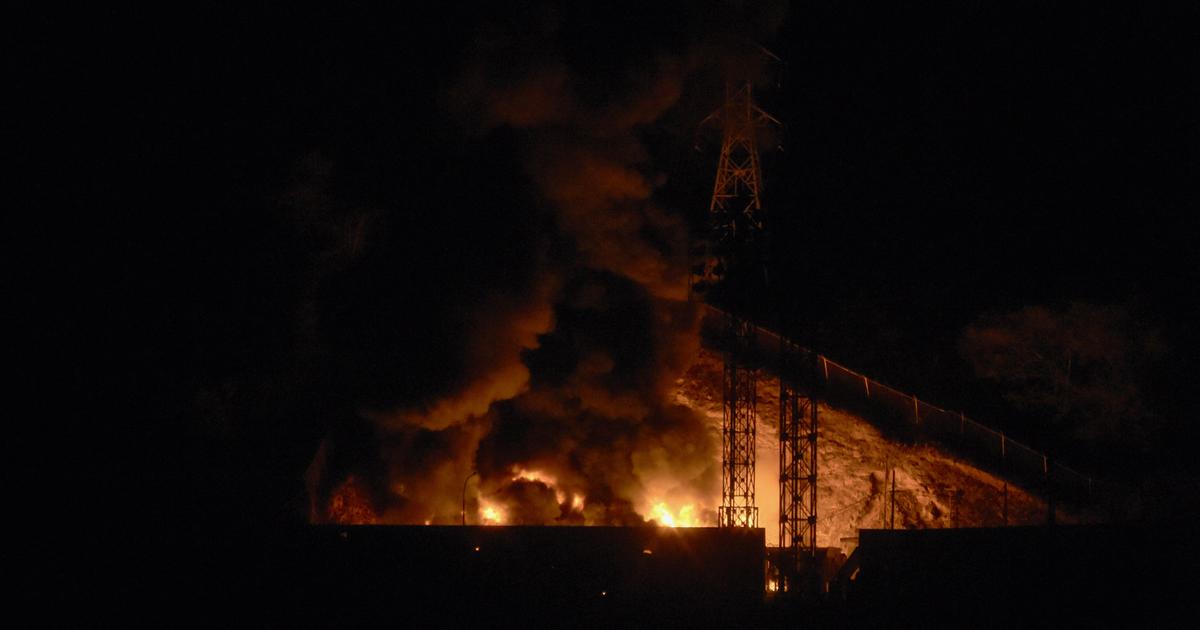
On Saturday, the US carried out strikes inside Venezuela. Explosions were heard in Caracas, the capital of the South American country, AFP reported.
The loud noises, accompanied by sounds resembling aircraft flying over the city, were heard at about 2 am local time, the news agency reported.
The Venezuelan government had described the incident as “military aggression” by the United States, Reuters reported. The attacks took place in Caracas and the states of Miranda, Aragua and La Guaira, The Guardian quoted the government as having said.
Unidentified officials later told CBS News that Trump had ordered strikes on sites inside Venezuela, including military facilities.
Maduro had also declared a state of emergency and called for military mobilisation after the attack, AFP reported.
The incident came as the US military has in recent months targeted alleged drug-smuggling boats off the Venezuelan coast.
🇻🇪| AHORA: Explosiones en Caracas, Venezuela. pic.twitter.com/Bn7MiWNtf8
— Radar Austral (@RadarAustral_) January 3, 2026
Since late August, the US has put together a major military deployment off the Venezuelan coast with the stated goal of combatting drug trafficking in Latin America, though it has focused on Venezuela.
The US is among countries in the West that does not recognise the Maduro government in Venezuela. Washington has long backed the Venezuelan Opposition.
Tensions have escalated in recent weeks after US President Donald Trump signalled his intention to launch military action inside Venezuela.
US military presence off the Venezuelan coast
For several weeks, Trump threatened ground strikes on drug cartels, saying they would start soon. On Monday, Trump said that the US had destroyed a docking facility used by alleged Venezuelan drug boats.
On Friday, Maduro, the Venezuelan president, said that he is ready to negotiate with Trump to combat drug trafficking. But, he declined to comment on the alleged US strike on the docking area.
The US’ military deployment in the Caribbean, meant to combat drug trafficking, includes the country’s largest aircraft carrier strike group USS Gerald R Ford and the advanced F-35 fighter jets.
On November 30, the US president had unilaterally announced that the Venezuelan airspace should be considered closed. On December 10, the US military seized an oil tanker off the Venezuelan coast, claiming that the vessel was transporting sanctioned oil from Venezuela and Iran.
On December 16, Trump ordered a blockade of sanctioned oil vessels heading to and leaving Venezuela.
The decision escalated Washington’s military and economic pressure campaign on the Maduro government. The South American country’s economy is heavily dependent on oil export.
The US president had said at the time that his country wanted to regain oil that he claimed had been stolen by Venezuela. It was unclear what oil or land Trump had been referring to as Venezuela had nationalised its oil and gas industry in the 1970s.
This is a developing story. It will be updated as new details become available.
