







SC refuses to entertain plea seeking minimum wages for domestic workers as fundamental right
The court expressed concerns that a mandatory amount could result in trade unions dragging every household into litigation.
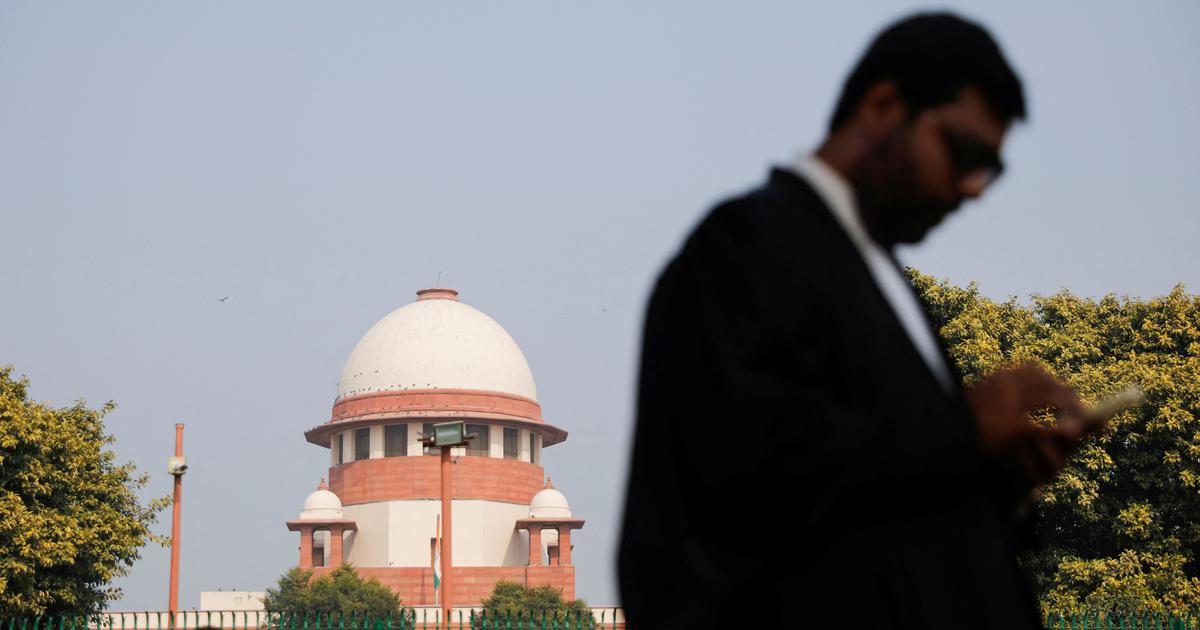
The Supreme Court on Thursday refused to entertain a public interest litigation seeking a declaration that domestic workers have a fundamental right to be paid minimum wages, Bar and Bench reported.
The plea, filed by domestic workers’ unions, sought to bring domestic workers under the minimum wages notification, Live Law reported.
A bench comprising Chief Justice Surya Kant and Justice Joymalya Bagchi held that the reliefs sought were legislative in nature and that the court could not issue a writ asking the Centre and states to consider amending existing laws, PTI reported.
“No enforceable decree or order can be passed unless the legislature is asked to enact a suitable law” Bar and Bench quoted the court as saying. “Such a direction…ought not to be issued by this court.”
The bench was also quoted as having expressed concerns that fixing a mandatory minimum wage could backfire as trade unions may drag “every household” into litigation, leading to a reluctance in hiring domestic workers.
“Once minimum wages are fixed, people will refuse to hire,” Bar and Bench quoted Kant as saying. “Tell me how many industries have been able to hire successfully using the trade unions. See all sugarcane unions closed.”
The chief justice also remarked that trade unions had, in his view, played a role in slowing industrial growth in the country, Live Law reported.
“How many industrial units in the country have been closed thanks to trade unions,” Kant was quoted as saying. “All traditional industries in the country, all because of these…unions have been closed, all throughout the country. They don’t want to work.”
“Of course exploitation is there, but there are means to address exploitation,” PTI quoted Kant as saying. “People should have been made more aware of their individual rights, people should have been made more skilled, there were several other reforms which should have been done.”
While acknowledging the plight of millions of domestic workers across the country, the bench maintained that the judiciary cannot encroach upon the legislative domain to mandate the enactment of laws, PTI reported.
Responding to the submission that collective bargaining could address these concerns, Bagchi noted that domestic workers are already covered under existing welfare frameworks, the news agency reported.
“It is not as if there is no safety net,” PTI quoted Bagchi as saying. “The Unorganised Workers’ Social Security Act does take care of several aspects.”
Advocate Raju Ramachandran, appearing for one of the petitioner organisations, Penn Thozhilalargal Sangam, argued that non-payment of minimum wages violated several constitutional rights pertaining to equality, prohibition against discrimination, equality of opportunity in public employment, among others, Live Law reported.
He submitted that domestic workers were deliberately excluded from the minimum wage framework despite the uniform nature of domestic work across states.
He also drew comparisons with countries such as Singapore, where statutory safeguards, mandatory leave and service conditions applied to domestic workers.
The court, however, said that a declaration recognising a fundamental right to minimum wages would amount to “lip service if not implemented”, Bar and Bench reported.
It reiterated that courts must be cautious in matters of economic policy and declined to interfere, suggesting that the petitioners approach the concerned state governments or, where appropriate, the High Courts.
