




India’s foreign policy driven by ‘exploitation of a compromised individual’: Rahul Gandhi
The Congress MP’s criticism came soon after the US granted Indian refiners a 30-day waiver to buy Russian oil stranded at sea amid the West Asian conflict.
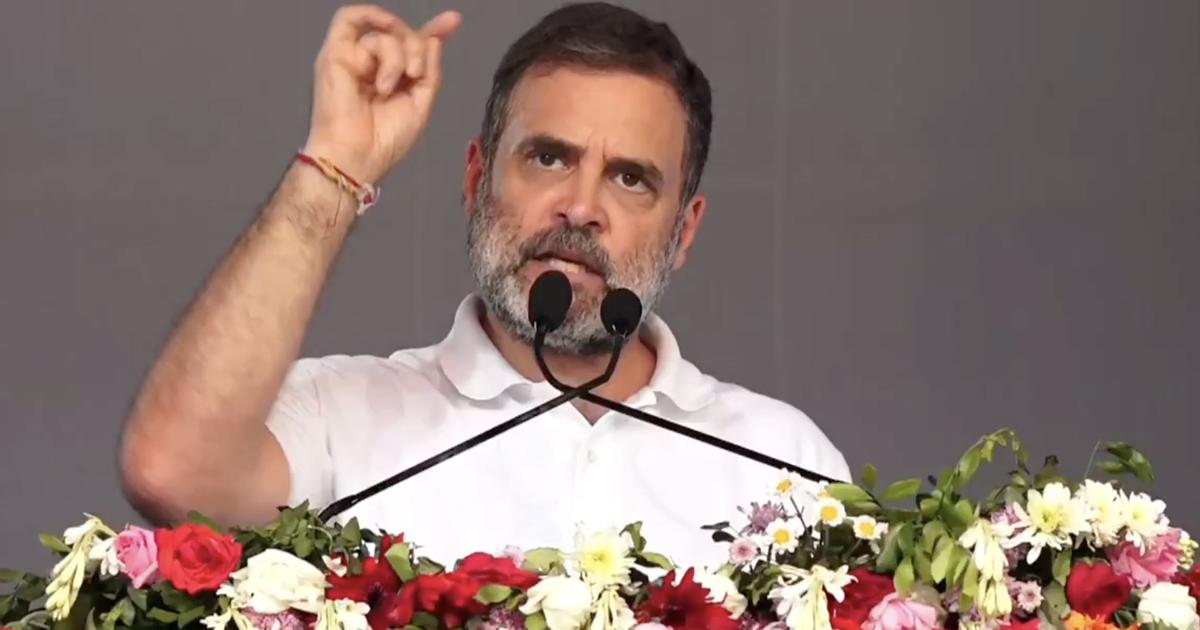
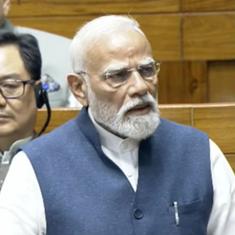
Congress leader Rahul Gandhi on Friday questioned the Narendra Modi government in the context of the conflict in West Asia, saying that its foreign policy today “is the result of the exploitation of a compromised individual”.
Gandhi’s statement came soon after the United States granted Indian refiners a 30-day waiver to buy Russian oil stranded at sea amid the conflict in West Asia.
Indian goods had been facing a combined US tariff rate of 50%, including a punitive levy of 25% imposed in August for purchasing Russian oil. US President Donald Trump had, on February 7, removed the additional 25% punitive levy, bringing the effective US tariff rate on Indian imports down to 18%.
The White House had said that the punitive tariff was being withdrawn as India had committed to stop “directly or indirectly importing Russian Federation oil”.
On Friday, Gandhi said that India’s foreign policy “emerges from the collective will of our people”.
“It should be rooted in our history, our geography, and our spiritual ethos based on Satya [truth] and Ahimsa [non-violence],” added the Congress leader. “What we are witnessing today is not policy.”
On February 11, 2026 while speaking in Lok Sabha LoP Shri @RahulGandhi warned about India’s energy security being compromised.
— Congress (@INCIndia) March 6, 2026
“The US will tell us who we can or cannot buy oil from - If it's Russia or Iran, the US will decide. But our Prime Minister will not decide."
The proof… https://t.co/jCqnBNiBhj pic.twitter.com/tw3hF6Etut
The Congress also shared a video of Gandhi’s speech in the Lok Sabha from February 11, when he had alleged that “India’s energy security was being compromised” with the US trade deal.
“The US will tell us who we can or cannot buy oil from – if it’s Russia or Iran, the US will decide,” Gandhi had said then. “But our Prime Minister will not decide.”
Congress president Mallikarjun Kharge echoed Gandhi on Friday, alleging that the US granting a 30-day waiver to India to buy Russian oil “clearly demonstrates Modi government is continuously cedeing diplomatic space”.
“This is the kind of language which is used for sanctioned states, and not India, who has been a responsible and an equal partner in global order,” Kharge said in a social media post.
India's strategic autonomy and national sovereignty is under dire threat because PM Modi is getting blackmailed on Epstien Files and Adani Case.
— Mallikarjun Kharge (@kharge) March 6, 2026
The US proclamation to 'allow' and grant us 'permission' to buy Russian oil, as a 'waiver for 30-days' clearly demonstrates Modi Govt…
On Thursday, US Treasury Secretary Scott Bessent said that the decision to give the 30-day waiver to India was a short-term measure to keep oil supplies flowing globally amid disruptions because of the conflict.
The measure “will not provide significant financial benefit” to the Russian government because it only permits the trade of oil that is already stranded at sea, he added.
The decision came amid concerns about rising crude oil prices and the supply from West Asia being disrupted.
India is a net importer of oil and gas, with around 80% to 85% of its energy requirements met through imports.
The price of benchmark Brent crude had reached $84 per barrel by Friday, marking a 15.9% increase from February 27, when it was at $72.87. The jump came after Israel and the US, on February 28, launched a joint operation to “degrade the capabilities” of the Iranian government.
Iran retaliated by striking Israel and US military bases in the region, and targeting major cities in other Gulf countries and some ships.
On Monday, Iran claimed that the Strait of Hormuz was “closed” for shipping traffic, warning that any vessel attempting to pass through the strategic waterway would be set on fire, according to reports.
The narrow waterbody connects the Gulf to the Arabian Sea. About 20% of global petroleum liquids consumption traverses the maritime chokepoint.
