






INDIA bloc demands Union Education Minister Dharmendra Pradhan’s resignation
He presided over the ‘betrayal’ of youth who took the NEET and the CBSE exams, the alliance alleged.
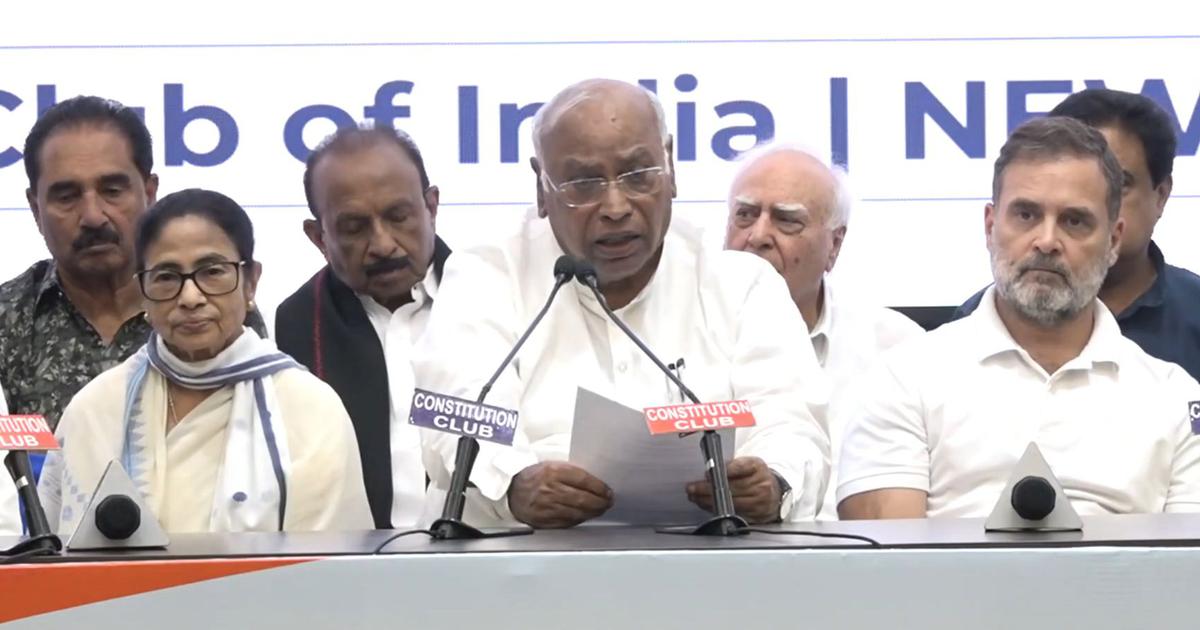
The Opposition INDIA bloc on Monday demanded the resignation of Union Education Minister Dharmendra Pradhan, saying that he presided over the “betrayal of lakhs of youth” who appeared for the National Eligibility cum Entrance Test for medical seats and the Central Board of Secondary Education exam.
Congress chief Mallikarjun Kharge said that the Opposition will also approach the chief justice of India on the special intensive revision of electoral rolls underway across the country, “vote loot” and the “stealing of elections”.
Speaking at a press conference alongside Congress’ Rahul Gandhi and Trinamool Congress chief Mamata Banerjee, among leaders of the alliance, Kharge demanded that the Union government immediately call an all-party meeting to discuss the “precarious current economic situation”, unemployment, price rise and farmers’ problems.
The Congress leaders said that members of the INDIA bloc agreed to meet every two months and that they will continue to coordinate in Parliament.
Problems raised by the Opposition
More than 22 lakh candidates had appeared for the undergraduate NEET exam that was conducted on May 3. However, the National Testing Agency on May 12 cancelled the test following allegations of a paper leak. A retest will take place on June 21.
Similar allegations of paper leaks and irregular grace marks had emerged during the test in 2024.
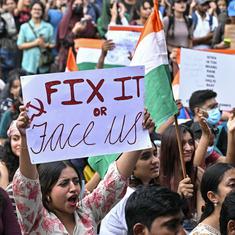
Many Class 12 students of the Central Board of Secondary Education have also alleged mismanagement relating to the on-screen marking evaluation system. They alleged that the scanned copies of answer sheets uploaded by the board did not match their handwriting, raising concerns about possible answer sheet mismatches.
Students seeking re-evaluation also alleged that they faced portal failures, delays in payment confirmation and, in some cases, were asked to pay excess fees because of technical glitches.
On May 28, Pradhan said that the Union government had acknowledged discrepancies in the board’s on-screen marking evaluation process and accepted responsibility for them.
The Opposition has for long alleged that the ruling Bharatiya Janata Party colluded with the Election Commission for favourable electoral outcomes. It has also alleged that the revision of voter lists was an attempt to undermine democracy.
Scroll’s analysis of the recent West Bengal Assembly election results found that in half the seats that the BJP won, the total deletions that took place during the voter list revision exercise outnumbered the victory margin.
By April 6, about 91 lakh voters, nearly 11.9% of the electorate before the process began, had been removed from the electoral rolls. Ahead of the Assembly elections in April, about 34 lakh appeals were reportedly pending before the tribunals.
On May 27, the Supreme Court upheld the legality of the special intensive revision of electoral rolls conducted by the Election Commission, saying that the exercise “advances the constitutional imperative of free and fair elections”.
However, the court said that the poll panel’s inquiries for the purpose of including a person in the voter list do not mean that it can decide on whether the person is an Indian citizen.
Written by Nachiket Deuskar. Edited by Sneha.
