









Assam to dismiss government employees practising polygamy, says CM
Those who are in a polygamous marriage would not be eligible for any welfare scheme, Himanta Biswa Sarma also announced.
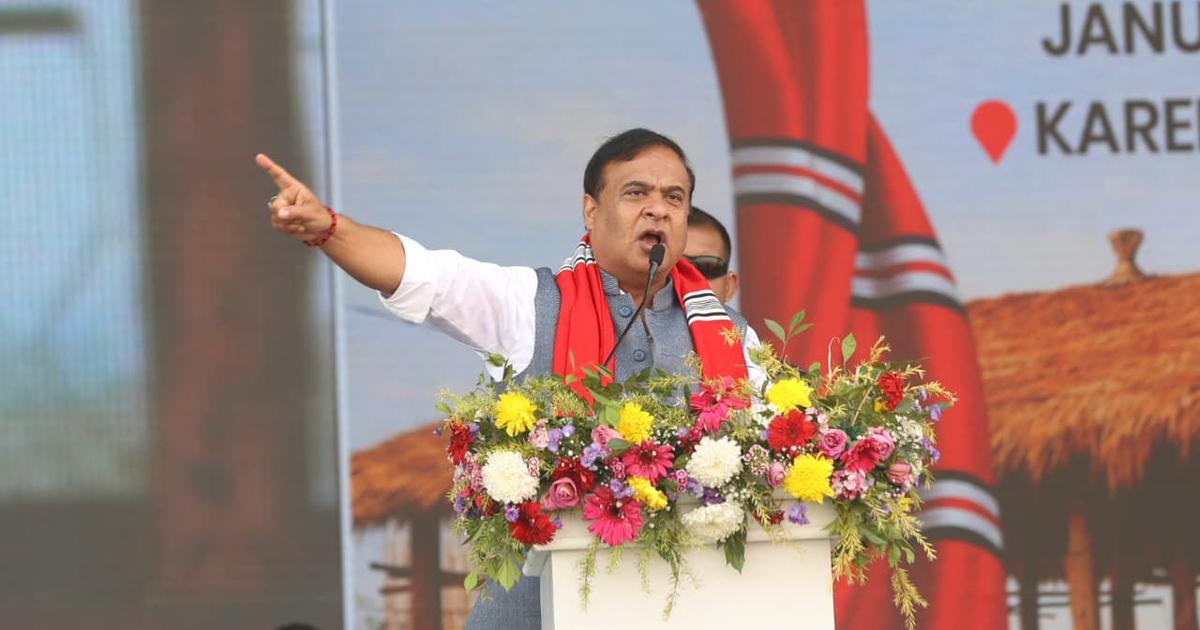
Assam government employees practising polygamy or the practice of having more than one wife, will be dismissed from their posts, Chief Minister Himanta Biswa Sarma said on Friday.
He also announced that those in a polygamous marriage would not be eligible for benefits under any government welfare scheme.
The Bharatiya Janata Party leader made the announcement at a post-Budget press conference.
This came months after the state Assembly passed the 2025 Assam Prohibition of Polygamy Bill in November.
It proposes up to seven years of imprisonment for persons convicted of polygamy. It also provides for up to ten years of imprisonment for those found guilty of concealing a previous marriage.
It further states that parents, priests or village heads who conceal a polygamous marriage from the police, or “unreasonably” delay informing the authorities, would be held liable for abetting the offence.
At the time the bill was passed, Sivasagar MLA Akhil Gogoi said that it undermines constitutional protections pertaining to freedom of conscience and the freedom to manage religious affairs.
On May 27, the Assembly also passed the Uniform Civil Code bill, seeking to ban polygamy and make the registration of live-in relationships compulsory.
The Uniform Civil Code refers to a common set of laws governing marriage, divorce, succession and adoption for all citizens. Currently, such personal affairs of different religions are based on community-specific laws, largely derived from religious scripture.
After the bill was passed, Sarma said on social media that the tribal population in the state would be kept outside the purview of the Uniform Civil Code. “It does not interfere with the religious practices of any community or traditional practices of our indigenous”, he said.
The code will override personal laws and will “ensure national integration by removing disparate loyalties to law, which have contracting ideologies”, Sarma added.
This paved the way for Assam to become the third state, after Uttarakhand and Gujarat, to introduce such a code after independence.
Introducing a common personal law has long been on the BJP’s agenda and several states ruled by the party have been making advances towards implementing it.
In its campaign for the Uniform Civil Code in Uttarakhand, the BJP had mainly targeted Muslim personal law, arguing that it discriminated against women as it allows Muslim men to practice polygamy, inherit a greater share of property, initiate divorce and deny alimony.
Written by Sneha. Edited by Sara Varghese.
Also read: In Assam, Muslim women cautiously welcome move to outlaw polygamy
