




Youth protests: Biased reporting cannot justify attacks on media persons, says Editors Guild
The press body condemned the ‘brutal suppression of the peaceful protest’ by the security forces.
The Editors Guild of India on Thursday said that biased reporting by media outlets cannot justify violence against journalists, adding that such attacks could have “disastrous implications for our tenuous society”.
The guild issued the statement after videos on social media showed reporters from television channels being attacked and heckled while covering the youth protests demanding the resignation of Union Education Minister Dharmendra Pradhan.
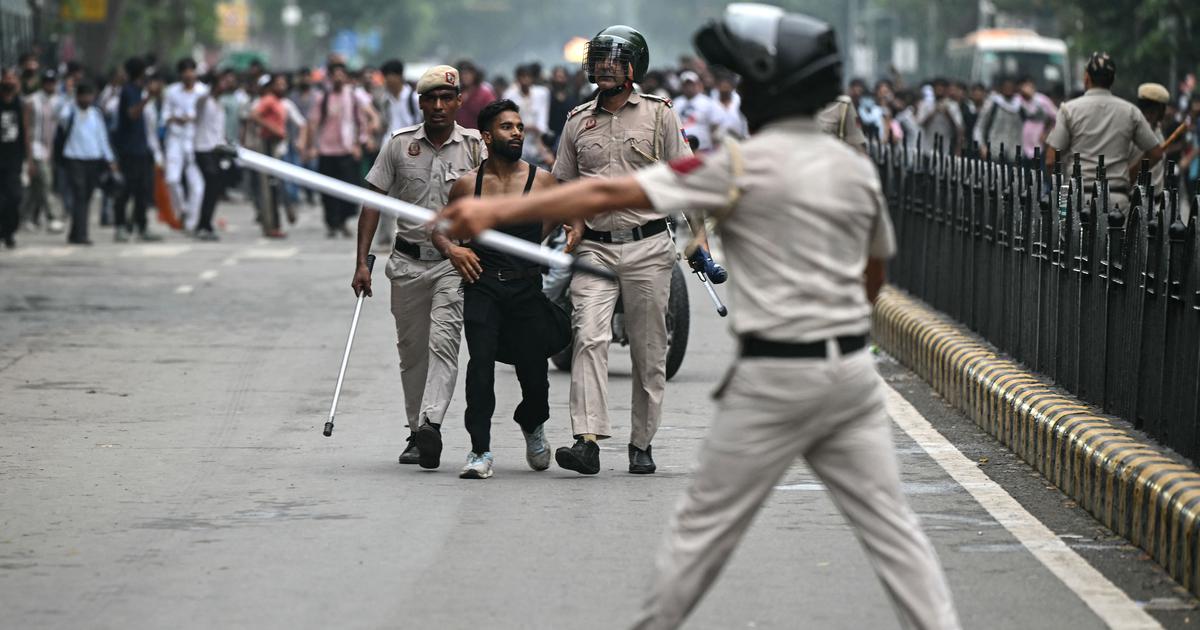
The press body also condemned the “brutal suppression of the peaceful protest” by the security forces.
In the past few days, several videos have emerged showing protesters attacking reporters from television channels. One of them showed Times Now reporter Dev Kotak standing on a street in Delhi with his shirt torn.
Dev Kotak, a reporter with Times now, was attacked by a mob of protesters at Jantar Mantar in New Delhi. This is absolutely disgraceful. You can request a reporter to leave the spot if you don't want him/her around but resorting to violence is absolutely unjustified. pic.twitter.com/wCsTEswJ8t
— Piyush Rai (@Benarasiyaa) July 21, 2026
“I was slapped and punched from at least six directions, and was also hit with water bottles,” Kotak can be heard saying in the video. “They [protesters] even snatched my spectacles. They took away my mobile, watch and spectacles.”
The Times Network alleged that two more reporters, Shafali Nigam and Jyoti Mishra, were also attacked while covering the protests.
Zee News alleged that in Patna, protesters attacked its correspondent Prashant Jha and cameraperson Shahnawaz Alam, leaving both of them injured.
A video from Mumbai showed protesters heckling a reporter from Zee Media.
Yesterday, the protesters gave the Zee News reporter a reality check.
— زماں (@Delhiite_) July 23, 2026
Prime-time journalists spread propaganda, hate, and lies, but it is the reporters on the ground who end up facing the public's anger. pic.twitter.com/SihZSMCO5f
The Editors Guild also noted that the anger of protesters was directed at members of media outlets considered close to the Bharatiya Janata Party.
It said that “flawed and biased reporting” weakens the media’s position as one of the key pillars of a functional democracy.
“That position is accorded to the media by society thanks to hard-earned credibility built up over decades through considered, nuanced and unbiased reporting and rationally argued opinion,” the press body added. “Openly catering to the dictates of vested interests or even the government flies against the principles of responsible journalism the Guild advocates.”
Statement on Violence During Protests Against NEET Exam Paper Leaks pic.twitter.com/AVX6YyGaMk
— Editors Guild of India (@IndEditorsGuild) July 23, 2026
The guild, however, said that this “can never be the justification” for carrying out violence against members of the media organisations.
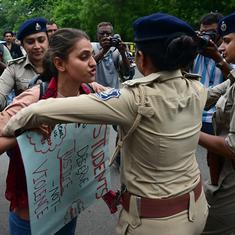
Condemning the police action on protesters, the press body said that using state power to suppress the right to dissent violates the freedom of expression.
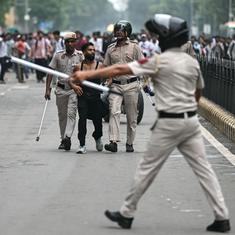
“Caning, tear-gassing and even using electric prods cannot be justified against young protestors,” it said. “The right to dissent is fundamental to a democracy.”
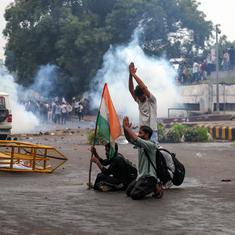
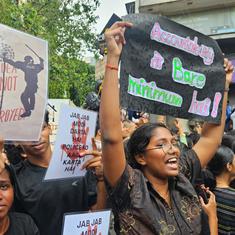
The youth protests in Delhi began on June 6, when the Cockroach Janta Party political campaign began to demonstrate at Jantar Mantar to demand Pradhan’s resignation for the alleged mismanagement of national competitive exams.
On Sunday, thousands joined the protest in Delhi after the police forced activist Sonam Wangchuk, who had been on a hunger strike, into hospital. The protests soon spread to other cities.
A march to Parliament on Monday was met with a brutal crackdown by the police. Dozens were injured by police lathis and had to brave tear gas.
Written by Neerad Pandharipande. Edited by Tanya Shrivastava.
Also read:
How Mumbai Police is using surveillance to stop youth from protesting
With elections perceived to be rigged, do Indians see protests as the only option?
Delhi protests: Constitution demands that India’s judiciary check police excess
