


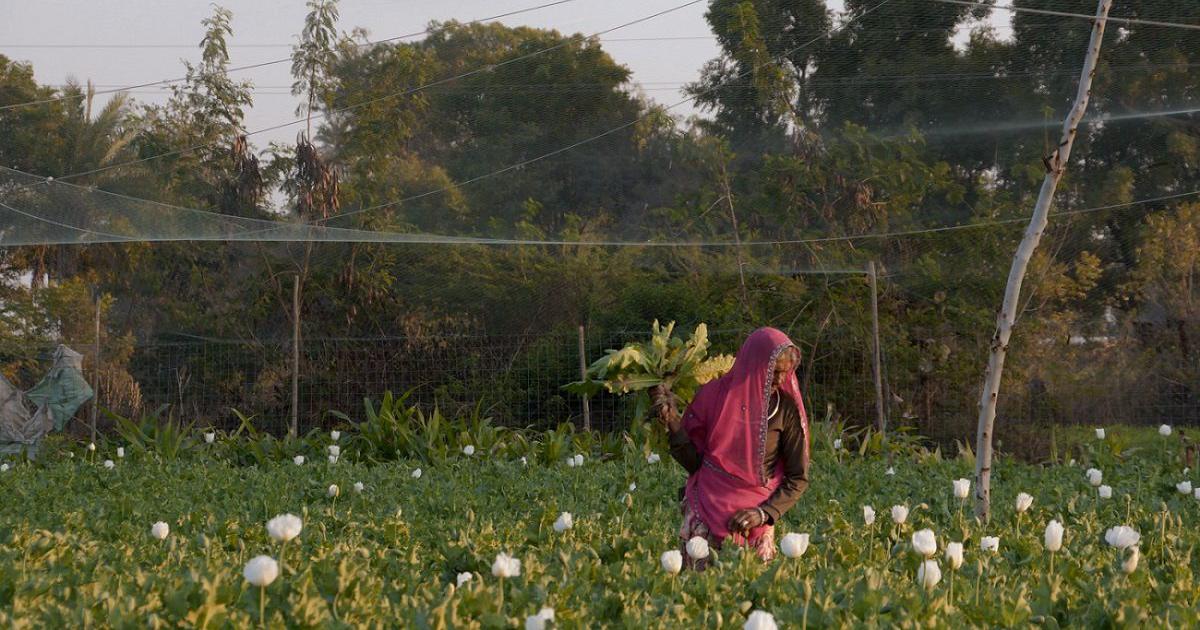
Vivek Chaudhary’s I, Poppy is an intimate portrait of a debt-ridden family of opium cultivators in Rajasthan. The engrossing documentary explores the way in which farming, and the personal lives of farmers, are affected by agricultural policies.
Mangilal Meghwal is fed up with the challenges faced by small-time cultivators like him, from low procurement prices to corruption. Government officers demand bribes for certifying the purity of the opium extract, which forces farmers to trade in the black market. The extension of licences for a crop that is required for medical purposes depends on palm-greasing or arbitrary decision-making.
Mangilal isn’t one to take things lying down. Flamboyant and outspoken, the Dalit farmer tries to organise protests. Mangilal’s mother Vardibai and his two sons worry over his rising debt and risky activism.
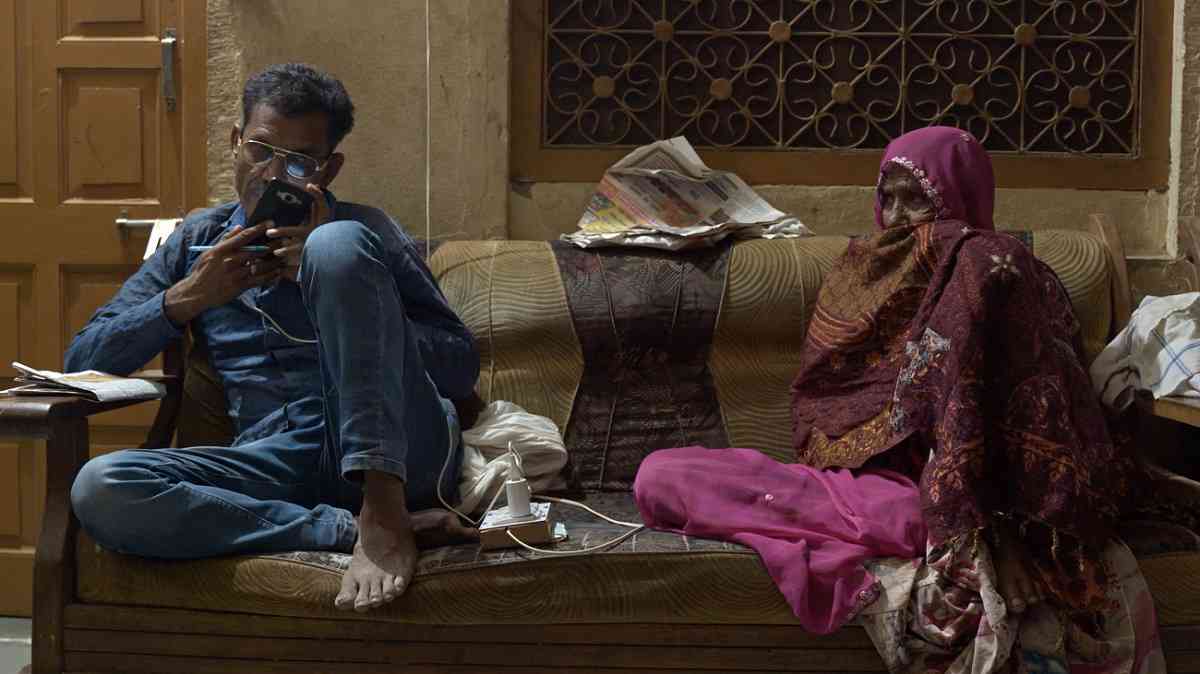
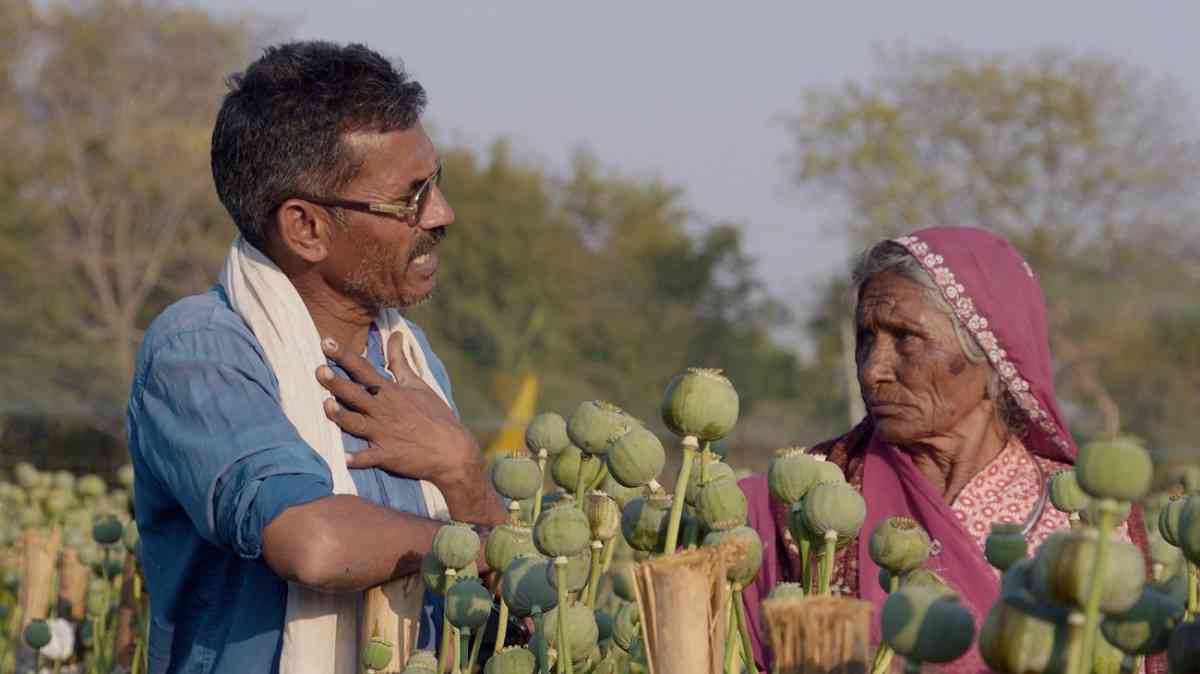
Filmed over four years, I, Poppy closely follows the relationship between Mangilal and his relaties. The film is strong on portraiture. Vardibai and Mangilal emerge as distinct personalities: one cautious and resigned, the other dandyish and combative. Their travails are constructed by Chaudhary, cinematographer Mustaqeem Khan and editors Tanushree Das and Camille Mouton into a chronicle of rural disquiet caused by external forces and compounded by individual attitudes.
Completed in 2025, I, Poppy was selected for several prestigious festivals, including Hot Docs, Busan and DOC NYC. Vivek Chaudhary had previously co-directed Goonga Pehelwan (2014), a National Film Award-winning documentary on the deaf wrestler Virender Singh’s battle against discrimination.
Chaudhary got interested in filmmaking while studying commerce in Ahmedabad. His personal interest in sport, plus his own mother’s deafness, moved him to make Goonga Pehelwan. Chaudhary and Mustaqeem Khan are developing a fiction film based on Goonga Pehelwan.
Meanwhile, the journey of I, Poppy continues. The 82-minute documentary will be screened on April 16 at the G5A cultural centre in Mumbai. From April 17, I, Poppy will be shown at Bertha DocHouse, a cinema in London dedicated to documentaries. I, Poppy will also be travelling to festivals in Taiwan, Paris, Munich and Berlin.
In an interview, 36-year-old Chaudhary revisited the making of I, Poppy and the film’s stylistic approach. Here are edited excerpts.
Why opium?
I started my research into opium cultivation in early 2017. I come from Barmer in Rajasthan, where we don’t grow opium but there’s a lot of cultural usage.
Initially, the film was going to be a much bigger story on opium farmers, traffickers and addicts. There were also patients who required morphine but didn’t have access to it. I met all kinds of people, including people in the opium mafia. I was looking at a kind of addiction.
An “Udta Rajasthan” of sorts?
Yes. Mustaqeem and I are working on developing parallel stories within the spectrum of opium. We are calling it Udta Rajasthan in our heads.
The original project was getting too risky and time-consuming. We wanted to shoot during the growing season in 2018. We had earmarked three families. They had very interesting stories. But they dropped out one by one, possibly because they didn’t want to ruffle any feathers.
How did you zero in on the Meghwals?
We met Mangilal at a protest meeting in 2018. He didn’t really fit the quintessential image of a Rajasthani farmer. At one point, we were mobbed by a group of farmers who let us go after destroying our memory cards. Mangilal got wind of this and told us that it was dangerous for us, and that we should stay with him for a night and leave the next morning. We were reluctant – we loved his politics but he was also an out-there person.
It was night when we walked into his house. We could sense that his mother was unhappy with him and was going at him. We asked for permission to shoot, and he didn’t mind. Something changes when the camera is on, but almost nothing did, which was interesting. We spent another day there and went to their field. When we looked at the footage, we felt that there was a film here.
We ended up shooting with the family over four seasons, from October 2019 to January 2022. Then there was a very lengthy edit process.
What was it about the Meghwal family dynamic that came to dominate the narrative?
If we sift the film down to its bare bones, what we are trying to say is, we are in a world of broken systems and structures. One way of going about it is to be pragmatic, which is the mother. The other is idealistic, which is Mangilal.
He loves to be in the midst of people. He’s complex too, especially when you put him in the family, which is relatively not so well off and also lower caste. As an activist, he desires the story to be told. This was a character that couldn’t have been written.
More than his characteristics, it was the interpersonal thing with the mother. The dichotomy in the household and what it was telling us about the larger ideas were exciting.
We mostly see Mangilal, Vardibai and his sons in the film. Were there others too, and why weren’t they included?
Mangilal has a wife, whom you see tangentially. Mangila’s elder son Dinesh has a wife too. We wanted both of them to be in the film because they are a big part of how the household runs.
But we were also in a conservative Rajasthani household. There was always going to be a mask. It would be like flashes of some random thing that was said.
With Mangilal, we were getting to know him at the level of activism. We were spending time with the mother and valuing her work. These things helped us get closer to them. They were also why we couldn’t go to the other two women in the household.
Vardibai appeals directly to the film crew at times, making them part of the strife. Did behaviours change over the duration of the shoot? Did you directly intervene, and therefore influence the film?
We walked in at a time when there was already a lot of conflict. Our role was also to bring them together a little bit. Could we see moments where the situation was less charged?
Sometimes, the resentment is so deep that you are not able to talk to each other. For example, in the film, you will see during a fight that the mother has turned towards us while saying something to her son. She would also tell us stuff off-camera. We were trying to be bridges in some way.
Mangilal also has a sister. One day she told me, he listens to you, could you please sit him down and talk to him? So Mustaqeem and I spoke to him. Of course, I could not force him to not do what he wanted to do.
We were living with the family, since the closest hotel was a few hours away. We are shooting for a few hours but the rest of the time, we were with them. So a lot happened outside the camera.
What are the challenges of constructing a storified narrative out of lived moments gathered over time? This is an approach that international funders prefer.
I was interested in watching a family over time. Such films engage me.
I also wanted to put the audience into the place of, can you breathe with a family living in a place like this? Can you stay with them and know the impossibilities of choices that they have to make in places that are not that far away from you but you don’t really look at?
I would be a fool to say that nothing of what you see and what gets funding doesn’t affect you.
A couple of funders wanted the fact that the Meghwals are Dalit to be spelt out in the first five minutes. We pushed back and said, identity has to be organic to a lived, felt reality. If you know, you know. If you don’t know, you should still be engaged by the story of a family in this setting.
We wanted to be respectful to people and not reduce them to caricatures. There is humour, a lot of sadness. They are fully drawn-out characters, not just placeholders of what a particular person from a particular caste or social background is like.
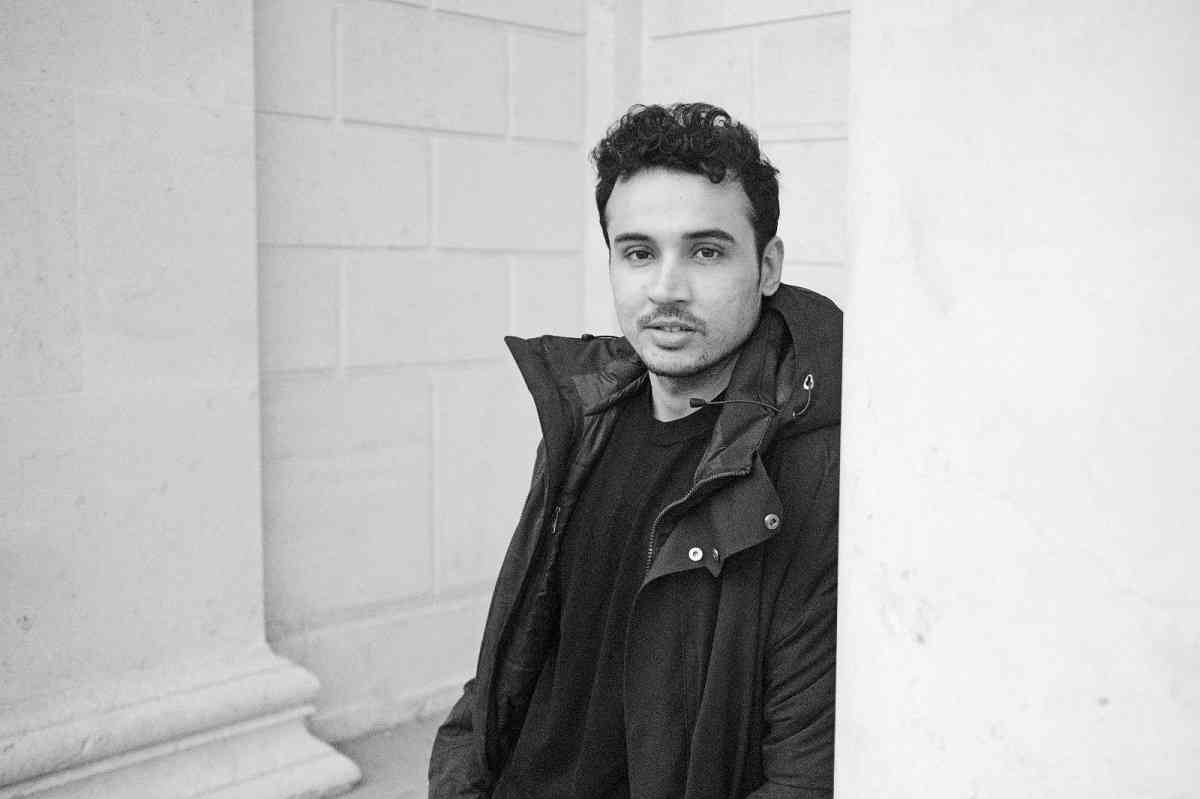
This kind of storytelling can create all kind of complications.
I almost didn’t finish the film because in some ways, it’s an ethical minefield.
This is maybe my last documentary where I look at somebody outside of me or my family. I am only able to get into a film if I think there’s something that can be done here. But sometimes, it’s just not possible. I am a very small player in this thing where I am barely getting by myself. Then I am adding families to my life. How many more can I add without having to subtract, which also feels very wrong?
How did the Meghwals react to the documentary?
They watched it before the Hot Docs premiere. A lot of trust had developed because we were showing them practically everything.
We first showed them a three-minute teaser revolving around an argument. Mangilal was okay but the mother didn’t like it. Mangilal spoke to her. He is a smart guy, he intuitively got what we were doing – that it’s the system that is making them go at each other. It was okay from that point.
