




The lovers have had a tiff. She leaps into a hand-drawn carriage. He gets into another to follow her. Each of them exhorts their drivers to go faster and faster. The fare goes up and up.
Shambhu, who is carrying the man, is running so hard he outpaces a horse carriage. The shots get shorter. The cutting gets more frenetic. It looks like Shambhu’s heart will give out any minute. The lovers are having too much fun to notice, their laughs like the whips used on beasts and enslaved humans.
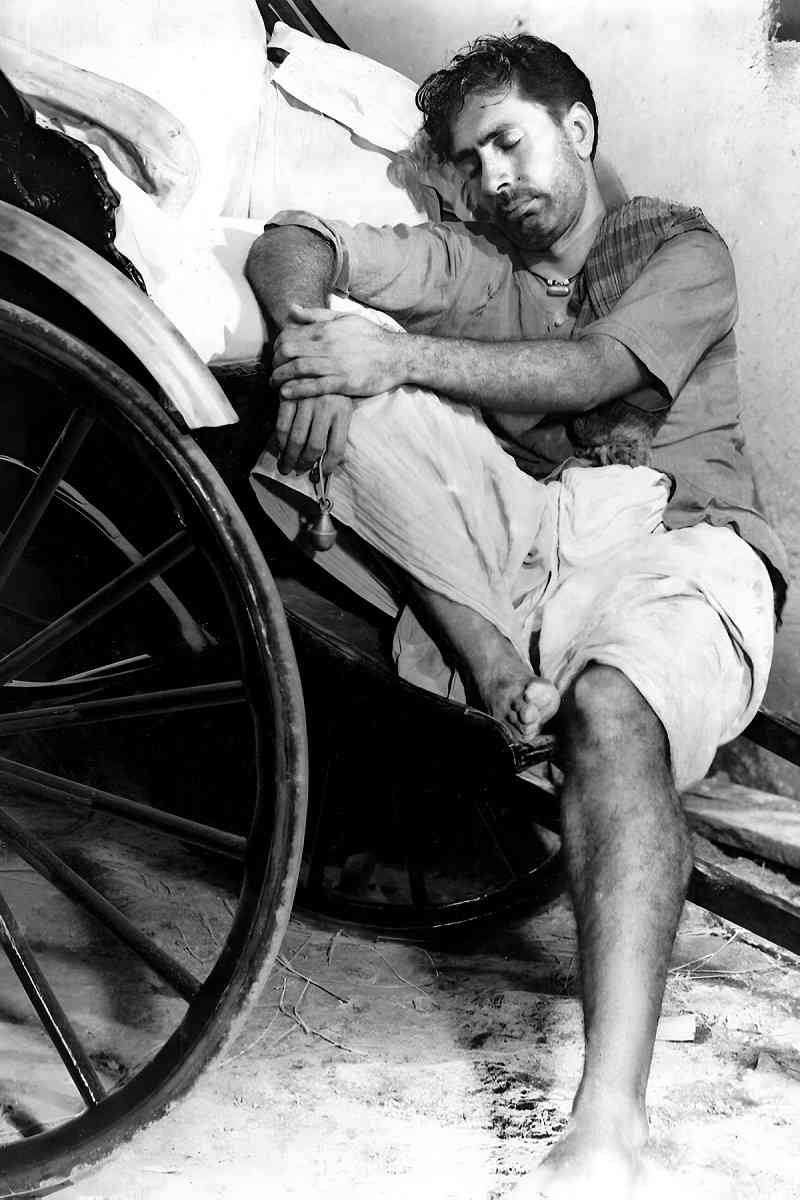
The tanga race on the streets of Kolkata is one of cinema’s most unforgettable capsules of despair and apathy. The sequence from Bimal Roy’s Do Bigha Zamin (1953) is the centrepiece of a film about the brutality of poverty.
Do Bigha Zamin “hit me between my eyes in many ways”, Shyam Benegal once said. “Bimal Roy made a connection with reality… he placed a sequence in time and space in recognisable ways from life,” Benegal told Roy’s daughter, Rinki Roy Bhattacharya, for the book Bimal Roy – A Man of Silence.
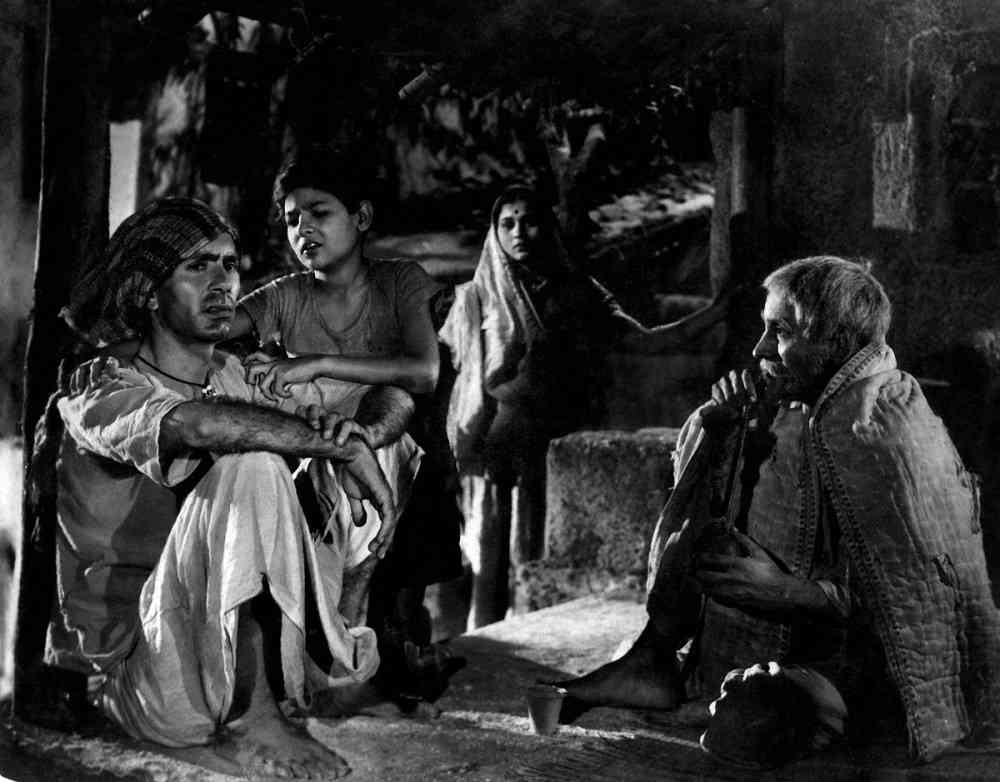
Do Bigha Zamin was recently restored by the Criterion Collection/Janus Films and Film Heritage Foundation and shown at the Venice Film Festival in September. The festival in Italy was an apt venue for the restoration’s premiere.
Among Roy’s inspirations for Do Bigha Zamin was the Italian neo-realist classic The Bicycle Thieves (1948). Vittorio De Sica’s film, about a father and son who desperately try to recover their stolen bicycle, is mirrored in Do Bigha Zamin through the attempts by Shambhu and his son to eke out a living in Kolkata.
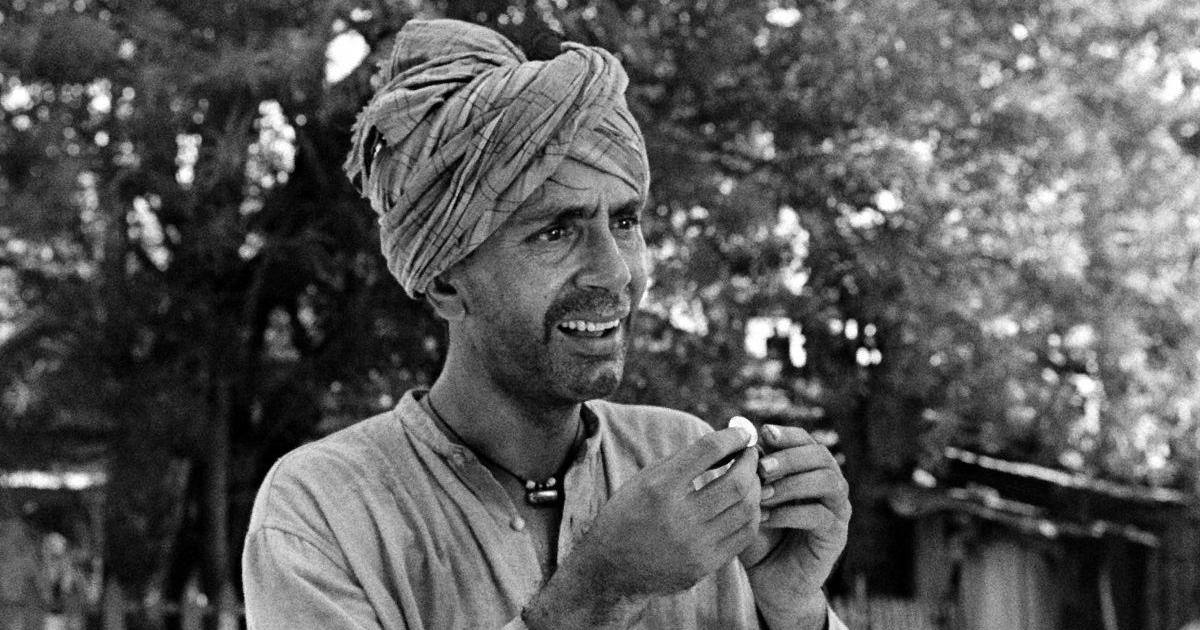
On June 11, Film Heritage Foundation will screen Do Bigha Zamin at Mumbai’s Regal cinema. Among the highlights of an insistently downbeat drama is Balraj Sahni’s indelible body-and-soul portrayal of Shambhu.
The film’s title is from a poem of the same name by Rabindranath Tagore, Rinki Roy writes in Bimal Roy – A Man of Silence. The story is by Salil Chowdhury, who also composed the lilting songs. The screenplay and editing are by Hrishikesh Mukherjee, who went on to make his own films.
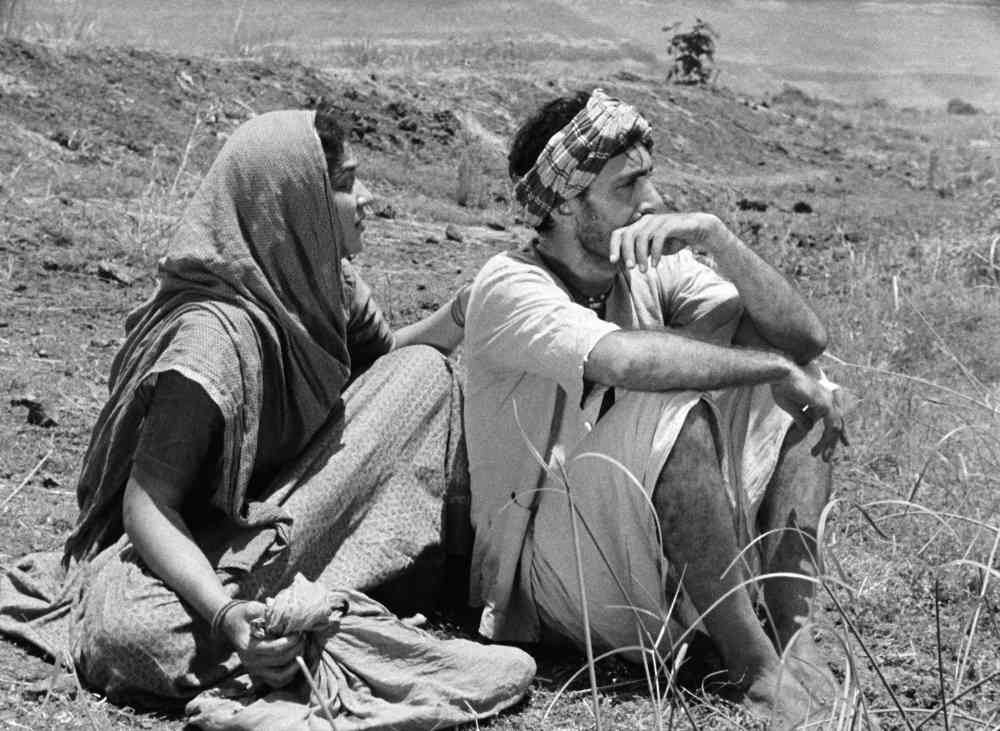
The opening credits are laid out over a patch of dried earth. After a two-year drought, the skies finally open up over a village. The villagers burst into song. Shambhu dunks his wife Parvati (Nirupa Roy) into a puddle.
The joy is short-lived. Shambhu owes money to a rapacious landlord. Shambhu refuses to sell his two acres of land to settle the debt. Shambhu has to travel to Kolkata with his son Kanhaiya (Ratan Kumar) to raise the money.
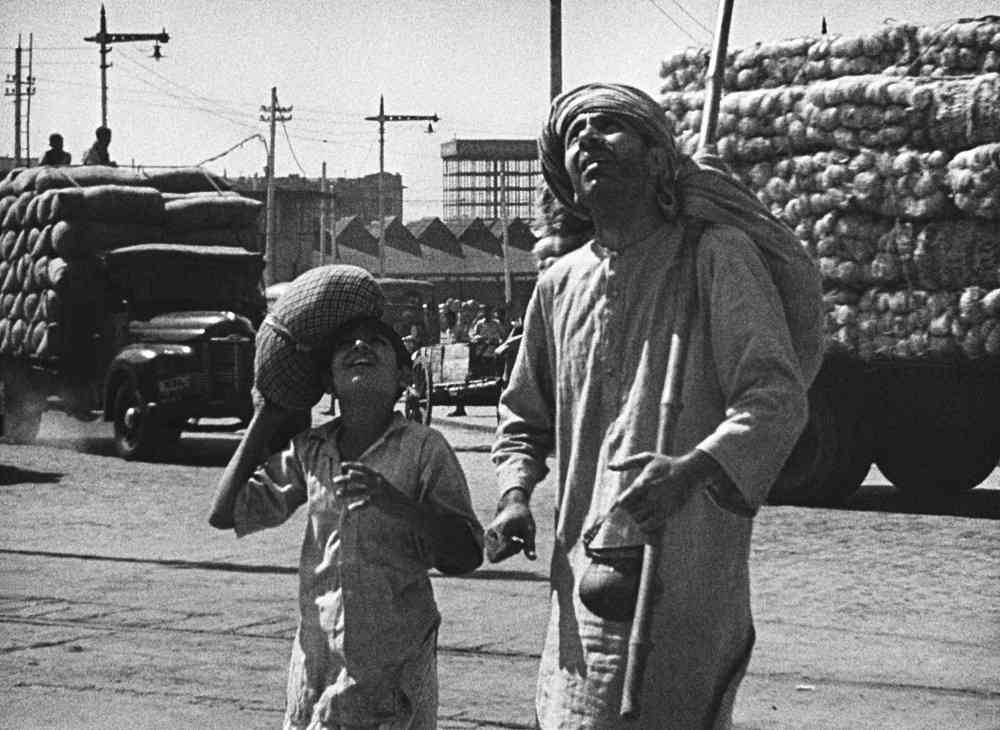
Kolkata is dripping in wealth, but is also bewildering and cruel, feasting on the underpaid labour of indigent migrants.
It’s on the streets and in a slum that Shambhu and Kanhaiya find solidarity, survival tips and a home away from home. The slum dwellers sing of owning nothing despite the mountains that they have cut through and the palaces they have built (the lyrics are by Shailendra).
Several of Bimal Roy’s films, Parineeta and Madhumati among them, are critiques of feudal structures that engender injustice, Rinki Roy Bhattacharya writes in Bimal Roy – The Man Who Spoke in Pictures. “Was this negative projection of the zamindari class a coincidence?” Roy Bhattacharya wonders. “Or, was this an unconscious gesture to liberate his spirt from the shackles of a feudal legacy he had come to mistrust?”
Bimal Roy’s short life – he died in 1966 at the age of 56 from cancer – was marked by relocation and reinvention. He was born in 1909 to a land-owning clan in Suapur in present-day Bangladesh.
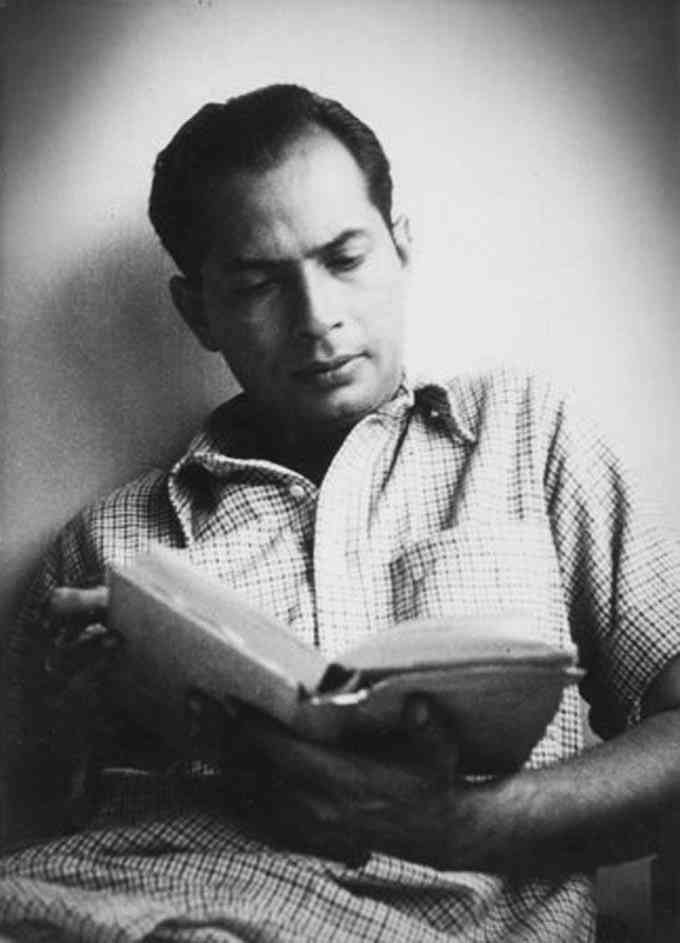
Circumstances compelled Roy’s family to move to Kolkata in the 1930s. Roy began working as a still photographer at New Theatres, later becoming a cinematographer for the studio’s productions. These included a 1936 adaptation of Sarat Chandra Chattopadhyay’s Devdas. Roy’s own version of Devdas came out in 1955.
Roy made his directing debut with the Bengali-language Udayer Pathey in 1944. Also filmed in Hindi as Hamrahi in 1955, Udayer Pathey is about an idealistic working-class writer who organises an agitation against his girlfriend’s wealthy brother-in-law.
Udayer Pathey was a success, running in a theatre in Kolkata for a year, Rinki Roy Bhattacharya writes in Bimal Roy – A Man of Silence. Roy’s storytelling drew praise from Satyajit Ray.
In his contribution to Bimal Roy – A Man of Silence, Ray notes that in Udayer Pathey had managed to “sweep aside the cobwebs of the old tradition and introduce a realism and subtlety that was wholly suited to the cinema”.
Ray adds that Roy “reached his peak with a film that still reverberates in the minds of those who saw it when it was first made… I refer to Do Bigha Zamin, which remains one of the landmarks of Indian cinema”.
In the early 1950s, Roy moved to Mumbai to direct Maa (1952). He later set up his own banner, Bimal Roy Productions. Like his peers Raj Kapoor and Guru Dutt, Roy asserted creative control over his projects. And like other directors at the time, Roy moved fluidly between genres and subjects.
Do Bigha Zamin was released in the same year as Parineeta, a relationship drama starring Ashok Kumar and Meena Kumari. Ashok Kumar was the first choice for Do Bigha Zamin before he was “summarily replaced” by an “unknown newcomer”, Parikshat Sahni writes in The Non-Conformist: Memories of My Father Balraj Sahni.
Previously a radio announcer and theatre actor, Balraj Sahni had moved to Mumbai in the 1940s to work in films. Do Bigha Zamin was a breakthrough for the actor, who later appeared in such memorable movies as Kabuliwala (1961), Waqt (1965) and Garm Hava (1974).
According to Parikshat Sahni, Ashok Kumar said that he was relieved that Sahni got the part of Shambhu. Ashok Kumar told Parikshat Sahni, “Whenever I see a film, I watch the leading actor’s performance very closely and I invariably come to the conclusion that I could have done the role much better!” But after watching Do Bigha Zamin, Kumar confessed that he “could not have done the role as well” as Sahni.
Sahni’s performance is remarkable for its physical naturalism and emotional depth. Sahni lives the part of the farmer who submits to indignities to hold on to his two-acre patch.
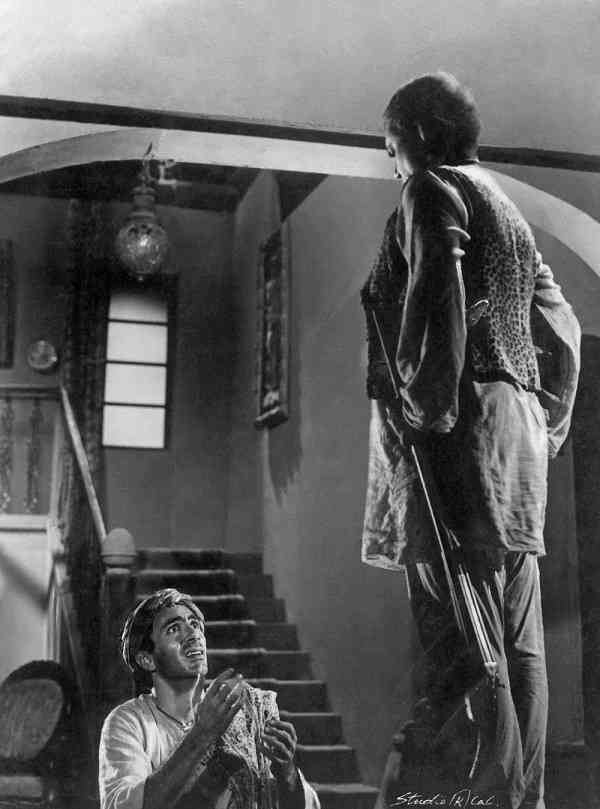
As a Marxist and political activist, Balraj Sahni was no stranger to working class struggles. But the urbane actor made a special effort to become Shambhu, Bhisham Sahni writes in his memoir Balraj My Brother.
Balraj Sahni spent time with milkmen who had moved from Uttar Pradesh to Mumbai the day he was chosen for Do Bigha Zamin, Bhisham Sahni writes. The actor studied their speech patterns and body language, how they tied towels around their heads.
Balraj Sahni travelled to the Kolkata leg of the shoot in an unreserved railway compartment, Bhisham Sahni says. Members of a rickshaw union trained the actor in pulling the cart. During his preparation, Balraj Sahni met a rickshaw puller who had a story uncannily similar to Shambhu’s.
“I simply stopped thinking about the academic theories of acting,” Balraj Sahni wrote in his own autobiography. “Instead, I entered into the soul of that middle-aged rickshawallah, which is why I was so eminently successful in playing that role.”
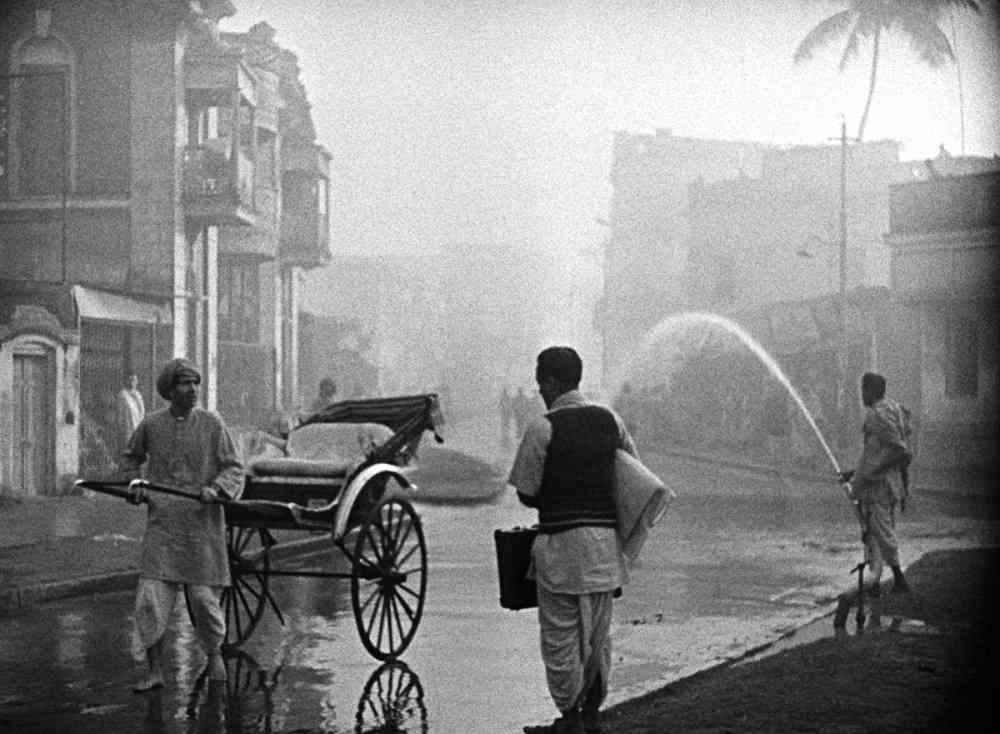
Sahni’s performance is more powerful because Roy and cinematographer Kamal Bose filmed Shambhu’s rickshaw scenes at actual locations.
“He [Roy] shot Do Bigha Zamin on the streets of Kolkata with a new Arriflex camera…” filmmaker Tapan Sinha writes in Bimal Roy – The Man Who Spoke in Pictures. The Arriflex was lighter in weight and more suited to location shooting than previous cameras, Sinha says, adding, “As a technician, he [Roy] understood the possibility of this camera and utilised it extensively.”
Do Bigha Zamin was showered with praise and awards in its time. The movie’s box office reception improved after Roy removed the original ending, in which Nirupa Roy’s pregnant Parvati comes to Kolkata to look for her husband and son and dies in an accident. In the new ending, Parvati survives. The family returns to the village, only to be met with a shocking development.
The reputation of Do Bigha Zamin as a leading example of realist cinema remains unchallenged. Seen in the present, Do Bigha Zamin stands out for its refusal to sugarcoat its themes of rural debt, forced displacement, insurmountable penury and the horrors of the big city.
Do Bigha Zamin opts out of the post-Independence optimism of the 1950s, pointing instead to stubborn fault lines. Shambhu still walks among us – as the daily-wage earner, the construction site labourer and the gig worker.