




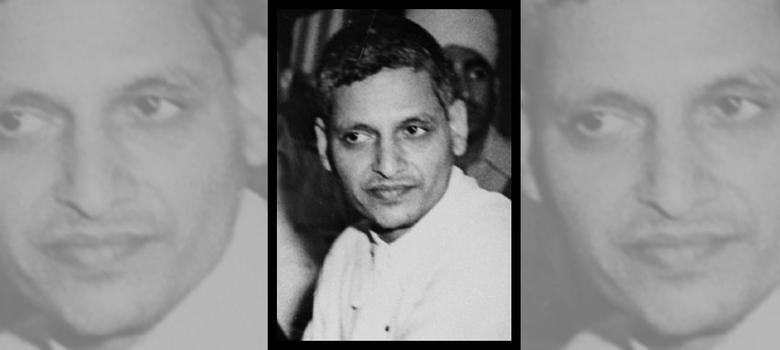
A new flyover in the town of Alwar in Rajasthan was all set to be named after Mohandas Gandhi’s murderer Nathuram Godse. But questions raised by the local media this week appear to have put paid to the plan. Sixty-seven years ago too, Alwar, then a smallish princely state with nothing remarkable in its history, was in the headlines because of Godse. It was rumoured that Godse and his co-conspirator, Narendra Apte, had been armed by the Maharaja of Alwar, and that Godse, perhaps in disguise, had visited the town and addressed incendiary public meetings.
The Maharaja of Alwar and the Prime Minister of Alwar, NB Khare, were investigated for their role in the conspiracy to kill Gandhi. No case was proven against either nor was there verifiable evidence of Godse’s visit. But the Hindu Mahasabha’s activities in Alwar and Khare’s close links with it were laid bare.
Alwar was one of many princely states on friendly terms with the Hindu Mahasabha, which like them opposed their merger with the union. But Khare’s personal involvement with the Mahasabha made Alwar’s links to the group especially close.
Khare was a former Congress legislator and an ally of V D Sarvarkar, under whose charge the Alwar state administration appears to have encouraged anti-Muslim violence in the wake of the partition. During that period, Alwar saw bloody massacres of Muslims and destruction of property. The “Alwar atrocities”, which were still outside the purview of the independent Indian state, were raised at Congress meetings and Gandhi described the officials of the Alwar state as having “acted much like General Dyer”. Khare went on to lead the Hindu Mahasabha as its President from 1949-'51.
Destruction of mosques
Historians Shail Mayaram and Ian Copland have written of the “safaya” (ethnic cleansing) of Meo Muslims in the Mewat region of which Alwar is a part and of forced conversions of Muslims. But long before their research was published I had heard these stories from my father, a schoolboy in 1947, and his brothers. They had witnessed the destruction of the main mosques in Alwar town, the disappearance of Muslims they knew, and “shuddhi” (conversion) ceremonies that involved tonsuring heads and smelling parts of dismembered pigs. These “shuddhi” ceremonies were formalised with the issuance of a revenue document by the State of Alwar.
A senior Bharatiya Janata Party leader who also would have probably witnessed the violence in Alwar and in Mewat at large is LK Advani. As a pracharak, Advani organised the Rashtriya Swayamsevak Sangh’s work in Alwar and Bharatpur at the time of the Partition. In his autobiography, he writes about being in Alwar on the day of Gandhi’s murder, of being imprisoned for three months following the assassination, and goes on to talk at length about Godse’s quitting the RSS and the RSS’s exoneration by the Justice J L Kapur Commission. But curiously he says nothing about the violence.
As the government scouts around for another name for the flyover, Advani might find himself wondering why the ghost of Godse still hovers over a decaying dusty town in the shadow of the Aravallis.
We welcome your comments at
letters@scroll.in.
The Maharaja of Alwar and the Prime Minister of Alwar, NB Khare, were investigated for their role in the conspiracy to kill Gandhi. No case was proven against either nor was there verifiable evidence of Godse’s visit. But the Hindu Mahasabha’s activities in Alwar and Khare’s close links with it were laid bare.
Alwar was one of many princely states on friendly terms with the Hindu Mahasabha, which like them opposed their merger with the union. But Khare’s personal involvement with the Mahasabha made Alwar’s links to the group especially close.
Khare was a former Congress legislator and an ally of V D Sarvarkar, under whose charge the Alwar state administration appears to have encouraged anti-Muslim violence in the wake of the partition. During that period, Alwar saw bloody massacres of Muslims and destruction of property. The “Alwar atrocities”, which were still outside the purview of the independent Indian state, were raised at Congress meetings and Gandhi described the officials of the Alwar state as having “acted much like General Dyer”. Khare went on to lead the Hindu Mahasabha as its President from 1949-'51.
Destruction of mosques
Historians Shail Mayaram and Ian Copland have written of the “safaya” (ethnic cleansing) of Meo Muslims in the Mewat region of which Alwar is a part and of forced conversions of Muslims. But long before their research was published I had heard these stories from my father, a schoolboy in 1947, and his brothers. They had witnessed the destruction of the main mosques in Alwar town, the disappearance of Muslims they knew, and “shuddhi” (conversion) ceremonies that involved tonsuring heads and smelling parts of dismembered pigs. These “shuddhi” ceremonies were formalised with the issuance of a revenue document by the State of Alwar.
A senior Bharatiya Janata Party leader who also would have probably witnessed the violence in Alwar and in Mewat at large is LK Advani. As a pracharak, Advani organised the Rashtriya Swayamsevak Sangh’s work in Alwar and Bharatpur at the time of the Partition. In his autobiography, he writes about being in Alwar on the day of Gandhi’s murder, of being imprisoned for three months following the assassination, and goes on to talk at length about Godse’s quitting the RSS and the RSS’s exoneration by the Justice J L Kapur Commission. But curiously he says nothing about the violence.
As the government scouts around for another name for the flyover, Advani might find himself wondering why the ghost of Godse still hovers over a decaying dusty town in the shadow of the Aravallis.
